

In January–August 2026, Ukraine increased poultry meat exports by 12.5% compared to the same period last year—to 330,200 metric tons—while foreign exchange revenue from these exports decreased by 2.6%—to $697.9 million, according to the Ukrainian Poultry Farmers’ Union.
In August 2026, poultry meat exports totaled 40,600 metric tons, which is 1.5% less than in July (41,200 metric tons).
In monetary terms, August exports fell by 7.9% compared to July, to $82.2 million. The average export price for poultry meat in August was $2.02/kg, which is 20.9% lower than in August of last year. According to the Association, this is due to changes in the range of exported products and a decline in export prices on foreign markets.
The main buyers of Ukrainian poultry meat during the first eight months of 2026 were the Netherlands (20% of exports), the United Kingdom (11.7%), Slovakia (10.6%), and the UAE (6.4%).
EU countries accounted for 36% of total poultry meat exports during this period, or 118,900 metric tons. In monetary terms, the EU’s share amounted to nearly half of foreign exchange earnings—47%.

According to the “Serbian Economist,” on September 3, Montenegro’s Skupština (parliament) unanimously supported a proposal to amend the Constitution, which would remove the immunity of the country’s president, prime minister, and members of the government in cases of crimes against official duties, including corruption offenses.
All 66 deputies present at the session voted in favor of the proposal; there were no votes against or abstentions. A two-thirds majority of parliamentarians was required to initiate the constitutional amendment process.
This specifically concerns abuse of office, accepting and offering bribes, as well as other corruption-related crimes. The government explains these changes as necessary to address situations where the immunity of a high-ranking official becomes an obstacle to criminal prosecution.
The initiative was drafted by the government back in the spring of 2026. The Cabinet of Ministers proposed amending Article 86 of the Constitution to explicitly revoke immunity for the president and members of the government in cases of crimes against official duties. The government links this reform, in particular, to the implementation of recommendations from the Council of Europe’s anti-corruption group GRECO and Montenegro’s progress under Chapter 23 of the EU accession negotiations.
However, formally, immunity has not yet been abolished. Parliament has instructed the Constitutional Committee to prepare a draft of the amendments within four days. According to Article 156 of the Constitution of Montenegro, after the draft is approved by two-thirds of all deputies, it must undergo a public consultation lasting at least one month, after which the final text must again receive the support of two-thirds of Parliament.
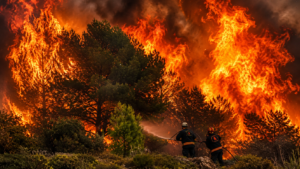
The 2026 fire season in Europe has become one of the most difficult in terms of the geographical spread of fires and the scale of their consequences, with Ukraine ranking among the continent’s most affected countries, the Experts Club information and analytical center reports, citing data from the Global Wildfire Information System (GWIS), the European Forest Fire Information System (EFFIS) and other European bodies.
As of August 31, the area affected by fire in Ukraine was estimated by GWIS at 413.1 thousand hectares, or about 0.69% of the country’s territory. If the Russian Federation is not included in the direct comparison, as the system also takes into account the vast territories of Siberia and the Far East, Ukraine ranks first among the countries of geographical Europe in terms of the absolute area affected by fires.
It is followed by Spain — 242.1 thousand hectares, Italy — 118.3 thousand hectares, France — 105.1 thousand hectares, and Portugal — 60.5 thousand hectares.
In Ukraine, fire statistics have an additional specific feature due to the war. Satellite systems record the territory affected by fire but do not determine its cause. Therefore, alongside heat, drought, careless handling of fire and arson, shelling, explosions and fires along the front line may also play a significant role.
The greatest burden relative to the size of the territory is recorded in the Balkans. In Montenegro, about 1.7% of the country’s territory has been affected by fire, in Bosnia and Herzegovina — more than 1%, and in North Macedonia — about 0.75%. Altogether, Montenegro, Bosnia and Herzegovina, North Macedonia, Albania and Serbia have about 142 thousand hectares of burned areas.
A separate feature of the season has been a sharp increase in fire activity in countries where large fires are traditionally less common. In Belgium, the area affected by fires has already exceeded the average for 2012–2025 by more than ten times, in the Netherlands — by approximately three times, in Austria — by 2.5 times, and in France — by almost 2.5 times.
In the EU itself, by August 30, 636.1 thousand hectares of burned areas had been recorded within 1,861 major fires. This is 36% less than in the record year of 2025, but more than twice the long-term average for the same period.
Bringing pharmaceutical production into compliance with European requirements demands significant investments from Ukrainian pharmaceutical manufacturers, which could lead to higher production costs, according to Anatoliy Reder, CEO of the pharmaceutical company “Interchem.”
“We are operating within the paradigm that our country is currently moving toward—alignment with European requirements. We must understand that compliance with European standards, EU directives, and the principles and approaches currently in effect in Europe will require significant additional investments from us—in production, regulatory processes, research, and so on. In other words, this involves enormous additional costs in order to meet, within a relatively short period of time, the requirements that are currently the norm in the European Union. With a gradual transition to these requirements, it must be acknowledged that production costs will rise significantly,” he said in an interview with the “Interfax-Ukraine” news agency.
As Reder noted, compliance with European standards—particularly those incorporated into Ukraine’s law on medicinal products—will automatically require additional investments, which will inevitably lead to price increases.
“We need to speak openly about this. You can’t make pills out of thin air. If additional controls are needed, additional costs will be incurred. Today, we monitor every batch of manufactured products throughout their entire shelf life—something that wasn’t required before—and this involves hundreds and thousands of manufactured batches and, consequently, enormous costs. The additional control points in production required of us by European Union legislation—this means additional equipment, additional laboratory staff, and additional production processes—represent objectively large-scale investments. These costs will inevitably lead to price increases,” he stated.
According to the “Serbian Economist,” Serbia’s economic ties with the European Union are now significantly more extensive than its trade with Russia, while Belgrade’s main dependence on Moscow remains primarily in the energy sector, said Andon Sapundži, Serbia’s ambassador to Ukraine.
According to him, about 70% of Serbia’s exports and imports go to European Union countries, with another approximately 15% going to countries in the region that are candidates or seeking to join the EU, including Bosnia and Herzegovina, Montenegro, North Macedonia, and Albania.
“The remaining countries account for the rest of Serbia’s foreign trade, including the United States, China, and Russia. Russia’s share is approximately 7–8%, and a significant portion of this trade consists of energy resources, primarily natural gas,” Sapundži said in an interview with “Apostrophe.”
According to him, dependence on Russian energy resources remains one of the most sensitive aspects of Serbian-Russian economic relations, which is why Belgrade is working to diversify its sources and supply routes.
Separately, the ambassador commented on the situation surrounding Serbia’s largest oil and gas company, NIS, which has come under U.S. sanctions due to Russian ownership stakes.
According to him, the process of changing NIS’s ownership structure is in full swing. Serbia is discussing the company’s future structure with Hungary’s MOL, while negotiations with Russia’s Gazprom Neft are ongoing. To finalize the deal, appropriate approvals under the U.S. sanctions regime are required, among other things.
Sapundži identified Serbia’s two main priorities as maintaining energy security and finding a long-term, sustainable ownership structure for NIS.
The company is of strategic importance to the country’s economy, as it operates Serbia’s only oil refinery in Pančevo.
At the same time, the diplomat emphasized that a change in trade structure does not mean Serbia is completely abandoning its economic relations with Russia.
Belgrade, meanwhile, continues to pursue EU accession. According to Sapundži, European integration remains a strategic priority for the country, although Serbia’s refusal to join sanctions against Russia is creating difficulties in negotiations with Brussels.
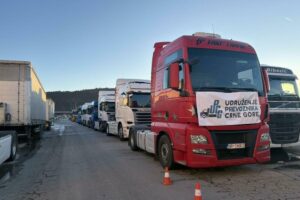
According to The Serbian Economist, Serbian truckers, together with their colleagues from Montenegro, Bosnia and Herzegovina, and North Macedonia have announced their intention to begin blocking freight border crossings into the European Union starting September 14, 2026, if a solution to the issue of professional drivers’ stay in the Schengen Area has not been found by that time.
This was reported by the Serbian association of international carriers, “Međunarodni transport.” According to the association, drivers from the Western Balkan countries continue to be detained, deported, and turned back at the borders for exceeding the permitted length of stay in the Schengen Area. The association claims that several dozen Serbian drivers are turned back at the borders every day, and there have been more than 50 such cases in the past week alone.
Before the blockade begins, the carriers intend to make one more attempt to reach an agreement with European authorities. On August 31, from 12:00 p.m. to 2:00 p.m., a peaceful protest will take place in Belgrade in front of the EU delegation at 40/V Vladimira Popovića Street. Similar protests are planned in front of the EU delegations in Montenegro, Bosnia and Herzegovina, and North Macedonia.
In addition, another meeting between representatives of the transport companies and the European Commission is scheduled for September 1. If it does not lead to a concrete decision, starting September 14, transport companies from the four countries intend to begin protests at border crossings.
The cause of the conflict is the 90/180 rule in effect in the Schengen Area, under which a third-country national may stay in the Schengen Area for no more than 90 days within any 180-day period. This is sufficient for the average tourist, but international carriers argue that professional drivers are physically unable to make regular trips to the EU under such a restriction.
The rule itself existed previously, but with the introduction of the Electronic Entry/Exit System (EES), enforcement has become significantly stricter. The system automatically records the entries and exits of third-country nationals and, as of April 10, 2026, is fully operational at the external borders of the Schengen Area, with the exception of Ireland and Cyprus. The possibility of “losing” some days between passport stamps has effectively disappeared.
At the same time, the European Commission officially acknowledges the existence of the problem. The EU Visa Policy Strategy, adopted on January 29, 2026, states that a number of mobile professions, particularly truck drivers serving European businesses, may need to stay in several Schengen countries for more than 90 days within a 180-day period.
The European Commission has stated that it will seek a solution, including the possibility of introducing special EU-wide rules regarding extended short-term stays. However, a specific mechanism has not yet been approved.
For Serbia, this issue is particularly acute due to the significant dependence of its exports on road transport to the EU. Carriers warn that some drivers are already refusing to make trips to EU countries.
This will be the second major regional protest by carriers in 2026. Starting on January 26, drivers from Serbia, Montenegro, Bosnia and Herzegovina, and North Macedonia simultaneously blocked freight terminals at the borders with the EU. In Serbia, the protest lasted five days and was called off on January 30 after the European Commission included the issue of professional drivers in its new visa strategy.
The economic impact of the previous blockade was significant. According to estimates by the Serbian Chamber of Commerce and Industry, the restrictions affected about 93% of exports from the four Western Balkan countries, and potential business losses were estimated at up to 92 million euros per day.
For Ukraine, a potential blockade is also significant, although its impact will be considerably less than for Serbia and other Western Balkan countries. The main truck traffic between Ukraine and the EU passes directly through Poland, Slovakia, Hungary, and Romania, so a blockade of the Serbian borders will not halt Ukrainian-European trade.
However, the issue could directly affect Ukrainian trucks traveling to Serbia, Bosnia and Herzegovina, Montenegro, North Macedonia, Albania, and Greece, as well as carriers that use Serbia as a transit country. If the protest follows the January scenario and the Batrovci freight terminal on the border with Croatia, the Horgos terminal on the border with Hungary, the border crossings with Romania, and the Gradina terminal on the border with Bulgaria are blocked, Ukrainian carriers will find themselves in the same lines as other international trucks.
The most vulnerable routes may be those from Ukraine through Hungary or Romania to Serbia and onward to Montenegro, Bosnia, and North Macedonia, as well as transit toward the Adriatic and the southern Balkans. Rerouting cargo through Romania and Bulgaria or other border crossings is not always possible and entails additional mileage, fuel costs, and longer delivery times.
This is a particularly sensitive issue for Ukrainian logistics due to the economy’s heavy reliance on land transport corridors. According to the European Commission, in July 2026, the “Solidarity Lanes”—established after the start of the full-scale war—accounted for approximately 90% of Ukraine’s imports and 95% of its non-agricultural exports, although only a portion of these shipments is related to the Balkan route. Therefore, a strike in the Western Balkans alone is not capable of paralyzing Ukrainian foreign trade, but for companies that work specifically with the Balkans, it could significantly increase logistics costs.
A separate issue concerns Ukrainian professional drivers themselves. Ukraine has a special agreement with the EU on road transport, which has been extended until March 31, 2027. It liberalizes bilateral and transit freight transport and allows Ukrainian carriers to operate within the EU without some of the former licensing restrictions.
However, this agreement primarily regulates carriers’ access to the market, not the length of stay of a specific driver in the Schengen Area. Therefore, a Ukrainian driver entering the Schengen Area as a third-country national on a short-term stay and who does not hold a long-term visa, residence permit, or other relevant status must generally also comply with the 90-day limit within a 180-day period. The European Commission notes that holders of long-term visas and residence permits are not subject to this restriction.
https://t.me/relocationrs/3545



