
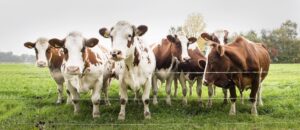
As of August 1, 2026, the cattle herd in Ukraine had decreased by 15,900 head, or 0.9%, compared to July 1—to 1.751 million head, while the number of cows decreased by 8,600 head, or 0.9%, to 932,600 head, according to the Association of Milk Producers (AMP), citing preliminary data from the State Statistics Service (SSS).
Compared to August 1, 2025, the cattle herd decreased by 400,000 head, or 19%, and the number of cows fell by 208,000 head, or 18%.
The industrial sector held 953,000 head of cattle, which is 2,000 head, or 0.2%, fewer than a month earlier, but 29,500 head, or 3%, more than a year ago. The number of cows on agricultural enterprises decreased by 3,800 head, or 1%, over the month—to 392,800 head—but increased by 11,200 head, or 3%, over the year.
Private households kept 798,100 head of cattle, which is 14,000 head, or 1.7%, fewer than a month earlier, and 430,000 head, or 35%, fewer than a year ago. The number of cows in this sector decreased by 5,000 head, or 0.9%, over the month—to 539,800 head—and by 219,000 head, or 29%, over the year.
“The cattle herd in Ukraine, including cows, continues to shrink, primarily due to the decline in the backyard farming sector. The commercial sector increased its cow herd compared to the same period last year. However, farmers sold off part of their cows in July,” the AVM noted.
According to the association, the recovery of the herd is being negatively affected by rising production costs for raw milk, low purchase prices, and the likely increase in feed costs. According to preliminary data from the State Statistics Service, cattle slaughter volumes in January–July 2026 totaled 79.24 thousand metric tons, which is 6% more than last year.
The largest number of cows in the commercial sector were kept in the Poltava region—52,400 head; Cherkasy—46,100; Chernihiv—38,000; Kyiv—35,400; and Khmelnytskyi and Vinnytsia—32,500 head each. In total, these six regions account for about 60% of the cows in Ukraine’s commercial sector.
Farms of all categories produced 3.55 million metric tons of raw milk in January–July 2026, which is 12% less than during the same period in 2025, according to the Association of Milk Producers (AMP), citing preliminary data from the State Statistics Service.
In July, farms of all categories produced 563,700 metric tons of raw milk—0.5% less than in June and 15% less than in July 2025.
Agricultural enterprises produced 281,000 metric tons, which is 0.7% less than in June but 4.5% more than last year, while private households produced 282,700 metric tons, which is 0.2% less than in June and 28.3% less than in July 2025.
Over the first seven months of 2026, commercial dairy farms increased raw milk production by 5%—to 1.93 million metric tons—while private households reduced it by 27%—to 1.62 million metric tons.
“Raw milk production in Ukraine has declined due to the heat, as not all commercial dairy farms have been modernized and equipped with state-of-the-art ventilation systems that allow cows to avoid heat stress. The hot weather led to a 10–15% decline in raw milk production at many farms,” the AVM explained.
In January–July 2026, approximately 54% of raw milk was produced by agricultural enterprises in five regions: Poltava, Cherkasy, Khmelnytskyi, Chernihiv, and Vinnytsia.
The AVM noted that in January–July, agricultural enterprises accounted for 54% of raw milk production, while private farms accounted for 46%.
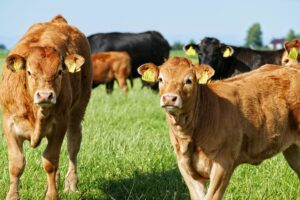
As of July 1, 2026, the cattle herd on agricultural enterprises in Ukraine had increased by 4% compared to the same date last year—to 955,200 head, while on private farms it decreased by 35%—to 811,800 head, according to the Association of Milk Producers (AMP), citing preliminary data from the State Statistics Service (SSS).
According to State Statistics Service data, as of July 1, 2026, there were 1.767 million head of cattle in Ukraine, including 941,200 cows.
About 54% of the cattle herd was kept on agricultural enterprises, and another 46% on private farms.
Agricultural enterprises had 396,600 cows, which is 4% more than a year ago, while the number of cows on private farms decreased by 29% to 544,600 head.
“The cow herd is shrinking mainly in the backyard farming sector but remains relatively stable in the commercial sector. The decline in the cattle herd is a long-standing problem in Ukraine due to the lack of an effective government program to support dairy farming. Since 2014, the cow herd in the commercial and backyard farming sectors has nearly halved, and the situation has been further exacerbated by Russia’s full-scale invasion and unfavorable market conditions,” the AVM emphasized.
The association noted that the recovery of the herd is being negatively impacted by low milk purchase prices, rising production costs, the relocation of farms from frontline regions, and adaptation to EU environmental and phytosanitary requirements.
According to the AVM’s assessment, without the modernization of dairy processing plants and an increase in purchase prices, there is a risk of a further reduction in the herd size, as farmers are increasingly selling their livestock amid high global beef prices.
According to the State Statistics Service, the largest herds of dairy cows in the commercial sector are concentrated in Poltava Oblast—52,800 head, Cherkasy Oblast—46,000 head, Chernihiv Oblast—38,800 head, Kyiv Oblast—35,600 head, and Vinnytsia Oblast—33,000 head. In total, these five regions account for about 52% of Ukraine’s commercial cow herd.
CATTLE, Cow, FARM, livestock farming, State Statistics Service

The agro-industrial holding “Astarta” has modernized one of the largest livestock complexes in the Khmelnytskyi region by installing a state-of-the-art 40-head milking carousel, the company’s press service reported on Facebook.
“Dairy farming remains one of Astarta’s strategic areas of development… In the last 2.5 years alone, investments in the dairy segment have exceeded 1 billion hryvnia,” the press service quoted Viktor Ivanchik, CEO of the agribusiness holding, as saying.
According to the press service, investments are being made in farm modernization, technology, and production quality, resulting in market leadership in industrial milk production and 99% of milk being of extra-class quality.
According to the company, the complex is designed to house 2,000 head of cattle.
The modernization project involved upgrading production facilities with a focus on improving animal welfare, production efficiency, and the potential for further expansion.
The company noted that the modernization is part of the holding’s infrastructure program, which also includes the implementation of digital technologies in livestock farming, improving the energy efficiency of farms, and enhancing the genetics of the herd.
“Astarta” is a vertically integrated agro-industrial holding operating in seven regions of Ukraine and is the country’s largest sugar producer. The company’s portfolio includes five sugar refineries, agricultural enterprises with a land bank of 214,000 hectares (including 129,000 hectares in Poltava Oblast, 42,000 hectares in Khmelnytskyi Oblast, and 16,000 hectares in Vinnytsia Oblast), and 26 dairy farms with 29,000 head of cattle across three regions. The holding company also operates a soybean processing plant and a bioenergy complex in Poltava Oblast, as well as a network of six grain elevators.
Astarta’s net profit for 2025 fell 4.2-fold to $19.94 million, while consolidated revenue decreased by 23% to $472 million.
Revenue from the livestock segment last year amounted to EUR56 million, and the average annual livestock headcount increased by 5% to 29,000.
Milk sales volumes rose by 6% year-over-year to 122,000 metric tons. At the same time, 99% of the raw milk was classified as extra-quality milk, compared to 97% in 2024.
The agricultural holding “TAS Agro” plans to invest approximately $15 million over the next three years in modernizing dairy farms to bring them into compliance with EU standards, the company’s CEO Oleg Zapletnyuk said in an interview with Delo.ua.
The CEO of the agricultural holding clarified that TAS Agro is concentrating its livestock operations in the Vinnytsia region, where it is completely rebuilding a farm, increasing the number of stalls, and implementing loose housing for livestock.
“The total investment amount is approximately $15 million over the next three years. We are investing in this step by step. This primarily concerns cows. Our goal is to transform outdated livestock farming into a highly productive sector, increase its efficiency, improve livestock housing conditions, and enhance the quality of meat and dairy products,” Zapletnyuk said.
The company’s CEO noted that the strategic plan calls for expanding the land bank from the current 80,000 hectares to 100,000 hectares by the end of 2026.
“Strategically, we plan to increase our land bank to 100,000 hectares. We are currently considering certain assets; if we manage to finalize the purchase by the end of the year, that will bring us to about 100,000 hectares. The next step is to increase it to 120,000 hectares, but that is by 2028,” he said.
Assessing the financial results, the company’s CEO noted that TAS Agro’s net profit for 2025 is expected to be in the range of $20–22 million.
“In 2025, the company’s net profit was in the range of $20–22 million, but we have not yet sold part of our production. As of today, we have effectively sold the wheat, but we have not yet updated the key financial indicators. Estimated at $20–22 million, this is actually 10% more than we had budgeted,” he emphasized.
Zapletnyuk attributed the decline in profitability compared to 2024 (over $25 million) to drought in some of the regions where the company operates and the drop in global prices for agricultural products.
Last year, the holding exported approximately 270,000 tons of agricultural products, with exports accounting for about 60% of total production. The primary destination was the EU, which received 49% of all shipments. Additionally, 25% of exports went to North African countries, 19% to Asia, and 4% of the products were sold in Middle Eastern markets. At the same time, sunflower seeds, as well as a significant portion of soybeans and rapeseed, are processed domestically at partner plants for the subsequent sale of finished products.
The TAS Agro agricultural holding was established in 2014. It cultivates approximately 80,000 hectares across six regions of Ukraine. Its specialization is crop production and dairy farming (cattle herd—5,500 head). Its grain storage capacity is 250,000 tons. Serhiy Tihipko is the founder of the “TAS” group and the beneficiary of the agricultural holding.
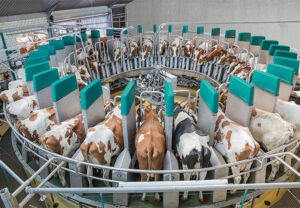
Ukrainian Dairy Company (UMK, Kyiv region) will begin construction of the first phase of the world’s largest robotic farm for group milking in 2026, according to a press release from equipment supplier GEA.
According to the report, the project involves the launch of 60 milking robots, 24 of which will be put into operation in the first phase. A special feature of the complex will be the use of batch milking technology (automated group milking – IF-U), which combines loose housing with automated milking.
“This is a unique project not only for Ukraine but also for the global dairy industry in terms of its scale and the number of innovative solutions implemented. Milking will be performed by DairyRobot R9650 robots manufactured by the German company GEA Farm Technologies GmbH,” said Alexey Antonov, product manager at GEA Ukraine.
The company emphasized that the introduction of a robotic system will reduce labor costs, avoid risky interaction between staff and animals, and ensure individual feeding for each cow. Most of the technological equipment will be located in the basement under the robots, which will minimize the impact of maintenance on the milking process.
Ukrainian Dairy Company LLC (UMK) was founded in 2006. It specializes in the production of extra-class milk based on three branches with a total herd of 12,000 head of cattle (including 4,400 cows). The production capacity of the enterprise is 170 tons of milk per day. The company’s land bank is 11,000 hectares. A biogas station for organic waste disposal and energy generation operates on the farm’s territory. The enterprise has the status of a special raw material zone for the production of baby food. The ultimate beneficiary of the company is Vitaliy Haiduk.
GEA Group AG (Germany) is one of the world’s largest suppliers of systems and technological solutions for the food, pharmaceutical, and dairy industries. GEA has been operating in Ukraine for over 25 years. The group has two local offices in Ukraine, a service department, and a spare parts warehouse.



