
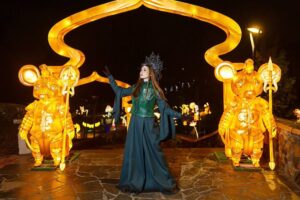
The Spotlight International Light Art Festival will take place in Bucharest from October 9 to 11, 2026, bringing together artists and art studios from seven countries. The 10th anniversary festival will transform the central street of Calea Victoriei into a large-scale gallery of light and digital art.
Sixteen artists from Romania, Switzerland, France, Australia, Italy, Austria, and the United Kingdom will participate in Spotlight 2026. They will present 19 projects, including interactive light installations, new media art, immersive projects, and large-scale video mapping.
The theme of the tenth Spotlight will be “Playground.” According to the organizers’ vision, the city center will be transformed into a space for experimentation, where visitors interact with light, architecture, and new technologies, and familiar buildings and public spaces take on a completely different visual appearance.
Calea Victoriei will traditionally serve as the central venue. In 2026, the route has been expanded—it will run from the Radisson Blu Hotel to the intersection of Calea Victoriei and Splaiul Independenței. Individual events will also take place at ARCUB, Hanul Gabroveni, Mega Mall, and Promenada Mall. The total area of the festival space on Calea Victoriei will exceed 7,000 square meters.
One of the highlights of the program will be six large-scale video-mapping shows. Projections will appear on the facades of the Odeon Theater, the Telephone Palace, the Novotel Hotel, the National Military Club, the Corinthia Grand Hotel du Boulevard Bucharest, and the National Museum of Art of Romania.
Another 13 immersive installations will be placed along Calea Victoriei. Some of them will respond to visitors’ movements, blending the city’s physical space with digital images and lighting effects.
The scale of the festival can also be gauged by its technical specifications. Spotlight will require over 300 metric tons of equipment, 11 projection structures and towers, 20 laser video projectors, and over 200 light sources. Kilometers of cable and fiber-optic lines are also being used to set up the light installations.
Spotlight has been held in Bucharest since 2015 and was the first light art festival of this scale in Romania. According to the organizers, the event attracts over 300,000 visitors annually. The festival is organized by the Bucharest City Hall through the ARCUB Municipal Cultural Center.
In this anniversary year, Bucharest will also host the annual meeting of the International Light Festivals Organisation (ILO). On October 10, leaders and representatives of international light festivals, artists, and industry experts will gather at ARCUB—Hanul Gabroveni. Concurrently, on October 10–11, Spotlight Talks will take place under the theme “Light, Art & the City,” where, among other topics, the use of artificial intelligence in light installations will be discussed.
The festival will open on October 9 at 9:00 p.m. and run until 11:00 p.m. On October 10 and 11, the installations will be on view from 7:00 p.m. to 11:00 p.m. Admission to Spotlight 2026 is free.
Ukraine has been named the Guest of Honor at the 24th Pisa Book Festival, which takes place October 2–4 in Pisa, Italy.
“This year’s guest country is Ukraine, which is presenting a rich and diverse program covering literature, history, and art, organized under the patronage of the Ukrainian Embassy in Rome,” the festival states on its website.
In particular, the festival will feature writer Andriy Kurkov, as well as writers and translators Olena Kostyukovych, Yaryna Hrush, and Olena Ponomariova.
As part of the program dedicated to Ukraine, an exhibition of Ukrainian illustrators titled “Yellow and Blue” is on display at Palazzo Blu through January 10, 2027.
In total, this year’s festival features 90 booths from Italy’s leading independent publishers, as well as professional meetings with editors, translators, and distributors.
Over 100 events are scheduled as part of the festival, which will welcome more than 200 guests.
The festival was founded in 2003 to support independent Italian publishers.
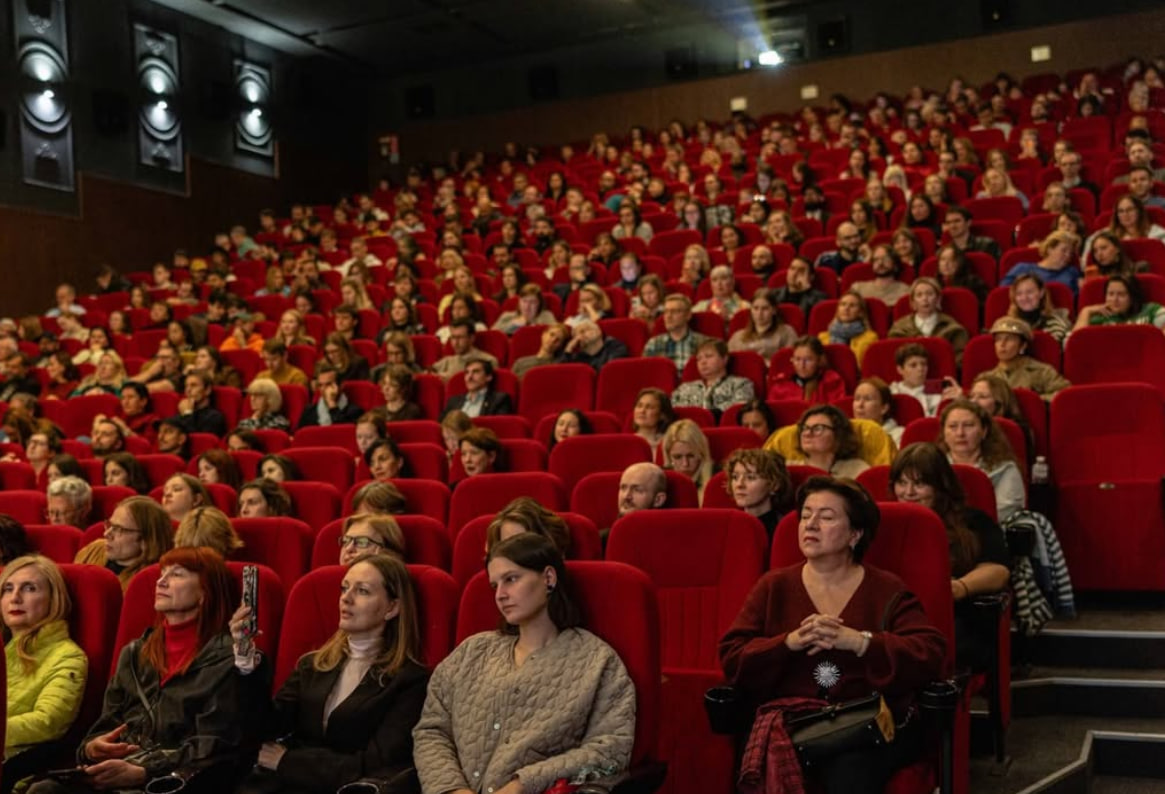
The SEPTEMBER FEST 2026 urban festival, previously scheduled for September 18 at the A-STATION venue in Kyiv, has been rescheduled for November 5, 2026. The event will take place at the “Parkovy” Exhibition and Convention Center in conjunction with the UBC Congress in the format of SEPTEMBER FEST + UBC, according to the DMNTR media group, which is organizing the festival.
The decision to reschedule was made following the introduction of new restrictions in Kyiv on mass gatherings due to the deteriorating security situation.
On September 7, the Kyiv Defense Council voted to temporarily ban entertainment and sports events in open areas, as well as in buildings and structures lacking shelters capable of accommodating the expected number of participants. The new rules take effect at 12:00 a.m. on September 10, the Kyiv City State Administration announced on September 9.
“In light of the decision by the Kyiv Defense Council and the announcement by Mayor Vitali Klitschko, starting September 10, entertainment and mass events in open areas and in premises without appropriate shelters are temporarily prohibited in the capital. Therefore, we are postponing the September Fest urban festival to November 5 and will hold it jointly with the UBC Congress at the “Parkovy” Exhibition and Convention Center—in the format of SEPTEMBER FEST + UBC,” the organizers announced.
According to DMNTR, the festival’s announced program, speakers, and concert lineup remain unchanged.
SEPTEMBER FEST 2026 was previously planned as an open-air event. The festival is positioned as a professional platform for representatives of the development sector, architecture, city governments, investment companies, and related industries. Over 150 speakers were announced for the professional program.
Key topics of the event include the development of Ukrainian cities, architecture and real estate development during the war, post-war reconstruction and revitalization of territories, investments in real estate and infrastructure, the labor shortage in construction, the digitalization of the industry and BIM technologies, energy independence, the design of public spaces, and the creation of a modern urban environment.
Previously announced international participants in the professional program include Christos Passas, Design Director at Zaha Hadid Architects; British industrial designer Ross Lovegrove; and German designer Konstantin Grcic. The Ukrainian portion of the program will feature developers, architects, investors, mayors, and chief city architects, as well as representatives of government agencies and industry organizations.
The organizers expect that combining SEPTEMBER FEST with the UBC Congress will allow them to preserve the professional and cultural components of the festival in a new, safer format and bring together representatives of the development, architectural, investment, and urban communities under one roof.
The general sponsors of SEPTEMBER FEST + UBC are A Development and “Creator-Bud.” The organizer is the DMNTR media group.
The new date is November 5, 2026.
Venue: “Parkovy” Exhibition and Convention Center, Kyiv.
Additional information from the organizer: 077 777 25 47.
“Interfax-Ukraine” and Open4Business are the official media partners of SEPTEMBER FEST 2026.
Official announcement from the Kyiv City State Administration regarding restrictions on mass events dated September 9, 2026: Kyiv City State Administration
ARCHITECTURE, DEVELOPMENT, DMNTR, FESTIVAL, KYIV, SEPTEMBERFEST
SEPTEMBER FEST 2026, Ukraine’s largest urban festival dedicated to urban development, contemporary architecture, real estate development, design, culture, and the quality of urban life, will take place on September 18 in Kyiv at the A-STATION venue.
According to the event organizers, the festival will run from 11:00 a.m. to 9:00 p.m. Entry to the A-STATION grounds will be via the Mykilski Gates near the “Arsenalska” metro station.
SEPTEMBER FEST 2026 is expected to attract about 3,000 visitors and over 150 speakers. Invited participants include mayors of Ukrainian cities, chief architects, representatives of real estate development companies and investment funds, architectural firms, designers, government officials, international experts, and specialized media outlets.
The festival’s main themes will include the development of Ukrainian cities, modern approaches to architecture and urban planning, real estate development, investments in real estate and urban infrastructure, the design of public spaces, culture, and the creation of a comfortable urban environment.
The organizers position SEPTEMBER FEST as a professional platform for dialogue among representatives of government, business, and the architectural and real estate development communities, as well as for discussing the future of Ukrainian cities and projects for their revitalization and development.
Basic admission to the festival is free upon prior registration.
SEPTEMBER FEST 2026 is organized by DMNTR, with A Development serving as the general partner.
Open4business is the official media partner of SEPTEMBER FEST 2026.
ARCHITECTURE, DEVELOPMENT, DMNTR, FESTIVAL, KYIV, SEPTEMBER FEST 2026, urban planning
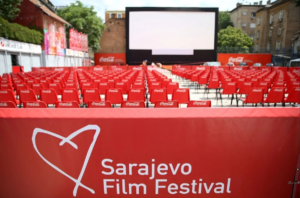
According to “The Serbian Economist”, Sarajevo is hosting the 32nd Sarajevo Film Festival, which over three decades has evolved from a festival founded during the city’s siege into one of the leading film platforms in Southeast Europe.
The festival runs from August 14 to 21, 2026. Its program features over 250 films, with participants hailing from approximately 70 countries and territories. Fifty-one films are competing for the top prize, the “Heart of Sarajevo,” across four competition sections. Among them are 21 world premieres, six international premieres, and one European premiere.
A distinctive feature of the Sarajevo Film Festival is its strong regional focus. The official competition section includes 21 countries: Albania, Armenia, Austria, Azerbaijan, Bosnia and Herzegovina, Bulgaria, Croatia, Cyprus, Georgia, Greece, Hungary, Kosovo, Malta, Moldova, Montenegro, North Macedonia, Romania, Serbia, Slovenia, Turkey, and Ukraine.
But the actual geographical scope is much broader. Thanks to international co-productions, the program also features films made in collaboration with France, Germany, the United Kingdom, Italy, the Netherlands, Denmark, Iran, Qatar, and other countries.
The festival opened with the film *Fatherland* by Polish director Paweł Pawlikowski, a co-production of Poland, Germany, Italy, and France. Among this year’s distinguished guests are British actress Emily Watson, Mexican actor and director Diego Luna, Iranian director Asghar Farhadi, and Woody Harrelson.
In addition to regular film screenings, the Sarajevo Film Festival has long served as a major business platform for the film industry. As part of the CineLink Industry Days, there are presentations of new projects, as well as meetings between directors and producers and funding organizations, distributors, and potential investors.
Why this festival is special. The Sarajevo Film Festival was launched in 1995, during the siege of Sarajevo. It was founded by Obala Art Centar as an effort to preserve the city’s cultural life amid the war. The first festival became a symbol of the city’s return to normal life.
Over the next three decades, it has evolved into one of the Balkan region’s leading film festivals and a platform through which regional cinema enters the European market. That is why, in August, Sarajevo effectively becomes one of the region’s cultural capitals: it attracts not only actors and directors, but also producers, film distributors, representatives of international foundations, and streaming platforms.
The festival will conclude on August 21.



