
Total drug sales at gas stations accounted for less than 0.1% of the retail market; experts surveyed by Interfax-Ukraine believe this segment has a negligible impact on the retail pharmaceutical market.
“As of today, 260 licenses have been issued, with more than a third of them in Kyiv and the surrounding region. This accounts for 1% of the total number of pharmacies on the market. These are more like pharmacy kiosks than pharmacies at gas stations,” said Iryna Horlova, CEO of the analytical and consulting firm Support in Market Development (SMD).
She noted that the law permits these retail outlets to sell only a specific list of limited over-the-counter medications, primarily pain relievers, nasal drops, and cold remedies.
“Since this accounts for 1% of the total number of pharmacies and potentially about 0.05% of the pharmaceutical market’s turnover, the opening of these pharmacies has had no impact and will have no impact on the country’s pharmaceutical market,” she said.
At the same time, Gorlova noted that “prices are regulated by law.”
“Last year, the National Price Catalog was introduced, which sets a price cap for each registered drug item; pharmacies are not allowed to sell it for more than that. Therefore, prices at gas station pharmacies cannot be higher than at regular pharmacies and will not affect price changes in any way,” she said.
At the same time, according to Gorlova, despite the fact that “this initiative brings Ukraine closer to other developed countries where the sale of medicines at gas stations is permitted, unfortunately, these initiatives will not help make medicines more accessible to rural regions, as was intended, but will increase their accessibility and convenience for drivers and their passengers.”
For his part, Dr. Serhiy Sur, a pharmaceutical scientist, also noted that “the authorization to sell medicines at gas stations has not yet had any impact on the market.”
“According to results from April 2026, medicines were sold at only 260 gas stations, and the total volume of sales amounted to just 354,000 UAH. The average turnover per location was 4,700 UAH per month. For comparison, sales of over-the-counter medicines in the retail market (across 18,000 pharmacies) totaled 5.167 billion UAH as of April 2026. Accordingly, the average turnover for this category of drugs per pharmacy was approximately 283,000 UAH per month. In other words, sales of over-the-counter drugs at gas stations as of April 2026 accounted for less than 0.007% of their sales in pharmacies,” he said.
According to Sura’s estimates, the sale of medicines at gas stations also did not affect pharmaceutical manufacturers’ product ranges due to insignificant sales volumes. “Drug manufacturers have no need to change their product ranges for this sales channel,” he said.
At the same time, he noted that there is currently no available analytical data on price differences for the same drugs at gas stations and in pharmacies, but the cost of drugs at gas stations, just as in pharmacies, must not exceed the maximum retail prices listed in the National Price Catalog.
“Theoretically, expanding the channel for selling medicines at gas stations could create additional opportunities for patients to access over-the-counter drugs, especially in certain situations—while traveling or outside standard pharmacy hours. At the same time, from a practical standpoint, one should not expect this channel to drive significant sales growth compared to volumes sold through the pharmacy network. Gas stations will remain a niche channel with a limited product range and a specific consumption model. Thus, this can only be seen as a selective addition to the existing sales structure, rather than a significant transformation of it,” he concluded.
Sur also noted that “there is no uniform approach to the sale of medicines at gas stations across EU countries”: in some countries, their sale is permitted only through pharmacies, while others allow sales outside of pharmacies, specifically at gas stations. However, this applies exclusively to a limited list of over-the-counter medications, typically intended for treating mild conditions that do not require complex diagnosis and pose a low risk to the patient’s health. Furthermore, such activities are accompanied by regulatory safeguards: the establishment of special lists, requirements for storage conditions, as well as personnel standards.
International experience, particularly in EU countries such as France and Austria, shows that the range of permitted over-the-counter medications at gas stations is quite limited—approximately 30–50 items. These are medications in small packages (2–4–6 tablets or capsules) and in standard but low dosages, for example, ibuprofen 200 mg.
GAS STATIONS, MEDICINES, over-the-counter drugs, PHARMACEUTICAL MARKET, PHARMACIES
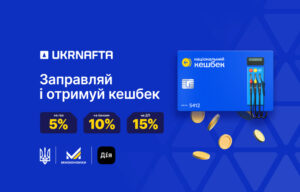
UKRNAFTA was the first to join the government’s fuel cashback support program.
Starting today, at all 660 gas stations in the network, customers will be able to receive:
15% cashback on diesel;
10% on gasoline;
5% on LPG.
Funds will be credited to a card registered in the state “National Cashback” program.
The maximum cashback amount for fuel is up to 1,000 UAH per person per month.
Accrued funds can be viewed in the Diya app. Payments are made by the end of the month following the purchase.
Fuel cashback is part of the government’s support for Ukrainians in response to rising oil prices due to hostilities in the Middle East.
The program will run until May 1.
JSC “Ukrnafta” is Ukraine’s largest oil producer and operates the country’s largest national network of gas stations—UKRNAFTA. In 2024, the company entered into an asset management agreement with Glusco. In 2025, it finalized a deal with Shell Overseas Investments BV to purchase the Shell network in Ukraine. In total, it operates 660 gas stations.
The company is implementing a comprehensive program to resume operations and modernize the format of gas stations in its network. Since February 2023, it has been issuing its own fuel vouchers and “NAFTACard” cards, which are sold to legal entities and individuals through Ukrnafta-Postach LLC.
The largest shareholder of Ukrnafta is Naftogaz of Ukraine with a stake of 50% plus one share.
In November 2022, the Supreme Commander-in-Chief of the Armed Forces of Ukraine decided to transfer to the state the share of corporate rights in the company that belonged to private owners, which is now managed by the Ministry of Defense.
The Parallel gas station chain (AZK) Parallel reported a net profit of UAH 165,875,000 in 2025, which is 7.14 times higher than the corresponding figure for 2024 (UAH 23,212,000), according to a company statement provided to the Energoreformi online portal by the press service.
According to the report, net profit in 2023 was a loss of 978,000 UAH.
Meanwhile, the company’s revenue in 2025 was 11,179,677 thousand UAH, in 2024 – 8,750,387 thousand UAH, and in 2023 – 4,830,609 thousand UAH. The company forecasts revenue of nearly UAH 13,917,547 thousand for 2026.
Profitability increased from minus 0.02% in 2023 to 0.27% in 2024 and 1.48% in 2025.
At the same time, the company’s assets, as well as its liabilities, decreased. In 2024, assets amounted to nearly 6.8 billion UAH, and in 2025—4.08 billion UAH; liabilities, respectively, were 6.3 billion UAH and 3.5 billion UAH.
For 2025, the company reports more than double the growth in pre-tax wages compared to 2024—21,600 UAH versus 10,100 UAH. The lowest salary in the network was in 2022—approximately 5,000 UAH, which is nearly 2.5 times less than the previous year—11,680 UAH in 2021.
According to the company’s data, 454 people were employed in the network in 2025, and 432 in 2024. Revenue per employee amounted to 24.6 million UAH and 20.25 million UAH, respectively.
As reported, the Parallel gas station chain plans to expand its fuel business by 350 gas stations in 2026 and become one of the top five largest retailers of light petroleum products in Ukraine. According to the network’s owner, Oleksandr Dubinin, Parallel plans to invest approximately 2 billion UAH in the network’s development in 2026, time and market conditions permitting. Prior to this, starting in 2022, approximately 350 million UAH was invested in the network’s reconstruction and development.
In an interview with Forbes Ukraine, Dubinin noted that building new stations from scratch during wartime is impossible due to lengthy bureaucratic procedures, obtaining permits, and land allocation, so the company is considering the acquisition of regional networks.
Before the war, the Parallel network comprised 132 gas stations. As a result of the full-scale invasion, Parallel lost or suspended operations at a significant portion of its facilities. As of July 2025, 76 gas stations were reported to be operational across 8 regions.
Parallel is among the top 10 largest Ukrainian fuel importers.
Alexander Dubinin is listed as the sole owner of the network.
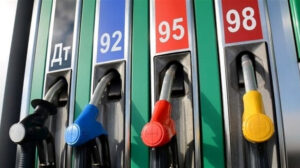
Cashback on fuel of 5-15% will be valid until May 1 at all gas stations that join the program, Prime Minister Yulia Svyrydenko announced.
“Cashback on fuel. When purchasing at a gas station, citizens will be able to receive from the state: 15% cashback on diesel fuel, 10% cashback on gasoline, and 5% cashback on autogas,” Svyrydenko wrote on Telegram following the results of a government meeting on Thursday.
According to her, cashback on fuel will be valid until May 1 at all gas stations that join the program, and payments will be made on the basis of the National Cashback program, which is already used by 9.4 million citizens.
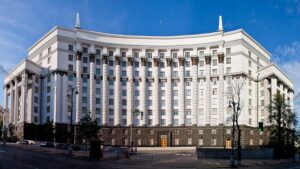
The Cabinet of Ministers has authorized the sale of over-the-counter drugs at gas stations, provided that the appropriate license is obtained, according to Health Minister Viktor Lyashko.
“We have authorized the sale of over-the-counter drugs at gas stations, provided that the appropriate license is obtained. This applies to situations where there are no pharmacies nearby: in villages, in frontline communities, or late at night outside of large cities. We are only talking about safe, over-the-counter drugs that people use on their own. In wartime, this is especially important, as gas station chains often remain operational even during power outages. The requirements for sales at gas stations ensure the quality and safety of medicines. This will help lower prices and make medicines more affordable,” he wrote on Facebook.
According to him, the government has also made a number of decisions, in particular, pharmacies in state and municipal hospitals are required to sell only the three lowest-priced drugs from the National Catalog among drugs with the same composition and effect.
In addition, specialists with a broader range of qualifications, as defined by law, can now be employed in pharmacies and pharmacy outlets.
“In rural areas and frontline communities, medicines can be dispensed in pharmacies (without manufacturing) by specialists with at least a junior bachelor’s degree in nursing and a certificate in pharmacy (retail sale of medicines). This allows pharmacies to build more effective teams, especially in communities with staff shortages, while ensuring the quality and safety of pharmaceutical care for patients,” Lyashko wrote.
In addition, the government has regulated the rules for providing marketing services in the pharmaceutical sector.
“This refers to transparent tools for promoting drugs at points of sale: providing information, placing materials, or participating in loyalty programs. The launch of the National Price Catalog makes it impossible to use marketing as a tool for covertly increasing the cost of drugs—the declared prices are fixed, and promotion becomes a mechanism for informing and increasing accessibility for patients,” the minister noted.
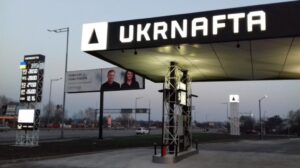
UKRNAFTA, Ukraine’s largest network, has completed the rebranding of petrol stations that previously operated under the Shell brand, which is an important step for the company and the development of its retail infrastructure.
“The completion of the Shell rebranding is another important step in the formation of a modern, efficient, and competitive UKRNAFTA network,” Ukrnafta JSC said in a press release on Friday.
The stations have undergone a complete rebranding, including the interior, exterior, identity, retail space, and zoning. All gas stations have been brought up to UKRNAFTA’s uniform standards for floor plans, layout, service processes, and category management. The customer journey has been unified, coffee and food areas have been revamped, service has been standardized, etc.
“Today, all 663 UKRNAFTA gas stations operate as a single operating system — the largest fuel retail network in Ukraine,” the company noted.
Ukrnafta, in particular, has significantly strengthened its presence on key highways, in Kyiv, and in strategically important regions.
The company claims that stations that have undergone the transformation from Shell to UKRNAFTA are already showing growth in fuel sales and significant growth in non-fuel product groups, such as food, coffee, and non-food items.
“Today, UKRNAFTA is the most dynamically growing network of gas stations in the country: it is already in the top three in terms of fuel sales and is moving towards a leading position,” the statement said.
Full standardization makes the retail direction more structured and predictable in terms of operations and economic indicators, the company notes.
As reported, in January 2025, the Antimonopoly Committee of Ukraine granted PJSC Ukrnafta permission to purchase more than 50% of the shares of Alliance Holding LLC, which operates the Shell gas station network in Ukraine.
The joint venture between Shell and Mussa Bazhaev’s Russian Alliance Group to manage the gas station network in Ukraine began operations in August 2007. Shell owned a 51% stake in the joint venture, while Alliance owned 49%. Alliance transferred about 150 gas stations to the joint venture, while Shell contributed cash, licenses, and the brand.
In 2014, it became known that sanctioned Russian businessman Eduard Khudainatov had bought Bazhaev’s oil assets. In June 2022, he was sanctioned by the European Union, and in October 2022, by Ukraine.
In October 2023, the Ukrainian Ministry of Justice filed a lawsuit with the High Anti-Corruption Court of Ukraine to recover Khudainatov’s assets for the state. As a result of the proceedings, 49% of Alliance Holding was recovered for the state. In April 2024, this share was transferred to the State Property Fund.
In November 2024, Overseas Investments, part of the Shell group of energy and petrochemical companies, registered 51% of the authorized capital of Alliance Holding in accordance with the decision of the Appeals Chamber of the High Anti-Corruption Court.
Ukrnafta JSC is Ukraine’s largest oil producer and operator of the largest national network of gas stations, UKRNAFTA. In 2024, the company entered into an asset management agreement with Glusco. In 2025, it completed a deal with Shell Overseas Investments BV to purchase the Shell network in Ukraine. In total, it operates 663 gas stations.
The company is implementing a comprehensive program to restore operations and update the format of its network of gas stations. Since February 2023, it has been issuing its own fuel vouchers and NAFTAKarta cards, which are sold to legal entities and individuals through Ukrnafta-Postach LLC.
The largest shareholder of Ukrnafta is Naftogaz of Ukraine with a 50%+1 share. In November 2022, the Supreme Commander-in-Chief of the Armed Forces of Ukraine decided to transfer to the state the corporate rights of the company that belonged to private owners, which is now managed by the Ministry of Defense.



