
The consumption of antibiotics for some groups in Ukraine has grown 5-6 times, Minister of Health Maksym Stepanov said during a press briefing in Kyiv on Wednesday.
At the same time, the minister noted that the situation is under control.
“The consumption of antibiotics in Ukraine has grown by 5-6 times for some groups. I held meetings with pharmaceutical companies, we have a controlled situation, medical institutions are provided with a two-three-month supply of antibiotics,” he said.
In the modern world of rapid technological development, you need to do a lot to be successful and stay in the top. It is especially important to know how to stay healthy and enjoy a fulfilling life, be productive and push yourself beyond limits.
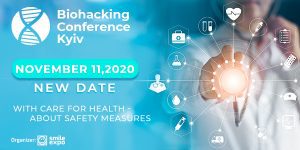
Answers to the most topical questions about upgrading the body and mind will be given at the first Biohacking Conference Kyiv, dedicated to innovative ways of improving health and prolonging youth. Organized by Smile-Expo, the event will take place on November 11, 2020.
Leading experts from various industries will speak at the event: doctors, scientists, gerontologists, biohackers and many others. Among them:
– Oleksandr Kolyada – geneticist, research associate at the lab of epigenetics at the Institute of Gerontology, founder of DIAGEN lab.
– Lyudmyla Goncharova – dietarian, immunologist, two-time winner of The Battle of Nutritionists TV show on STB, founder of Goncharova Clinic.
– Oleksandr Skorokhod – Candidate of Biological Sciences, research worker at the Department of signaling cell systems at the Institute of Molecular Biology and Genetics at the National Academy of Sciences of Ukraine.
– Hlib Khodorovskyi – meditation expert, experienced mindfulness trainer.
Experts will delve into the main biohacking tools and explain the interrelation of dieting and longevity. Separately, speakers will discuss how genetic researches help to detect health risks, determine parameters of food digestion, and draw up a disease prevention program. In addition, the reports will focus on a safe approach to sports training, the benefits of mindfulness meditations and health management intended to improve productivity in all areas of life.
About safety measures at the conference
To protect guests, speakers, participants, and sponsors of the event against catching coronavirus, Biohacking Conference Kyiv will adhere to all the requirements of the Ukrainian government and the Ministry of Healthcare aimed to prevent the spread of COVID-19.
The following preventive measures will be taken at event, among others:
– Admission to the event is allowed only in a protective face mask or respirator.
– Temperature screening at the entrance.
– Availability of antiseptics in the premises, where the event will take place.
– The number of conference attendees is restricted according to the requirements of the Ministry of Healthcare.
– The distance between chairs for guests will be at least 1.5 meters.
Organizer and venue
The event is organized by the international Smile-Expo company, which specializes in industry events dedicated to innovations.
Biohacking Conference Kyiv will be held at Oasis conference hall on November 11.
More info and registration: kyiv.biohacking.events
Interfax-Ukraine – General News Partner of the event.
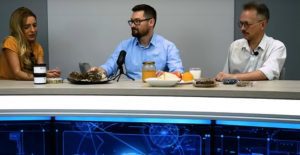
In the second part of an educational video made by the Expert Club about nutrition, veganism and vegetarianism, Doctor of Biological Sciences Sviatoslav Morozov and healthy nutrition expert Veronika Vero, who promotes vegetarianism, analyzed staple food that is traditionally consumed by Ukrainians.
The experts came to the conclusion that consumption of sausages and sausage products, as well as cakes, some sorts of sweets and canned herrings could be harmful. They also recommended to eat more fruit and vegetables, as well as limit consumption of bread, flour products and bacon.
Honey, dried fruit, raisings, seasonal fruit and vegetables were highly recommended by the experts.
In addition, the experts cast doubt on benefits from regular consumption of dairy products since quality of the raw material (milk) raises questions, while lactose intolerance among many people makes consumption of such products even detrimental.
Doctor of Biological Sciences Sviatoslav Morozov said that food producers aspire to reduce their products’ cost value and often ignore the harm they may cause to consumers’ health.
Otherwise, they will be simply unable to withstand the market competition.
“Speaking about monotonous diet for farm animals and various chemical additives, they are used not to poison consumers. Nobody pursues such a goal. The task is different – to cut the cost value and make products with a very long shelf life, while it is a big question whether this is useful or at least safe for human body,” Morozov said.
The full video is available on the Expert Club YouTube channel
Veronika Vero, a vegetarian and healthy nutrition expert, spent more than eight years of training at the research and development center. She is the author of several programs, seminars, as well as physical, mental and energy retreats.
Sviatoslav Morozov is a scientist with 30 years of experience, a Doctor of Biological Sciences and the author of a series of trainings, titled “Survival in a Megalopolis.”
EXPERT, EXPERT CLUB, HEALTH, HEALTHY NUTRITION, MAXEVENTS, VEGETARIANISM
The Health Ministry of Ukraine has allowed clinical testing of four domestic medicines with the aim of studying their effectiveness for patients diagnosed with coronavirus (COVID-19).
These medicines include Amizon Max, Amixin IC, Bioven and Corvitin, Health Minister of Ukraine Maksym Stepanov said during a press briefing on Monday.
“Some clinical trials are at the final stage. As soon as results are obtained, conclusions on a possibility of using these medicines for treatment of the coronavirus disease will be made,” the ministry said.
The Health Ministry also monitors the information about the development of COVID-19 vaccines in the world. There is no such vaccine at the moment. AstraZeneca has announced its plans to produce the vaccine. Four countries (Germany, France, Italy and the Netherlands) have created an alliance and preordered the vaccine.
“Ukraine has also addressed these countries with a request for putting our country on the priority list for obtaining the vaccine when it appears,” the ministry said.

Nowadays fast food is an unavoidable part of nutrition of an average urban resident. It is being promoted by aggressive advertising of fast food restaurant chains whose main task is to attract as many customers as possible and increase sales. The hidden side of such policy is addiction of a large number of people to ill-balanced and unhealthy nutrition, which, in turn, causes general health deterioration and even dangerous diseases.
Doctor of Biological Sciences Sviatoslav Leonov, who is also a healthy nutrition expert, in his commentary to the Expert Club YouTube channel spoke about the most popular products sold by the largest fast food restaurant chains, giving detailed description of each of them in terms of the contents of various harmful substances in them.
According to the expert, almost all fast food products contain transfat and are high in calories. Consumption of such food causes obesity and other bad consequences.
“Hamburgers, for example, often contain flavor intensifiers. It’s quite simple: you ate it, you enjoyed it, and you felt full-bellied. That’s how a habit is formed which enhances the likelihood of the fact that the customer will buy more and more,” Leonov said.
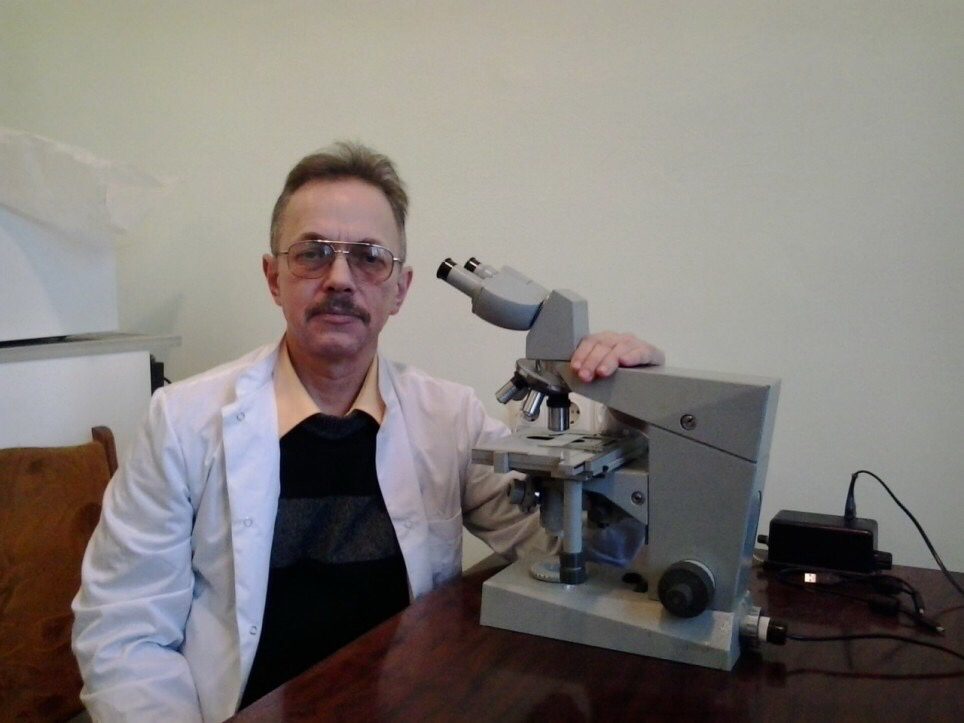
According to the expert, margarine is often used in fast food as its cost value is much lower than that of natural butter or plant oil. Meanwhile, a part of molecules of fat are transformed into the so-called transfat, which in high amounts is extremely dangerous for human health.
The expert also said that beverages proposed to fast food consumers are rich in carbohydrates which are accumulated in human body and build up excess weight, while desserts, including milkshakes, create a medium for the development of numerous microorganisms that may cause eating disorders and diarrhea.
The full video is available on the Expert Club channel: https://www.youtube.com/watch?v=Rj3VxYuY-lg
Tags: expert club, expert, healthy diet, nutrition, fast food, unhealthy eating, transfat, hamburger
The flow of health tourists from Ukraine to Germany grows by some 15-20% every year, and the sharp growth was seen after the introduction of visa-free regime, Director of DeutschMedic GmbH Anna Weegen (Essen, Germany) has told Interfax-Ukraine. “In 2019, it will be the 21st year, as I organize the arrival of patients from the countries of the former USSR for treatment in Germany. According to my observations and according to the press, the flow from Ukraine is increasing annually by 15-20%. A significant jump occurred after the abolition of the entry visas to the countries of the Schengen legislation of the European Union for holders of Ukrainian biometric passports, “she said.
The cheapening of air links between Ukraine and Germany contributes to the increase in the flow of medical tourists, according to the expert. Weegen said that foreign patients can receive almost all the services that modern medicine has in its arsenal in German hospitals, with the exception of only legally regulated features in transplantation and artificial insemination.
In particular, for patients from Ukraine, requests for treatment of oncology are currently the most relevant. Neurology is second, outperforming traditionally high-demand cardiac interventions (electrophysiology, stenting, valve replacement, and aortocoronary shunting), orthopedics is in fourth place, including total joint replacement.
“Practically each of the patients who receive medical services in the above-mentioned disciplines necessarily uses the services of related specialists, and at the end of the treatment – some types of rehabilitation,” the expert said, noting the growing popularity of preventive annual check-ups.
Weegen said that currently there are no legislative acts in Germany prescribing medical institutions to report to any authorities on the number of foreign patients. However, those institutions that have not some foreign patients, “but dozens and hundreds, keep their own internal statistics, which is sometimes shared with the press or economic authorities.”
“In Germany there are almost 2,000 hospitals with a total fund of about 500,000 beds, and 20 million inpatients per year. At the same time, there are hospitals where there have never been foreign patients, but in some clinics the proportion of medical tourists can approach 10% of the total number of patients,” she said.
In this case, medical tourists receive not only inpatient, but also outpatient treatment in Germany, using the services of medical practices, which in Germany are more than 75,000.
“Many foreign patients receive outpatient services in clinics where statistics is not collected by anyone. The same applies to numerous sanatoriums, rehabilitation centers, prosthetic institutes and other institutions,” she said.
According to Weegen, in the coming years, medical tourists will come to Germany, mainly to receive high-tech medical care, in particular, complex surgical or catheter interventions, robot-assisted surgeries, radiation, that is, all that domestic medicine, due to the high cost of technology, has not yet implemented everywhere.”
At the same time, according to the expert, “primary diagnosis is made in the country of residence,” and the patient receives the second opinion in Germany. Then the patient has a surgery in the country of residence. He or she comes to Germany for radiation and chemotherapy, and then continues chemotherapy at the place of residence.
“This approach saves the patient’s time and money and gives him or her access to all the achievements of medical progress without a complete separation from the domestic system,” she said.
Weegen said that the share of health care in Germany is about 11% of GDP, and the share of medical tourism in health care is less than 0.04% of GDP.
According to Weegen, according to very rough estimates, approximately 250,000 foreign patients are treated in Germany annually. At the same time, about half of all medical tourists come from the countries of the former USSR.



