

The winner of the tender to conclude a production sharing agreement (PSA) for the extraction and enrichment of metal minerals within the Dobra lithium deposit (Kirovograd region), will be a consortium led by the Irish company TechMet (Dublin), according to The New York Times, citing two anonymous members of the PSA commission.
“Although (the decision) requires formal approval by the Ukrainian Cabinet of Ministers, officials said the agreement is essentially a done deal,” the newspaper writes.
Interfax-Ukraine has not yet been able to obtain official comment on this information from the Interdepartmental Commission for the Conclusion and Implementation of PSAs, which is headed by Minister of Economy, Ecology, and Agriculture Oleksiy Sobolev.
The agency also contacted the second participant in the tender, European Lithium Ukraine LLC, which, through the Australian company European Lithium Ltd, is a sister company of the American company Critical Metals Corp (CRML), but at this stage, they declined to comment on the NYT information.
The publication notes that the winning consortium has close ties to the administration of US President Donald Trump, as it includes Ronald S. Lauder, a friend of the US president and heir to the Estée Lauder cosmetics company, whom Trump has known since his college days.
TechMet’s largest shareholder is the US International Development Finance Corporation (DFC).
The NYT claims, citing a member of the PPP commission, that the consortium’s proposal is significantly better than the minimum investment of $179 million required by the terms of the tender.
As reported, the opening of the envelopes of the participants in the tender announced in September took place on December 15, 2025. Subsequently, the URPP commission had five days to check the submitted applications for completeness and, by January 12, 2026, to provide the government with substantiated proposals for determining the winner of the tender.
CRML, which is listed on the Nasdaq stock exchange under the ticker symbol “CRML,” announced its bid for the tender. positions itself as a leading mining development company specializing in critical metals and minerals, as well as producing strategic products necessary for electrification and next-generation technologies for Europe and its Western partners. According to the company, its flagship Tanbreez project, located in southern Greenland, is one of the world’s largest rare earth element deposits.
European Lithium, listed on the Australian Stock Exchange under the ticker symbol “EUR,” is a mining company engaged in the exploration and development of lithium, rare earth, precious, and base metal deposits. Its stated markets are Austria, Ireland, Ukraine, and Australia. According to information on the company’s website, it wholly owns the Wolfsberg lithium project located in Carinthia, Austria.
CRML had previously claimed its rights to the Dobra site, linking them to the transfer of assets from European Lithium, which in turn had acquired these rights from the Ukrainian company Petro-Consulting LLC.
In mid-June 2025, when he was head of the Office of the President, Andriy Yermak stated that the development of the Dobra lithium deposit could become the first pilot project within the framework of cooperation with the US.
As for the mining investment company TechMet, one of whose largest investors is the US government through the DFC, it announced in July 2025 its interest in participating in this competition and, if successful, building processing facilities with investments of more than $0.5 billion. In September, a DFC delegation accompanied by Ukrainian Ministry of Economy officials visited the Kirovograd region.
Earlier in 2025, TechMet CEO Brian Mennell reported that the company was part of a consortium interested in developing the potentially large-scale Dobra lithium deposit in Ukraine under a production sharing agreement. According to him, TechMet has been evaluating the Dobra project since 2023.
TechMet, according to information on its website, owns controlling or dominant minority stakes in 10 critical mineral assets on four continents. The U.S. international development finance corporation DFC is a significant shareholder in TechMet. “TechMet’s investment approach supports the broader policy goals of the U.S. government and its allies,” the website notes.
In addition, TechMet-Mercuria has been established as a joint venture with Mercuria, which is also a major shareholder in TechMet on a 50:50 basis. This is a physical supply chain management platform focused on marketing, trading, logistics, and risk management services for the range of technology metals that TechMet works with.
TechMet’s representative in Ukraine, Vladimir Ignashchenko, was vice president of the Ukrainian State Credit and Investment Company in the late 1990s, then deputy head of the Ministry of Natural Resources and the Ministry of Economy, in 2010-2011, he was first deputy head of the Ministry of Natural Resources when the ministry was headed by Nikolai Zlochevsky, and then advisor to Minister Eduard Stavitsky and Minister of Energy Igor Nasalik.
His son, Taras Ignashchenko, was for some time the director of Petro-Consulting (later renamed European Lithium Ukraine), which fought for the Shevchenkivske lithium deposit in Donetsk Oblast, now occupied by Russian aggressors, and the Dobra deposit.
The tender for the conclusion of a PSA for the Dobra lithium deposit was announced with the aim of exploring, extracting, and enriching lithium, niobium, rubidium, tantalum, cesium, beryllium, tungsten, and gold for a period of 50 years. The minimum investment for geological exploration is the equivalent of $12 million, and for the organization of mining and enrichment of lithium-containing minerals and other metal minerals – $167 million, but the final obligations are determined by the results of the tender.
The total area of the site is 17.07 square kilometers, and the deadline for submitting applications for participation in the tender is December 12, 2025. The participation fee is UAH 0.5 million.
According to the terms and conditions, the maximum share of compensation production, through which the investor is compensated for its expenses, is 70% of the total volume of production until the investor’s expenses are fully reimbursed, while the state’s share in profitable production must be at least 4-6%.
It is noted that the reserves and resources of lithium ores in the area were approved by decisions at the end of 2017 and in 2018 in the amount of 1 million 218.14 thousand tons (average Li2O content 1.37%) and P2 – 70.6 thousand tons (average Li2O content 1.43%).
Separately, the State Commission of Ukraine on Mineral Reserves (SCM) noted the presence of promising and forecast resources of associated useful components (P1+P2) in the lithium ores of the Dobra site: Ta2O5 – 4.75 thousand tons; Nb2O5 – 8.24 thousand tons; Rb2O5 – 104.07 thousand tons; BeO – 22.08 thousand tons; SnO2 – 4.46 thousand tons and Cs2O – 7.97 thousand tons.
The winner of the tender must ensure geological exploration of the subsoil and conduct an international audit of reserves at the site within two and a half years, as well as submit materials to the State Geological Committee on the assessment of lithium and other metal mineral reserves for approval.
After the conclusion of the PSA, the investor will be required, among other things, to search for, extract, and enrich (primary processing) lithium and possibly other metal minerals, and to ensure the comprehensive development and exploitation of the metal mineral deposit.
In addition, for the first time, the PSA tender documentation includes obligations for the investor related to the agreement signed at the end of April 2025 on the creation of the US-Ukrainian Investment Fund for Recovery, which has the first right to invest in new projects for the extraction of rare earth materials and the purchase of their products.
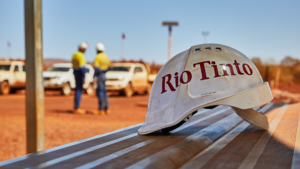
Rio Tinto Group has mothballed its $2.95 billion Jadar lithium project in Serbia, Bloomberg reported, according to the Serbian Economist.
The project will be transferred to “care and maintenance” mode in accordance with plans to simplify Rio Tinto’s asset portfolio and focus on more interesting opportunities in the short term, the document said.
A company spokesman confirmed to the agency the decision to mothball Jadar, which has large lithium-rich ore reserves.
The project, which never reached the production stage, faced many problems. The Serbian government has repeatedly changed its position on the issue of granting permits to develop the mine, which was strongly opposed by local communities.
“Given the lack of progress on the issue of permits, we can no longer maintain the previous level of expenditure and resource allocation,” the document said.
https://t.me/relocationrs/1742
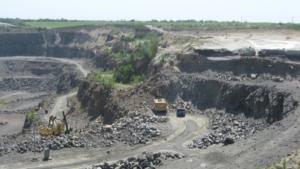
During its spring offensive, Russian forces took control of one of Ukraine’s most promising lithium deposits — the Shevchenkivske site in Donetsk region. Previously under development by an American critical minerals company, the site was seen as a key asset in the growing economic partnership between Kyiv and Washington in the field of strategic resources. Its capture now poses serious risks to future joint projects and has already raised concerns among Western investors.
The Shevchenkivske deposit contains significant reserves of spodumene — a mineral from which lithium is extracted. Lithium is essential for manufacturing batteries used in electric vehicles and energy storage systems. Ukraine had earlier signed a framework agreement with the United States on cooperation in the field of critical raw materials, including the development of domestic lithium, titanium, and rare earth element extraction — crucial for the West’s green energy transition. The agreement envisioned attracting investment into Ukrainian subsoil resources. However, with Shevchenkivske now under Russian control, the feasibility of that cooperation is under threat.
Myroslav Zhernov, the director of the company holding the license for the site, confirmed the loss in a comment to The New York Times. According to him, the battle for the deposit lasted several weeks: “It was very hot. They were bombing with everything they had. And now they’re there.” Zhernov warned that this may not be the end: “If the Russians advance farther, they will control more and more deposits.”
The New York Times reports that signs of activity have already been observed on the occupied territory: an assessment of reserves is underway, and preparations for future extraction may be in progress. In this way, control over lithium could give the Kremlin not only military but also geoeconomic advantages. The article notes that Russia is already leveraging its influence in global raw materials supply chains, particularly in uranium markets.
Although Ukraine still possesses two other major lithium deposits in its western regions, Shevchenkivske was considered the most promising due to its high spodumene concentration — up to 90%. In peacetime, the development of this site could have become not only a source of revenue, but a strategic lever for integrating Ukraine into Western critical materials markets.
Former head of the State Service of Geology and Mineral Resources, Roman Opimakh, explained that such investments are subject to enormous risks during wartime: “Security and control over a deposit is the main prerequisite. The military threat scares away investors, and the loss of such a site effectively nullifies any near-term development plans.”
Observers note that the war is increasingly taking on characteristics of economic conflict. Russia is not only destroying infrastructure but is actively targeting resources that could be useful to itself or potentially strengthen Ukraine. Gaining control over lithium assets allows for pressure on Western corporations and contributes to reshaping global dependencies.
Despite the loss, Zhernov said his company is not giving up on investing in Ukraine and is exploring other options. However, he admitted the situation has fundamentally changed risk assessments: “Before, we saw this project as a driver of economic growth. Now — it’s just another front in the war.”
Earlier, the Experts Club information and analysis center produced a detailed video analysis of the prospects for rare earth element mining in Ukraine.
Ukraine is preparing to announce a tender for the development of the Dobra lithium deposit, which could become the first project within the framework of cooperation with the US, according to the head of the President’s Office, Andriy Yermak.
“Ukraine is preparing to announce a tender for the development of the Dobra lithium deposit in the Kirovohrad region. This could be the first project within the framework of cooperation with the US. I am glad to see that the process is moving forward and that the results of our meetings in Washington a week ago are turning into concrete actions,” Yermak wrote on Telegram on Wednesday.
For more details on the prospects for rare earth element mining in Ukraine, see the video from the Experts Club analytical center – https://www.youtube.com/watch?v=UHeBfpywpQc&t

According to recent geological exploration data, lithium reserves at the Polokhivske deposit (Kirovohrad region) exceed 760 thousand tons of lithium carbonate equivalent (760 LCE kt), and Ukraine has significant potential for its extraction, said Ksenia Orynchak, Executive Director of the National Association of Extractive Industries of Ukraine (NADPU), in a commentary to Interfax-Ukraine.
“According to the latest geological exploration data for the Polokhivske deposit, the reserves exceed 760 thousand tons of lithium carbonate equivalent,” she said.
According to her, this deposit, which belongs to Ukrlithium mining, is one of the largest in Europe.
Orynchak reminded that there are four explored lithium deposits in Ukraine. Polokhivske is the only explored one where the owner holds a mining license. The others are Dobra (also in Kirovohrad region), Shevchenkivske (Donetsk region) and Kruta Balka (Zaporizhzhia region), the latter two located in the temporarily occupied territories.
“It is a fact that Ukraine has significant lithium mining potential. According to reputable studies, we are among the top three countries in terms of reserves, along with the Czech Republic and Serbia. (…) Ukraine is very favorably located geopolitically for the European Union,” the NAPRU head said.
Orynchak also disagreed with the opinion of Yegor Perelygin, Chairman of the Board of UMCC-Titanium – United Mining and Chemical Company JSC, who recently criticized the prospects for the development of Ukrainian lithium deposits due to low world prices for lithium, its surplus, high production and processing costs, and the need for significant investment in the face of high risks in Ukraine.
Earlier, the National Academy of Sciences of Ukraine estimated that the country has about 500 thousand tons of lithium.
Demand for lithium, which is used to produce electric vehicle batteries, is likely to grow in the coming years, supporting prices that have fallen significantly in recent years, Market Watch reports, citing experts.
“Currently, the world does not produce enough lithium hydroxide to meet the demand driven by the growing popularity of electric vehicles,” said Austin Devaney, chief commercial officer of Piedmont Lithium Inc. Austin Devaney.
According to the International Energy Agency (IEA), the share of electric vehicles in total global vehicle sales last year was 14%. It more than tripled from 4% in 2020. In 2023, global sales of electric vehicles are expected to grow by 35% compared to the previous year.
Fundamental factors suggest that the global electric vehicle market will continue to grow, says Devani.
Meanwhile, the average price of lithium-ion batteries fell by 8.7% in August, falling below $100 per kWh for the first time since August 2021, according to Benchmark Mineral Intelligence. The price reached $98.1 kWh on September 6, which is 33% lower than the peak recorded in March last year – $146.4 kWh.
The global lithium surplus has increased this year compared to last, but S&P Global Commodity Insights expects it to decline over the next three years.
According to S&P Global Commodity’s forecast, this year’s market supply will amount to 990.065 thousand tons of lithium carbonate equivalent, while demand will be 928.717 thousand tons. As a result, the surplus of lithium will reach 61,348 thousand tons compared to 10,061 thousand tons in 2022.
In 2024, the oversupply will decrease to 43 thousand tons of lithium carbonate equivalent, in 2025 – to 11 thousand tons, in 2026 – to 3 thousand tons, and in 2027 a deficit of 8 thousand tons will be recorded, according to S&P Global Commodity.
After 2027, demand for lithium will exceed supply, Devani said, citing Benchmark Mineral Intelligence forecasts.
“We believe that the expected lithium shortage requires the US to increase production capacity and reduce dependence on other countries,” the expert says. The bulk of lithium raw materials used in the US are mined in Australia and South America, with 80% of these raw materials being processed in China, Devani said.
According to him, the total amount of announced investments in battery production capacity in the United States over the past two years amounted to approximately $80 billion. In order for these capacities to be utilized, the annual supply of lithium hydroxide in the United States should reach 715 thousand tons by 2030, which is more than 40 times higher than the volume currently produced in the country (approximately 17 thousand tons).
Devaney noted that his company plans to produce about 60 thousand tons of lithium hydroxide per year in the long term, which is expected to be enough for about 1.2 million electric vehicles per year.



