

The model for reforming the military conscription system proposed by the Cabinet of Ministers in late October of this year requires significant refinement, as it does not align with either economic or security logic, stated Andriy Dligach, founder and chairman of the Advanter Group.
“Reserves are a tool for preserving the human capital necessary for the country’s defense capability. The economy does not compete with the military; it finances it. It is business that ensures production, pays taxes, and generates resources for defense,” he emphasized in a post on his Facebook page.
According to him, Ukrainian businesses are currently on the brink of collapse: average corporate revenue stands at about 85% of the 2025 level, financial reserves are running out, and further draft calls for critically important personnel could bring business operations to a halt.
Dligach is convinced that reforming the system should begin with an audit of human resource utilization in the Defense Forces, as well as an assessment of opportunities for rotation and optimization. As one promising model, he proposes introducing the “2+2” principle (two years of military service and two years of civilian work), while simultaneously developing recruitment efforts and boosting motivation.
Commenting on the fight against corruption in the area of personnel reserving, the expert noted that this problem should be solved not by destroying businesses, but by creating the possibility of reserving at least 15% of key personnel. According to his calculations, this would reduce the demand for corruption, contribute to bringing salaries out of the shadows, and could bring the economy approximately 250 billion UAH.
“The military and the economy are not competitors, but two components of national security. Without a strong economy, there will be no resources for a strong military. Therefore, Ukraine needs a comprehensive human capital management strategy that will ensure defense capability, preserve businesses, and enable the country to withstand a protracted war,” Dligach concluded.
As previously reported, on October 23, the Cabinet of Ministers completed the implementation of changes to the reservation system, decoupling the criticality of enterprises from economic indicators and updating sectoral and regional criteria. The government also lowered the maximum reservation rate for the energy and defense industries from 100% to 95%, with the option to submit a substantiated request to a special Coordination Center if an increase in the quota is necessary, and announced a mechanism for 100-percent reserving, provided that the mobilization obligation regarding the regular voluntary enlistment of employees into military service is fulfilled.
The government has also established a Coordination Center for organizing the reserving of conscripts during periods of mobilization and martial law, in accordance with Resolution No. 1328 of October 23. The Deputy Minister of Economy and Environment and the Deputy Minister of Defense have been appointed co-chairs of the Coordination Center, and the center’s main tasks include reviewing proposals from government agencies regarding the determination of the criticality of enterprises, increasing the volume of reservations, and providing recommendations on the revocation of relevant decisions within one month or within seven business days in cases requiring urgent consideration.
Prime Minister Serhiy Koretskyi explained that the changes are necessary due to the high rate at which deferrals are being granted and the need to prevent abuse, where companies are artificially created for mass reservations without actually participating in the fulfillment of critical tasks.
The Federation of Employers’ Unions (FEU) and the Union of Industrialists and Entrepreneurs (UIE) put forward a number of proposals regarding the resolution. In particular, the FEU proposed establishing a two-month transition period in the event the “criticality” criterion is abolished, extending the validity of current decisions set to expire in November–December, and removing the limited list of industries to ensure equal access for businesses. For its part, the SUP called for retaining the current criticality criterion until its expiration for enterprises that meet the requirements, shortening the document review periods, clarifying the concept of “involvement in production processes” for employees in the defense industry and the energy sector, and ensuring that the liability of managers for violations of military registration is proportionate.
Source: https://www.facebook.com/share/p/19GUkU4VLU/
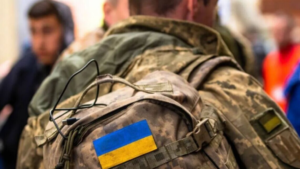
The Cabinet of Ministers of Ukraine has published a resolution updating the arrangements for reserving persons liable for military service during mobilization and martial law.
In particular, according to Resolution No. 1328 of October 23, central executive authorities, other state bodies, public administration bodies whose jurisdiction extends throughout the entire territory of Ukraine, regional and Kyiv City State Administrations (military administrations if established) must, within ten days from the date this resolution enters into force, ensure the review and approval of the criteria used to determine enterprises, institutions and organizations that are critically important for the functioning of the economy.
Following the review of the criteria, an analysis of enterprises’ compliance with these criteria must be carried out, and if a criterion on the basis of which an enterprise was designated as critically important is removed, the decision designating it as critically important must be revoked.
The government has established that decisions designating enterprises as critically important that are valid on the date this resolution enters into force shall remain valid for the period for which they were adopted, except for those that have been revoked.
It is noted that decisions of the Minister of Defense to increase the number of persons liable for military service eligible for reservation, adopted before Resolution No. 1608 entered into force, shall remain valid throughout the period of validity of the decision designating an enterprise as critically important, but no later than December 8, 2026. Decisions of the Ministry of Defense to increase reservation quotas adopted after December 8, 2025, shall remain valid for the duration of the decision on critical importance, but no longer than the period specified in the relevant decision of the ministry.
The Cabinet of Ministers has also established a Coordination Center for Organizing the Reservation of Persons Liable for Military Service during Mobilization and Wartime.
It is noted that enterprises operating in the following sectors may be designated as critically important for the functioning of the economy and ensuring the population’s essential needs during a special period: the defense-industrial complex; the fuel and energy complex; housing and communal services; the extractive industry; the processing industry; agro-industrial production, including ensuring food security; retail trade; construction; transport and logistics; information technology; banking; healthcare; communications; as well as enterprises carrying out emergency rescue and other urgent work (emergency rescue services); and enterprises operating in a sector approved by the Coordination Center following a substantiated request from a central executive authority or another state body responsible for formulating and/or implementing state policy in the relevant sector.
It has been established that the proportion of persons liable for military service eligible for reservation may exceed 50% based on the recommendations and proposals of the Coordination Center.
Substantiated proposals to increase reservation quotas shall be submitted to the Coordination Center by the relevant state body. Grounds for the Coordination Center to refuse to consider such proposals include, in particular, the establishment of facts of systematic violations by the head of a critically important institution of the legal requirements governing the organization and maintenance of military registration records. This includes, in particular, the existence of two or more documented violations within the past 12 months and/or the imposition of administrative liability on the head of the institution for committing such violations.
It has also been established that the number of persons liable for military service holding positions in representative offices of donor institutions and organizations implementing international technical assistance projects who are eligible for reservation must not exceed 50% of the number of employees liable for military service directly involved in carrying out the tasks of a single project, and must not exceed seven people.
Under a decision of the State Secretary of the Cabinet of Ministers, adopted taking into account the recommendations of the Coordination Center, the number of persons liable for military service eligible for reservation may exceed seven people, but must not exceed 50% of the total number of employees liable for military service.
The number of employees liable for military service who are eligible for reservation must not exceed 95% in critically important institutions designated by the Ministry of Defense as critically important in the defense-industrial complex, the fuel and energy complex, and their contracting organizations, or among domestic manufacturers of transformer equipment for the energy sector that carry out construction, repair, restoration, manufacture and/or supply of equipment, provide services, or implement other engineering and technical measures aimed at ensuring the uninterrupted operation of Ukraine’s integrated power system and gas transmission system during a special period.
The proportion of persons liable for military service eligible for reservation may exceed 95% under a decision of the Ministry of Defense or the Ministry of Energy, adopted taking into account the agreed recommendations of the Coordination Center.
Among other things, the government recommended that enterprises intending to obtain critically important status ensure the timely submission of documents to central executive authorities, other state bodies and public administration bodies in order to obtain such status.
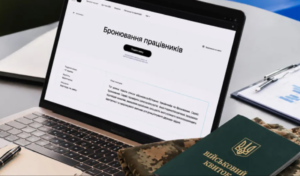
The Cabinet of Ministers of Ukraine, which established a Coordination Center for the Organization of Reservations at its meeting on October 23, initiated a review of sectoral and regional criteria for determining critical importance, taking into account new requirements, within 10 days, and updated the reservation limits for certain categories of enterprises, according to a Saturday announcement on the website of the Ministry of Economy and Environment of Ukraine.
“The government’s decision clarifies the definition of critical importance. In this regard, central executive authorities and regional military administrations must review sectoral and regional criticality criteria in light of this definition within 10 days of the changes taking effect. The updated criteria will be approved by the Coordination Center,” the ministry’s website states.
At the same time, it is noted that the review of the criteria does not entail an automatic review of the status of all enterprises, and enterprises previously recognized as critical based on criteria that will not be changed as a result of the review will retain their status as critically important. The statement asserts that such enterprises constitute the “overwhelming majority.”
It is also noted that the decision to designate enterprises as critically important remains within the purview of authorized state bodies, and the Coordination Center’s proposals are subject to review by central executive authorities and regional military administrations.
It is reported that the Coordination Center for Mobilization is a temporary consultative and advisory body of the Cabinet of Ministers, whose work will involve representatives of government agencies responsible for the economy, defense, security, humanitarian policy, and the operation of critical infrastructure; it will be co-chaired by the Deputy
Minister of Economy and Environment and the Deputy Minister of Defense. The center’s tasks include, in particular, reviewing requests from government agencies to designate enterprises as critically important, providing recommendations on revoking such status if law enforcement agencies provide grounds for doing so, and approving increases in procurement quotas exceeding 50%. The timeframe for reviewing requests from government agencies is limited to one month.
The Ministry of Economy confirmed that the government has reduced the maximum reservation limits for enterprises in the fuel and energy and defense-industrial sectors to 95% of employees subject to military service, and that citizens granted deferments for other reasons—such as parents of large families, guardians, and others—will be included in the quota when calculating the maximum percentage of reserved personnel. It was also stated that the reduction in the maximum limits should not apply to critically important personnel, who must be reserved in full, but the enterprise’s director will independently determine whom to reserve within the limit.
As previously reported, on Friday, Prime Minister Serhiy Koretskyi stated that the Cabinet of Ministers of Ukraine had finalized changes to the reservation system—an enterprise’s criticality will be separated from its economic indicators, sectoral and regional criteria for criticality will be updated, and enterprises will be audited for abuse.
The second change is that the maximum reservation rate—particularly for the energy sector and the defense industry—will no longer be 100%. “Unconditional full reservations are unfair to those who serve and open the door to abuse. There were companies created specifically for the reservation system, and it became a business,” the prime minister noted, adding that the government will not ease restrictions on those who manufacture weapons or maintain critical infrastructure, and if more reservations are needed to ensure uninterrupted operations, the company will be able to submit a substantiated request to the Coordination Center.
The third change is that the Ministry of Defense is tightening penalties for evading military service; the fourth is the development of a mechanism for 100% workforce reservation, contingent upon fulfilling mobilization obligations: a company will be able to fully reserve its employees if it regularly and voluntarily enlists some of them into military service.
COMPANY, defense industry, ENERGY SECTOR, mobilization, workforce reservation

Ukraine is preparing another review of its military personnel reservation rules, which could affect companies operating in the defense industry, energy sector, utilities and other sectors considered critical to the national economy. However, the final parameters of the proposed changes remain under discussion, and reports of a mass cancellation of existing exemptions have not yet been sufficiently substantiated, according to the Experts Club information and analytical center.
According to information published on October 22 by Dmytro Kysylevskyi, deputy chairman of the parliamentary committee on economic development, the Cabinet of Ministers plans to finalize the adoption of a new resolution by the end of the week. A provision that would have excluded employees with individual mobilization deferments from the total number of eligible employees used to calculate reservation quotas has already been removed from the draft.
Earlier proposals included reducing the maximum reservation quota for certain defense and energy companies from 100% to 85%, and for water supply, heating and waste management companies from 75% to 60%. However, these figures appeared in earlier versions of the draft and cannot be regarded as approved regulations.
According to Experts Club, the most vulnerable groups could include employees of companies that lose their critically important status, fail to confirm compliance with government criteria within the required period, or face reductions in available reservation quotas. Under existing regulations, an employer’s loss of critical status can already result in the automatic cancellation of its employees’ reservations.
Another issue concerns the distinction between essential operational personnel and support staff. One approach under discussion would preserve broader exemptions for specialists directly involved in defense manufacturing, equipment maintenance and critical infrastructure operations. However, no definitive list of positions potentially subject to restrictions has been approved.
The draft also provides for establishing a Coordination Center under the Cabinet of Ministers. The center is expected to assess the justification for criteria used to designate companies as critically important and recommend revisions. Final decisions would remain with the relevant government authorities.
Separately, legislative proposals concerning family-based mobilization deferments are also being discussed. They could introduce additional requirements for parents of children with disabilities, spouses of people with disabilities, caregivers of ill relatives and legal guardians. These initiatives are not part of the government’s resolution on reservation quotas and do not currently alter existing statutory protections.
The Ministry of Defense previously announced that more than 90% of existing individual deferments could potentially be extended automatically using information from state registers. The relevant procedure will continue until October 30, 2026. Failure to verify information automatically does not, by itself, mean that a person has lost their legal entitlement to a deferment.
Business representatives emphasize that frequent regulatory changes complicate workforce planning, contract fulfillment and uninterrupted operations. Experts Club analysts believe that the effectiveness of the reform should be measured not only by the number of reservations reviewed, but also by the state’s ability to meet defense needs, prevent abuse and maintain the functioning of critical industries.
DEFERMENTS, EXPERTS CLUB, MILITARY RESERVATIONS, mobilization
A petition on the website of the Cabinet of Ministers of Ukraine calling for the mobilization age limit to be lowered to 55 has reached the number of votes required for consideration.
According to the platform on the government’s website, the petition was submitted on July 27 and, as of October 14, had gathered the 25,000 votes required for consideration.
“Practical experience in carrying out combat and special missions demonstrates the need to revise the regulations to lower the upper age limit to 55,” the petition states.
According to the petition’s author, men aged 55–60 in most cases experience significant age-related changes in health and chronic illnesses, which substantially reduce their physical endurance in extremely challenging field and combat conditions.
Furthermore, according to the author, staffing units with personnel based on their physical capabilities will help improve the overall combat readiness and mobility of military units.
Furthermore, in her view, citizens in this age group are highly qualified specialists whose work in the civilian sector and at critical infrastructure facilities provides substantial support to the country’s economy.
In this regard, the author of the petition proposes: to draft and submit to the Verkhovna Rada of Ukraine a bill amending the Law “On Military Duty and Military Service” and the Law “On Mobilization Preparation and Mobilization,” which would lower the age limit for military service during martial law from 60 to 55 years for enlisted personnel, sergeants, senior noncommissioned officers, and officers, as well as establish a provision granting the right to voluntary discharge from military service to service members who have reached the age of 55 during martial law.
A general mobilization is currently in effect in Ukraine, covering men subject to military service between the ages of 25 and 60.
As previously reported, a petition posted on the Cabinet of Ministers’ website failed to garner the number of votes required for consideration. The petition called for allowing the demobilization of military personnel over 55 years of age who have served more than three years; lowering the upper age limit for conscription from 60 to 58 years; demobilize men over 55 who are eligible for a civilian pension for working in hazardous conditions.
CABINET OF MINISTERS, military service, mobilization, PETITION, UKRAINE
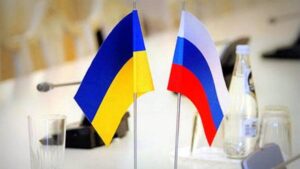
An overwhelming majority (72%) of Ukrainians support peace talks with Russia, however, about half of citizens are open to territorial compromises to end the war, while an absolute majority considers any reduction or limitation of the Armed Forces of Ukraine’s strength unacceptable, according to the results of a public opinion poll conducted by the Future Research Foundation and presented during a press conference at the “Interfax-Ukraine” news agency on Thursday.
“The dynamics of public sentiment demonstrate a strong desire to find diplomatic avenues for a ceasefire. Specifically, 72.2% of respondents tend to support peace talks with Russia. Opposition to this stands at 20.8% of those surveyed,” said Svitlana Kushnir, project manager at the Foundation for Future Studies, during the presentation of the survey results.
Among the possible ways to end the war, 48.5% favor compromises and ceasefire negotiations, even if they involve territorial or political concessions; 24.6% support a temporary “freeze” of the front lines without officially acknowledging the loss of territory, while 18.6% of respondents favor continuing the war to restore the 1991 borders without compromise.
At the same time, 51.7% of citizens are open to territorial compromises to end the war (29.4% – “yes, if it leads to the end of the war,” 22.3% – “probably yes”), while 41.3% of respondents oppose territorial compromises. (20.4% – “no, under no circumstances,” 20.9% – “rather no”).
“This negotiation track is closely linked to security red lines, which society considers unacceptable to cross. In particular, 76.3% of respondents consider reducing or limiting the size of the Armed Forces of Ukraine at the request of the other side to be unacceptable even if it ensures security (for 55.2% of respondents, this is categorically unacceptable),” Kushnir reported.
According to her, 58.7% of respondents believe that the situation in Ukraine is moving in the wrong direction (30.9%—definitely, 27.8%—somewhat). At the same time, 32.5% of respondents assess the direction of development as correct (8.6%—definitely, 23.9%—somewhat), while 8.8% were unable to answer.
At the same time, a number of acute socioeconomic problems are dampening the willingness to compromise, particularly bribery and corruption within government structures (51%) and rising food prices (39.6%). In addition, there is a certain level of concern regarding the winter season: 56.1% of households are fully or partially prepared for possible prolonged power and heating outages, while 43.2% rate their preparedness as insufficient.
According to the survey results, 84.5% of respondents consider the current mobilization process to be unfair, with 59.6% deeming it absolutely unfair.
Ihor Zhdanov, a political expert, former Minister of Youth and Sports of Ukraine (2014–2019), and head of the “Information Defense” project at the Open Policy Foundation, notes that these survey results indicate that Ukraine and its politicians are ready for negotiations, but “they want negotiations with substantive content, not just negotiations about surrender.”
“It is clear that there can be no question of any kind of surrender in Ukrainian society. The point is to hold negotiations, find some kind of compromise, and this society is ready for a compromise. So why isn’t peace being achieved? Why aren’t substantive peace consultations and negotiations already taking place, and why hasn’t some kind of ceasefire been declared for this purpose? And the Russian dictator Putin isn’t ready to hold peace negotiations; he doesn’t want to. Because there, in Russia, the circumstances haven’t yet arisen that would force him or push him toward peace,” he noted during a press conference.
Commenting on the fact that 76% of Ukrainian citizens consider reducing the size of the Armed Forces of Ukraine unacceptable, the expert noted that this indicates that Ukrainian society relies solely on itself and its own Armed Forces. “We rely on ourselves and on our Armed Forces; we also need to develop our own defense-industrial complex so that the situation remains predictable and so that there are level playing fields for Ukrainian and foreign companies,” Zhdanov said.
He also pointed out that more than half of Ukrainians consider corruption in government to be a particularly pressing problem—even more serious than rising prices and low wages.
“Bribery and corruption in government are not just a matter of public opinion but also a problem related to receiving funds from the European Union. We were told in no uncertain terms: you must carry out judicial reform; there is the Kachka-Kosa plan related to anti-corruption efforts, such as adopting an anti-corruption strategy, competitive selection of prosecutors, and implementing judicial reform. Unfortunately, of the 10 points, none have been implemented. All of these bills will benefit the country. None of them are controversial, unlike bills in the socioeconomic sphere. They need to be adopted, but for some reason they aren’t being adopted, and this simply means that we aren’t receiving the corresponding funds from the EU,” Zhdanov noted.
The survey was conducted from September 19 to 22 using the Computer-Assisted Telephone Interviewing (CATI) method with a random sample of mobile phone numbers among 1,203 respondents aged 18 and older in all government-controlled territories of Ukraine. The maximum theoretical margin of error does not exceed 2.9% with a 95% confidence level.
Armed Forces of Ukraine, mobilization, NEGOTIATIONS, POLL, UKRAINE



