
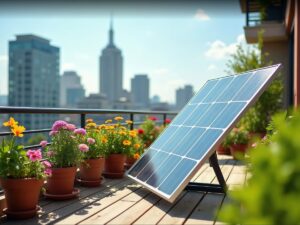
There are nearly 90,000 residential solar power plants in Ukraine operating under the “green” tariff, according to the National Commission for State Regulation of Energy and Public Utilities (NKREKP).
“As of May 25, universal service providers had signed 86,691 contracts with owners of residential solar power plants. This means that more than 86,000 Ukrainian families have become participants in the energy market—not only consuming electricity but also generating it,” the energy regulator’s website states.
According to NEURC estimates, during the first five months of 2026, private households in Ukraine generated 544.8 million kWh of electricity from renewable sources, which was fed into the power grid under the “green” tariff mechanism.
“In January–May 2026, more than 3.28 billion UAH was paid for electricity generated by private households,” the NEURC noted.
The largest number of residential solar power plants operate in the Kyiv, Dnipropetrovsk, Zakarpattia, Ivano-Frankivsk, Ternopil, Chernivtsi, Lviv, Odesa, Kirovohrad, and Khmelnytskyi regions.
According to the energy regulator, under martial law, residential generation takes on particular importance, as it helps increase the flexibility of the power system, maintain the reliability of electricity supply, and strengthen the energy resilience of communities.
“The NEURC provides the regulatory framework for the operation of the ‘green’ tariff mechanism and residential power generation. Thanks to the established rules, owners of solar power plants can connect their installations to the power grid and sell surplus electricity,” the commission emphasized.
The regulator noted that the European energy model envisions an active role for the “prosumer”—a market participant who both consumes and generates electricity. As it pointed out, Ukraine is gradually implementing such approaches, creating a more decentralized and resilient power system.
The NEURC did not specify the total capacity of residential solar power plants for security reasons, but market participants estimate it could be up to 2 GW. Before the war, the number of residential solar power plants was reported to be 40,000–45,000, with a combined capacity of up to 1 GW.
According to expert estimates published in open sources, Ukraine consumes approximately 60–65 billion kWh over a six-month period. Based on these figures, the electricity generated by residential solar power plants in January–May accounted for slightly more than 1% of consumption. It should be noted that grid-connected solar power plants without storage systems do not operate during power outages, which significantly affects their efficiency. At the same time, electricity stored in the battery is not accounted for by the grid.
ELECTRICITY, green tariff, HOUSEHOLD, NEURC, SOLAR POWER PLANT

The Ukrainian Renewable Energy Association (UREA) supports the revision of electricity transmission tariffs for NPC “Ukrenergo” and proposes simultaneously launching the practical implementation of a mechanism to protect vulnerable electricity consumers and accelerating the introduction of targeted monetary support for the population.
This is stated in the association’s official letter addressed to the National Commission for State Regulation of Energy and Public Utilities (NEURC) and the Ministry of Energy of Ukraine, published on Facebook.
“The UAVE emphasizes: the discussion should not be limited solely to the tariff rate. A comprehensive solution is needed—a financially sound tariff must be combined with a gradual reduction of cross-subsidization and the launch of targeted monetary support for vulnerable consumers,” the association stressed.
The UAVE also considers it necessary to work with the Ministry of Social Policy, Ukrenergo, distribution system operators (DSOs), and other stakeholders to develop a data-sharing mechanism for launching targeted monetization of subsidies.
The association asserts that this approach will help maintain the financial stability of the energy sector, preserve social protection for the population, and reduce distortions in the electricity market. The transition to targeted support also aligns with Ukraine’s commitments regarding market liberalization to the EU, the IMF, and other international partners.
In turn, as stated in the association’s appeal to the NEURC and the Ministry of Energy, the UEA supports Ukrenergo’s position on the electricity transmission tariff, as the financial stability of the transmission system operator (TSO) is critical for the reliable operation of the power system, the fulfillment of special obligations, stable settlements between market participants, and the restoration of energy infrastructure.
The association cited Ukrenergo data, according to which the projected volume of electricity transmission in 2026 will be approximately 89.6 million MWh, which is significantly lower than the figure used when setting the current tariff. At the same time, costs to cover transmission losses have increased, the configuration of power grids is changing, and the volumes of electricity imports and long-distance transmission are growing—a situation that, against the backdrop of ongoing damage to energy infrastructure, requires significant financial investment.
“Trends such as the accumulation of debt among market participants, deteriorating payment discipline, reduced opportunities for the restoration and development of grid infrastructure, and a decline in the investment attractiveness of the energy sector—all in the absence of a source to cover the TSO’s costs—will intensify,” the UAVE emphasized.
At the same time, as the association noted, amid systematic attacks on energy infrastructure, the development of distributed generation, renewable energy sources (RES), and energy storage systems has become one of the key elements of energy security, as these facilities provide additional stability to the power system, increase its flexibility and maneuverability, and reduce the risk of shortages.
“Therefore, ensuring timely and predictable payments to renewable energy producers is not only a matter of fulfilling financial obligations but also a crucial factor in the further development of Ukraine’s energy resilience,” the UAVE concluded.
As reported, the NEURC proposes setting the tariff for NPC “Ukrenergo” for electricity transmission at 903.53 UAH/MWh (excluding VAT) effective July 1, 2026, which is 21.62% higher than the current rate.
It is noted that the updated tariff component for Ukrenergo’s special obligations regarding payment for electricity from alternative sources amounts to 367.56 UAH/MWh within the transmission tariff structure.
Accordingly, it is proposed to increase the dispatch tariff by 7.83% to 118.64 UAH/MWh.
The National Energy and Utilities Regulatory Commission (NEURC) has extended the ban on the import of electricity from the countries that are not members of the Energy Community, that is, from the Russian Federation and Belarus, for another month – until November 1 of this year. The regulator made the corresponding decision on September 29.
During the meeting, member of the commission Dmytro Kovalenko noted that this issue was considered at a meeting of the Anti-Crisis Energy Headquarters on Monday, September 27. It was supported by market participants, the Ministry of Energy, and government representatives, as well as Ukrenergo.
“At its headquarters, Ukrenergo noted that the situation is under control and the ban on electricity imports for a month will not cause problems with operational safety in the integrated power system of the country. There is already a protocol of the Anti-Crisis Headquarters to do this,” Kovalenko explained.
According to him, the decision to further extend the ban will be made on the basis of the operational situation, in particular with the accumulation of coal in Ukraine.
At the same time, following a proposal from Ukrenergo, the regulator, after the meeting, approved a resolution with wording allowing the transmission system operator in October to hold auctions to allocate capacity for imports from Russia and Belarus for November, in case the ban for this month is no longer imposed.
There is no text of the resolution on the NEURC website yet.
As reported, the NEURC established a ban on the import of electricity from the Russian Federation and Belarus by decree No. 853 dated May 26, its validity period expires on October 1. The powers of the regulator to limit the available bandwidth distributed at daily and monthly auctions in 2021 is enshrined in law of Ukraine No. 1396-IX regarding the certification of Ukrenergo.
The National Energy and Utilities Regulatory Commission of Ukraine (NEURC) at a meeting on Wednesday limited the available capacity for importing electricity to Ukraine from states that are not parties to the Energy Community (Russia, Belarus) to 0 MW until October 1, 2021. “We take this decision on the initiative of Energy Minister Herman Haluschenko, who made such a request to us. At the same time, we remember our experience and this winter, and remember the balance of interests, because we also think about consumers and about that, theoretically, the termination of imports as a market mechanism can lead to abuses and manipulations in the market,” Chairman of NEURC Valeriy Tarasiuk said.
He did not rule out that NEURC will most likely continue limiting the throughput of power lines between Ukraine and Russia and Belarus after October 1.
The regulator decided to cancel the results of annual auctions at which the capacity for 2021 was allocated in terms of interstate relations between Ukraine and states that are not parties to the Energy Community (Russia and Belarus). The regulator also instructed the transmission system operator to reimburse the auction winners for the funds paid for the capacities allocated at the annual auctions.



