
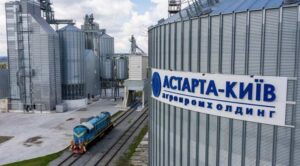
Astarta, Ukraine’s largest sugar producer, intends to continue investing in the construction of its soy protein concentrate plant in 2026. These investments will amount to approximately EUR40 million, said Vyacheslav Chuk, director of commercial operations and strategic marketing at the agricultural holding.
“Our budget process is not yet complete, but the agricultural holding will definitely invest in the completion of our new project to build a soy protein concentrate plant. This is about EUR40 million, and the rest is maintenance, which will vary depending on what we focus on,” he said at the Forbes Agro 2025 conference in Kyiv on Friday.
Responding to a follow-up question about how much Astarta will invest during the year to resolve current issues, Chuk said it could be tens of millions of dollars.
In 2024, Astarta began investing in the construction of a plant for processing soybean meal into soybean protein concentrate with a capacity of 500 tons/day (about 100,000 tons per year) in the Hlobyn industrial complex (Poltava region). The agricultural holding is investing more than EUR 76 million in the purchase of equipment and technologies and will create 110 new jobs.
Astarta and its structural unit Astarta Agro Protein signed the first investment agreement with the Ukrainian government to receive compensation from the state for significant investments. Under the agreement, the state will provide the agricultural holding with a number of incentives, including exemption from import duties on new equipment, import VAT on new equipment, and income tax for up to five years.
Astarta is a vertically integrated agro-industrial holding company operating in eight regions of Ukraine and is the largest sugar producer in Ukraine. It comprises six sugar factories, agricultural enterprises with a land bank of 220,000 hectares, dairy farms with 22,000 head of cattle, an oil extraction plant in Hlobine (Poltava region), seven elevators, and a biogas complex.
In the first nine months of 2024, Astarta increased its net profit by 35.1% compared to the same period in 2023, to EUR75.60 million. The agricultural holding’s revenue grew by 12.6% to EUR441.46 million, and EBITDA by 12.8% to $131.56 million.
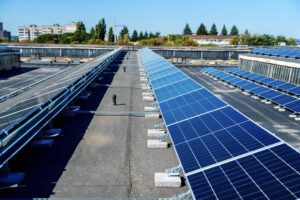
A large Ukrainian manufacturer of heating devices and equipment for heating systems (TM Termia), JSC Vinnytsia Mayak Plant, has installed its own solar power plant (SPP), according to Andriy Ocheretny, deputy head of the Vinnytsia City Council.
“The SPP was launched on September 19, 2025. A total of 384 solar panels were installed. The peak capacity is 236.16 kW,” he wrote on Facebook on Thursday.
As specified by City Council Deputy Vyacheslav Terlikovsky, the enterprise took advantage of the Vinnytsia City Council’s program to compensate for the cost of equipment from renewable energy sources.
According to him, the installation of the SES was carried out by Promavtomatika Vinnytsia LLC, which will also provide further maintenance.
The Mayak plant, under the Termia trademark, manufactures, among other things, air heating units (heat guns, fan heaters, air curtains), electric convectors, electric boilers, and heating radiators.
According to the company’s annual report on its website, in 2024, its consolidated net profit decreased by 2.4 times compared to 2023, to UAH 7.6 million, and net income decreased by 10%, to UAH 251.6 million.
Ocheretny also reported that an application for compensation from the Vinnytsia City Council for the purchase of equipment for the production of electricity from renewable sources was submitted by PP “Konex,” which specializes in the trade of pharmaceutical products.
“PP Konex now also has its own solar power plant with a total capacity of 60 kW. In total, 108 panels (560 W each) and 20 storage batteries (5.12 kW each) are installed on the roof of the enterprise,” he wrote.
According to its website, the Konex pharmacy chain has more than 200 pharmacies in the Vinnytsia, Khmelnytskyi, Chernivtsi, Cherkasy, Kirovohrad, Zhytomyr, Ivano-Frankivsk, Kyiv, Rivne, Ternopil, and Odesa regions.
According to its report, Konex earned UAH 51.8 million in net profit and UAH 3.5 billion in revenue in 2024.

Biopharmaceutical company Biopharma (Kyiv) has completed construction of a new pharmaceutical plant in Uzhhorod.
This was announced by Dmytro Kysilevsky, deputy chairman of the parliamentary committee on economic development.
“Biopharma Plasma has completed 80% of the construction of a plant for the production of blood plasma-based medicines in Uzhhorod. The industrial premises have already been fully built, the construction and connection of the energy infrastructure has been completed, and the installation of production equipment will begin in October,” he wrote on his Facebook page.
Kysilevsky specified that commissioning work at the plant is scheduled for late 2025-early 2026, with the launch of the first stage of production planned for the first half of 2026.
According to the plan, the volume of blood plasma-based drugs produced in Uzhhorod will be twice that of Bila Tserkva, amounting to 1.5 million liters of blood plasma per year.
Construction of the Biofarma Plasma plant in Uzhhorod began in the fall of 2024. The planned investment in the new production facility is approximately €80 million. The company’s Uzhhorod plant will focus on exports.

The European Bank for Reconstruction and Development (EBRD) will provide a long-term secured loan of EUR11 million to Karpatski Mineralni Vody LLC (KMV) from the group of the same name to finance the construction and commissioning of a new beverage production plant with an effective capacity of 200 million bottles per year in the Lviv region.
“The use of modern equipment at the new plant will significantly increase resource efficiency compared to the existing plant. The project will increase the Group’s competitiveness, production efficiency, and environmental performance,” the bank said on its website.
According to the information, the EBRD Board of Directors approved the loan on August 5, and the next step will be the signing of the necessary documents.
It is noted that the total cost of the project is EUR24 million.
KMV LLC is a manufacturing company of the KMV Group, one of Ukraine’s leading producers of non-alcoholic beverages, producing mineral water, flavored mineral water, other non-alcoholic and energy drinks, as well as snacks, the EBRD noted.
According to the project, the group will have to conduct a comprehensive hydrogeological study during the first three years of operation to assess the permissible volume of water intake for the future, as well as ensure automatic monitoring of water intake and groundwater levels at its wells.
The project provides for a first loss guarantee provided by the European Union through the Ukraine Investment Framework (UIF), and the costs of external pre-investment legal and environmental and social analysis will be partially covered by the Japan-EBRD Cooperation Fund.
In addition, KMV is expected to receive a grant under the EBRD’s Human Capital Investment Incentive (HCII) program to cover up to 50% of eligible costs related to improving workplace accessibility and upgrading equipment and infrastructure. It is expected that the grant funds will be allocated from the Japan-EBRD Cooperation Fund or provided by a Taiwanese donor. The project is also expected to receive a FINTECC grant under the EU4Climate program for the purchase of energy-efficient bottling equipment.
According to data from YouControl, KMV LLC increased its revenue by almost 2.3 times in the first half of 2025, to UAH 277.20 million, and its net profit by 8.2 times, to UAH 140.69 million.
The beneficiaries of the company are listed as Serhiy Petrovych and Petro Ivanovych Ustenko, who own 83.77% and 16.23%, respectively.
The revenue of Serhiy Ustenko’s KMV Trading House LLC for the first half of this year increased by 18.5% to UAH 1 billion 71.47 million, while net profit decreased 2.4 times to UAH 61.17 million.
According to the Karpatski Mineralni Vody website, the company began operating in the mineral water market in 1996 with the first bottling of Karpatskaya Dzherelna natural mineral table water, and in June 2002, it was reorganized into a plant for the production of mineral water and non-alcoholic beverages, Karpatski Mineralni Vody. In 2002, the company began producing sweet carbonated beverages under the TM “Fruktova Dzherelna” and TM ‘Sokovinka’ brands, and in 2016, the energy drink TM “Dragon”.
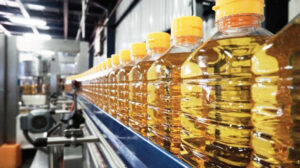
Tail LLC (Lviv region), one of the leaders in the production of metal roofing and corrugated sheets, has invested €10 million in the construction of an oil refinery, according to Maksym Kozytskyi, head of the Lviv Regional Military Administration (OVA).
“This facility represents investments that remain in Ukraine and strengthen our economy. For Lviv region, this means new jobs, taxes paid to the local budget, and a contribution to the development of the region’s economy,” he wrote on Telegram after visiting the enterprise together with Prime Minister Yulia Svyrydenko.
The head of government clarified that the owners of the enterprise, Yuriy Shkvark and Andriy Tsymbalyak, decided to diversify and try their hand at agricultural processing during the war.
“All the equipment at the plant is Ukrainian: TAN refining and PET Pet Technologies line from Chernihiv, TEFF boiler room from Odesa, Nadiya bottling line from Cherkasy, AKIM containers and filling unit from Dnipro, Lubnimash silos from Lubny. From Ukrainian entrepreneurs like them, who ensure our economic stability with their energy, labor, inventions, and investments,” Svyrydenko wrote on Telegram.
She added that Lviv entrepreneurs are currently building another plant in Kremenchuk.
Tail LLC was founded in 2009 in the Lviv region. It specializes in the production of steel roofing materials for exterior decoration of houses, facade work, and industrial complexes. The company’s product range includes more than 15 types of products, which are manufactured on 25 production lines.
According to data from Opendatabot, in 2024, Tile LLC increased its revenue by 19.6% to UAH 820.51 million, reduced its net profit by 1.9 times to UAH 10.16 million, increased its debt obligations by 1.6 times, to UAH 427.76 million, assets by 1.4 times, to UAH 550.51 million, and the number of employees by 19, to 204.
The beneficiaries of the enterprise are Andriy Tsymbalyak and Yuriy Shkvark.
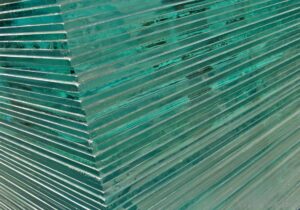
NovaSklo plans to start construction of a float glass plant in the Kyiv region in March 2026.
As NovaSklo CEO and founder of investment company EFI Group Igor Lisky told Interfax-Ukraine on the sidelines of the URC-2025 recovery conference, investments in the project amount to more than €240 million.
The project is being implemented with the support of UkraineInvest and the Ministry of Economy of Ukraine.
The project includes, in particular, the construction of a plant with a capacity of 24.8 million m2 of glass per year. The enterprise will reduce dependence on imports of flat glass and will produce products for export.
Liski noted that the project could pay for itself in 6-7 years.
He said that a memorandum had been signed on the sidelines of the conference between NovaSklo and three leading European equipment manufacturers – Horn Glass Industries AG (Germany), Zippe Industrieanlagen GmbH (Germany) and Bottero S.p.A. (Italy), which will be the main suppliers of technology and equipment.
According to Liska, NovaSklo has already secured a plot of land for production and purchased a license for sand extraction.
Commenting on the risks associated with the construction of an industrial facility in Ukraine, Liska noted that “this is an important symbolic project because it is a symbol of Ukraine’s recovery.”
“Broken glass and broken windows are always a symbol of decline and war. A new plant that produces high-quality glass is a symbol that we, Ukrainians, have a future, and we will rebuild Ukraine with the best glass and the best technology. We must do everything in our power to ensure that Ukraine has a different future,” he said.
Liski noted that the project is finalizing the signing of contracts with financial institutions for lending.
“This is a good margin project because all glass is currently imported, which involves high transportation costs. This project is efficient and has good margins. We think that the payback period will be 6-7 years,” he said.



