

In the first half of 2026, foreign citizens purchased 51,627 residential properties in Spain, which is approximately 4% more than during the same period last year and marks the highest figure in the history of relevant statistics from Spanish registries.
The second quarter proved to be the most active: foreigners concluded more than 26,8 thousand transactions, and their share of all registered housing purchases reached 15.98%—a historic high, according to data from the Colegio de Registradores de España.
At the same time, the overall Spanish housing market, on the contrary, cooled off somewhat in the second quarter. The number of transactions fell by 5.7% compared to the previous quarter—to 167,934 thousand, with sales of new-construction properties dropping by 11.5% to 34,919 thousand. Thus, foreign demand strengthened against the backdrop of a decline in overall buyer activity.
British citizens remained the largest group of foreign buyers in the first half of the year. They purchased 3,567 properties, although the number of transactions fell by approximately 10% year-over-year.
Dutch citizens came in a close second—with 3,489 purchases, a 12% increase compared to the first half of 2025. The gap between the two largest groups was just 78 transactions. In the second quarter alone, British buyers closed 1,843 deals, while Dutch buyers closed 1,830.
Official statistics for the second quarter show that British buyers accounted for 6.99% of all foreign transactions, while Dutch citizens accounted for 6.94%. Germans came in third with a 6.11% share.
Germany retained its third place among the largest foreign markets, although demand from German buyers declined slightly over the first half of the year—by approximately 2%. At the same time, the number of purchases by Italian citizens rose by 11%, by Poles—also by 11%, by French citizens—by 3%, and by Irish citizens—by 6%. Belgian demand, on the other hand, fell by approximately 16%.
Thus, the structure of foreign demand in Spain is becoming increasingly diversified. Just ten years ago, British buyers were significantly ahead of other nationalities, whereas now the gap between the United Kingdom, the Netherlands, Germany, and the next group of European buyers has narrowed considerably. In the first quarter of 2026, for example, British and Dutch buyers accounted for 6.82% and 6.56%, respectively, of foreign purchases.
The most detailed official report from the Colegio de Registradores for the first quarter of 2026 shows that Ukrainians ranked 10th among foreign buyers, accounting for 3.08% of all foreign real estate transactions; Ukrainian citizens made approximately 765 purchases over the three-month period.
In terms of the number of transactions at the start of the year, Ukrainians trailed behind the British, Dutch, Moroccans, Germans, Italians, French, Romanians, Poles, and Belgians, but outpaced citizens of China, Sweden, Ireland, the U.S., and Russia.
By comparison, Chinese nationals accounted for 2.69% of foreign purchases, while Russians accounted for only 1.44%. Thus, the share of Ukrainians was more than twice that of Russians.
The full official report for the first half of the year, broken down by nationality, has not yet been presented in the registrars’ brief press release; therefore, the exact number of purchases made by Ukrainians over the six-month period should be interpreted with caution. If the share remains at around 3%, this could amount to approximately 1,500 transactions for January–June; however, this is an estimated figure and not a separately published official statistic.
In support of these statistics, Ukraine’s largest international real estate agency—HomiUm—notes a steady increase in demand for real estate in Spain and confirms the long-term investment potential of this market.
According to the company’s CEO, Artur Brazilevsky: “One in five of our agency’s clients buys real estate specifically in Spain.”
The opposite trend is observed among Russian citizens. In the first half of the year, Russians purchased fewer than 1,000 properties, and the number of transactions fell by more than 20% year-over-year.
In the second quarter, the share of foreign buyers reached 32.27% in the Balearic Islands and 31.03% in the Valencian Community. At the same time, the share of foreign buyers increased in all of the country’s autonomous communities.
In the first quarter, a high concentration of foreign demand was also observed in the Canary Islands—22.78% of transactions—and in the Region of Murcia—21.73%. In the province of Alicante, foreigners accounted for about 44.7% of home sales, and in Málaga, more than a third.
Overall, over the past 12 months, foreign citizens have purchased approximately 99,400 homes in Spain, meaning the market has come very close to the 100,000 mark for foreign transactions per year.
The growth in international demand is occurring alongside a sharp rise in real estate prices. The average registered price of housing in the second quarter reached a new all-time high of 2,487 euros per square meter, increasing by 2.4% quarter-over-quarter and by 9.2% year-over-year. The resale index showed even more significant year-over-year growth—16.7%.
Thus, despite a decline in the total number of transactions in Spain, foreign demand continues to strengthen. At the same time, the market is becoming less dependent on traditional British and German buyers: the role of the Netherlands, Poland, and a number of other European countries is growing, while Ukrainians remain among the most prominent nationalities in the Spanish real estate market.
Brazilevsky, FOREIGNER, Homium, HOUSING, REAL ESTATE, SPAIN, UKRAINE

Foreign buyers account for about 60% of the demand for ultra-luxury housing in Spain, and prices in this segment have risen by approximately 30% over the past five years. Alongside traditional British and German buyers, the most notable activity is currently being driven by citizens of the Netherlands, Poland, and the United States, as well as affluent clients from the Gulf States. Ukrainians also remain among the most active foreign buyers of Spanish real estate.
These estimates are contained in data published in August by Hiscox on the Spanish ultra-luxury housing market. This primarily refers to properties valued at EUR3 million or more.
Most of the demand is concentrated in just a few regions. The Balearic Islands, the province of Málaga, Madrid, and Barcelona account for 83% of Spanish real estate listings priced at over EUR3 million.
A particularly high proportion of foreign buyers is observed in resort markets. In Benahavís, in the province of Málaga, foreign buyers account for about 84% of luxury real estate transactions, while in Andratx, on Mallorca, they account for about 79%. In Madrid, the situation is the opposite: in the capital itself, foreign buyers account for only about 14% of transactions in this segment, while in the prestigious suburb of Alcohendas, the figure is 17%. Thus, Madrid’s luxury market remains focused to a much greater extent on affluent Spanish buyers.
At the same time, non-resident foreigners pay some of the highest prices per square meter, as they focus on properties in the most prestigious neighborhoods. According to Hiscox’s assessment, international capital has been one of the factors driving the approximately 30% increase in prices for luxury real estate in Spain over the past five years.
The Hiscox study does not provide a detailed breakdown by nationality of buyers specifically for homes priced above EUR 3 million. However, the latest data from Spanish property registries reveal which foreign groups are currently the most active in the country’s market as a whole.
In the second quarter of 2026, foreigners purchased more than 26,800 residential properties in Spain, accounting for a record 15.98% of all registered transactions.
British citizens took first place with a 6.99% share of foreign purchases, virtually tying with Dutch citizens at 6.94%. They were followed by Germany (6.11%), Morocco (6.09%), Romania (5.70%), Italy (5.13%), France (4.97%), and Poland (4.33%).
In the first half of the year, British buyers purchased approximately 3,570 properties, while buyers from the Netherlands purchased about 3,490. Dutch demand grew by approximately 12% year-over-year, while Polish demand rose by about 11%.
In the luxury market itself, the structure of demand is shifting even more noticeably. In June, Reuters noted a sharp influx of affluent buyers from Poland, the U.S., and the Gulf states to Madrid and the Costa del Sol. Meanwhile, British and German buyers remain traditionally strong groups of foreign property owners along the Spanish coast.
Polish demand has grown particularly rapidly in recent years. The share of Poles among all foreign buyers increased from approximately 1.6% in 2019 to 4% in 2025. In the Santa Clara luxury complex in Marbella, which was completed last year, about 70% of the 102 homes were sold to Polish clients. Polish buyers also make up the majority of clients for the 64-story residential skyscraper currently under construction in Benidorm.
At the same time, American investment is growing rapidly. According to the real estate agency Gilmar, the share of U.S. clients in its transactions rose from 0.5% in 2024 to 6.2% in 2025, with Americans having already surpassed Britons as the agency’s top foreign buyers on the Costa del Sol. Across Spain as a whole, U.S. buyers also stand out for the high value of the homes they purchase.
Ukrainians are also among the most prominent foreign real estate buyers in Spain, although their purchases are not exclusively concentrated in the luxury segment.
In the first quarter of 2026, Ukrainian citizens accounted for 3.08% of all foreign home purchases, ranking tenth among nationalities. This corresponds to approximately 760–765 transactions over three months. In the second quarter, the share of Ukrainians was about 2.94%, placing them 11th among foreign buyers. In the first half of the year, Ukrainians purchased approximately 1,500 residential properties. This last figure is an estimate, as Spanish registrars did not publish the absolute number of Ukrainian transactions for the half-year separately.
For comparison, in the second quarter, Ukrainian buyers ranked just behind China, which accounted for 3.02%. At the same time, Ukraine remained ahead of a number of traditional markets for foreign buyers.
As early as the first half of 2025, Ukrainians set a record for themselves by purchasing 2,165 properties. At that time, the number of transactions by Ukrainian citizens increased by 4.5% year-over-year. The average price of housing purchased by Ukrainians was approximately EUR1,832 per square meter, which is significantly lower than the levels paid by American, German, or Scandinavian buyers and indicates that a significant portion of Ukrainian demand is concentrated not in the ultra-luxury segment, but in the standard and mid-range segments.
From a regional perspective, Ukrainians are particularly prominent in the Valencian Community, where they accounted for 5.92% of all home purchases by foreigners as of the end of 2025.
It is noteworthy that Spain’s cancellation of the Golden Visa program as of April 3, 2025, had virtually no impact on the situation in the high-end price segment.
According to Hiscox’s estimates, transactions related to obtaining a residence permit through investment accounted for only about 0.5% of the total number of deals. A typical buyer of real estate worth several million euros chooses Spain primarily for its quality of life, climate, safety, infrastructure, and the opportunity to diversify their capital—rather than to obtain a residence permit.
Reuters also confirms this trend: geopolitical instability has become an additional driver of demand. For some Polish and Ukrainian families, a home on the Costa del Sol is viewed as a safe haven far from Europe’s eastern border; American buyers are seeking an alternative place to live and invest their capital; and clients from the Gulf states are beginning to view Spain as a potential alternative to Dubai.
As a result, Spain’s luxury real estate market is becoming increasingly international.
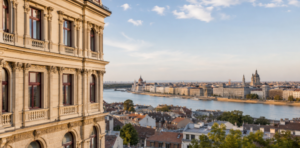
The Hungarian housing market continued its recovery in 2025, with prices rising by 20% in nominal terms and by 15% after adjusting for inflation. The number of registered transactions approached 136,000, and the final figure, according to estimates by the Hungarian Central Statistical Office (KSH), is expected to exceed 140,000 transactions, according to the latest annual market review.
However, the KSH has not yet published detailed statistics for 2025 breaking down homebuyers by citizenship. The latest available comprehensive snapshot shows that in 2024, foreign nationals purchased 6,600 residential properties in Hungary with a total value of approximately 834 million euros. This represented a 5.2% increase in the number of properties compared to the previous year.
Thus, foreigners accounted for about 5% of all real estate transactions in Hungary in 2024, and in monetary terms, they accounted for 6.4% of the market’s turnover. In total, approximately 131,100 real estate properties were sold in the country that year.
Following a decline in activity in 2023, the number of transactions in Hungary rose by 25% in 2024—to 131,100. Growth continued in 2025: as of the data cutoff, the Hungarian Central Statistical Office (KSH) had received information on 135,700 sales, of which 128,200 were in the resale market and approximately 7,600 were new construction units. The final number of transactions is expected to exceed 140,000.
The market picked up particularly noticeably in the second half of the year following the launch of the Home Start government program for subsidized housing loans. In September, the number of sales was 47% higher than a year earlier, and in the fourth quarter, KSH estimated annual growth in the number of transactions at approximately 10%.
In Budapest, the average price per square meter for resale housing in the fourth quarter of 2025 was approximately 3,240 euros.
The average price of a sold property reached approximately 184,000 euros. Prefabricated apartments sold for an average of approximately 165,000 euros, while single-family homes sold for 284,000 euros.
The price per square meter in the capital rose by 21% over the year. At the same time, growth was even higher in certain segments: prefabricated apartments rose in price by approximately 35%.
Outside the capital, the highest prices among administrative centers at the end of 2025 were observed in Debrecen—about 2,620 euros per square meter, Dióra—2,450 euros, Veszprém—2,440 euros, and Szeged—about 2,380 euros per square meter.
Although comprehensive statistics for 2025 are nearly complete, the most recent detailed ranking of buyers by citizenship published by the KSH still pertains to 2024.
Foreign nationals purchased 6,600 residential properties that year, which is 5.2% more than in 2023.
The total value of real estate purchased by foreigners amounted to approximately 834 million euros, or 6.4% of the Hungarian housing market’s turnover.
Statistics by major groups of foreigners in 2024:
Germany — 1,369 properties
China — 708
Romania — 671
Slovakia — 671
Netherlands — 438
Vietnam — 329
Austria — 268
Russia — 185
Ukraine — 144
Israel — 137
Differences between groups of foreign buyers are particularly noticeable in terms of the geographic location of purchases.
Chinese citizens completed 91.5% of their transactions in Budapest, Vietnamese buyers — 96%, and Russians — 84.9%.
Ukrainians were significantly less focused on the capital: only 39.6% of the homes they purchased were located in Budapest. Thus, the majority of Ukrainian buyers chose other cities and regions of Hungary.
Germans, despite ranking first in the number of transactions, showed virtually no concentration in the capital—Budapest accounted for only 8% of their purchases. The KSH notes high activity among German citizens in small towns in the Southern and Western Transdanubia regions.
The average price of a property purchased by a Ukrainian citizen was approximately 96,000 euros, and the average price per square meter was about 1,350 euros.
Nationwide in Hungary, foreigners account for about 5% of the total number of transactions, but their share is significantly higher in Budapest. In 2024, foreign citizens accounted for 7.8% of residential purchases in the capital and 10% of their total value.
In the inner districts of Pest, foreigners accounted for approximately 19% of all transactions and, in terms of value, represented about 26% of the market. Chinese and Vietnamese buyers were particularly prominent here.
Thus, the latest official statistics already allow us to assess the Hungarian real estate market for 2025: approximately 136,000 registered transactions, with the prospect of exceeding 140,000 after final data processing; a 20% increase in prices; and a further significant rise in housing costs in Budapest and most major cities.
However, the breakdown of purchases by citizenship for 2025 has not yet been published.
Source: Hungarian Central Statistical Office (KSH).

The Egyptian government has approved the creation of “The Spine,” a special private investment zone in the Madinaty district of New Cairo. The project, valued at approximately $27.4 billion, involves the construction of 165 residential, office, and hotel towers and is positioned by the developer as the first large-scale “cognitive city” in Egypt and the Middle East, where artificial intelligence will be widely used to manage its infrastructure.
Approximately 2.1 million square meters of land within the existing Madinaty project will be allocated for development. In addition to residential, office, and hotel buildings, the project will include retail, entertainment, tourism, medical, and other infrastructure.
Orion Urban Development, a subsidiary of one of Egypt’s largest developers, Talaat Moustafa Group Holding (TMG), has been granted the right to establish and develop the investment zone. Back in April, Egypt’s General Authority for Investment and Free Zones (GAFI) approved the creation of the country’s first private investment zone of this type for the project.
Investments in The Spine are estimated at over $27.4 billion, and the project’s paid-in capital amounts to approximately $1.35 billion. TMG’s partner is the National Bank of Egypt. The developer expects that the project will create 55,000 direct jobs and about 100,000 indirect jobs.
TMG Chairman Hisham Talaat Mustafa estimates The Spine’s potential contribution at approximately 1% of Egypt’s GDP, with total tax revenues from the project over its entire operational period amounting to approximately $16 billion. The company also expects to attract international corporations, tourists, and business visitors to the area. These figures are projections provided by the developer itself.
One of the distinctive features of The Spine is expected to be the extensive digitization of urban infrastructure. TMG states that it will use artificial intelligence systems and self-learning technologies to manage urban services. The project also includes an underground logistics and road network, which should free up a significant portion of the surface area from vehicular traffic.
Approximately 70% of the surface area—or more than 1.5 million square meters—is planned to be allocated to green spaces and open areas. Medical infrastructure will also be integrated into the project, including a partnership with the American hospital Houston Methodist Hospital.
The special status of the investment zone is intended to simplify registration, licensing, import, and export procedures for companies operating there. The project will feature its own customs infrastructure and a special support program for investors, which is a key part of the effort to transform The Spine not only into a residential area but also into an international business cluster.
TMG officially unveiled The Spine on April 18–19, 2026, in the presence of Egyptian Prime Minister Mustafa Madbouly, following approximately five years of preparation and research involving international consultants.
The project is in the early stages of implementation, though some elements of Madinaty’s infrastructure are already under construction: a medical complex in partnership with Houston Methodist is scheduled to open in April 2027. The overall timeline for completing construction of all 165 towers of The Spine has not yet been publicly announced.
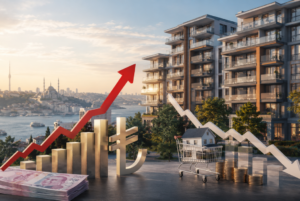
Prices for housing in Turkey in July 2026 rose by an average of 23.3% in local currency compared to last year; however, high inflation completely offset this increase: in real terms, real estate prices fell by 6.6%, according to the July market review by the platforms Emlakjet and Endeksa. The data was published on August 14.
The average price per square meter of housing nationwide reached 41,700 Turkish lira, or approximately $871, while the average price of a property sold was 5.21 million lira, which corresponds to approximately $109,000.
At the same time, July saw the first small positive sign in short-term trends: prices rose by 1.9% in nominal terms over the month and by approximately 0.5% when adjusted for inflation. However, one month is not yet enough to speak of a sustained recovery in the real value of Turkish housing.
Ankara’s Prices Are Rising Faster Than Istanbul’s and Antalya’s
Among the 30 provinces with the highest number of transactions, the most notable growth was recorded in Ordu—32.4% over the year. This is the only province among those analyzed where growth was positive even after adjusting for inflation—about 0.4%.
Ankara ranks second with a nominal increase of 28.7%, although in real terms, housing in the capital became approximately 2.5% cheaper. Next are Kocaeli—up 28.5%, Denizli—27.1%, and Elazığ—26.9%.
In Istanbul, a square meter of housing cost an average of 65,100 liras in July, and the average price of a property was about 7.16 million liras, or $149,500.
In Antalya, one of the main markets for foreign buyers, the average price per square meter reached 55,500 lira, and the average price per property was about 6.1 million lira, or $127,500. In Izmir, the average price was about 54,000 lira per square meter and 6.48 million lira per property.
Muğla remains Turkey’s most expensive province, home to resort centers such as Bodrum and Marmaris. Here, the average price per square meter reached 87,200 lira, and the average price per property was 11.34 million lira, or nearly $237,000. This is more than double the national average.
Housing sales have fallen sharply
The rise in prices is occurring against the backdrop of a significant decline in the number of transactions. According to the Turkish Statistical Institute (TÜİK), statistics on residential and commercial real estate sales for July were published on August 13, 2026. A total of 123,603 residential properties were sold nationwide during the month, which is approximately 17% less than a year earlier.
Istanbul remained the largest market with 22,600 transactions, followed by Ankara with 9,640, Izmir—6,550, and Antalya—6,300.
At the same time, the sales breakdown sends mixed signals. The number of mortgage transactions rose by 23.7%, while sales of new homes fell by 8.6% and those of existing homes dropped by as much as 20.8%. This may indicate a gradual return to the market of some buyers who are able to take advantage of bank financing.
Thus, the rise in the value of Turkish real estate in lira remains, to a large extent, a consequence of inflation. For investors, it is more important to pay attention not only to nominal growth of 20–30%, but also to real price trends, exchange rates, and rental yields. As of the end of July, the average property in Turkey is nominally significantly more expensive than a year ago; however, its real value continues to decline.
Open4Business recently conducted a separate analysis of the composition of foreign buyers of Turkish real estate. As of June 2026, Russian citizens ranked first with 381 purchases, while Ukrainians acquired 170 properties and tied for second place with Iranian citizens. In total, foreigners purchased 2,015 residential properties in June. From January through June, foreign demand totaled 9,083 properties, down 9.2% from the previous year.
Ukrainians remain one of the largest groups of homebuyers in Turkey, even over the long term. In 2025, Ukrainian citizens purchased 1,541 properties and ranked third among foreign buyers, trailing only Russians and Iranians. Thus, the decline in real prices for Turkish housing is of direct interest to Ukrainian private investors, who continue to maintain an active presence in this market.

In July 2026, Ukrainian citizens purchased 145 residential properties in Turkey and ranked third among foreign homebuyers in the country, according to data from the Turkish Statistical Institute (TÜİK) published on August 13.
Russian citizens purchased the most residential properties among foreign buyers in July—394 properties. Iranian citizens ranked second with 189 transactions, while Ukrainians ranked third with 145 properties.
Thus, Ukrainian citizens accounted for approximately 6.8% of all residential property sales to foreigners in Turkey that month.
However, compared to June, activity among Ukrainian buyers declined slightly. In June, Ukrainians purchased 170 properties and tied for second place with Iranian citizens. In July, the number of transactions by Ukrainians decreased by approximately 15%, but Ukraine remained among the top three foreign buyers of Turkish real estate.
In total, 2,120 residential properties were sold to foreigners in Turkey in July, which is 1.9% more than in July of last year. Foreigners accounted for 1.7% of total residential property sales.
At the same time, the overall situation in the Turkish real estate market was significantly worse: in July, 123,603 thousand houses and apartments were sold in the country—17% fewer than a year earlier. Sales of new housing fell by 8.6% to 42,529 thousand units, while sales of resale housing dropped by 20.8% to 81,074 thousand
Thus, demand from foreign buyers in July appeared more stable than in the domestic market. However, over a longer period, foreign demand remains lower than last year’s levels. From January through July 2026, foreigners purchased 11,203 thousand residential properties in Turkey, which is 7.3% less than during the same period in 2025.
Ukrainians have maintained a strong presence in the Turkish real estate market for several years now. In 2025, Ukrainian citizens also ranked third among foreign buyers, purchasing 1,541 thousand residential properties. Ahead of them were Russians, with 3,649 thousand transactions, and Iranian citizens, with 1,878 thousand.
For comparison: in 2024, Ukrainians were also among the top three foreign buyers, purchasing 1,631 thousand properties.
Thus, despite a slight decline in July compared to June, Ukraine remains one of the three largest foreign markets for Turkish residential real estate, alongside Russia and Iran.



