
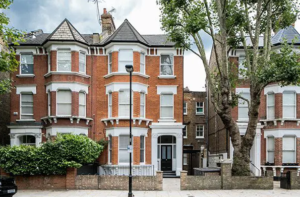
Nearly four out of ten apartments in London that were resold within 12 months as of August 2026, after five to ten years of ownership, were sold for less than their original purchase price. This is according to an analysis by e.surv Chartered Surveyors.
The share of loss-making apartment resales in the British capital reached 39.5%, the highest rate among regions in the United Kingdom. By comparison, among homes owned for the same period, the share of sales below the original purchase price was less than 4%.
In Southeast and East England, approximately one-third of apartments that owners had held for five to ten years were also sold for less than their purchase price. In central and northern England, such transactions accounted for about 20%, while the UK-wide average was slightly more than a quarter. In Scotland, the figure remained below 10%.
According to e.surv’s assessment, price trends for apartments and single-family homes began to diverge noticeably around 2017. Among the factors holding back apartment prices, analysts cite leasehold issues, high service charges, safety concerns regarding buildings, the cost of replacing cladding following the cladding crisis, and rising mortgage costs.
Additional pressure is coming from the general weakening of the London real estate market. According to the e.surv index, the average housing price in the United Kingdom in September 2026 was approximately £328,900, which is 1.5% higher than a year ago. However, London was the only major region to see a year-over-year decline in prices—by approximately 2.3%, to 594,200 pounds
A separate analysis by ValuQ also shows an increase in the number of loss-making transactions in England and Wales. In the first half of 2026, 16.3% of residential properties resold less than five years after purchase were sold for less than their original price. Among apartments, this figure reached 29.5%. The total difference between the purchase price and the resale price of such properties was estimated at approximately £210 million.
It is important to note that this is strictly a nominal comparison of purchase and sale prices. The calculation does not include stamp duty, mortgage interest, real estate agent commissions, renovation costs, maintenance fees, or other owner expenses. Therefore, the actual financial outcome for some sellers may be even worse.
Experts attribute the weak performance of the apartment market primarily to the fact that buyers are increasingly carefully evaluating the ongoing maintenance costs of apartment buildings and potential legal and technical risks. At the same time, demand for single-family homes and townhouses remains relatively more stable.
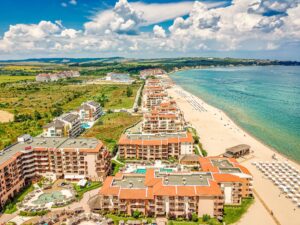
The Bulgarian real estate market continued to cool sharply: in the third quarter of 2026, 45,312 transactions were registered in the country, marking the lowest figure since at least 2005, according to comparable data from the Bulgarian Registry Agency.
Compared to July–September 2025, when 58,184 transactions were recorded, market volume shrank by 22.1%. For the first time since 2010, the number of transactions in the third quarter fell below 50,000.
The decline affected nearly the entire country. An increase in the number of transactions was recorded in only six of the 113 cities included in the statistics. Among them were Blagoevgrad, where sales rose by 19.8%, and Gotse Delchev, with an increase of 11.2%.
In Sofia, 7,282 transactions were recorded in the third quarter, which is 21.2% less than a year earlier. In the Burgas region, the figure fell by 14.3% to 2,047 transactions. Both markets have effectively returned to 2023 levels.
An even sharper decline was recorded in a number of resort and regional markets. In Nessebar, which also includes transactions in Sunny Beach, the number of transactions fell by 37%. In Razlog, which includes the Bansko market, the decline was 30.4%; in Smolyan, 30.7%; and in Chepelare, nearly 40%.
From January through September 2026, 129,431 transactions were registered in Bulgaria, which is nearly 19% fewer than a year earlier. By comparison, 159,338 transactions were concluded during the same period in 2025, 152,316 in 2024, and 153,109 in 2023.
However, the decline in the number of transactions has not yet been accompanied by a drop in prices. According to data from the National Statistical Institute of Bulgaria, in the second quarter of 2026, housing prices rose by 15.5% year-over-year and by 4.5% compared to the first quarter. Bulgaria ranked second in the EU in terms of the annual growth rate of housing prices. Consequently, an unusual situation is unfolding in the market: the number of transactions is falling sharply, but prices continue to rise. This may indicate a reduction in the supply of high-quality properties, a high proportion of cash buyers, as well as price inertia following significant growth in recent years.

Foreign investors poured approximately 1.02 billion euros into Greek real estate in the first half of 2026, a 6.7% increase compared to the same period last year, according to data from the Bank of Greece.
At the same time, the growth in foreign investment is occurring against the backdrop of a sharp decline in the number of new applications under the Golden Visa program. This indicates that foreign buyers’ interest in Greek real estate is becoming less dependent on the possibility of obtaining a residence permit.
In the second quarter of 2026, the volume of foreign capital directed toward real estate purchases in Greece amounted to approximately 515.8 million euros. This is 11.2% less than in the second quarter of 2025; however, thanks to a strong first quarter, the result for the entire half-year remained higher than last year’s.
The primary source of these statistics is the Bank of Greece, which separately publishes quarterly and annual data on non-residents’ direct investments in Greek real estate. The statistics include real estate purchases by foreign investors as part of foreign direct investment. Bank of Greece
At the same time, the Greek Ministry of Migration and Asylum has recorded a decline in activity under the Golden Visa program. From January through June 2026, 2,551 new applications were submitted, compared to 4,553 during the same period a year earlier. Thus, the figure fell by approximately 44%. Ekathimerini
The decline in the number of applications is linked, in particular, to stricter program requirements. In the most popular regions—including Attica, Thessaloniki, Mykonos, and Santorini—the minimum threshold for a standard real estate purchase to qualify for a Golden Visa has been raised to 800,000 euros. In most other regions, it stands at 400,000 euros. A separate threshold of 250,000 euros has been retained for certain properties that are being converted from commercial to residential use or are subject to restoration.
However, statistics show that foreign capital continues to flow into the market even without a direct link to the immigration program.
Throughout 2025, foreign investors invested approximately €2.05 billion in Greek real estate. This was less than the record €2.75 billion in 2024, but remained one of the highest figures in recorded history. Between 2019 and 2025, the total inflow of foreign capital into Greek real estate reached approximately €12.4 billion. Ekathimerini
By comparison, the Bank of Greece reported that in 2024 alone, net inflows from real estate purchases by non-residents reached €2.75 billion, up from €2.13 billion a year earlier—an increase of 28.9%. Bank of Greece
The shift in demand means that foreign buyers are increasingly viewing Greek real estate not only as a means of obtaining a residence permit but also as an investment asset in its own right. Demand is driven by the tourism market, long-term rentals, rising housing prices in the most attractive regions, and international investors’ interest in hotel and commercial properties.
Foreign capital continues to be particularly active in Athens and Attica, Thessaloniki, Crete, Rhodes, and other tourist islands.
At the same time, Greek authorities continue to discuss further changes to the Golden Visa program amid a shortage of affordable housing. The growth in foreign demand and short-term rentals has become one of the arguments for raising investment thresholds and introducing additional restrictions on the use of purchased real estate.
Thus, preliminary data for 2026 indicate noticeable changes in the Greek market: the number of investors directly seeking to obtain a Golden Visa is declining, yet the total volume of foreign capital in real estate continues to grow for now.
foreign investor, golden visa, GREECE, INVESTMENTS, REAL ESTATE
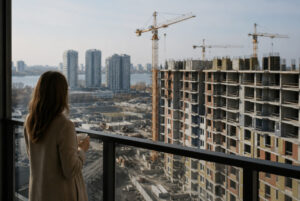
The volume of construction work completed in Ukraine from January through August 2026 decreased by 9.9% compared to January through August 2025, according to data from the State Statistics Service (Derzhstat).
According to the statistical agency, the volume of construction output in January–August totaled 156.5 billion hryvnias.
According to the State Statistics Service, over the eight-month period, the volume of residential construction decreased by 3.8% compared to January–August of last year, nonresidential construction by 6.3%, and civil engineering structures by 13.7%.
In August 2026, compared to August 2025, construction volumes decreased by 3.7%, including residential construction by 2.3% and civil engineering structures by 12.2%. At the same time, construction volumes for non-residential buildings increased by 9.8%.
In August 2026, compared with the previous month, construction volumes increased by 12.9%; specifically, in the residential category by 0.2%, in nonresidential buildings by 25.3%, and in civil engineering structures by 8.8%.
According to the agency’s seasonally adjusted data, construction output indices in August 2026 stood at 62% for residential construction, 155% for nonresidential construction, and in civil engineering at 112%; taking into account the calendar-day effect, the figures were 63.1%, 156.5%, and 115.4%, respectively.
The share of new construction in the total volume of construction work completed in July was 44.6%, repairs—30.3%, and reconstruction and other work—25.1%.
CONSTRUCTION, INFRASTRUCTURE, REAL ESTATE, State Statistics Service, UKRAINE

More than two-thirds of Ukrainians planning to buy an apartment pay attention to the availability of a backup power supply and independent heating, according to the results of a survey by “OLX Real Estate.”
According to the study, 68% of potential buyers consider a backup power supply in case of power outages to be important, compared to 49% in 2025. Thus, over the course of a year, the share of buyers paying attention to a home’s energy independence has risen by 19 percentage points. The availability of autonomous heating is also important to 68% of respondents.
“Energy sustainability has effectively become on par with many ‘traditional’ characteristics of an apartment or house,” notes the OLX report.
At the same time, the main criterion when buying an apartment remains its cost—82% of respondents cited price as important. In second place is the total area of the home—79%.
The number of rooms and the city neighborhood are considered by 77% of potential buyers each. A good floor plan or renovation, as well as the property’s stage of completion, are important to 76% of respondents; infrastructure and the building’s exterior are important to 73%; and the floor level is important to 72%.
At the same time, the war has significantly changed Ukrainians’ security requirements for real estate. 67% of potential buyers consider the distance from strategic facilities, and the presence of a shelter directly in the building is important to 60%.
At the same time, traditional advantages of a property’s location are less important. Proximity to the metro was cited as important by 46% of respondents, and a location near the city center by 45%.
The main reason for purchasing real estate remains the desire to improve current living conditions—47% of respondents cited this as their motivation. Another 42% want to acquire their own private space, 23% plan to move into a more spacious home, 20% view the purchase as a way to improve their standard of living, and 11% want to change the neighborhood where they live.
The investment component remains significant, though it takes a back seat to purchasing a home for personal use. Twenty-eight percent of potential buyers view real estate as an investment. Specifically, 19% expect to generate income in the future by renting out the property or reselling it.
Thus, the survey results indicate a shift in Ukrainian buyers’ priorities: alongside price, square footage, and location, a property’s ability to function during power outages and its level of security are becoming increasingly important.
According to OLX, attitudes toward backup power have changed particularly noticeably: while in 2025 approximately one in two potential buyers considered this factor, by 2026 the figure had risen to more than two-thirds.
Source: “OLX Real Estate” study.

According to the Relocation project, Greece has proposed discontinuing the granting of residence permits to foreign investors for the purchase of real estate and refocusing the “Golden Visa” program on direct investments in the country’s economy.
This initiative was put forward by Nikos Androulakis, leader of the main opposition party PASOK, amid the ongoing housing crisis. Androulakis believes that the current model effectively encourages the sale of Greek real estate to foreign investors and further impacts housing affordability for the local population.
However, PASOK’s proposal does not call for Greece to completely stop granting residence permits in exchange for investment. The party proposes removing real estate from the list of assets eligible for a “Golden Visa” and redirecting foreign capital toward investment instruments that promote economic growth.
For now, this is solely a political initiative by the opposition. PASOK holds 34 seats in Greece’s 300-seat parliament, so the proposal does not automatically mean a change to the current program.
Currently, the minimum real estate investment required to obtain a Greek Golden Visa depends on the region and the type of property.
In Attica, Thessaloniki, Mykonos, and Santorini, as well as on islands with a population of over 3,100, the minimum threshold is 800,000 euros. In most other regions of the country, it is set at 400,000 euros.
A reduced threshold of 250,000 euros applies to certain categories of properties, including real estate being converted from commercial to residential use and certain buildings requiring restoration. For standard investments of 400,000 euros and 800,000 euros, there is a requirement to purchase a single property with an area of at least 120 square meters.
Greek authorities have tightened the conditions of the Golden Visa program several times in recent years amid rising housing costs. In addition to raising the minimum investment thresholds, real estate purchased under the program can no longer be used for short-term rentals.
The stricter rules have already affected demand. According to the Greek Ministry of Migration and Asylum, in the first half of 2026, foreign investors submitted 2,551 new applications for the Golden Visa—44% fewer than the 4,553 applications filed during the same period in 2025.
At the end of the first half of the year, there were 32,702 active investor residence permits in Greece, issued under the program since its launch. Another 7,368 applications from previous periods remained pending.
The decline in interest in the Golden Visa has not yet led to an overall drop in foreign investment in Greek real estate. In the first quarter of 2026, the inflow of foreign capital into the real estate market reached 511.6 million euros, an increase of 43.4% compared to 356.8 million euros a year earlier. This indicates that demand for Greek properties among foreigners remains strong even without the incentive of obtaining a residence permit.
Between 2019 and 2025, foreign investors poured approximately €12.4 billion into Greek real estate. In 2025, the volume of foreign investment totaled €2.05 billion, compared to €2.75 billion in 2024.
The Golden Visa program has been in effect in Greece since 2014 and allows citizens of non-EU countries to obtain a five-year renewable residence permit provided they meet the investment requirements. The question of the future role of real estate in this program takes on particular significance against the backdrop of rising housing costs and the government’s efforts to increase the supply of properties available for long-term rent.
https://relocation.com.ua/greece-proposes-to-exclude-real-estate-from-the-golden-visa-program/
golden visa, GREECE, INVESTMENTS, REAL ESTATE, RESIDENCE PERMIT



