

The European Union did not support Ukraine’s request for early disbursement of additional funding in 2026 and emphasized that the allocation of funds will depend directly on Kyiv’s implementation of agreed-upon reforms, according to the Financial Times, citing a letter from European Commissioners Valdis Dombrovskis and Marta Kos to Verkhovna Rada Chairman Ruslan Stefanchuk.
This summer, Ukraine estimated its additional defense needs at approximately $27 billion and approached the European Commission with a proposal to advance a portion of the funds from the two-year €90 billion Ukraine Support Loan program (€60 billion earmarked for defense, €30 billion for direct budget support). According to the program’s terms, up to €45 billion is to be made available to Ukraine in 2026, with the remaining €45 billion to follow in 2027.
According to the FT, European Commissioners have made it clear that access to funding is contingent upon fulfilling an agreed-upon list of commitments. Specifically, this involves the elimination of VAT exemptions for small international parcels, the introduction of taxation rules for digital platforms, and proper financial monitoring of politically exposed persons (PEPs)—changes to which have raised concerns in Brussels as a deviation from the anti-corruption agenda. According to the publication’s assessment, meeting these requirements will pave the way for Kyiv to receive approximately 34 billion euros in support as early as 2026.
At the same time, the European Commission emphasized that the rejection of the request for an early advance payment does not mean a curtailment of financial assistance. On October 1, the parties announced that they had agreed on sources of funding for budgetary and defense needs through the end of 2026, noting that there is no unfunded financial gap for the current year.
In addition, on October 2, the European Commission transferred another tranche of 2.9 billion euros to Ukraine as part of the Ukraine Facility program. The total amount of aid to Kyiv from the EU and its member states since the start of Russia’s full-scale invasion has reached 227.4 billion euros.

The introduction of uniform hospitalization criteria in Ukraine does not mean an automatic reduction in the hospital network; however, complex medical procedures will increasingly be concentrated in facilities capable of ensuring the necessary level of safety, said Yevhen Honchar, Ukraine’s Deputy Minister of Health, in an exclusive interview with Interfax-Ukraine.
According to him, in most communities where hospitals currently operate, medical care facilities should remain. The key issue is the range of services that a specific facility is capable of providing safely.
A small hospital does not necessarily need to perform surgical procedures or deliver babies if it lacks a sufficient number of specialists and the necessary infrastructure.
In particular, safe round-the-clock monitoring of surgical patients requires several anesthesiologists, whereas small facilities sometimes have only one surgeon and one anesthesiologist on staff.
At the same time, basic services—family medicine, consultations with a cardiologist, an obstetrician-gynecologist, and other specialists—must remain as geographically accessible as possible.
Thus, the development of the hospital network will proceed simultaneously in two directions: the concentration of specialized care and the preservation of a broad network of basic medical services.
HOSPITAL, HOSPITALIZATION, MEDICINE, Ministry of Health, REFORM

Bulgarian authorities are considering changing the methodology for determining the taxable value of real estate, which could lead to an increase in annual property taxes and transaction costs when buying or selling real estate.
The changes may be included in the 2027 state budget, said Bulgarian MP Yavor Gechev. The legislative framework for implementing the new system is scheduled to be drafted in October–November 2026, after which a special working group will determine the new valuation coefficients. A final decision has not yet been made.
When calculating the taxable value, it is proposed to take into account more accurately the property’s location, type, and technical condition, the year of construction, as well as actual prices on the real estate market. The current methodology has not been revised for many years, so the tax assessment of many apartments and houses is significantly lower than their market value.
According to tax consultant Mykola Ivanchev, a reasonable increase in the tax value could be 20–30%. At the same time, he recommends limiting the increase to 20% to avoid placing an excessive burden on property owners, especially retirees and low-income citizens.
As an example, the expert cited an apartment or house in Sofia with a market value of 150,000–200,000 euros, whose tax assessment is approximately 50,000 euros. At the municipal rate of 2 per mille, the owner currently pays about 100 euros per year. After a 20–30% increase in the assessment, the payment could rise to approximately 120–130 euros.
The reform will affect more than just owners’ annual payments. The tax assessment is used to calculate a portion of local taxes, notary fees, and other costs associated with the purchase or sale of real estate. Therefore, an increase in the assessment will make transactions somewhat more expensive even if municipal rates remain unchanged.
Legal experts suggest that rising costs associated with purchasing and maintaining housing could affect demand. Properties that previously attracted buyers with low taxes and operating costs may become less appealing if mandatory payments increase significantly.
Authorities have long delayed revising the methodology due to the high proportion of homeowners. According to estimates by participants in the discussion, over 90% of Bulgaria’s residents own real estate, so a tax increase could trigger significant public and political backlash.
At the same time, the idea of a higher tax on second and subsequent apartments is being discussed. However, experts consider this difficult to administer: about 8–9% of the population owns multiple properties, and the additional costs for municipalities may prove to be comparable to the expected revenue.
Thus, Bulgaria has not yet made a decision to raise the property tax. At this stage, discussions are focused on updating the tax assessment of properties, with the possible implementation of a new methodology starting in 2027. The actual amount of payments will depend on the approved coefficients and rates set by each municipality.

Ukraine has received $3.35 billion as part of the First Labor Market Development and Private Sector Growth Program, implemented jointly with the World Bank; the funds have already been transferred to the state budget and will be used to support macrofinancial stability and finance priority expenditures under martial law, Prime Minister Yulia Svyrydenko announced.
According to her, the funds were the result of agreements signed by Ukraine and the World Bank on June 24 as part of the Ukraine Recovery Conference (URC 2026).
“This funding was made possible by a large-scale reform package. To fulfill the program’s conditions, the government and the Verkhovna Rada adopted 13 laws and 7 subordinate regulatory acts,” Svyrydenko stated in a post published on Facebook.
The reforms covered a number of areas, including improving the public procurement system, developing factoring, integrating energy markets with the European Union, transforming the agricultural sector, supporting veteran entrepreneurship, developing housing policy, modernizing preschool and vocational education, and restoring the system for monitoring greenhouse gas emissions.
“The next phase of the program provides for the allocation of an additional $1 billion by the end of 2026, subject to the fulfillment of certain conditions,” the prime minister noted.
She also reported that part of the funding under the program is backed by guarantees from the governments of the United Kingdom and Japan.
Source: https://www.facebook.com/share/p/18v8tuSZnE/?mibextid=wwXIfr

More than 15% of Ukrainians noticed that the cost of medicines increased by more than 50% during 2024-2025, while 52% of Ukrainians noted a 20%-50% increase in the cost of medicines.
According to Alexander Pozniy, director of the research company Active Group, this is evidenced by the results of a survey conducted by Active Group and the Experts Club analytical center in early February and presented to Interfax-Ukraine on Friday.
Pozniy noted that a third of those surveyed said that medicine prices had remained almost unchanged, while 2.6% said that they had even decreased.

“In general, it can be noted that the cost of medicines has risen quite significantly, and this is noted by almost the absolute majority (of respondents),” he said, explaining that medicines account for about 10-20% of the household budget, which is why the price increase is so noticeable.
Pozniy noted that, according to the survey, when buying medicines, 25% of Ukrainians pay attention to price, while 24.5% pay attention to effectiveness.
“That is, slightly more than half pay attention to the combination of price and effectiveness of the selected medicines. Therefore, people try to find the optimal combination that would provide the best effect and the least financial burden in terms of treatment,” he said.
In addition, Pozniy said that 28.4% of respondents prefer Ukrainian medicines, while 33.4% prefer imported ones. For 38% of respondents, the country of origin of the drugs does not matter.
According to the results, 31.4% of respondents believe that using electronic prescriptions is very convenient, 44% believe it is somewhat convenient, 18.7% believe it is somewhat inconvenient, and only 5.9% believe it is very inconvenient.
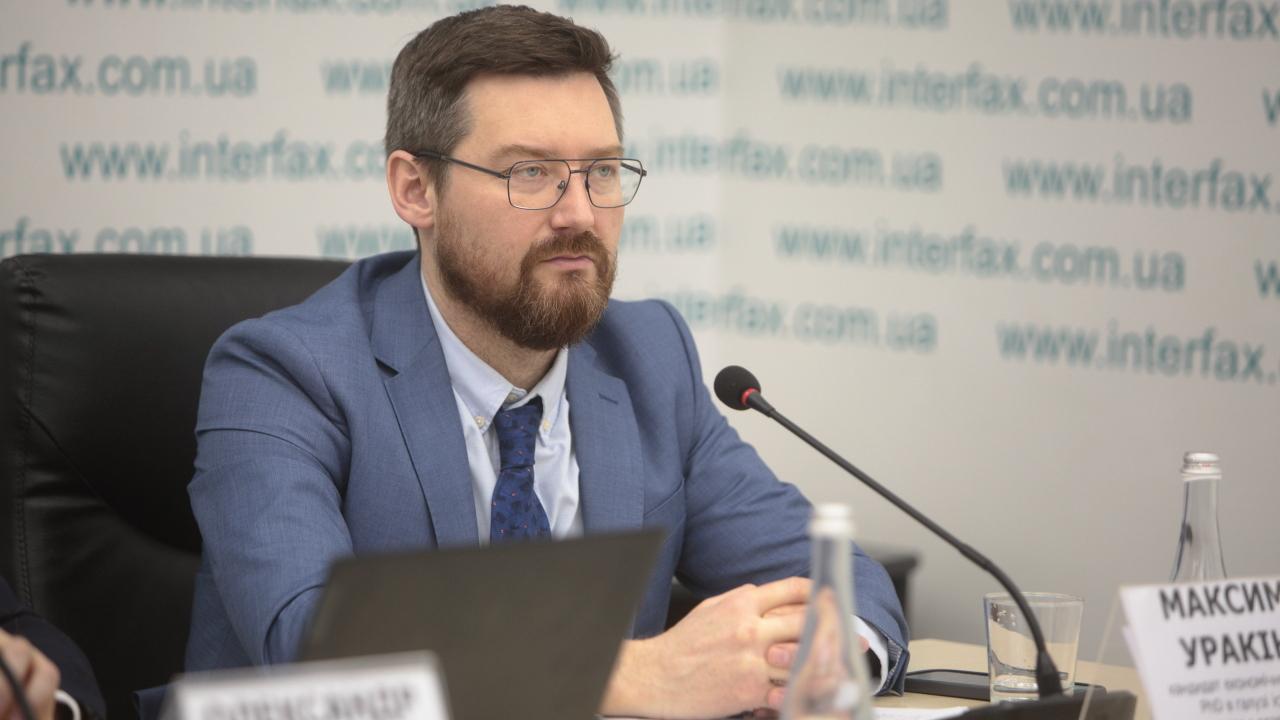
For his part, Maksim Urakin, founder of the Experts Club information and analytical center, noted that the price of medicines is a key factor for Ukrainian citizens.
“Against this backdrop, it is particularly important how state mechanisms for reimbursement and compensation for the cost of medicines work. There is a state reimbursement program, but only 13% of Ukrainians use it. Therefore, reimbursement needs to be promoted among citizens,” he said.
The survey was conducted on the SunFlowerSociology online panel using a representative sample on February 11-12, 2026. The survey involved 1,000 respondents from a representative sample in all regions of Ukraine, except for the temporarily occupied territories.
ACTIVE GROUP, EXPERTS CLUB, MEDICINE, Pozniy, REFORM, URAKIN

New Zealand’s Active Investor Plus investor residency visa program has seen increased interest from foreign capital since the rules were changed: as of January 19, 2026, Immigration New Zealand had received 532 applications covering 1,709 applicants (including family members) representing 33 nationalities.
According to INZ data, the minimum investment “potential” of the applications submitted is estimated at NZ$3.16 billion, with 392 applications already receiving approval in principle and 159 applications completed with the issuance of residence visas. The volume of investments already committed under issued residence visas amounts to NZ$926.2 million, with most of the funds going to Invest New Zealand-approved managed funds and bonds.
The most active applicants are US citizens (201 applications), followed by China (86), Hong Kong (69), Germany (37), Singapore and Taiwan (26 each). The statistics also include the United Kingdom, Japan, South Korea, Vietnam, Switzerland, the Netherlands, as well as Russia (3 applications) and Ukraine (1 application).
The reformed rules have been in effect since April 1, 2025, and provide for two categories of investment: Growth (minimum NZD 5 million for 3 years, more “active” and risky instruments, including managed funds and direct investments in business) and Balanced (NZD 10 million for 5 years, a mixed portfolio with the possibility of lower-risk instruments). The package of changes also includes a reduction in the investment threshold compared to the previous settings, the removal of the English language requirement, and the relaxation of certain immigration conditions for investors choosing more active investments.



