
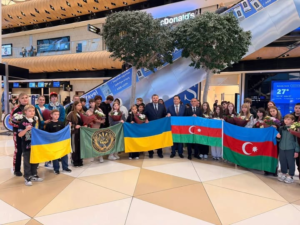
A group of 30 Ukrainian children from the Kharkiv and Kherson regions has arrived in Azerbaijan for psychological and health rehabilitation and recreation, the Embassy of Ukraine in the Republic of Azerbaijan reported.
The group includes children living under constant Russian shelling, as well as children of active Ukrainian servicemen, prisoners of war, and wounded defenders of Ukraine.
The rehabilitation and recreation program has been organized in the city of Gabala, one of Azerbaijan’s main mountain resort centers.
At Heydar Aliyev International Airport, the children were welcomed by Ukraine’s Ambassador to Azerbaijan Yurii Husiev, head of the Azerbaijan-Ukraine Interparliamentary Relations Working Group and member of the Milli Majlis Alibala Maharramzade, and Deputy Chairman of the Board of the Social Services Agency under Azerbaijan’s Ministry of Labour and Social Protection of the Population Vugar Mammadov.
Since the beginning of the full-scale war, 692 Ukrainian children have already undergone recreation, health improvement and rehabilitation in Azerbaijan, the embassy reported.
Thus, taking into account the current group, Azerbaijan continues to implement humanitarian programs aimed at supporting Ukrainian children affected by the war.
“We highly appreciate this assistance, the strong strategic partnership and friendship that unite the Ukrainian and Azerbaijani peoples,” Husiev said.
The ambassador also thanked Azerbaijan for its support for Ukraine and assistance to children who, because of the war, are forced to live under conditions of constant danger and shelling.
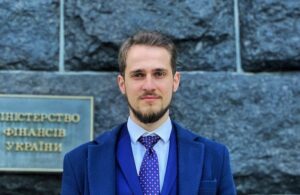
Nazarii Volyansky has been appointed director of the “Kyiv Region Regional Development Agency” following a competitive selection process.
According to the Unified State Register, Volyansky has been listed as the agency’s director since July 20. The Agency’s director is appointed for a three-year term by decision of its supervisory board.
In his new position, Volyansky will focus on attracting investment and international technical assistance, developing strategic partnerships, supporting communities and businesses, and implementing projects for the recovery and economic development of Kyiv Oblast.
Volyansky has over 10 years of experience in the fields of international economics, attracting foreign direct investment, business-government relations, and strategic communications.
Since January 2025, he has served as director of government relations in Ukraine for the Polish energy group UNIMOT S.A. From 2024 to 2025, he headed the Ukrainian representative office of the Polish Union of Entrepreneurs and Employers (ZPP), where he focused on developing Ukrainian-Polish economic cooperation, establishing business contacts, and supporting Ukrainian companies’ entry into the Polish and other European markets.
In 2023, Volyansky served as head of the Department of International Relations and Communications at UkraineInvest, the government agency responsible for attracting and supporting investment. From 2021 to 2023, he worked as director of corporate communications at the Ukrainian Chamber of Commerce and Industry.
He was also the creator and host of the television program “Exclusive with Nazar Volyansky” on the Rada TV channel, as well as an advisor to the leadership of the Ukrainian Nuclear Forum Association and the technology company FRDM Group. In October 2025, he was appointed Head of Development and Representative of the National Association of Lobbyists of Ukraine in Poland.
Volyansky earned a master’s degree in journalism from Ivan Franko National University of Lviv, studied international economics and economic relations at the Kyiv Institute of International Relations, and completed a training program for specialists in attracting foreign direct investment at the Møller Institute at the University of Cambridge.
The Kyiv Regional Development Agency was registered on June 12, 2018. Its founders were the Kyiv Regional State Administration, the Kyiv Regional Council, the Kyiv Regional Chamber of Commerce and Industry, the Bila Tserkva National Agrarian University, and the non-governmental organization “Society of Researchers of Ukraine.”
The Agency’s main objective is to promote the economic development of the Kyiv region and coordinate cooperation between investors, businesses, local communities, and government agencies. The Agency provides support for investment projects, assists with the registration of industrial parks, helps prepare grant applications, identifies suitable land plots and production facilities, and develops business models and community development strategies.
Among the Agency’s projects are the European GreenGov program for implementing environmental standards, the development of community development strategies for Kyiv Oblast, the “Power of Opportunities” entrepreneurship support program, the development of the region’s biogas industry, and projects to expand rehabilitation assistance.
AGENCY, Appointment, INVESTMENT, Kyiv Oblast, REHABILITATION
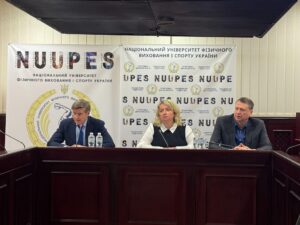
From Injury to Victory: Is Ukraine Ready for Systematic Veteran Rehabilitation Through Sports
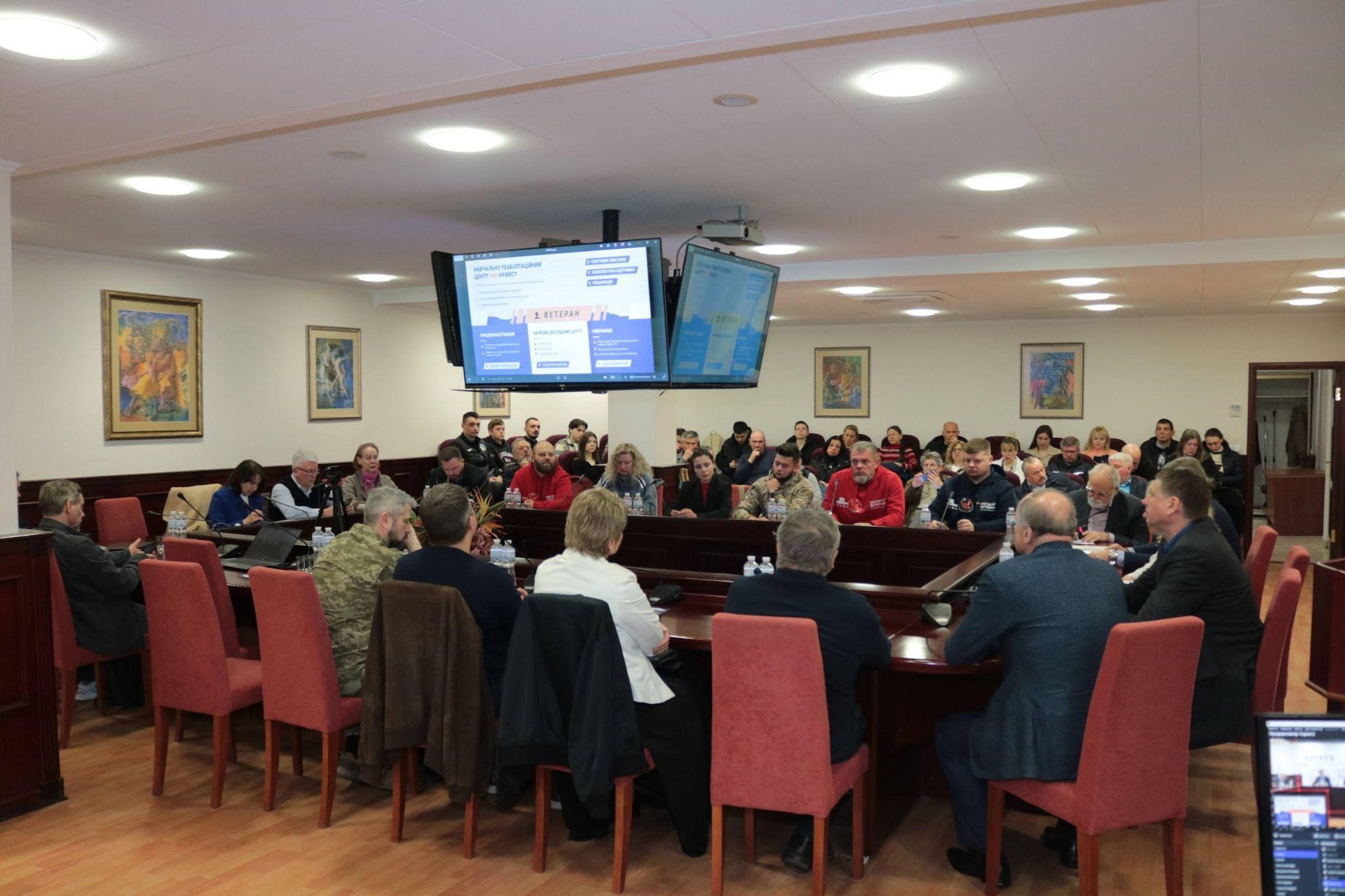
On April 16, 2026, an open expert meeting was held at the National University of Physical Education and Sports of Ukraine
“From Injury to Victory: Is Ukraine Ready for a New Rehabilitation System?”, which served not only as a discussion platform but also as an attempt to form a shared vision of the future model of adaptive sports and rehabilitation in Ukraine.
The event brought together representatives of government institutions, relevant ministries, the scientific and educational community, the National Olympic University, civil society organizations, the sports community, rehabilitation centers, and the veterans themselves—those for whom this system is intended to work first and foremost.
Full-scale war has radically changed the social structure of Ukrainian society. Thousands of soldiers are returning to civilian life with injuries—both physical and psychological. In this context, rehabilitation ceases to be a narrowly defined medical issue and becomes a matter of national resilience.
Adaptive sports play a much broader role in this process than mere physical activity. It is a tool for physical recovery, psycho-emotional stabilization, social integration, and the formation of a new identity after trauma.
However, the main challenge, which was repeatedly raised during the meeting, is the lack of a systematic approach.
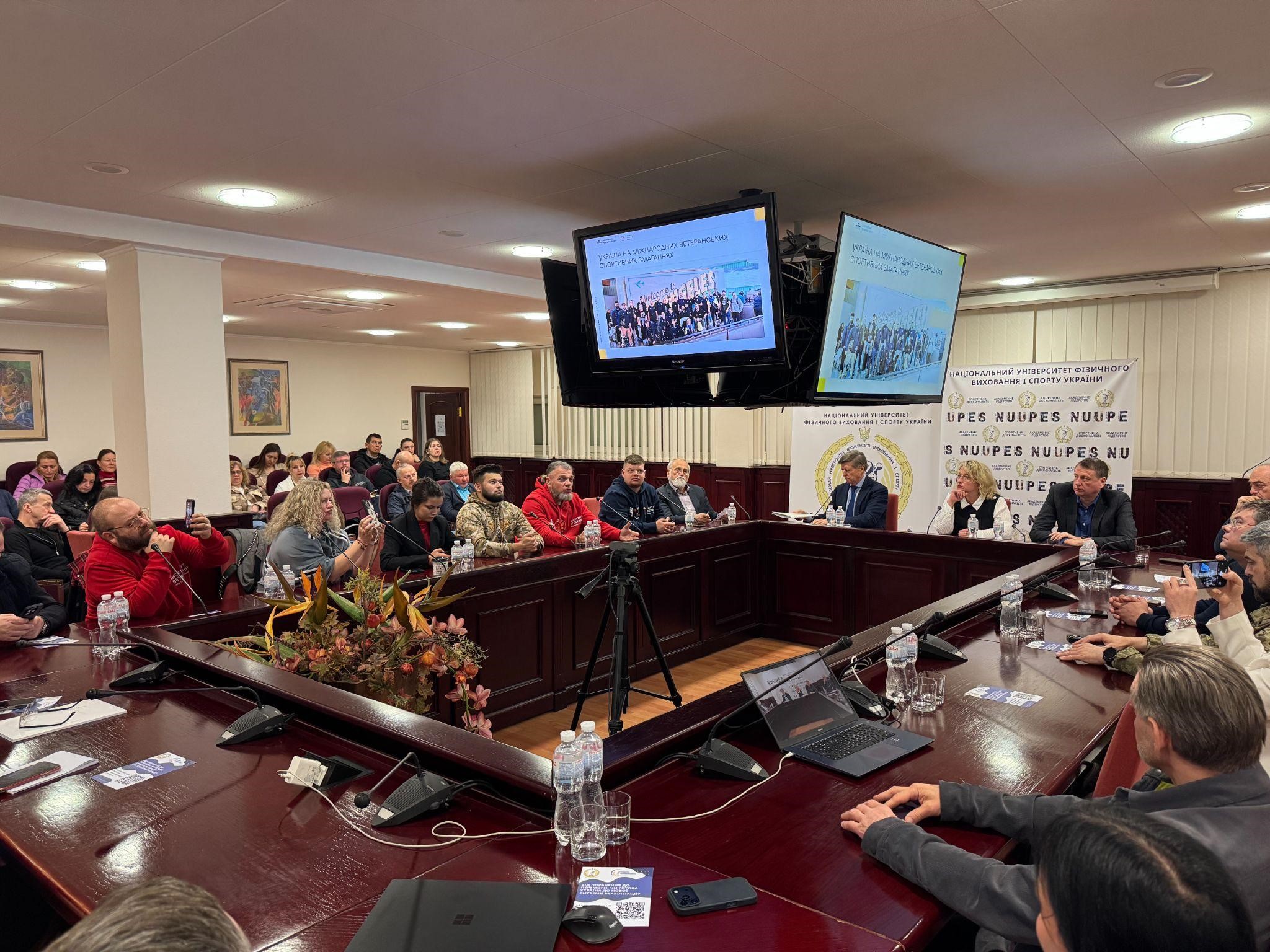
Opening the event, Viktor Korzh, director of the NUPSU Training and Rehabilitation Center, immediately identified the key problem: there are already many initiatives in Ukraine, but they remain fragmented.
“Physical education and sports rehabilitation, as well as adaptive sports, are an extremely important social component that should serve the recovery and social integration of our wounded veterans.
This requires an individualized approach, professional medical supervision, and consideration of each person’s health condition.
Only then will these tools truly be beneficial and not cause harm.
“Sports and physical rehabilitation are powerful tools that must be based on deep knowledge and responsibility, and only then will they truly be beneficial and not cause harm.”
His statement set the tone for the entire discussion: the focus is not on creating new separate projects, but on building a comprehensive ecosystem.
Special attention was paid to the role of education in shaping this system.
Olga Borisova, Acting Rector of the National University of Physical Education and Sports of Ukraine, emphasized the strategic importance of training specialists.
“Today, universities must go beyond traditional education and become centers for shaping a new rehabilitation system.
We are talking about training specialists who will work at the intersection of sports, medicine, and psychology.
It is precisely such professionals who will ensure the quality and safety of the veterans’ recovery process.”
This approach underscores that the challenge of adaptive sports is not merely organizational but also a staffing issue. Without systematic training of specialists, even the best programs cannot function effectively.
A key focus of the discussion was an analysis of the experiences of the United States and Israel—countries with long-standing experience working with veterans.
Artem Goncharenko, head of the “Architecture of Resilience” Institute for Rehabilitation, Reintegration, and Professional Development at KNUBA, emphasized that the key difference between these systems is their integration.
“In the U.S. and Israel, adaptive sports do not exist in isolation—they are integrated into state rehabilitation policy.
This is part of a continuous process: from the hospital to a full return to society.
It is important for Ukraine not simply to adopt this experience, but to properly integrate it into its own system.”
In fact, this involves a shift from “post-injury assistance” to a model of “supporting the individual at every stage of recovery.”
One of the most powerful moments of the meeting was the speech by veteran Vadym Honcharenko, who shared his own experience of participating in international competitions.
“Adaptive sports are not just about physical recovery.
It’s about regaining self-confidence, about the opportunity to feel in control of your life again.
It was through sports that I was able to find new motivation and return to an active life.”
His words effectively confirmed what the experts had been saying: the effectiveness of the system is measured not by the number of programs, but by the changes in the lives of specific people.
Also among the meeting participants were: the head of the Sports Committee of Ukraine, Illia Shevlyak; the head of the Department of Physical and Mental Health at the Ministry of Veterans Affairs of Ukraine, Vyacheslav Chernenko; and other guests who actively participated in the discussion.
One of the main conclusions of the meeting was the need for genuine cooperation between the state, educational institutions, the business sector, and civil society organizations. Without such collaboration, the adaptive sports system will remain fragmented and unable to ensure long-term impact.
The meeting at the National University of Physical Education and Sports of Ukraine demonstrated that an understanding of the problem has already been established in Ukraine and that all key players are in place to address it. However, the next step is to consolidate efforts to ensure veterans’ full return to a meaningful life.
Adaptive sports today is not just about physical activity. It is about a new social policy, about bringing people back to life, about the state’s ability to respond to the challenges of war.
And the main question that remained after the event:
Will Ukraine be able to unite all these efforts into a single system that works not on a case-by-case basis, but for every veteran?
The answer to this question depends not on words, but on the decisions that will be made in the near future.
Lithuania is investing €15 million to strengthen the rehabilitation system and modernize the healthcare system in Ukraine.
According to the Central Project Management Agency (CPVA), which is implementing the program, the project is funded by the Lithuanian Cooperation and Humanitarian Aid Development Fund and the Lithuanian Ministry of National Defense, as reported to Interfax-Ukraine.
The program covers three strategically important rehabilitation centers—in Lviv, Dnipro, and Zhytomyr. Specifically, in Dnipro, the university hospital will receive a 34-bed inpatient rehabilitation ward with 18 rooms featuring modern physical and occupational therapy facilities, as well as a shelter for 80 people.
In Zhytomyr, the rehabilitation ward of one of the military hospitals will be modernized: 11 two-bed rooms, a shelter for 200 people, and solar panels for energy self-sufficiency during massive attacks will be added.
The project also supports the development of the UNBROKEN rehabilitation center in Lviv and its expansion from 70 to 120 beds through the construction of a third floor and a specialized rehabilitation pool.
“Today, international support for Ukraine continues, but it needs visibility. It is critically important for partners to see that their aid not only reaches its destination but is also visible, valuable, and important to Ukrainian society,” the CPVA notes.

The total cost of rebuilding and reconstructing Ukraine over the next 10 years is estimated at $588 billion, which is $64 billion more than last year and almost three times the nominal GDP for 2025, according to the Ministry of Community and Territorial Development of Ukraine.
According to the fifth assessment of damage and needs (RDNA5) presented by the ministry and the World Bank, the largest amount of investment is needed in the transport sector — more than $96 billion over a decade to modernize roads, railways, and ports. The needs of the housing sector are estimated at $90 billion (14% of the housing stock has been destroyed or damaged), and those of the energy and water sectors at $17.5 billion.
“We need $15.25 billion to implement priority projects in 2026. We have secured $5.8 billion in funding, but the shortfall remains critical at $9.5 billion,” the ministry quoted Deputy Prime Minister for Recovery and Minister of Community and Territorial Development Oleksiy Kuleba as saying.
According to the ministry, the heat supply sector remains critically underfunded: with a need of $1.6 billion for 2026, less than 1% of the funding has been secured. There is also a significant shortage of funds in the energy, housing construction, and transport sectors, where only a third of the needs are currently covered.
The Ministry of Development reminded that three key priorities have been identified in the context of the war: energy security of communities (protection of facilities and distributed generation), housing restoration, and logistics support.
An installation with an anti-drone net became a symbolic element of the report presentation. The ministry emphasized that hundreds of kilometers of roads in frontline regions are already equipped with such protective structures.
The RDNA5 report was prepared jointly with the World Bank, the European Commission, and the UN. It covers the period from February 24, 2022, to December 31, 2025.

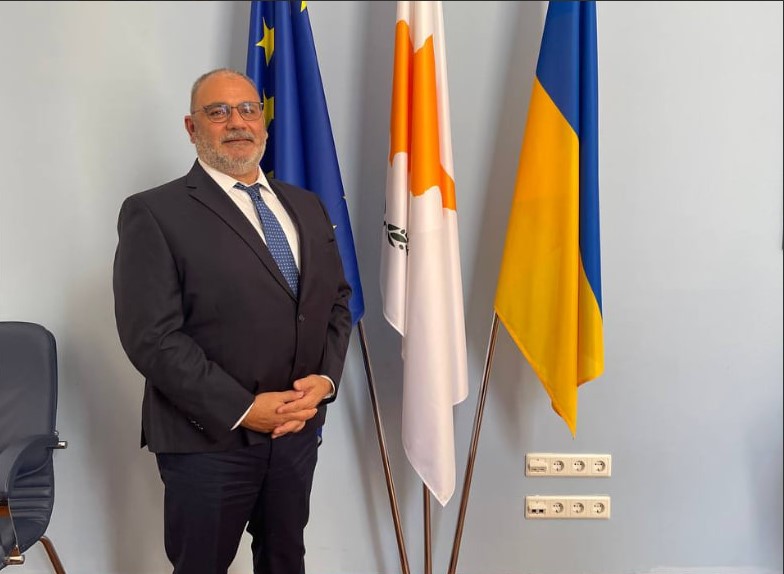
Cyprus is ready to expand cooperation with Ukraine in the field of rehabilitation programs for citizens affected by the war. This was stated by the Ambassador Extraordinary and Plenipotentiary of the Republic of Cyprus to Ukraine, Michalis Firillas, during a meeting with a representative of Interfax-Ukraine.
“Cyprus is known not only as a resort country, but also for its modern medicine and high-quality rehabilitation services. We want to use this potential to help Ukrainians who need treatment and recovery from injuries and psychological trauma,” the diplomat said.
According to him, Cyprus already has a number of medical centers and clinics specializing in physical rehabilitation, post-operative recovery, and psychological support. “We are interested in creating joint programs with Ukrainian partners that will allow our medical institutions to accept more patients from Ukraine,” Firillas emphasized.
The ambassador added that this cooperation could include both the treatment of military and civilians, as well as training programs for Ukrainian doctors and rehabilitation specialists. “Our task is to ensure that Ukrainians receive quality care and support during the most difficult time for them,” he concluded.



