
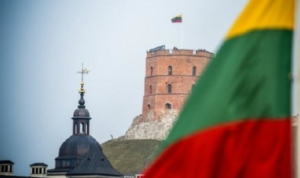
The Lithuanian government has approved a draft law providing for additional restrictions on the acquisition of real estate by citizens of Russia and Belarus near strategically important facilities, Open4Business reports, citing data from the Lithuanian authorities.
According to a proposal by the Lithuanian Ministry of Foreign Affairs, the restrictions should apply to real estate located near military training grounds and other facilities of importance to national security. The draft law materials refer to areas within a radius of up to 10 km from the relevant facilities.
A significant change is that the restrictions are proposed to be extended, among others, to citizens of Russia and Belarus who have a residence permit in Lithuania.
Currently, the country already restricts the right to acquire real estate for Russian citizens who do not have a temporary or permanent residence permit, as well as for legal entities whose beneficial owners are Russian citizens. An exception is provided for receiving real estate through inheritance.
The new draft law should expand the existing restrictions. Similar rules are proposed to be established for citizens of Belarus and legal entities associated with them, while Russians and Belarusians with a residence permit would additionally be restricted from acquiring real estate near facilities important to national security.
The Lithuanian authorities explain the initiative by the risks of hybrid threats, intelligence activities and possible surveillance of strategic infrastructure and military facilities.
The problem is of a fairly significant scale. According to data from Lithuania’s Centre of Registers published in February 2026, Russian citizens owned about 8.7 thousand real estate properties in which they controlled at least 50% of the ownership. Belarusian citizens owned another approximately 4 thousand properties.
Thus, taken together, citizens of the two countries own approximately 12.7 thousand real estate properties in Lithuania.
The highest concentration of such property is in major cities and their suburbs, as well as in border municipalities, including Visaginas and Šalčininkai.
The authorities are paying particular attention to real estate near strategic infrastructure. According to data cited by Lithuanian media with reference to the Centre of Registers, after the start of the full-scale war, 1,845 Russian citizens acquired real estate near airports, as well as within 10 km of military training grounds and power plants, of whom 364 had temporary residence permits.
At the same time, this does not mean a complete closure of the Lithuanian real estate market to all citizens of Russia and Belarus. The new additional restrictions are primarily tied to territories near facilities of interest to national security.
The draft law still has to be considered by the Seimas of Lithuania. If finally approved, the new rules are planned to apply from January 1, 2027.

From September 4 to 17, special regulations governing vehicle entry, exit, and movement will be in effect in Uman in connection with the Rosh Hashanah celebrations, according to Ihor Taburets, head of the Cherkasy Regional State Administration.
“Vehicle entry is prohibited: from Highway M-30 to Uman—onto Derevyanka Street, near the ”Standard Budivelnij” LLC facility; from the M-30 highway to Uman—on Gorikhov Street; from the village of Rodnikovka to Uman—on Pavlova Street,” Taburets wrote on his Telegram channel.
In addition, enhanced checkpoint controls will be implemented at the following entry points: from the M-30 onto Derevyanka Street; from the M-05 onto Ednannia Street; from the village of Gorodetske (Palanska Territorial Community) to the intersection of Gorodetska Street and Maksym Zaliznyak Street; from the M-30 highway onto Mykhailivska Street, from the M-30 highway onto Vokzalna Street, and from the village of Rodnykivka (Palanska Territorial Community) onto Kyivska Street.
It is specifically noted that traffic from the M-05 Kyiv-Odesa highway to Uman, on Vyzvolyteliv Street, will be permitted only for Hasidic pilgrims.
In the pilgrimage district, the sale of alcoholic beverages, fireworks and pyrotechnics, knives and other sharp or cutting objects, air guns, and toys that imitate them is also prohibited.
“I ask everyone—local residents and visitors alike—to take these restrictions into account in advance and plan their routes accordingly,” Taburets urged.
Every year on the Jewish New Year, Rosh Hashanah, tens of thousands of Hasidic pilgrims arrive in Uman, Cherkasy Oblast, to visit the grave of Rabbi Nachman, the founder of Bratslav Hasidism. Despite Russia’s full-scale war against Ukraine, the pilgrimage continues, although Ukrainian authorities regularly urge foreigners to be aware of security risks. In 2025, more than 35,000 pilgrims arrived in Uman for the Rosh Hashanah celebrations.
In 2026, the Ukrainian Ministry of Foreign Affairs recommended that Hasidic pilgrims refrain from traveling to Uman, as Russia’s full-scale aggression against Ukraine, constant massive rocket attacks on Ukrainian cities and communities, civilian and transportation infrastructure, as well as ongoing Russian terror, sabotage, and provocations pose real threats to people’s lives and safety.
The Ministry of Foreign Affairs also noted that a legal regime of martial law is in effect in Ukraine. If pilgrims visit Uman despite the warnings from Ukrainian authorities, they should be aware of restrictions on freedom of movement, curfews, increased patrolling, and a ban on mass gatherings; violators may be subject to coercive measures.

On June 29 and 30, Romania will temporarily restrict the movement of trucks weighing more than 7.5 metric tons on a number of roads due to a severe heat wave, according to Romania’s National Road Infrastructure Management Company (CNAIR).
The restrictions will be in effect on Monday and Tuesday from 12:00 p.m. to 8:00 p.m. on sections of national roads, expressways, and highways in 35 counties across the country, including Suceava, where border crossing points with Ukraine are located.
As a result, temporary restrictions on freight traffic may be imposed at the Ukrainian-Romanian border through the “Krasnoilsk–Vicovu de Sus” and “Porubne–Siret” border crossing points. According to preliminary information, the restrictions will apply to trucks, including those traveling without cargo.
The Romanian side explains this decision by the need to protect the road surface from damage under conditions of extremely high temperatures. During intense heat, heavy vehicle traffic can deform the asphalt, especially during the daytime hours when temperatures are at their highest.
The duration of the ban may be adjusted depending on weather conditions and decisions by Romanian authorities. Carriers planning to cross the border through the Chernivtsi region are advised to factor in possible delays in advance and monitor announcements from border and road authorities.

The European Commission may present legislative proposals as early as summer 2026 to restrict minors’ access to social media. This was announced by European Commission President Ursula von der Leyen while speaking at a democracy summit in Copenhagen.
According to Reuters, von der Leyen said that the European Commission is stepping up measures to protect children from the “addictive design” of digital platforms, including TikTok, Meta, Facebook, Instagram, and X. She linked excessive social media use by teenagers to risks related to sleep, mental health, anxiety, cyberbullying, and other threats to young people.
However, this does not involve an immediate shutdown of social media platforms or a temporary suspension of their services for all users. Primary sources mention a possible “social media delay” for children, meaning a delay or restriction on the age at which minors can independently use social media. Euronews reports that the European Commission may present plans for a Europe-wide ban or age restriction for children as early as this summer.
The European Commission has already established a special panel of experts on children’s online safety. According to official EC documents, by the summer of 2026, the panel’s co-chairs are to present von der Leyen with recommendations on protecting children online, including possible harmonized age restrictions for access to social media and other online services.
Digital age verification will be a separate element of the future policy. In April 2026, the European Commission held the second meeting of the special panel, dedicated to current rules for protecting minors online and EU initiatives in this area. Reuters also reported that the EU has already developed an age verification app designed to help restrict children’s access to inappropriate content and services.
The new proposals could become part of a broader EU digital policy, including the Digital Services Act and the future Digital Fairness Act. The EU is currently investigating major platforms regarding the protection of minors, advertising transparency, researchers’ access to data, and the use of mechanisms designed to capture users’ attention.

The State Border Guard Service of Ukraine (SBGS) is launching a new “Personal Account” service so that citizens can independently check for restrictions on travel abroad, according to the SBGS press office.
“The new service on the SBSU website allows users to receive real-time information about restrictions imposed based on court decisions and rulings by the State Enforcement Service,” the statement said.
The service specifically addresses temporary restrictions imposed by a court or the enforcement service (child support, fines, other debts).
The “Personal Account” will be useful for parents who evade alimony payments or individuals who evade the enforcement of court decisions.
Previously, to obtain such information about travel restrictions, one had to submit a written request to the Main Center for Processing Special Information of the State Border Guard Service (by mail or in person) and wait several weeks for a response.
However, travel restrictions due to martial law (for men aged 18–60 and individuals subject to the provisions of paragraph 214 of the Rules for Crossing the State Border by Citizens of Ukraine, approved by Resolution of the Cabinet of Ministers of Ukraine No. 57 dated July 21, 1995) are verified according to separate rules and are not displayed in the account.
The State Border Guard Service notes that the service does not lift existing restrictions but allows users to quickly identify and resolve them.
The service operates 24/7 and is accessible from any device—smartphone, tablet, or computer.
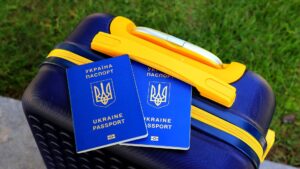
The Cabinet of Ministers of Ukraine has lifted all restrictions on border crossings for all women without exception, regardless of their positions, Prime Minister Yulia Sviridenko announced.
“The government is lifting restrictions on border crossings for all women without exception, regardless of their positions in state authorities, local self-government bodies, state-owned enterprises, and courts,” Sviridenko wrote on her Telegram channel.
As previously reported, in early May, the government lifted restrictions on travel abroad for a specific category of female officials. At that time, it was noted that the changes did not apply to the highest-ranking state officials, key heads of state authorities and their deputies, specifically members of the Cabinet of Ministers, the leadership of ministries and central executive bodies, the Office of the President of Ukraine, the Secretariat of the Verkhovna Rada of Ukraine, the National Security and Defense Council (NSDC), the Security Service of Ukraine (SBU), the National Bank, as well as to members of parliament, judges of the Supreme Court and the Constitutional Court of Ukraine, prosecutors of the Office of the Prosecutor General, and heads of state-owned enterprises and state bodies whose jurisdiction extends throughout the territory of Ukraine.



