

According to Serbian Economist, two cases of leprosy (Hansen’s disease) have been confirmed in Romania — the first in the country in over 40 years, authorities said. The disease was diagnosed in two massage therapists at a spa in the northwestern city of Cluj. Both patients are Indonesian citizens aged 21 and 25; two other people are being tested.
Health Minister Alexandru Rogobete said that visitors to the spa center should not panic, as prolonged contact is usually required for the infection to be transmitted. According to him, one of the patients recently returned from Asia, where she spent about a month with her mother, who was in the hospital with the same disease at the time. The authorities have suspended the spa center’s operations for the duration of the epidemiological investigation.
According to Romanian authorities, the last confirmed case of leprosy in the country was recorded 44 years ago (i.e., in the early 1980s).
An important clarification: we are talking about “the first cases in Romania in 40+ years,” not “the first in Europe” — the media sometimes likes to simplify headlines.
What does this mean for tourists and the healthcare system?
According to the authorities, the risk to spa customers is low: leprosy is usually transmitted through prolonged close contact with an untreated patient; casual contact is not considered a typical route of transmission.
The long incubation period makes it likely that the infection did not occur in Romania: symptoms can appear years later, sometimes up to 20 years after contact.
Closing the facility and testing contacts is a standard measure for rare imported infections: even with low contagiousness, it is important to quickly identify close contacts (including colleagues) and prevent further transmission.
The informational risk (fears/stigma) may be higher than the medical risk: leprosy has historically been highly stigmatized, although today it is curable and, with timely treatment, does not usually lead to disability.
What is leprosy (Hansen’s disease):
Causative agent: Mycobacterium leprae bacteria. The disease most often affects the skin and peripheral nerves.
Transmission: mainly through droplets from the nose/mouth during close and frequent contact with an untreated person. It is not spread through normal everyday contact (handshakes, hugs, sharing food, sitting next to someone).
Incubation period: on average about 5 years, but symptoms may appear much later — up to 20 years.
Treatment: leprosy is curable with multidrug therapy (MDT); after starting treatment, the patient usually ceases to be a source of infection.
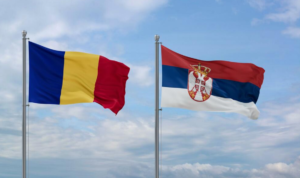
According to Serbian Economist, representatives of the Serbian and Romanian governments have recently officially confirmed their intention to develop a major transport project — to build a modern motorway that will provide a direct road link between the capitals of the two countries.
The project combines two national infrastructure plans:
— the Romanian A9 motorway (Timișoara–Moravița), which will connect Timișoara with the Serbian border, and
— the Serbian Belgrade–Vatin motorway with access to the Romanian border.
According to an intergovernmental agreement signed by the transport ministers of Serbia and Romania, both countries are working to agree on the technical details so that the roads connect at the border and create a continuous high-speed route from Belgrade to Timișoara.
In Romania, the section of the motorway between Timișoara and the Moravița border crossing is already in the preparation and design stage, and individual sections of the construction have been handed over to contractors.
This route is of strategic importance to both countries:
• It will strengthen transport links between the countries and improve freight and passenger transport logistics.
• The connection to the European motorway network will help integrate Serbian and Romanian infrastructure into European transport corridors.
The project is expected to be financed by both European funds and national budgets, and its implementation will be a step towards closer economic and transport integration in the region.
https://t.me/relocationrs/1926
TK-Domashniy Tekstil, part of the Textile-Contact (TK Group) group of companies, significantly increased its exports in December, in particular, it began working with customers from Sweden for the first time, according to the group’s owner, Alexander Sokolovsky.
“December is just beginning, but it has already become a record month for TK-Domashniy Tekstil’s exports: since the beginning of the month, we have shipped seven trucks of our own products to Europe! We have started working with customers from Sweden for the first time, with whom we have contracted our own digitally printed fabrics,” he wrote on Facebook.
It is specified that the designs were provided by the customer, and the Chernihiv Textile Combine (TK-DT Chernihiv) was fully responsible for the manufacture of fabrics and digital printing.
Products were also shipped to a new customer in Romania.
According to Sokolovsky, two trucks went to a new partner in the Baltics with a custom order for mattresses filled with 70% Ukrainian flax.
“The covers for these mattresses were sewn from natural cotton fabric (half-panels), which is also manufactured at our textile production facility,” added the owner of TK Group.
This month, the company made two large shipments to Lithuania—to the DEPO supermarket chain, where two trucks of finished home textile products were delivered, and the next batch is already being prepared.
“In addition, we made another shipment to our regular customer in Georgia, the Domino supermarket chain. This time, it was an expanded range of home textiles under our HomeLine brand with pre-New Year designs,” said Sokolovsky.
At the same time, he noted that currently, TC and many light industry enterprises are facing a problem where even regular customers have been afraid to place orders in Ukraine for the past two years.
“Although it is us who are taking the risk here, not them. Interestingly, this was not the case at the beginning of the full-scale invasion in 2022-2023. On the contrary, many Europeans tried to help Ukrainian entrepreneurs and, even understanding our capabilities, increased their orders despite logistical and other risks. Now, for some reason, it is much more difficult to break through, but we are doing everything possible and impossible,” Sokolovsky emphasized.
TK-Domashniy Tekstil is a leader in the production of fabrics, home textiles, and children’s products in Ukraine. Its asset portfolio includes one of the few finishing factories in Ukraine that produces cotton fabrics in Chernihiv, TK-DT Chernihiv. Its assets also include garment factories in Kyiv, Ternopil, Chernihiv, and Odesa; a shoe factory in Chyhyryn; a knitting factory; and a synthetic winterizer factory in Chernihiv.
The company’s products are imported to Denmark, Germany, Lithuania, Latvia, Georgia, and France.
TK Group was founded in 1995. It is currently a holding company that brings together the entire spectrum of textile industry services, from raw materials and threads to ready-made solutions for B2B, B2G, and B2C customers.
The group consists of 13 factories and employs about 1,500 people.
Since the start of the full-scale war, the group has invested about $14.5 million in development.
The founder of the group is Sokolovsky, chairman of the Light Industry Defense Procurement Committee at the Federation of Employers of Ukraine and a member of the Manifest 42 public movement.
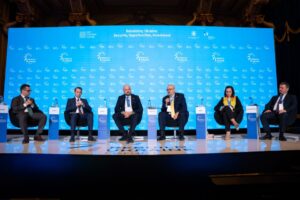
At the Rebuilding Ukraine: Security, Opportunities, Investments forum in Bucharest, during one of the panel discussions, representatives of Romania, the Republic of Moldova, and Ukraine announced their intention to deepen regional cooperation in infrastructure within the “strategic transport triangle” to support Ukraine’s reconstruction and strengthen the region’s resilience.
The panel was moderated by George Scutaru, CEO of the New Strategy Center think tank. Participants included Vladimir Bolea, Deputy Prime Minister and Minister of Infrastructure and Regional Development of the Republic of Moldova; Mihai Iurca, Special Envoy for the Reconstruction of Ukraine and Head of the Office of the Prime Minister of Romania; First Deputy Chair of the Verkhovna Rada Committee on Transport and Infrastructure Yulia Sirko, State Secretary of the Ministry of Infrastructure of Romania Ionel Scrieşteanu, Deputy Minister of Communities, Territories and Infrastructure of Ukraine Serhiy Derkach (via videoconference), and CEO of Leviatan Group Cătălin Podaru.
The discussion focused on the strategic importance of regionalizing infrastructure projects between the three countries and developing logistics corridors that ensure not only economic and demographic mobility, but also military mobility in the context of the ongoing war. The participants emphasized that transport and energy connectivity is seen as a tool for coordinating government policies, as well as a platform for involving the private sector in the reconstruction of Ukraine.
“Logistics is becoming a key element of security and development: from ports and railways to border infrastructure, all of this must function as a single network between Romania, Moldova, and Ukraine,” Skutaru noted during the discussion. He stressed that coordinating investments and projects within the “strategic transport triangle” is a necessary condition for increasing the capacity of corridors used for trade, transit, and military aid.
Representatives of the Ukrainian and Moldovan sides stressed that the reconstruction of Ukraine is impossible without the active participation of private business and the involvement of international companies in joint projects. “Ukraine is open to partnership, and we need both financial resources and technological solutions that can be provided by regional and global partners. Joint infrastructure projects strengthen not only the economy but also the stability of the entire region,” emphasized Deputy Minister Serhiy Derkach.
Following the discussion, participants noted positive dynamics in strengthening connectivity between the three countries, particularly with regard to the modernization of transport corridors, port, and border infrastructure. They concluded that further progress will depend on coordinated government action, effective use of financial instruments, and close cooperation with international partners to enhance the collective resilience and prosperity of the region.
The forum “Rebuilding Ukraine: Security, Opportunities, Investments” is being held on December 11-12 in Bucharest under the auspices of the Romanian Ministry of Foreign Affairs and the Ukrainian Ministry of Foreign Affairs and organized by the New Strategy Center. According to the organizers, more than 30 panel discussions and parallel sessions are planned over two days with the participation of representatives of governments, international organizations, the private sector, financial institutions, and experts from Europe, North America, and Asia. The topics of the panels cover security and defense, infrastructure, financing and investment, green energy, digitalization, human capital, and cross-border cooperation.
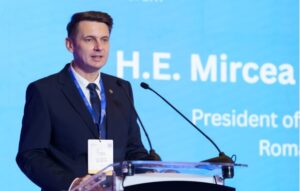
On Thursday, December 11, the international forum “Rebuilding Ukraine: Security, Opportunities, Investments” began in Bucharest on Thursday, December 11. At the opening, Ionel Nitu, president of the New Strategy Center think tank, and Mircea Abrudianu, president of the Romanian Senate, emphasized Romania’s readiness to play a key role in the post-war reconstruction of Ukraine and to become the main logistics hub for this process.
According to Nitu, the forum aims to create a permanent platform for dialogue focused specifically on the practical aspects of Ukraine’s reconstruction, involving representatives of central government, business, international financial institutions, and local administrations in border regions. As a neighboring country, he emphasized, Romania has a direct understanding of local needs and challenges, which creates additional opportunities for joint investment and cooperation projects in the fields of infrastructure, logistics, and energy.
“As Ukraine’s neighbor, Romania has a practical understanding of what reconstruction means in the context of ongoing aggression. Our goal is to bring the government, business, and local authorities to the table and move the discussion to the level of concrete decisions and contracts,” Nitu said, opening the first panel of the forum.
The head of the New Strategy Center drew attention to the concept of a “strategic transport triangle” involving Romania, Ukraine, and the Republic of Moldova, which should be based on the port infrastructure of the Black Sea and the Danube, as well as on the rail and road corridors that are already the focus of the European Commission’s efforts to expand the region’s transport capacity. He also stressed the need for a multidimensional approach to reconstruction, combining economic, social, humanitarian, and security dimensions, as well as the need for “direct, honest, and results-oriented dialogue” between all participants in the process.
The first panel of the forum, “The Importance of Romania for the Reconstruction of Ukraine,” was opened by the keynote speaker, Mircea Abrudianu, President of the Romanian Senate. He confirmed the political position of official Bucharest on supporting Ukraine in countering Russian aggression and stressed that Romania’s participation in reconstruction is not only an economic priority but also a “political and security imperative for the whole of Europe.”
Abrujan noted the strategic importance of Romania’s geographical location for reconstruction logistics: through the port of Constanta, the Danube ports, and the development of railway and road infrastructure, the country aims to become a central hub for cargo flows related to infrastructure, energy, and industrial projects in Ukraine. “Romania has all the prerequisites to become a logistics center for reconstruction — from ports on the Danube and Black Sea to transport corridors connecting the EU with the Ukrainian economy,” he said during his speech.
Separately, the Senate President emphasized the need for deep reforms in Ukraine in parallel with reconstruction projects, primarily in the areas of energy, infrastructure, public administration, and digitalization. In his opinion, investments in reconstruction should also be seen as a tool for Ukraine’s European integration, taking into account the negotiations on EU accession. “If we are talking about long-term investments, we need a just and lasting peace, and until it is achieved, a predictable security environment, which is ensured, in particular, by military support for Ukraine from its allies,” Abrudyan stressed.
He also recalled that the issues of “just peace” and security guarantees for Ukraine had already been discussed during his recent meeting with Verkhovna Rada Speaker Ruslan Stefanchuk in Stockholm, where the parties agreed on joint approaches to future peace negotiations.
The forum “Rebuilding Ukraine: Security, Opportunities, Investments” is being held on December 11-12 in Bucharest under the auspices of the Romanian Ministry of Foreign Affairs and the Ukrainian Ministry of Foreign Affairs and is organized by the New Strategy Center. According to the organizers, more than 30 panel discussions and parallel sessions are planned over two days with the participation of representatives of governments, international organizations, the private sector, financial institutions, and experts from Europe, North America, and Asia. The topics of the panels cover security and defense, infrastructure, financing and investment, green energy, digitalization, human capital, and cross-border cooperation.
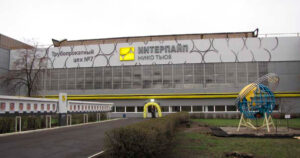
Interpipe has signed an agreement to acquire ArcelorMittal’s Romanian pipe plant ArcelorMittal Tubular Products Roman S.A., the company announced.
The closing of the deal is subject to obtaining approvals from antitrust authorities and foreign direct investment. Until these conditions are met, the companies will continue to operate separately.
The company clarified that this plant is not related to another Romanian pipe company, ArcelorMittal, which Metinvest had previously planned to acquire.



