
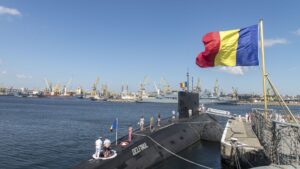
The Romanian Navy has begun testing the new Black Talon drone countermeasure system at the military port of Constanța on the Black Sea. The system, developed as part of a long-standing collaboration with the U.S. Navy, is scheduled to enter operational service by the end of October 2026.
Black Talon is designed to detect, track, and monitor unmanned aerial vehicles near critical port infrastructure. According to the Romanian military, the system includes a high-performance 3D radar, electro-optical equipment, and passive electromagnetic radiation detection devices. The system provides a 360-degree field of view and can target detected objects.
The threat detection radius is approximately 10 km. One of the primary countermeasures is electronic jamming—Black Talon is capable of disrupting the communication channel between a drone and its operator, allowing the threat to be neutralized without necessarily destroying the drone physically.
Currently, Romanian military personnel are undergoing training to operate the new equipment. Following Constanta, plans are in place to equip the military ports of Mangalia, Tulcea, and Braila with similar systems. The U.S. side is to provide three more systems. Thus, protection will cover Romania’s military ports on both the Black Sea and the Danube, particularly near the Ukrainian border.
At the same time, the Romanian Navy is preparing to deploy the Sentinel system to monitor threats from the sea and underwater. It will use sonar capable of detecting unmanned underwater vehicles, combat divers, and mini-submarines. According to Navy officials, Black Talon and Sentinel can be integrated to form a comprehensive surveillance system covering the air, surface, and underwater spaces around the military ports.
The commander of the Constanta military port, Rear Admiral Ciprian Mandaki, announced on September 16 that the program has been implemented jointly with the U.S. Navy for several years and has now entered the operational phase. Black Talon is primarily intended to protect critical military infrastructure from aerial drones.
The強化 of security in Constanța follows a serious incident on June 5, 2026, when a maritime drone was detected in the civilian section of the port, near Pier No. 78. At approximately 10:30 a.m., the drone self-detonated. There were no casualties, as the area had already been cordoned off by Romanian intelligence services, the coast guard, and the military. The Romanian Ministry of Defense officially reported that the drone did not belong to the Romanian military and was of a type used in the war in Ukraine. The investigation into the incident was handed over to the prosecutor’s office.
Following this incident, Romanian authorities ordered the acceleration of measures to protect port infrastructure. At the same time, the Black Talon program itself had been launched earlier and was being developed as part of Romania’s cooperation with the United States in the field of maritime security.
For Ukraine, the strengthening of security at Romanian ports is of particular importance due to the proximity of Constanța and the Danube ports to the Ukrainian border and their role in the region’s Black Sea and Danube transportation infrastructure.

According to Serbian Economist, Montenegrin police have deported six Ukrainian citizens suspected of establishing a network of cooperation with one of the “high-risk organized crime groups” (OCGs) operating in the country.
According to police, the operation lasted several days and was aimed at identifying foreigners whose presence and activities could pose a threat to the country’s internal and national security. As a result of the investigations, police reported uncovering links between six Ukrainians, aged 28 to 33, and one of the organized criminal groups.
Following the investigation, the police initiated the revocation of the temporary protection previously granted to these Ukrainian citizens. Subsequently, a decision was made to deport all six individuals and ban them from returning to Montenegro for a period of five years. They were forcibly removed from the country via Podgorica Airport and the Božaj border crossing on the border with Albania.
Another Ukrainian citizen, who is currently outside Montenegro, was barred from entering the country on the same grounds. Thus, the measures affected seven individuals: six were deported, and one was barred from entry.
During the operation, various communication devices, GPS tracking devices, drones, devices for interpersonal communication, and other items were seized from those inspected. The police stated that they will continue to inspect foreigners as part of measures to counter threats to national security.
At the same time, it is important to clarify the legal aspect of the report: the police are specifically referring to suspicions of collaboration with an organized criminal group and the results of operational checks. The official statement contains no information about a court verdict that has taken effect regarding these citizens or about criminal charges brought against them. Therefore, it is currently incorrect to refer to them as members of a criminal group based on the published data.
Since 2022, the Ukrainian community has become one of the largest foreign communities in the small country of Montenegro. The actual number of Ukrainians with valid temporary protection can now be conservatively estimated at 6,000–7,000 people.
The situation is less clear regarding regular residence permits and permanent residency. The most recent complete breakdown by nationality from the Ministry of the Interior showed that as of October 31, 2023, 5,208 Ukrainian citizens held regulated temporary or permanent residence permits in Montenegro. The Ministry of Internal Affairs has not yet released any more recent official public data specifically regarding Ukrainian temporary or permanent residence permits for 2026. Therefore, it is not possible to state, for example, that exactly 5,000 or 7,000 Ukrainians currently hold regular temporary residence permits. In 2025, local media, citing registration data from the Ministry of Internal Affairs, estimated the total Ukrainian community at 10,000 people. This represents about 1.6% of the country’s population. For comparison, the latest census indicates that Montenegro’s permanent population is 623,633.
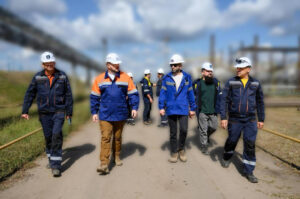
“Ukrnafta” is preparing for the fall-winter period amid ongoing Russian attacks on civilian oil and gas production infrastructure.
Bogdan Kukura, Chairman of the Board of Ukrnafta, and Serhiy Fedorenko, Acting Chairman of the Board of Naftogaz of Ukraine, visited Ukrnafta’s production units in northern and eastern Ukraine.
“The main focus is on people’s safety and the protection of production facilities. Our top priority is to safeguard our personnel and minimize the consequences of possible attacks,” said Bogdan Kukura, Chairman of the Board of JSC “Ukrnafta.”
During the visit, they inspected shelters for employees, warning systems, and the availability of personal protective equipment. They also specifically checked the security status of production facilities and the units’ readiness for operations during the fall and winter months.
The company continues to strengthen security measures and prepare its production infrastructure to operate under conditions of constant threats. The primary objective is to protect people and ensure the stable operation of production facilities.
JSC “Ukrnafta” is Ukraine’s largest oil producer and operates the country’s largest national network of gas stations—UKRNAFTA. In 2024, the company began managing Glusco’s assets. In 2025, it finalized a deal with Shell Overseas Investments BV to acquire the Shell network in Ukraine. In total, it operates nearly 700 gas stations.
The company is implementing a comprehensive program to resume operations and modernize the format of the gas stations in its network. Since February 2023, it has been issuing its own fuel vouchers and “NAFTACard” cards, which are sold to legal entities and individuals through Ukrnafta-Postach LLC.
The largest shareholder of Ukrnafta is NJSC Naftogaz of Ukraine, with a stake of 50% + 1 share.
In November 2022, the Supreme Commander-in-Chief of the Armed Forces of Ukraine decided to transfer to the state the portion of the company’s corporate rights that belonged to private owners; this portion is now managed by the Ministry of Defense.

The Ukrainian Embassy in Thailand has advised Ukrainian citizens to observe heightened security measures in the southern provinces of Pattani, Yala, and Narathiwat amid a sharp escalation of the situation and a series of simultaneous attacks that occurred on the night of August 23.
According to Thai security forces, 51 incidents were recorded in the three southern provinces on the evening of August 22, including explosions, arson, and damage to infrastructure. Of these, 22 incidents occurred in Narathiwat, 18 in Yala, and 11 in Pattani. In Narathiwat, at least two injured civilians were initially reported.
The attacks targeted, among other things, stores, telecommunications infrastructure, and other facilities. Following a series of attacks in Narathiwat Province, authorities temporarily imposed a curfew from 10:15 p.m. on August 22 until 6:00 a.m. on August 23.
On the morning of August 23, Thailand’s Prime Minister and Minister of the Interior, Anutin Charnvirakul, convened an emergency meeting of law enforcement leaders in response to the scale of the nighttime attacks. Authorities have stepped up security measures in the region.
The attacks also affected transportation. The State Railway of Thailand temporarily closed the section between the Maruebo and Tanyong Mat stations in Narathiwat after damage to the railroad tracks was discovered as a result of an explosion. New explosions were also reported in Pattani and Narathiwat that morning.
The Ukrainian Embassy has advised citizens already in Pattani, Yala, or Narathiwat to take extra personal safety precautions and follow the instructions of local authorities. In the event of a threat to life or health, Ukrainians are advised to contact the Embassy’s hotline in Thailand: +66 970 107 760.
The current escalation is not directly related to the conflict between Thailand and Cambodia, which is unfolding along another section of the country’s border.
Pattani, Yala, and Narathiwat are located in the far south of Thailand near the border with Malaysia. These are predominantly Muslim provinces that historically were part of the Malay Sultanate of Pattani.
An armed separatist conflict has been ongoing in the region for over 20 years. The Barisan Revolusi Nasional (BRN) is considered the main insurgent group. Since the conflict reignited in 2004, the violence has claimed the lives of over 7,800 people. In recent months, the number of attacks has risen again.
One of the most serious incidents was the July 22 attack on a checkpoint in Narathiwat: armed men opened fire and used improvised explosive devices, killing five paramilitary personnel and wounding civilians. Following this, special security measures were stepped up in the province.
The day before, on July 21, a car bomb exploded near a police facility in Narathiwat. This was the first such car bombing in Thailand’s southern region in 2026.
Back in June, two separate explosions in Yala and Pattani left 11 police officers injured, and in Pattani, armed men attacked a biomass power plant, after which a key section of the highway was temporarily closed.
Amid the ongoing threat, the Thai government extended the state of emergency for the 85th time in July across much of Narathiwat, Pattani, and Yala—from July 20 to October 19, 2026. However, a number of calmer areas were excluded from the state of emergency.
At the same time, Bangkok is attempting to resume political dialogue. Thailand’s new chief negotiator, Tanut Suwannananda, announced in August his intention to change the approach to the peace process with the BRN, including discussions on political demands, elements of decentralization, and a possible amnesty. Negotiations mediated by Malaysia have been ongoing since 2013 but have been repeatedly interrupted.
Even before the current series of attacks, a number of foreign governments had recommended avoiding non-essential travel to Pattani, Yala, and Narathiwat. For example, the British Foreign Office advises against traveling there unless absolutely necessary due to regular armed attacks near the Malaysian border.
Thus, the Ukrainian Embassy’s warning is not related to a general deterioration of security throughout Thailand, but rather to a sharp escalation of the chronic armed conflict in the three southernmost provinces. The country’s main tourist regions—Bangkok, Phuket, Pattaya, Koh Samui, Krabi, and Chiang Mai—are located outside this conflict zone.
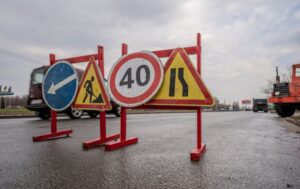
Due to security measures involving foreign delegations in the capital, temporary traffic restrictions will be implemented from August 22–25, according to the State Security Service of Ukraine.
It is noted that the restrictions will be in effect in the central part of the capital, as well as in certain areas of the Pechersky, Podilsky, Solomensky, and Shevchenkivsky districts.
“Please take this information into account when traveling,” reads a post by the State Security Service of Ukraine on Facebook.
KYIV, SECURITY, State Security Service, TRAFFIC, TRANSPORTATION

Ukrainian Minister of Internal Affairs Ivan Vygivsky held a telephone conversation with Azerbaijani Minister of Internal Affairs Vilayat Eyvazov, according to the press service of the Ukrainian Ministry of Internal Affairs.
“We discussed our partnership in the field of law enforcement. The key areas of cooperation are combating organized and transnational crime, cybersecurity, and the fight against fraud, as well as strengthening practical cooperation,” Vygivsky said following the conversation.
During the talks, the head of the Ukrainian ministry also briefed his counterpart on the current situation in the country, particularly regarding the latest Russian shelling of civilian infrastructure and attacks on the civilian population.
The parties paid special attention to joint humanitarian initiatives, particularly in the areas of healthcare, rehabilitation, and social support for the families of Ukrainian defenders.
“In the past year alone, the Republic of Azerbaijan has hosted two groups of high school students from the Ministry of Internal Affairs. The students had the opportunity to learn about the country’s culture and history and broaden their horizons. In recent years, our units have also received humanitarian demining equipment and technology from Azerbaijan that ensures uninterrupted operations during power outages. We are grateful to the Government of the Republic of Azerbaijan for its support of Ukraine and assistance to the Ministry of Internal Affairs. We agreed to strengthen our partnership,” Vygivsky concluded.
AZERBAIJAN, COOPERATION, Ministry of Internal Affairs, SECURITY, UKRAINE



