
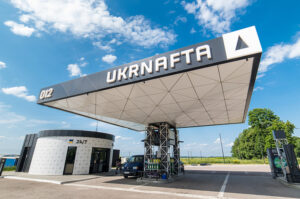
In 2026, Ukrnafta JSC will allocate an additional 2.5 billion hryvnia to protect its production infrastructure from shelling by Russia, which has intensified, said Bogdan Kukura, the company’s chairman of the board.
“We have shifted our priorities toward protecting facilities and ensuring the safety of equipment through underground construction. Therefore, this year we are allocating an additional 2.5 billion hryvnia to protect (production – IF-U) infrastructure; this is a huge investment,” he said in an exclusive interview with Interfax-Ukraine.
According to him, the drilling plan for this year calls for 15 wells to be completed. At the same time, Kukura suggested that, thanks to a balanced drilling program, there is a possibility this figure could increase. (Last year, the company set a drilling record, bringing the total to 25 wells – IF-U).
“A total of 11 wells have already been drilled since the beginning of the year—including those drilled jointly with Ukrgazvydobuvannya. But for us, it is not so much the quantitative figure that matters as, first and foremost, economic efficiency, production rate, and the contribution to increasing output,” Kukura noted.
He noted that the collaboration between “Ukrnafta” and “Ukrgazdobycha” has proven effective, and together the companies have drilled three high-yield wells, each with a depth ranging from 4.5 to 5.6 km.
“This project has confirmed the effectiveness of combining the expertise of state-owned companies, so we plan to continue developing this kind of cooperation in the future,” emphasized the CEO of Ukrnafta.
Kukura also noted that the company has suspended the UKRNAFTA network expansion program in the east due to constant shelling by Russia, which “would render all modernization efforts futile,” and is currently focused on protecting its facilities there. At the same time, he noted that in the west of the country, UKRNAFTA is working as hard as possible to continue modernizing gas stations and is allocating part of the funds received from commercial operations toward this effort.
“Overall, we are trying to maintain a balanced allocation of revenue from both segments—production and commercial operations,” Kukura emphasized.
As previously reported, in this interview, Kukura stated that JSC “Ukrnafta’s” oil production losses for the first half of 2026 amounted to 150,000 metric tons—this includes both physical losses, i.e., oil that burned as a result of shelling, and the volume of oil not produced due to operational shutdowns. According to him, oil losses in the first half of 2026 significantly exceed the figures for the same period of the previous year.
In the first seven months of 2026, Russia destroyed 37 gas stations belonging to the Naftogaz Group; some of them were successfully restored, but the rest sustained critical damage and ceased operations.
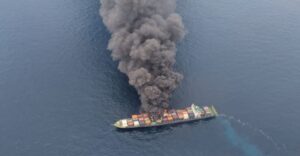
Turkey has called on Russia and Ukraine to agree to a moratorium on attacks on ships and maritime-related facilities in the Black Sea amid a sharp increase in attacks on the commercial fleet.
Turkish Foreign Minister Hakan Fidan stated on August 8 that Ankara is proposing that the parties establish a special mechanism to halt mutual attacks in the Black Sea.
“We have called on both sides to establish a mechanism for declaring a moratorium,” Fidan said in an interview with the Turkish state news agency Anadolu. According to him, Ukraine had previously put forward a similar proposal, after which Turkey conveyed it to the Russian side and is now awaiting Moscow’s response.
The Turkish foreign minister noted that the war has effectively spread to the entire Black Sea. While the attacks initially targeted mainly military ports and warships, commercial vessels are now increasingly coming under fire.
Ankara is particularly concerned about attacks on vessels linked to Turkey—those flying the Turkish flag, owned by Turkish companies, or carrying Turkish crew members.
According to Fidan, Russia and Ukraine are also attacking logistics facilities of strategic importance to the opposing side, and the further escalation of such actions is becoming “extremely dangerous.”
Ankara’s statement came after a sharp deterioration in the security situation for commercial shipping.
According to data from Ukraine’s Ministry of Community and Territorial Development, as cited by Reuters, in July alone, Ukraine recorded 35 attacks on ships in ports, 22 attacks on ships at sea, and 67 strikes on port infrastructure.
By comparison, Reuters counted 14 attacks on ships in the Ukrainian sector of the Black Sea throughout all of 2025. At the same time, Ukraine has intensified its strikes on tankers linked to the Russian oil trade. Both Moscow and Kyiv claim that their targets are facilities associated with military activities.
The escalation is already affecting global trade in grain and oil. More than 90% of the country’s agricultural exports pass through Ukrainian Black Sea ports, while the Russian ports of Novorossiysk and Tuapse remain major export hubs for grain and petroleum products.
The cost of war risk insurance for ships calling at Black Sea ports has risen to approximately 2% of a ship’s value, up from about 1% two weeks earlier, while the cost of chartering oil tankers on certain routes has exceeded $300,000 per day.
Amid rising risks, reports emerged that Turkey had begun restricting the passage of certain commercial vessels into the Black Sea. However, on August 9, two Turkish officials told Reuters that traffic through the Bosphorus and the Dardanelles was proceeding as usual. Ankara has indeed implemented temporary additional security measures, but these do not mean that the straits are closed to commercial shipping.
Passage is governed by the 1936 Montreux Convention, which grants Turkey control over the Bosphorus and the Dardanelles and special powers regarding military vessels, while ensuring freedom of passage for civilian vessels.
For Ankara, the security of the Black Sea is of fundamental economic importance. Large volumes of Russian and Ukrainian agricultural products, oil, and petroleum products pass through this region, and Turkish shipowners are actively engaged in these routes.
Since the start of the full-scale war, Turkey has maintained contacts with both Kyiv and Moscow and has sought to play the role of mediator. Ankara has not joined Western sanctions against Russia, yet it continues to cooperate with Ukraine and has repeatedly acted as a mediator on issues related to Black Sea shipping.
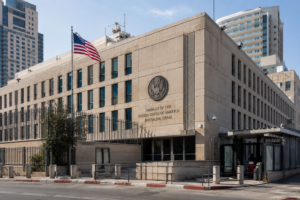
The US embassies in Israel and a number of other Middle Eastern countries have advised US citizens to consider leaving the region due to the risk of unforeseen escalation and possible disruptions to air travel.
“Due to heightened tensions in the Middle East, the security situation remains challenging, and the possibility of an unforeseen escalation persists,” according to warnings issued on 1 August by US diplomatic missions.
US citizens already in the region are advised to exercise increased caution and be prepared for flight cancellations, periodic airspace closures and other travel restrictions.
“Americans in the region should consider leaving or be prepared to leave in the event of an escalation,” the statement notes. Americans outside the Middle East are advised to seriously reconsider any plans to travel to or transit through the region.
Similar warnings have been issued by US embassies and diplomatic missions in Israel, Egypt, Jordan, Lebanon, Saudi Arabia, Qatar, Bahrain, Oman and Iraq. The diplomatic missions continue to provide routine consular and visa services.
The US Embassy in Jordan has additionally advised Americans to stay away from military bases in the country. The advisory also states that Iran and groups it supports may attack US interests and facilities abroad.
On 22 July, the US State Department issued a global travel advisory, urging Americans to exercise increased caution due to tensions in the Middle East. At that time, the department also warned of possible flight cancellations, airspace closures and disruptions at airports.
In other words, the US authorities have not ordered the mandatory evacuation of all citizens from Israel and other countries in the region. The advice is to make use of available commercial transport routes or to prepare an exit plan in advance in case the situation deteriorates further.

The Ukrainian Ministry of Foreign Affairs recommends that Hasidic pilgrims refrain from traveling to Uman to celebrate Rosh Hashanah.
“Russia’s full-scale aggression against Ukraine, which has been ongoing for more than four years, along with constant, massive rocket attacks on Ukrainian cities and communities, civilian and transportation infrastructure, and ongoing Russian terror, sabotage, and provocations, pose real threats to people’s lives and safety. Under these circumstances, the Ministry of Foreign Affairs of Ukraine urges Hasidic pilgrims planning to make a pilgrimage to Uman to celebrate Rosh Hashanah to take into account that it is impossible to guarantee full security for foreign citizens on Ukrainian territory,” reads a statement released by the ministry’s press service.
The Ministry of Foreign Affairs also noted that a legal regime of martial law is in effect in Ukraine. If pilgrims visit Uman despite the warnings from Ukrainian authorities, they should be aware of restrictions on freedom of movement, curfews, increased patrolling, and a ban on mass gatherings; violators may face enforcement measures.
In addition, other significant risks should be taken into account when planning a trip. Land transportation links with Ukraine remain overloaded, and significant delays are possible due to shelling. In Uman itself, there are not enough civil defense shelters to accommodate large numbers of pilgrims, and there is a shortage of medical personnel and facilities capable of providing qualified medical care.
For further clarification, the Ministry of Foreign Affairs advises contacting the National Police, the State Emergency Service, the Border Guard Service, and the Customs Service, as well as the Cherkasy Regional State Administration and the Uman City Council. Pilgrims who do decide to travel to the city are advised to familiarize themselves in advance with the rules for paying the tourist tax.
Every year on the Jewish New Year, Rosh Hashanah, tens of thousands of Hasidic pilgrims arrive in Uman, Cherkasy Oblast, to visit the grave of Rabbi Nachman, the founder of Bratslav Hasidism. Despite Russia’s full-scale war against Ukraine, the pilgrimage continues, although Ukrainian authorities regularly urge foreigners to consider the security risks. In 2025, more than 35,000 pilgrims arrived in Uman for the Rosh Hashanah celebrations.
Hasid, MINISTRY OF FOREIGN AFFAIRS, pilgrimage, SECURITY, UMAN

The removal of Ukrainian officials’ electronic declarations from the state registry does not mean that previously published information has completely disappeared from the public domain, notes Opendatabot.
Many documents were publicly available for several years before the mechanism for hiding them was introduced in late 2023. During that time, the data may have been saved by journalists, civil society organizations, analytical services, and online archives.
However, the publicly available portion of the declarations no longer contains residential addresses, tax identification numbers, or a number of other direct personal identifiers.
The mechanism to restrict access was introduced to protect military personnel, law enforcement officers, and other officials amid a full-scale war. A government agency may appeal to the National Agency for Corruption Prevention (NAZK) if it believes that the publication of a document poses a threat to the declarant or their family.
As of July 2026, more than 445,000 declarations for the years 2015–2026 have been removed from public access.
Source: https://opendatabot.ua/analytics/hidden-declarations-2026
As of July 2026, 445,536 electronic asset declarations submitted by 99,087 public officials for the years 2015–2026 have been removed from public access in Ukraine, according to Opendatabot, citing open data from the National Agency for Corruption Prevention.
On average, there are about 4.5 hidden declarations per declarant. If an official is granted the right to restrict access, all documents submitted by that official may be removed from the registry at once, regardless of the reporting period.
The mechanism for restricting access was introduced after the resumption of electronic filing in late 2023. It is designed to protect military personnel, law enforcement officers, and other individuals for whom the disclosure of information could pose a threat to them or their family members.
The declarant cannot independently remove the declaration from the registry. A government agency, military unit, or other authorized organization must submit a corresponding request to the NACP.
Source: https://opendatabot.ua/analytics/hidden-declarations-2026



