

According to the results of a survey conducted by the research company Active Group and the Experts Club analytical center in early February and presented at the Interfax-Ukraine press center, 31.4% of respondents called electronic prescriptions “very convenient,” 44.1% called them “rather convenient,” 18.7% called them “rather inconvenient,” and 5.9% called them “very inconvenient.”

“Digital tools gain support when they save time and really simplify access to medicines,” said Experts Club founder Maxim Urakin.
“Negative attitudes among some users are usually associated with practical failures and varying levels of digital literacy, and this needs to be taken into account when fine-tuning the service,” said Alexander Pozniy, CEO and co-founder of Active Group.

The study was conducted on the SunFlowerSociology online panel using a representative sample on February 11-12, 2026. The survey involved 1,000 respondents from a representative sample in all regions of Ukraine, except for the temporarily occupied territories.
ACTIVE GROUP, EXPERTS CLUB, Poznyi, SOCIOLOGY, SOLONINKA, SURVEY, URAKIN, Єременко

According to the results of a survey conducted by the research company Active Group and the Experts Club analytical center and published in the Interfax-Ukraine press center, when buying medicines, 50.5% of respondents primarily focus on the combination of price and effectiveness, 25.0% on price, and 24.5% on effectiveness.

The survey was conducted online on February 11-12, 2026, with 1,000 respondents (18+).

“The choice of ‘price plus effectiveness’ reflects the desire to get results, but within a limited budget,” said Experts Club founder Maxim Urakin.
“Consumers are becoming more rational, and this intensifies competition among manufacturers for trust and affordability,” said Active Group CEO and co-founder Alexander Pozniy.
The study was conducted on the SunFlowerSociology online panel using a representative sample on February 11-12, 2026. The survey involved 1,000 respondents from a representative sample in all regions of Ukraine, except for the temporarily occupied territories.
ACTIVE GROUP, EXPERTS CLUB, Pozniy, SOCIOLOGY, SOLONINKA, SURVEY, URAKIN

50.5% of Ukrainians said they had not seen any improvements after the medical reforms (in particular, the introduction of the National Health Service), 24.7% reported improvements, and another 24.8% were undecided.
At the same time, 64% of respondents said they had encountered unofficial payments in medical institutions, and 52.2% considered the medical system to be corrupt (another 44.3% considered it to be “partially corrupt”). This is according to the results of a survey conducted by the research company Active Group using the SunFlowerSociology online panel.
Active Group Director Oleksandr Pozniy noted that against the backdrop of more critical assessments of the reform, people often separate their trust in a particular doctor from their trust in the system as a whole.
“We can say that family doctors, especially those who have been specifically and consciously chosen, are trusted. It is quite a common situation when people may not trust the system, but trust a specific doctor they know. At the same time, reform exists when it changes everyday experience, and although some changes have taken place, there is still dissatisfaction with this reform,” he said at a press conference at the Interfax-Ukraine agency on Friday.
According to the study, Ukrainians most often assess the state of the healthcare system as “average” (54.6%), “rather poor” (18.7%), or “very poor” (7.2%); 2.9% said “very good” and 16.7% said “rather good.”
At the same time, the level of trust in family doctors remains relatively high: 29.5% of respondents said they completely trust them, 61.9% said they partially trust them, and 8.6% said they do not trust them.
The survey also identified problems with access to medical care and resources at the local level. In particular, 23.8% of respondents believe that it is “very easy” to get a consultation with a family doctor, 55.1% say it is “easy,” 18.1% say it is “difficult,” and 2.9% say it is “very difficult.” Only 10.1% responded that their local hospital has “enough” modern equipment and medicines, 45.8% said “somewhat enough,” and 32.4% said “no.”
In addition, according to respondents, the wait time for an appointment with a specialist exceeds one month in 11.5% of cases, lasts 2–4 weeks in 19.8% of cases, 1–2 weeks in 28.4% of cases, and up to one week in 40.2% of cases.
Active Group founder Andriy Yeremenko attributed some of the negative assessments to the scale of direct household expenses.

“In fact, we see that more than 90% pay for treatment in one way or another, although medicine is formally free. If you don’t have insurance, you still pay — either for medicine or for procedures. Therefore, the issue of financial accessibility remains key for most families,” he said.
According to the survey results, in 2024–2025, 68.2% of respondents said they paid for medical services or medicines themselves on a regular basis, 25.1% said they did so occasionally, and 6.7% said they did not pay.
At the same time, 20.9% reported spending more than 20% of their family budget on medicine, another 23.2% spent 11-20%, 39.8% spent 5-10%, and 16.1% spent less than 5%.
Maksym Urakin, PhD in Economics and founder of the Experts Club information and analytical center, commenting on the survey data, said that high proportions of healthcare costs affect not only well-being but also economic stability.

“As an economist, I want to emphasize that medicine is an integral part of a country’s economic stability, and when healthcare costs erode family budgets, it affects consumption and people’s ability to recover. In international monitoring methodology, it is considered catastrophic if a person spends more than 10% of their budget on medicines. And here we see a sign of a serious financial burden,” he stressed.
Separately, participants drew attention to the dynamics of medicine prices and the effectiveness of compensation mechanisms. Thus, 52.3% of respondents said that the prices of medicines they buy regularly had “increased significantly,” 43.9% said they had “increased slightly,” 3.6% said they had “remained unchanged,” and 0.2% said they had “decreased.”
Regarding the state program for reimbursement of the cost of medicines, 13.1% of respondents said they use it, 70.6% said they do not use it, and another 16.3% said they have heard of it but have not used it. Among those who received medicines under the program, 24.7% said they received them free of charge, and 75.3% said they paid extra.
Grigory Soloninka, a member of the board of the Kyiv Regional Organization “VULT” and professor at the Kyiv Medical University, believes that the pandemic and full-scale war have significantly influenced the perception of the reform, but there are also “positive elements.”

“To a certain extent, there are reforms: there are positive aspects and there are negative aspects. But this negativity was largely influenced, first of all, by the pandemic, then by the war — that is, our reforms began, perhaps, at the wrong time. But there are positives from these reforms, and we see that there is a good program for people over 40, screening,” he said.
The survey also separately assessed the impact of the war on the availability of medical services: 48.1% of respondents reported that they felt access had deteriorated due to the war, 36.9% said no, and 15% were undecided. Respondents identified the outflow of medical personnel (60.3%) as the most acute problem in healthcare during wartime, followed by the destruction of infrastructure (22.7%) and a shortage of medicines (13.4%).
The survey was conducted on February 11–12, 2026, using a self-administered questionnaire, with a sample of 1,000 respondents aged 18 and older throughout Ukraine, excluding temporarily occupied territories. The theoretical statistical error is up to 3.1% with a 95% confidence level.
ACTIVE GROUP, EXPERTS CLUB, Pozniy, SOCIOLOGY, SOLONINKA, SURVEY, URAKIN
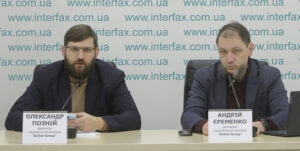
Personnel reshuffles initiated by the President of Ukraine at the start of 2026 are perceived by society with restraint: amid high awareness, Ukrainians more often speak of cautious hope than of a feeling of real renewal of power, according to the results of a nationwide survey by the research company Active Group.
According to the published data, 79.2% of respondents reported that they had heard about the personnel changes, and another 14.8% noted that they “had heard something but are not sure about the details.” 6.0% of those surveyed learned about these decisions for the first time – thus, the overall level of awareness exceeds 94%.
At the same time, assessments of the consequences of the personnel changes remain uncertain: 43.6% of respondents believe that these decisions brought more benefit to the country, 18.3% – more harm, and almost 38.0% were unable to give an unambiguous answer.
The founder of the sociological company Active Group, Andrii Yeremenko, commenting on the survey results, noted that the recorded high awareness of the personnel decisions did not transform into a formed assessment of their consequences.

“We see a situation where more than 94% of respondents have at least heard about these appointments, but almost 38% cannot say whether this is more benefit or harm. This means that society currently does not have sufficiently clear markers of effectiveness – people expect practical results, not signals of a ‘reset’ at the level of personalities. The distribution of answers regarding the ‘renewal of power’ almost equally additionally confirms that there is a demand for change, but it is tied to governance logic and the implementation of decisions, not to the very fact of personnel replacements,” Yeremenko emphasized.
When asked whether the decisions of recent weeks can be considered a renewal of power, 42.5% answered in the affirmative, while 46.7% answered negatively. In the emotional dimension, 52.1% of respondents stated that the personnel reshuffles give more hope, while 29.1% said that disillusionment prevails; at the same time, 10.2% feel “only hope.”
Among the areas of state policy that, in respondents’ opinion, may be strengthened as a result of the appointments, foreign policy, diplomacy and the negotiating track were most often named: 41.5% expect strengthening, 13.2% – weakening. Regarding the defense of the state, 39.0% forecast strengthening, 20.5% – weakening. For a number of domestic areas – social policy, the economy, the work of law enforcement agencies and the fight against corruption – restrained or negative expectations prevail, while a significant share of “hard to say” answers remains.
Assessing the impact of personnel decisions on trust in key officials, most respondents report no changes. In particular, regarding President Volodymyr Zelensky, 63.8% noted that the level of trust did not change, 17.5% speak of an increase in trust, and 13.5% – of a decrease. Regarding Kyrylo Budanov, 54.5% did not feel changes, 24.0% record an increase in trust, and 13.4% – a decrease; regarding Mykhailo Fedorov, respectively 55.3%, 18.6% and 15.8%. The most critical indicators are for Denys Shmyhal: 57.5% stated no change, 24.9% – a decrease, and 8.2% – an increase in trust.
The director of the sociological company Active Group, Oleksandr Poznyi, emphasized that the emotional background around the reshuffles remains restrained, and the impact on trust in key figures is limited.

“More than half of respondents say that personnel decisions give more hope, but only about 10% feel this hope unconditionally. At the same time, for most of those involved in the appointments, the dominant answer is ‘trust has not changed,’ which indicates the absence of an effect of rapid restoration of trust. In such a situation, society will assess these decisions through concrete results – primarily in the external contour and the security sphere, where the balance of expectations is more positive, while in domestic areas, in particular the economy, the law enforcement system and anti-corruption policy, significant skepticism remains,” Poznyi added.
The distribution of trust in well-known public figures, according to the survey data, indicates fragmentation: the highest level of trust is held by Kyrylo Budanov (43.2%), followed by Valerii Zaluzhnyi (37.7%) and Volodymyr Zelensky (27.4%). Also on the list are: Andrii Biletskyi (15.6%), Petro Poroshenko (13.1%), Denys Prokopenko (13.0%), Serhii Prytula (12.0%), Dmytro Razumkov (11.6%), and Vitalii Klychko (10.1%). Separately, 21.3% of respondents stated that they do not trust any of those listed.
The highest indicators of distrust, according to the study, are recorded for Oleksii Arestovych (68.5%), Yuliia Tymoshenko (60.7%) and Yurii Boiko (54.5%); Petro Poroshenko (46.7%) and Vitalii Klychko (36.5%) also have high levels of distrust. At the same time, distrust is also expressed toward Volodymyr Zelensky (33.1%), Valerii Zaluzhnyi (16.6%) and Kyrylo Budanov (15.6%).
More than half of Ukrainians already feel the start of the election campaign: 54.2% answered “yes” (including 17.3% – “definitely yes”), 32.6% – “no,” and 13.2% were undecided.
In February 2026, the highest support among potential presidential candidates is held by Volodymyr Zelensky – 22.3% (compared to 17.8% in December 2025 and 21.7% in January 2026). Support for Valerii Zaluzhnyi, according to the survey, decreased to 10.8% (from 16.6% in December and 14.9% in January). Kyrylo Budanov’s rating increased to 9.4% (after 6.3% in January), Petro Poroshenko has 7.4%, and other candidates do not exceed 4%. The share of those ready to vote “against all” or spoil the ballot increased to 10.6% (from 7.5% in December), 7.2% do not plan to take part in the elections, and 14.5% were undecided. In the negative ratings, the greatest rejection is toward Oleksii Arestovych (56.5%) and Yuliia Tymoshenko (52.2%), followed by Yurii Boiko (45.3%) and Petro Poroshenko (42.5%).
Electoral attitudes regarding possible elections to the Verkhovna Rada also do not form a dominant force. Valerii Zaluzhnyi’s party has 11.9% in February (against 14.2% in December), Kyrylo Budanov’s party – 10.1% (after 8.8% in January), Volodymyr Zelensky’s party fluctuates within 9.9–10.7%, and European Solidarity – 10.3% in February (after 11.0% in January). The Azov party decreased to 6.1% (from 7.6% in December). The share of those ready to vote “against all” increased to 10.1% (from 6.3% in December), 7.7% do not plan to participate in the elections, and 13.1% were undecided.
The survey was conducted by Active Group using the SunFlower Sociology online panel методом self-completion of questionnaires among citizens of Ukraine aged 18+. The sample size is 2,000 respondents; the sample is representative by age, gender and regions of Ukraine. The data collection period was January 31 – February 1, 2026. The theoretical margin of error at a confidence probability of 0.95 does not exceed 2.2%.
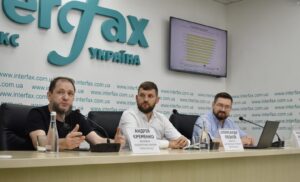
Ukrainians have the most positive attitude toward Germany, the UK, Norway, and France, while Hungary, China, Iraq, and Serbia are among the countries with the worst ratings. This is evidenced by the results of a study conducted by Active Group and the Experts Club analytical center at the end of August.
“We conducted a representative survey of 800 respondents at the end of August, taking into account gender, age, and region of residence. The margin of error does not exceed 3.5%. This is not the first study of this type, but this time we selected 50 countries based on economic criteria – we asked about the countries with which Ukraine trades the most,” said sociologist and founder of Active Group Andriy Yeremenko at a press conference at the Interfax-Ukraine agency on Tuesday.
According to him, the study showed that public opinion is clearly divided between Western countries and countries outside the West.
“Ukrainians most often associate the achievement of peace with the European Union – 42% of respondents believe this. The United States is supported by almost 26% of respondents, and the United Kingdom by 13%. Other large countries, such as China, India, and Brazil, are not really considered to be contributing to a peaceful settlement in Ukraine,” Yeremenko emphasized.
Alexander Pozniy, director of the research company Active Group, added that in economic terms, Ukraine’s key partners are China, Poland, Germany, Turkey, and the United States.
“At the same time, attitudes toward them vary greatly. For example, more than 76% of Ukrainians have a positive attitude toward Germany, while only 12% have a positive attitude toward China, and 40% have a negative attitude. The case of Hungary is even more critical, with 16% having a positive attitude and 55% having a negative attitude,” he said.
Maksym Urakyn, founder of Experts Club and deputy director general of the Interfax-Ukraine news agency, drew attention to economic imbalances in Ukraine’s trade with its leading partners.
“In the first half of 2025, Ukraine’s foreign trade deficit amounted to $18.5 billion, while in 2024 it was $12.4 billion. In other words, we have a significant deterioration. In particular, the negative balance exceeded $7 billion in trade with China alone, $2 billion with Germany, over $1 billion with Poland, and about $2 billion with the United States,” the expert emphasized.
He clarified that Ukraine remains a powerful exporter of agricultural products—grains, oilseeds, metals—while imports from the EU and China consist mainly of machinery, equipment, transport, electronics, and chemicals.
“This once again confirms the need for profound structural changes in the economy and diversification of foreign economic relations. We cannot continue to depend on a narrow circle of suppliers,” Urakin noted.
At the same time, according to the expert, sociological data demonstrate a certain paradox.
“The most economically advantageous partners for us are Egypt, Spain, Moldova, Algeria, Lebanon, and Iraq. But Ukrainians’ attitude toward most of these countries is neutral or even negative. This indicates that society forms its assessments not on the basis of economic benefits, but mainly on the basis of political statements or events,” he added.
Urakin concluded that this discrepancy between the economy and public opinion could have long-term consequences for Ukraine’s foreign policy.
“The representative offices of foreign countries that are Ukraine’s trading partners should pay more attention to working with Ukrainian society, holding cultural events, supporting humanitarian projects, and forming a positive image. Otherwise, we will continue to have a situation where the country is an important trading partner, but at the same time is perceived negatively by the majority of citizens,” emphasized the founder of Experts Club.
Learn more about the study
Source: https://interfax.com.ua/news/press-conference/1103619.html
ACTIVE GROUP, EXPERTS CLUB, INTERNATIONAL TRADE, Pozniy, PUBLIC OPINION, SOCIOLOGY, SURVEY, URAKIN, Єременко
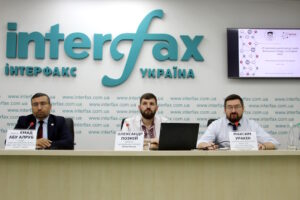
In the Southeast Asian region, Ukrainians have the most positive attitude toward Japan and South Korea. This is evidenced by the results of a joint study by the Experts Club think tank and the Active Group research company, presented at a press conference at Interfax-Ukraine on Thursday.
“Our research has shown that in East Asia, Ukrainians are most supportive of Japan and South Korea. Attitudes toward these countries largely depend on their support for Ukraine after the war began. In the Caucasus region, a positive attitude toward Georgia remains. Also, more than 50% of Ukrainians have a positive attitude towards Kazakhstan. The lowest level of support was recorded for such countries as the DPRK, Syria, and Iraq,” said Oleksandr Poznyi, director of the Active Group research company.

According to the expert, the negative attitude of Ukrainians toward China is also quite eloquent.
“Only 4% of citizens have a positive attitude toward China, 16.7% have a mostly positive attitude, 58.8% have a negative attitude, and 20% have not decided. Currently, China’s position is not entirely unambiguous in relation to Ukraine, which is reflected in the attitude of Ukrainians,” Mr. Poznyi emphasized.
In his turn, Maksym Urakin, founder of the Experts Club think tank and deputy director of the Interfax-Ukraine news agency, presented an analysis of Ukraine’s foreign trade with a number of Asian countries based on data from the State Customs Service for 2023.
“The largest market for Ukrainian goods in Asia is China – more than $2 billion. India ranks second, followed by Kazakhstan, Georgia, Iraq, and Indonesia. As for imports, China is also the largest importer to Ukraine, with more than $10 billion. It is followed by India, Japan, Korea, and Vietnam. In terms of total trade between Ukraine and these countries, China is also the leader, with almost $13 billion. India ranks second – 2.5 billion, followed by Japan – almost a billion,” said Urakin.

According to him, the analysis of economic data shows that Ukraine has significant trade ties with the countries of the Middle East and East Asia. At the same time, China remains one of our country’s largest trading partners in terms of both exports and imports.
“The problem of trade deficit remains, as Ukraine spends a lot of money on imports, while earning little on exports. This is a real problem. In 2023, Ukraine’s trade deficit with all countries is over $27 billion. The deficit with China is $8 billion. Among the countries represented today, we have a positive balance only with Iraq – almost $200 million in favor of Ukraine, Georgia – $100 million, and Armenia – $54 million,” Urakin added.
Chairman of the Ukrainian-Arab Business Council, member of the Council of National Communities of Ukraine Dr. Emad Abu Alrub emphasized that the importance of Ukraine’s relations with the countries of Asia and the Arab world cannot be overestimated, and Ukraine is currently taking important steps to develop these relations.
“Ukraine has significant opportunities in the markets of Arab countries, which have a total population of over 550 million. Arab countries are a permanent market for our goods. After 2014, new markets opened up for our country, especially in Asia. The Ukrainian Arab Business Council is actively working to develop these relations. We need to create a strategic plan to improve relations at the level of economy, politics, and culture. We have significant chances for success, but we need better communication and marketing,” emphasized Dr. Abu Alrub.

He also added that Saudi Arabia is interested in cooperating with Ukraine by investing not only in trade, but also in agriculture, technology, and other projects. Other interesting countries are the UAE, Qatar, and Egypt. All of them also have great potential for investment in Ukraine.
In conclusion, Maksym Urakin called on foreign embassies to be more active in establishing communication with Ukrainian society.
“If you can, please provide information to journalists about what you are doing here, how you are helping in the humanitarian sphere. Through these ties, we will deepen our cooperation, because the way Ukrainian citizens view your countries also depends on your work,” he concluded.
ACTIVE_GROUP, ALEXANDER_POZNYI, EAST_ASIA, ECONOMY, EXPERTS_CLUB, MAXIM_URAKIN, MIDDLE_EAST, SOCIOLOGY, SURVEY



