
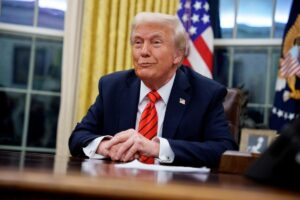
Beijing urges Washington to adhere to previously reached consensuses and considers President Donald Trump’s threats of new tariffs a mistake, the Chinese Ministry of Commerce said.
“China urges the United States to immediately reconsider its mistaken actions, adhere to the important consensuses reached during telephone conversations between the two heads of state, safeguard the hard-won results of consultations, and continue to use the mechanism of China–US trade and economic consultations,” the statement published on the ministry’s website said.
Beijing emphasized that it stands for resolving differences through dialogue, and if Washington insists “on the wrong path,” China will take measures to protect its legitimate rights and interests.
“Deliberate threats of high tariffs are the wrong way to build relations with China,” the ministry stressed. The agency also noted that US statements about possible new tariffs are an example of double standards.
On Saturday night, Trump announced that he intends, starting November 1, “or maybe even earlier,” to impose additional 100% tariffs on goods imported from China.
“Starting November 1, or perhaps earlier, depending on China’s actions, the United States will impose 100% tariffs in addition to the existing ones. In addition, starting November 1, we will implement export control measures for any vital software,” he wrote on Truth Social.
Trump explained that he made this decision because China “declared that starting November 1 it would implement serious export control measures on almost all products manufactured in the PRC.” “This will affect all countries and is clearly a plan that China has been preparing for years,” the US president said.
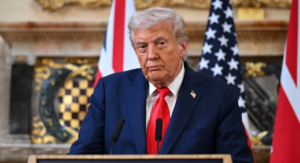
US President Donald Trump has announced that from November 1, 2025, additional 100% tariffs will come into effect on Chinese imports, which will be in addition to existing tariffs.
According to him, this decision was made in response to China’s recent export restrictions on rare earth metals and other critical materials.
According to a quick analysis by the Experts Club think tank, the possible consequences for the global economy could be as follows:
1) China is likely to respond with countermeasures: the introduction of tariffs, export restrictions, or lawsuits (including through the WTO).
2) The escalation of the trade conflict could trigger a chain reaction — countries dependent on China or the US may begin to “pull” supply chains.
3) The rise in the price of Chinese components will hit electronics, automotive, and equipment manufacturing, leading to higher prices for end products.
4) Companies will be forced to look for alternative suppliers, probably in Asia (Vietnam, India) or Latin America, which will increase logistics costs.
5) Increased instability could exacerbate capital flight to safe havens — the dollar, gold — and devalue the currencies of countries that trade actively with China.
6) Shares of technology companies that depend on Chinese components will come under pressure.
Many emerging markets depend on Chinese imports. Tariff increases will lead to inflationary pressure and a deterioration in the trade balance. Geopolitical alliances may also strengthen: countries may choose between the US and China, adjusting their foreign economic policies.
There may be leaks and problems in the implementation of measures. Administrative and customs burdens may increase the cost of complying with rules of origin, and it is clear that some companies will try to circumvent tariffs through “transit” countries.
A US appeals court on Friday ruled that most of the tariffs imposed by Donald Trump were illegal, undermining the use of these levies as a key tool of international economic policy, Reuters reports.
The court allowed the tariffs to remain in effect until October 14 so that the Trump administration could appeal to the US Supreme Court.
“The decision comes amid a legal battle over the independence of the Federal Reserve, which is also likely to reach the Supreme Court, creating an unprecedented legal confrontation this year over Trump’s economic policy,” the report said.
US President Donald Trump criticized the verdict, saying it was accepted: “ALL TARIFFS ARE STILL IN EFFECT! Today, the highly partisan Court of Appeals wrongly ruled that our tariffs should be canceled, but they know that the United States of America will ultimately prevail. If these tariffs ever disappear, it will be a complete disaster for the country. It will make us financially weak, and we must be strong… Now, with the help of the US Supreme Court, we will use them to benefit our nation and make America rich, strong, and powerful again!” Trump wrote on Truth Social.
According to the publication, in a 7-4 decision, the court considered the legality of the “reciprocal” tariffs imposed by Trump in April as part of the trade war, as well as separate tariffs against China, Canada, and Mexico imposed in February.
The court noted that the International Emergency Economic Powers Act (IEEPA), to which Trump referred, does not provide the president with the direct right to impose tariffs. “It is unlikely that Congress, in enacting the IEEPA, intended to depart from its previous practice and grant the president unlimited authority to impose tariffs,” the document states.
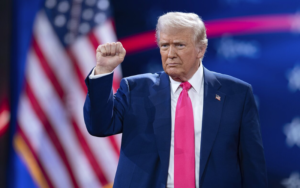
US President Donald Trump has decided to impose additional tariffs of 25% on India due to its purchase of Russian oil, according to a presidential decree published by the White House.
“Thus, goods from India imported into the US will be subject to ad valorem duties of 25%,” the document says.
“I have determined that it is necessary and appropriate to impose ad valorem duties on imports from India that directly or indirectly purchase oil from the Russian Federation,” Trump explained in the decree.
Ad valorem duties are levied as a fixed percentage of the price of the goods, rather than per unit of cargo.
At the same time, the order specifies that it applies not only to oil of Russian origin, but also to petroleum products.
“The term ‘oil of the Russian Federation’ means crude oil and petroleum products extracted, refined, and exported from the Russian Federation, regardless of the nationality of the company involved in the production or sale of oil or petroleum products,” the document explains.
The term “indirect import” is also clarified, which, according to the US, means the purchase of Russian oil through intermediaries or third countries, whereby the origin of the oil can be traced back to Russia if the head of the Ministry of Trade, who consulted with the Secretary of State and the head of the Ministry of Finance, comes to such conclusions.
Last week, Trump announced that he was imposing 25% tariffs on Indian goods, as well as “penalties” for India’s purchase of Russian oil and weapons. Trump later expressed hope that India would stop buying Russian oil.
Trump then threatened to seriously increase tariffs on Indian exports, arguing that India’s purchases of Russian oil contribute to the continuation of Russia’s military aggression against Ukraine.
In turn, the Indian Foreign Ministry said that the US and EU’s dissatisfaction with Delhi’s purchase of Russian oil was unfounded. Trump’s threats were also condemned by the ruling party and the opposition in India.
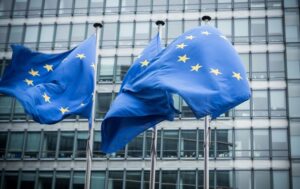
European leaders and industry circles have reacted strongly to US President Donald Trump’s announcement that he will impose 30% tariffs on imports from the EU from August 1, a significant increase on the current 10% base rate, according to Euractiv.
According to the publication, the decision has caused outrage among EU member state leaders, who are calling for an immediate and tough response from Brussels. European diplomats will hold an emergency meeting on Sunday to discuss measures
Bernd Lange, chairman of the European Parliament’s Trade Committee, called Washington’s actions “arrogant and a slap in the face” and said that countermeasures should take effect as early as Monday.
French President Emmanuel Macron called on the European Commission to resolutely defend the EU’s interests if no agreement is reached by August 1.
Spanish Prime Minister Pedro Sánchez noted the strength of the single market, while Italian Prime Minister Giorgia Meloni expressed hope that escalation could be avoided.
Hungary criticized the European Commission, saying that tariffs should have been lowered after Trump’s return.
Meanwhile, representatives of European industry are warning of serious consequences of the new tariffs. The Federation of German Industries (BDI) called Trump’s statement “an alarm bell” and called for a quick solution to avoid further escalation. According to official data, German exports to the US have already fallen to their lowest level since March 2022,” the statement said.
The food industry, particularly the wine sector, is particularly affected. The Italian wine association UIV said the new tariffs could lead to an embargo on 80% of Italian wine exports to the US. “This is the darkest page in the relationship between two historic allies,” said UIV President Lamberto Frescobaldi.
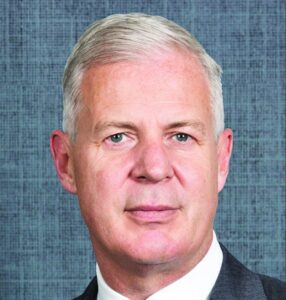
The International Chamber of Commerce (ICC) has introduced reduced fees for Ukrainian companies applying to the ICC International Court of Arbitration. This was announced in an interview with Interfax-Ukraine by ICC Secretary General John W. H. Denton.
“Yes, the decision to reduce fees was implemented to remove barriers to commercial dispute resolution for Ukrainian businesses,” he said.
In addition, according to the ICC Secretary General, the ICC One Click digital platform is now available in Ukrainian and integrated into the network of regional chambers of commerce and industry. He also announced this in an interview with the agency.
“Ukrainian small and medium-sized enterprises (SMEs) are already using the platform, undergoing training, and integrating into international supply chains,” Denton added.
The ICC (International Chamber of Commerce) is the world’s largest business organization representing the interests of the private sector at the global level.
Headquarters: Paris, France.
Member countries: more than 170.
Members: over 45 million companies, entrepreneurs, and business associations worldwide
Status: has observer status at the UN, works closely with the WTO, G20, IMF, and other international organizations.
The ICC develops global standards and rules for doing business (e.g., Incoterms®), resolves international disputes through the ICC International Court of Arbitration, one of the most authoritative arbitration bodies in the world, and promotes free trade, sustainable development, and the digitalization of the economy.
For more information, see the interview: https://interfax.com.ua/news/interview/1082092.html



