

According to the Serbian business media outlet Parametar, Serbia has seen a noticeable increase in the influx of Ukrainian citizens since April 2026. According to data cited by Radosh Džurović, director of the Center for the Protection and Assistance of Asylum Seekers, in an interview with RTS, approximately 70,000 people from Ukraine had entered Serbia by September. These figures reflect entry and exit statistics, not the number of people currently in the country.
According to Džurović, a significant change is that an increasing number of Ukrainians are not using Serbia merely as a transit country but are staying, renting housing, and seeking employment and educational opportunities. Most live in the private sector and do not use state-run accommodation centers.
Among those arriving, he said, are many people from the Kharkiv and Odesa regions, as well as from central Ukraine.
At the same time, official statistics on temporary protection are significantly lower than the total number of entries. Back in March 2026, the Center for the Protection and Assistance of Asylum Seekers reported that 1,253 Ukrainian citizens officially had temporary protection in Serbia. From the start of the full-scale war through January 2026, more than 744,000 Ukrainians entered Serbia, but most continued on their way.
This indicates that the current trend differs from previous years: some Ukrainian citizens are beginning to view Serbia not only as a transit route but also as a place for longer-term residence.
Džurović warns that if the situation in Ukraine continues to deteriorate, Serbia may face a new surge in arrivals and the need to expand its capacity to accommodate them.
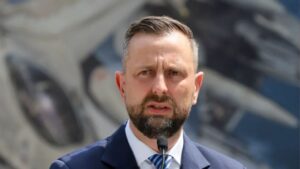
Polish Minister of National Defense Vladyslav Kosyniak-Kamysz stated that Ukrainians of draft age who are in Poland should be in Ukraine and serve their country.
“All young Ukrainians capable of fighting should be in Ukraine and serve their homeland there,” Kosiniak-Kamysz said during a speech, a video of which was published by the Video Parlament channel.
He also criticized Ukrainians who flaunt a lavish lifestyle in Poland or violate local rules. In particular, in the published excerpts from his speech, the minister stated that such cases “are not normal” and that such individuals should be deported.
The statement came amid a debate in Poland regarding the behavior of some Ukrainians residing in the country, as well as Ukraine’s mobilization needs. A separate incident that previously sparked public outrage involved a Ukrainian influencer who drove into the Morskie Oko area in the Tatra Mountains in defiance of a ban; Polish police sought a five-year ban on his entry into Poland and the Schengen Area.
At the same time, Kosyniak-Kamysz criticized far-right politicians and the opposition Law and Justice party for stoking anti-Ukrainian sentiment. He emphasized that since the start of the full-scale war, Poles have opened their homes and provided extensive assistance to Ukrainians without setting up refugee camps.
The Polish defense minister had previously expressed a similar position. In February 2025, in an interview with Radio ZET, he said that Ukrainians of draft age should leave Poland and fight for their country, and he also called the sight of young Ukrainian men in expensive cars and five-star hotels “indecent and unacceptable.”
The Polish minister’s new rhetoric coincided with discussions within the EU regarding changes to the temporary protection regime for Ukrainians. On June 26, 2026, the European Commission proposed extending temporary protection for people who fled the war in Ukraine until March 4, 2028, but at the same time noted that temporary protection, as a rule, should not be granted to new arrivals who cannot confirm that they have permission from the Ukrainian authorities to leave, given their military obligations.
Reuters, citing the European Commission’s proposal, reported that the restriction would apply to new arrivals—Ukrainian men of draft age without permission from the Ukrainian authorities to leave the country—but not to Ukrainians already under protection in EU countries.
Poland remains one of the leading EU countries in terms of the number of Ukrainians with temporary protection status. According to Eurostat, as of May 31, 2026, 967,505 people from Ukraine had this status in Poland, accounting for 22.1% of all individuals from Ukraine who had been granted temporary protection in the EU. Only Germany had a higher number—1.283 million people.
According to the Polish Office for Foreigners, approximately 993 thousand Ukrainian citizens in Poland are registered under temporary protection and hold a PESEL UKR number. In addition, 462 thousand Ukrainian citizens hold valid temporary residence permits, while another 92 thousand have permanent residence or long-term resident status in the EU.
Thus, Kosiniak-Kamysz’s statement reflects a tougher stance taken by a segment of the Polish political class: Warsaw continues to support Ukraine, but at the same time is increasingly raising the issue of mobilizing Ukrainians living abroad and condemning behavior that causes irritation in Polish society.
Kosiniak-Kamysz, mobilization, POLAND, TEMPORARY PROTECTION, UKRAINE
Ukrainian citizens ranked first in the number of residence permits issued by Spain to foreign nationals in 2025, according to data from Spain’s Ministry of Social Security and Migration.
According to the Spanish ministry, 244,579 residence permits were issued to Ukrainian citizens in 2025. They were followed by citizens of Venezuela—224,341 permits—and Morocco—187,790. These three countries accounted for 42% of all residence permits issued to foreigners in Spain in 2025.
In total, Spain issued 1,577,842 residence permits to foreigners in 2025, which is 7.8% more than the previous year, or 114,238 more permits. This growth was due, in particular, to an increase in the number of permits issued to citizens of Venezuela, Ukraine, and the United Kingdom.
Spanish authorities specifically note that these statistics reflect the number of permits, not the number of unique individuals. The same person could, for example, receive an initial permit and then a renewal within the same year, so this figure does not equal the number of new residents.
In the case of Ukraine, the temporary protection regime for people displaced by the war played a major role.
The report also notes that 238,007 permits in the “other exceptional circumstances” category were issued to Ukrainian citizens under the Temporary Protection Directive. This is 11.5% more than in 2024, with 85% of these permits being renewals.
According to the statistics, Russians ranked 11th among the largest groups of recipients of Spanish residence permits, with 27,655 permits issued.
By region, the highest number of residence permits were issued in Catalonia—311,038—followed by the Valencian Community—282,897—Madrid—275,607—and Andalusia—232,201. These four autonomous communities accounted for 70% of all permits issued to foreigners in 2025.
Separately, Spain reported 108,253 residence permits for study purposes issued to foreign students and their family members in 2025. The most common nationalities in this category were Colombia, Peru, Morocco, the United States, and China.
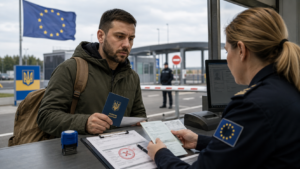
The European Commission is preparing the largest change since 2022 to the temporary protection regime for Ukrainian citizens: newly arriving Ukrainians who are subject to military obligations and do not have permission from the Ukrainian authorities to leave the country will, as a rule, be unable to receive temporary protection in the EU, the Polish newspaper Rzeczpospolita writes.
According to the Experts Club information and analytical centre, Ukrainian citizens will need special confirmation from Ukrainian authorities stating that they are not subject to mobilization in order to enter Poland and other EU countries and subsequently receive temporary protection. Rzeczpospolita clarifies that this requirement may apply not only to men but also to women if they are subject to the relevant Ukrainian military obligations.
The European Commission’s official proposal already confirms the general principle of such changes. On June 26, 2026, the Commission proposed extending temporary protection for people who fled Ukraine for another year, until March 4, 2028, but at the same time stated that temporary protection should generally not be granted to newly arriving persons whom the Ukrainian authorities have not allowed to leave because of military obligations.
The draft decision of the European Commission states that the extension of temporary protection should not undermine Ukraine’s ability to defend itself and that EU member states should take into account Ukraine’s military needs and its legally established conscription obligations. Verification of such requirements should apply only to new arrivals after the decision enters into force, while Ukrainians who have already received temporary protection in the EU should retain this status and the rights associated with it.
Polish Deputy Interior Minister Maciej Duszczyk told Rzeczpospolita that the new restrictions would probably begin to apply as early as July, but would concern not those who already have temporary protection in EU countries, but those who are only seeking to obtain it. He also noted that Poland supports such changes.
According to Rzeczpospolita, Ukraine itself initiated the tightening of the approach, having asked EU countries in early June to restrict the admission of some Ukrainian citizens under the special conditions of temporary protection. The Polish publication links this to Kyiv’s attempts to strengthen mobilization and reduce the outflow of people who may be needed by the Ukrainian army.
Reuters previously reported that the European Commission’s proposal means that newly arriving Ukrainian men of conscription age without permission from the Ukrainian authorities to leave the country will not be able to qualify for temporary protection. According to European Commissioner for Migration Magnus Brunner, the aim of the changes is to balance the need to protect people with Ukraine’s ability to defend itself.
This issue is of particular importance in Poland, as the country remains one of the main reception centres for Ukrainians in the EU. According to Eurostat, as of May 31, 2026, 4.38 million people who had fled Ukraine were under temporary protection in the EU. The largest numbers were in Germany, with 1.283 million, Poland, with 967,505, and Spain, with 267,400.
Rzeczpospolita, citing the Polish Ministry of Digital Affairs, writes that as of June 15 there were more than 218,000 Ukrainian men aged 18–65 with UKR status in Poland. Across the EU, adult men account for 26.8% of temporary protection beneficiaries from Ukraine, or more than 1.17 million people, based on Eurostat’s May estimate.
Poland’s Office for Foreigners previously reported that almost 1 million Ukrainian citizens in the country benefit from temporary protection, while approximately 1.55 million Ukrainians in total have valid grounds for staying in Poland. This estimate includes around 993,000 people with PESEL UKR, 462,000 Ukrainian citizens with temporary residence permits, and 92,000 with permanent residence or EU long-term resident status. These figures do not include Ukrainians staying in Poland under the visa-free regime or on visas.
Rzeczpospolita also writes that the Polish Interior Ministry is finalizing work on amendments to the citizenship law. Among the measures being discussed are increasing the minimum residence period for naturalization to eight years, introducing a language and integration test, and requiring a so-called confirmation of loyalty. According to the publication, this reform will affect Ukrainian citizens to the greatest extent, since for many years they have remained the largest group of foreigners applying for Polish citizenship.
Thus, this is not about ending protection for Ukrainians who are already in the EU, but most likely about introducing new screening of future arrivals. The European Union is effectively trying to combine humanitarian protection for refugees with Ukraine’s military needs, while Poland, which is home to one of the largest Ukrainian communities in Europe, is becoming one of the key participants in this debate.

The Norwegian government is tightening its rules regarding refugees from Ukraine: men aged 18 to 60, with some exceptions, will no longer be granted temporary protection in the country; this change will take effect shortly (Relocation).
“Since the fall of 2025, too many people have arrived in Norway, especially young men. Norway has already accepted the largest number of Ukrainians in Scandinavia, and Norwegian municipalities are reporting strain on the service delivery system and a shortage of housing. “That is why we are tightening the restrictions,” said Minister of Justice and Emergency Situations Astrid Hansen. “We also consider it important that as many people as possible remain in Ukraine to join the defense effort and support the functioning of Ukrainian society,” she added.
The change in regulations will mean that men aged 18 to 60 will no longer be covered by the temporary collective protection mechanism, under which temporary residence permits are granted based on a group assessment. Those applying for asylum will have their applications processed in the usual manner.
The government has provided for certain exceptions to these stricter requirements.
“First, they will apply only to new applicants and will not affect those who already have temporary collective protection in Norway. The stricter requirements will also not apply to minors or men over 60 years of age, men who have documented proof of exemption from military service or are clearly unable to perform it, or individuals evacuated under the medevac program. An exception is also made for men who are the sole caregivers for accompanying children or children in Norway. This applies only to the child’s father or another close family member,” the government statement noted.
In September 2025, there was an annual peak in the granting of temporary status to Ukrainian citizens in European Union countries, according to Eurostat.
“In October 2025, EU countries issued 74,175 new decisions on granting temporary protection. This is the second highest monthly figure in 2025 after the peak recorded in September (79,525). These high figures are the result of a decree by the Ukrainian government, adopted at the end of August 2025, which grants men aged 18 to 22 inclusive the right to leave Ukraine without hindrance,” the report says.
As of October 31, 2025, Ukrainian citizens accounted for more than 98.4% of those who received temporary protection in the EU. Adult women accounted for 43.8% of those who received temporary protection. Minors accounted for almost a third (30.8%), and adult men for just over a quarter (25.5%) of the total number
. As of October 31, 2025, a total of 4.3 million non-EU citizens who fled Ukraine had temporary protection status in the EU. Compared to the end of September 2025, the total number of persons from Ukraine under temporary protection decreased by 6,170 (-0.1%).
The EU countries that received the largest number of persons from Ukraine under temporary protection were Germany (1,229,960 persons; 28.6% of the total number in the EU), Poland (965,005; 22.5%), and the Czech Republic (393,005; 9.1%).
CZECH REPUBLIC, GERMANY, POLAND, TEMPORARY PROTECTION, UKRAINIANS



