

Imports of trucks to Ukraine from January through August 2026 declined by 1.1% in monetary terms compared to the same period in 2025—to $627.5 million, according to statistics from the State Customs Service.
According to the published data, imports of these vehicles rose by 13.5% in August compared to August 2025, reaching $80.1 million.
As in the previous year, the largest number of trucks in January–August were imported from Poland, but imports from that country fell by 24%—to $98.8 million—and its share of total truck imports decreased to 15.74% from 20.5%.
Germany became the second-largest supplier of trucks to Ukraine, with exports totaling $88.4 million; in January–August 2025, it had not been among the top three suppliers.
Imports from Italy, which also was not among the top three truck suppliers a year ago, totaled $68.9 million (nearly 11%).
In January–August of last year, the top three truck suppliers were Poland, France, and the United States.
Imports of trucks from all other countries during this period increased by 20.5%—to $371.4 million.
At the same time, according to statistics, Ukraine exported only $2.17 million worth of trucks over the eight-month period, mostly to Turkey, while a year ago, exports totaled nearly $4 million—also primarily to Turkey.
As previously reported, in 2025, imports of trucks into Ukraine increased by 5.5% compared to 2024—to $999.5 million, with the largest volumes coming from France—$169.2 million (42.8% more than the year before last), Poland—$162.7 million (-14.7%), and the United States—$109 million (+2%).
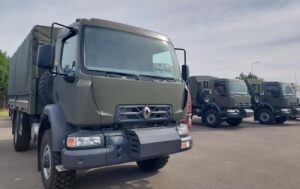
In August 2026, 1,050 new trucks and specialty vehicles were added to Ukraine’s fleet, which is 20% less than in July of this year, according to a report by “Ukravtoprom” on its Telegram channel.
At the same time, compared to August of last year, demand for these vehicles increased by 12%.
Renault remains the market leader with 250 units, which is 47 fewer vehicles than a month ago.
Mercedes-Benz took second place, with 121 registrations compared to 114 in July. Volkswagen came in third with 100 units (it was not among the top five in July).
Next were Citroën with 85 units (117 units in July 2026) and FIAT with 67 units (107 units).
As previously reported, last August the top five were Renault, Citroën, Peugeot, Toyota, and Hyundai, and sales fell by 14% compared to August 2024—to 937 units.
According to data from “Ukravtoprom,” overall sales growth for trucks and special-purpose vehicles from January through August 2026 slowed to 14% compared to the same period last year, reaching 8,626 new vehicles (sales growth stood at 15% for January through July).
As reported, citing data from “Ukravtoprom,” registrations of new trucks and specialty vehicles in 2025 fell by 5% compared to 2024—to nearly 12,300 vehicles.
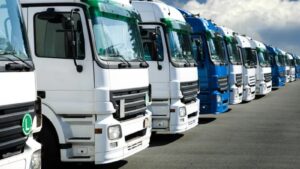
In July 2026, 1,206 new trucks and specialty vehicles were added to Ukraine’s fleet, which is 41% more than in July 2025 and 8.3% more than in June of this year, according to a report by Ukravtoprom on its Telegram channel.
Renault remains the market leader with 297 units, surpassing its June 2026 figure by 50 vehicles.
Citroën ranks second with 117 units (up by 5 units), and Mercedes-Benz ranks third with 114 units (it did not make the top five in June).
Rounding out the top five are Fiat with 107 units (7 more cars) and MAN with 97 units.
As previously reported, last July’s top five were Citroën, Renault, Hyundai, Peugeot, and Mercedes-Benz, with car sales rising by 2% compared to July of the previous year, to 971 units.
According to “Ukravtoprom,” overall, from January through July 2026, the growth rate of sales of trucks and specialty vehicles accelerated to nearly 15% compared to the same period last year, reaching 7,576 new vehicles (for January through June, the sales growth rate was 11%).
As previously reported, according to “Ukravtoprom,” registrations of new trucks and specialty vehicles in 2025 fell by 5% compared to 2024—to nearly 12,300 vehicles.

Restrictions on truck traffic have been imposed in Kyiv due to the heat wave, according to the capital’s Patrol Police.
“To preserve the road surface, trucks are prohibited from traveling when the air temperature reaches +28 degrees Celsius or higher. The ban applies to vehicles with a gross vehicle weight exceeding 24 metric tons and an axle load exceeding 7 metric tons,” the police stated in a message on their Telegram channel on Sunday.
It is noted that drivers can wait out the hot period at temporary parking areas in highway shoulders and near roadside service facilities.
A separate announcement will be made regarding the lifting of the restriction.

Imports of trucks to Ukraine in January–June 2026 fell by 6.7% in monetary terms compared to the same period in 2025—to $446.1 million, according to statistics from the State Customs Service.
According to the published data, imports of these vehicles in June, in particular, rose by 4% compared to June 2025 and by 4% compared to May of this year—reaching $94.14 million.
As in the previous year, the largest number of trucks in January–June was imported from Poland, but imports from that country fell by 40.4%—to $58.06 million—and its share of total truck imports dropped to 13% from 20.4%.
Imports from Italy, which did not rank among the top three truck suppliers in the first half of the year, totaled $55.2 million (12.38%), while imports from France fell by 36.5% to $47.7 million (10.68%).
In January–June of last year, the top three truck suppliers were Poland, the United States, and France.
Truck imports from all other countries increased by 27% in the first half of the year, reaching $285.1 million.
At the same time, according to statistics, Ukraine exported only $1.85 million worth of trucks over the six-month period, mostly to Turkey, while a year ago, exports totaled nearly $3.5 million, also primarily to Turkey.
As previously reported, in 2025, imports of trucks into Ukraine increased by 5.5% compared to 2024—to $999.5 million, with the largest volumes coming from France—$169.2 million (42.8% more than the year before last), Poland—$162.7 million (-14.7%), and the U.S.—$109 million (+2%).

In Ukraine, a requirement takes effect on July 1 stipulating that all freight vehicles registered for the first time for international transport must be equipped with second-generation smart tachographs (G2v2).
According to a statement from the Ministry of Community and Territorial Development, this requirement is part of Ukraine’s obligations under the Agreement on the Liberalization of Freight Transport with the EU.
“We are consistently harmonizing our legislation with EU standards so that Ukrainian companies can operate under the same rules as their European counterparts,” Deputy Minister of Community and Territorial Development Serhiy Derkach is quoted as saying in the press release.
The ministry explained that second-generation smart tachographs will automatically record drivers’ work and rest periods, as well as determine the vehicle’s location.
However, the ministry emphasized that this requirement applies only to trucks that are registered in Ukraine for the first time on or after July 1, 2026, for the purpose of international transport.
It is noted that there are currently over 100 centers operating in Ukraine that issue and service cards for smart tachographs. As a result, more than 29,000 such cards have already been issued.
Training is also underway for inspectors of the State Service of Ukraine for Transport Safety on how to use the new devices, which will enable them to effectively inspect both Ukrainian and foreign vehicles, the press release added.
EU, Ministry of Development, tachograph, TRANSPORTATION, TRUCK



