

Oil prices remained in the red on Wednesday after the publication of the US Department of Energy’s weekly report on energy reserves in the country.
Commercial oil inventories in the US last week increased by 3.46 million barrels to 415.13 million barrels, the Energy Department reported. Gasoline stocks increased by 2.96 million barrels, distillate stocks decreased by 4.99 million barrels.
The cost of March futures for Brent on the London ICE Futures exchange as of 18:00 hours is $77.3 per barrel, which is $0.19 (0.25%) lower than at the close of the previous trading.
March futures for WTI during trading on the New York Mercantile Exchange (NYMEX) decreased in price by $0.36 (0.49%) to $73.41 per barrel.
Traders’ attention is still focused on the actions of US President Donald Trump, who intends to impose a 25 percent duty on imports from Canada, a major supplier of oil to the US market, starting February 1.
“The oil market continues to dance to the rhythm of Trump’s tariff orchestra, with the focus on the duties for Canada that will take effect this Saturday,” said Ole Hansen, who is responsible for commodity strategy at Saxo Bank.
Traders are also waiting for news from OPEC+. Kazakhstan’s Energy Minister Almasadam Satkaliyev said on Wednesday that a meeting at the level of OPEC+ representatives is planned in the near future to discuss, among other things, the US plans to increase oil production.
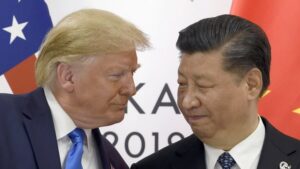
US President Donald Trump said that he has “always liked” Chinese President Xi Jinping and expressed hope for China’s help in a peaceful resolution of Russia’s war against Ukraine.
“I hope China will help us stop the war, particularly with Russia, Ukraine, and they have a lot of power over this situation. And we will work with them. And I mentioned that during our phone call with President Xi, and I hope we can work together and stop it,” he said during an online chat after a special address at the World Economic Forum in Davos on Thursday.
According to Trump, his administration “looks forward to getting along very well with China.”
The US leader also noted that he “really likes President Xi” Jinping. “I’ve always liked him. We’ve always had a very good relationship,” the US president added.
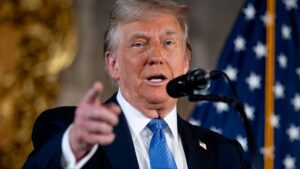
On Thursday, US President Donald Trump signed an executive order declassifying documents on the assassination of the 35th US President John F. Kennedy, Senator Robert Kennedy, and civil rights leader Martin Luther King Jr.
“More than 50 years after the assassinations of President John F. Kennedy, Senator Robert F. Kennedy, and Pastor Martin Luther King Jr. the federal government has not made all of its records related to these events public. Their families and the American people deserve transparency and truth,” the text of the decree reads.
The document emphasizes that within the next 15 days, the Director of National Intelligence and the Attorney General must submit to Trump a plan to fully disclose records related to the assassination of President John F. Kennedy, and within 45 days – those related to the assassinations of Senator Robert F. Kennedy and Martin Luther King Jr.
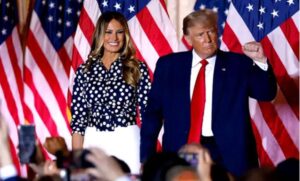
The administration of the new US President Donald Trump is taking the first steps to change the regulation of the cryptocurrency market. During his election campaign, Trump promised to create a more friendly environment for crypto assets.
Mark Ueda, the acting chairman of the U.S. Securities and Exchange Commission (SEC), announced the creation of a working group to “develop a comprehensive and clear regulatory framework for crypto assets.”
“The task force will help the SEC define clear regulatory boundaries, propose realistic pathways for registration, develop reasonable disclosure schemes, and prudently allocate resources for enforcement,” the regulator said in a statement.
Ueda is acting as SEC chairman temporarily while Trump’s nominee, lawyer Paul Atkins, awaits confirmation by the Senate.
Earlier, the Experts Club think tank, Brian Mefford and Maxim Urakin, released a video analysis of what changes await US domestic and foreign policy under Trump, the video is available on the Experts Club YouTube channel – https://youtu.be/W2elNY1xczM?si=MM-QjSqGce4Tlq6T
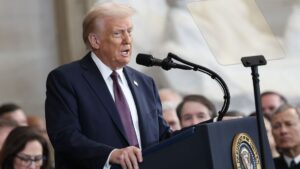
US President Donald Trump has lifted the moratorium on the issuance of new liquefied natural gas (LNG) export licenses imposed by his predecessor Joe Biden. The US Department of Energy reported that it is returning to the normal regime of reviewing export applications in accordance with Trump’s order.
“The Department has been instructed to resume reviewing applications for the export of US LNG to countries that do not have a free trade agreement with the United States. The proper review of export applications is required by law and must be carried out accordingly,” the Energy Ministry said in a statement.
In December, the agency published the results of a study on LNG exports and set February 18 as the deadline for public comments on it. Now the Ministry of Energy has decided to extend the comment period until March 20, 2025.
Earlier, the Experts Club think tank, Brian Mefford and Maxim Urakin, released a video analysis on what changes are expected to occur in US domestic and foreign policy under Trump, the video is available on the Experts Club YouTube channel – https://youtu.be/W2elNY1xczM?si=MM-QjSqGce4Tlq6T
EXPERTS CLUB, EXPORT, GAS, LICENSE, MORATORIUM, TRUMP, URAKIN, Меффорд
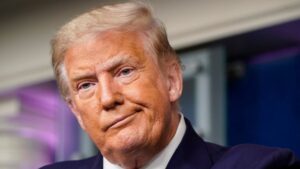
President Donald Trump signed an executive order on Monday to temporarily suspend all US foreign aid programs for 90 days pending a review to determine whether they meet his policy goals, the White House website reports.
“All heads of departments and agencies responsible for U.S. foreign development assistance programs should immediately suspend new commitments and disbursements of development assistance funds to foreign governments and non-governmental organizations, international organizations, and contractors providing development assistance until an analysis of such programs regarding their effectiveness and consistency with U.S. foreign policy is completed, to be conducted within 90 days of the date of this order,” the document says.
It is unclear how much aid is covered by the order, as funding for many programs has already been appropriated by Congress and should be spent, if not already.



