

France’s TotalEnergies has announced that it has halted or is in the process of halting production in Qatar, Iraq, and offshore assets in the UAE. According to the company’s estimates, these assets account for about 15% of its total production. This is stated in TotalEnergies’ statement on its investor page.
The company clarified that onshore production in the UAE is not affected by the conflict. Its volume is about 210,000 barrels of oil equivalent per day in TotalEnergies’ share. At the same time, 15% of the volume in the Middle East accounts for about 10% of the upstream segment’s cash flow, as local assets are subject to higher taxes and generate less cash flow per barrel than the group’s portfolio average.
The company also said that rising oil prices could compensate for the decline in volumes. According to TotalEnergies’ estimates, an $8 per barrel increase in the price of Brent is enough to offset the expected 2026 cash flow from assets in Iraq, Qatar, and offshore UAE at a price of $60 per barrel. At the same time, operations at the SATORP oil refinery in Saudi Arabia continue as usual and supply the kingdom’s domestic market.

The UAE has simplified the process of obtaining a “golden visa” for real estate investors: the key criterion remains the cost of the property from 2 million dirhams, while in Dubai it is possible to apply on the basis of a mortgage purchase if there is a letter from the bank and confirmation of payments, according to the description of the Dubai Land Department (DLD) service for applying for a 10-year investor residence visa.
According to the DLD’s terms and conditions, the applicant must own a property (or several properties) with a total value of at least AED 2 million, and the property may be mortgaged – a letter from the bank stating that there are no objections is required, as well as an indication of the amount paid and the outstanding balance.
The changes came into effect on February 20, 2026, and expand the pool of applicants to include buyers using mortgages and installment plans, as well as buyers of off-plan properties.
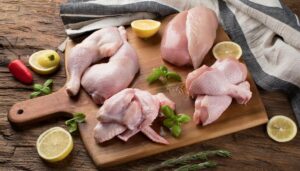
Poultry meat exports from Ukraine in January 2026 amounted to 38.1 thousand tons, which is 6.1% more than in December 2025, according to the Ukrainian Poultry Farmers Union.
The industry association specified that in monetary terms, exports for the specified period decreased by 2.1% to $85.4 million.
“The growth in physical export volumes against the backdrop of a decrease in total revenue is a consequence of a decline in the export value of products due to a fall in world prices for poultry meat,” the Poultry Farmers Union noted.
The main buyers of Ukrainian products in January were the Netherlands (21.9%), the United Kingdom (11.8%), the UAE (9%), and Slovakia (8.2%). The share of EU countries in total exports was 37.3% (13.8 thousand tons). At the same time, in monetary terms, the European market provided almost half of the foreign exchange earnings – 48.7%.
As reported, in 2025, Ukraine reduced the physical volume of poultry meat exports by 1.8% compared to 2024, to 458.1 thousand tons, but foreign exchange earnings from its sale increased by 13.7%, reaching $1.15 billion. The main markets were the EU countries (in particular, the Netherlands and Slovakia), Saudi Arabia, and the United Kingdom.
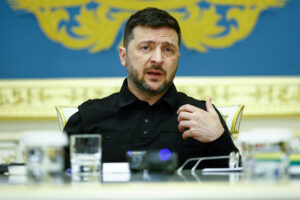
In an evening address, Ukrainian President Volodymyr Zelensky announced that the Ukrainian negotiating team will hold a preparatory meeting tomorrow to agree on the framework for future negotiations and all organizational details, and on Monday, February 2, will travel to the United Arab Emirates to participate in trilateral negotiations scheduled for Wednesday and Thursday of next week.
“There was a report from our negotiating team. An agreement has already been reached on a trilateral meeting at the appropriate level. This meeting will take place next week, as planned, on Wednesday and Thursday. In the Emirates, as last time,” Zelensky emphasized.
Zelensky added that a meeting is scheduled for Monday to agree on the framework for the talks and prepare for the negotiations, and the team will set off on Monday evening.
“Many leaders and different countries are with us in this process, supporting Ukraine, and we are coordinating on a daily basis. In February, we will be quite active in foreign policy, and starting tomorrow, we will have contacts and meetings,” the president said in a statement.
The creation of agri-food hubs as a new format for international cooperation in the field of food security was discussed by Deputy Minister of Economy, Environment and Agriculture Denys Bashlyk and Director General of the DIHAD Sustainable Development Fund of the United Arab Emirates Organisation Khaled Al-Attar, according to the press service of the Ministry of Economy.
“Ukraine is already actively working to expand the Food from Ukraine initiative, namely to create food hubs in African countries. This is not just about exports—it is about building local infrastructure for food storage, processing, and distribution. We want to scale up this approach. Together, we can create a network of modern food hubs that will ensure stable food supplies to the regions that need it most, including the Middle East. This is a contribution to global food security and stability,” Bashlyk said during the talks.
The deputy minister stressed that food security and the construction of food hubs, particularly in the Middle East, could become a new strategic area of cooperation, and expressed confidence that the development of such cooperation would contribute to the formation of a new innovative agroecosystem and the deepening of economic and investment ties between countries.
The parties also focused on developing cooperation between the state and business at the B2B and B2G levels, as well as establishing partnerships between scientific institutions. Practical steps include organizing a Ukrainian pavilion at the DIHAD exhibition in the UAE, as well as holding a thematic round table dedicated to food humanitarian aid issues.
DIHAD Sustainable is a specialized platform and international initiative aimed at promoting sustainable practices in agriculture, food, water, forestry, and natural resource management. It brings together government institutions, international organizations, agribusinesses, scientific institutions, and civil society organizations to share knowledge, best practices, and technologies that promote the sustainable development of agricultural sectors in the context of climate change, economic challenges, and growing environmental safety requirements.
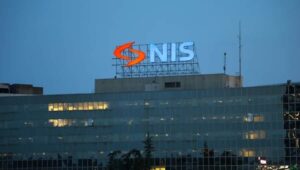
According to Serbian Economist, Naftna industrija Srbije (NIS) is considering the possible sale of a controlling stake (56.15%) to the Russian side of ADNOC from the United Arab Emirates.
According to the publication, there has been no official confirmation from either the Russian side or ADNOC. However, experts believe that the option of selling to an “Arab player” is the most likely and logical. Among other contenders mentioned is the Hungarian MOL Group.
The head of the Serbian parliament’s energy committee, Milun Babic, pointed out that a deal with an Arab investor is preferable to the risk of supply blockages due to sanctions, but he said that the best option would be to transfer management to the Russian side for 20 years. “Selling to the Arabs is a possible option… but it is not ideal,” he said.
Serbian President Aleksandar Vučić, in turn, confirmed that Russia is negotiating the sale of the NIS stake to three investors and that the Serbian side will not be able to exercise its right of first refusal.
If the deal goes through, experts see the following possible consequences for Serbia:
1) increased investment in the modernization of the oil industry, including possible expansion of production and logistics in the region;
2) increased geopolitical independence from Russian assets and reduced risk of sanctions;
3) strengthening of the country’s role as an energy hub in the Balkans.
According to expert Branimir Jovanovic, the new investor could export oil from Serbia and the region or invest in the modernization of the refinery in Pančevo.
Naftna industrija Srbije (NIS) is Serbia’s largest oil and gas company, controlled by Russia’s Gazprom Neft. The company’s authorized capital and strategic importance make it a key element of the country’s energy sector. The transfer of shares will affect Serbia’s future management, investments, and international relations.
Source: https://t.me/relocationrs/1793



