

In August 2026, the National Bank of Ukraine (NBU) fined PJSC “USG Insurance Company” 30.8 million UAH for violating legal requirements regarding the prevention and counteraction of money laundering and terrorist financing. According to the regulator, the violations concerned the improper organization and conduct of initial financial monitoring.
In particular, the NBU identified shortcomings in the company’s internal documents regarding financial monitoring, the conduct of due diligence on customers, and the application of a risk-based approach.
The regulator also pointed out shortcomings in the additional screening of politically exposed persons (PEPs), as well as in the provision of information and documents to the National Bank upon its requests.
In addition to the fine, the insurance company received a written warning for violating requirements regarding the preparation and submission of statistical reports on financial monitoring.
The enforcement actions against SK “USG” were part of a series of measures taken by the NBU in August against one bank and four non-bank financial institutions. The total fines imposed by the regulator on the five companies exceeded 50 million UAH.
Specifically, the NBU simultaneously fined the state-owned “Ukrgasbank” 17.6 million UAH, “Max Credit” LLC 1.08 million UAH, “FC Goal” LLC 391,000 UAH, and “Zaporizhsvyazservis” PJSC 255,000 UAH.
USG Insurance Company has been operating in the Ukrainian insurance market for over 20 years. The company was founded in 2000 and has been part of the international Vienna Insurance Group (VIG) since 2008. The company is 100% foreign-owned and operates in the main segments of non-life insurance, including auto insurance, property insurance, liability insurance, travel insurance, and corporate risk insurance. Pavlo Nelga serves as Chairman of the Board.

In January–August of this year, Ukrainian companies increased their imports of copper and copper products by 13.3% in monetary terms compared to the same period last year—to $139.044 million.
According to statistics released by the State Customs Service of Ukraine, exports of copper and copper products rose by 22.7% over the eight-month period, reaching $75.529 million.
In August, copper imports totaled $15.771 million, while exports totaled $9.646 million.
As previously reported, in 2025, Ukrainian companies increased imports of copper and copper products by 23.2% in monetary terms compared to 2024—to $173.453 million—while exports of copper and copper products rose by 17.7%—to $103.848 million.
Copper is widely used in electrical engineering, in the manufacture of pipes, for creating alloys, in medicine, and in other industries.
Previously, the Experts Club information and analytical center released a video on global copper production and leading producing countries – https://youtube.com/shorts/_h8iU50z8C0?si=a-XkgGEfeUxseQNa
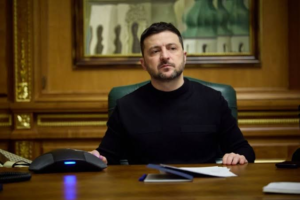
Ukrainian President Volodymyr Zelensky ranked 21st in the 2026 ranking of the 50 most influential Jews in the world, compiled by the Israeli newspaper The Jerusalem Post.
In the overall table, The Jerusalem Post calls Zelensky “the Jewish face of Ukrainian resistance,” while a separate article about the Ukrainian president is titled: “The Jewish president who became the face of Ukraine’s resistance.”
The authors of the ranking note Zelensky’s role in leading the country during the full-scale war with Russia, advancing Ukraine toward membership in the European Union, and developing new approaches to warfare, in particular drone technologies.
The Jerusalem Post also draws attention to the Jewish origins of the Ukrainian president and repeated attempts by the Russian authorities to combine accusations of “Nazism” against Ukraine with the fact that its president is Jewish.
The publication recalls that Zelensky’s relatives were killed during the Holocaust, while his paternal grandfather fought against Nazi Germany during World War II. Zelensky himself has repeatedly said that his Jewish background is part of his biography but does not define his political activity.
Zelensky has repeatedly appeared in The Jerusalem Post’s annual ranking. In 2022, after the start of Russia’s full-scale invasion, he took first place, and the publication then named him the most influential Jew of the year. In the 2024 ranking, the Ukrainian president was in 23rd place. Thus, in 2026 he rose by two positions compared with the ranking two years earlier.
The Jerusalem Post gave first place in its 2026 ranking to Jared Kushner and Ivanka Trump. Every year, the publication includes politicians, entrepreneurs, scientists, public figures, representatives of the technology industry, culture and religious organizations who, in the editorial board’s assessment, exert significant influence on global processes.
Primary source — The Jerusalem Post, 50 Most Influential Jews of 2026 ranking.

Law enforcement officials have uncovered a large-scale scheme involving the illegal production and distribution in Ukraine of the counterfeit weight-loss drug “Biopatid,” in connection with which 27 individuals have been notified of their status as suspects, according to a Sunday announcement by the press service of the Office of the Prosecutor General on its Telegram channel.
According to the investigation, the suspects include the scheme’s organizer and owner of the underground laboratory, the owner of a well-known Kyiv clinic, a customs broker, laboratory workers, packagers, sales and advertising managers, as well as other participants in the criminal activity.
The cost of the main ingredients was about $17, while the finished product was sold for up to $1,200. According to preliminary data, products totaling more than $5 million have been manufactured since the beginning of this year.
“The mastermind behind the scheme, aware of the high demand for weight-loss drugs and the high cost of medications containing the active ingredient tirzepatide, decided to set up his own illegal ‘pharmaceutical business.’ To this end, he set up an underground laboratory where a generic version of the drug was manufactured without any permits or quality control,” according to a statement released by the press service.
The raw materials were subsequently used in the underground laboratory. The participants in the scheme created a website and social media pages, recruited sales managers, and actively advertised the drug.
They offered it to beauty salons, clinics, and healthcare professionals in various regions of Ukraine. Bloggers, actors, and other public figures were also enlisted to promote the product.
As part of the criminal investigation, law enforcement officers conducted more than 250 authorized searches at locations where the counterfeit drug was manufactured, stored, sold, and distributed, as well as at hospitals and cosmetic clinics.
Investigative actions were carried out in Kyiv and the Kyiv region, Dnipro, Zaporizhzhia, Odesa, Poltava, Vinnytsia, Zhytomyr, Mykolaiv, Rivne, Kharkiv, Khmelnytskyi, and Chernihiv.
During the searches, investigators seized the counterfeit drug and raw materials used in its production, equipment from an underground laboratory, packaging materials and finished printed materials, documentation and drafts, as well as cell phones and computer equipment.
Law enforcement officers also seized cash in various currencies totaling nearly 15 million hryvnias, luxury cars, and other property.
The issue of imposing preventive measures on all suspects is currently being resolved.
The investigations were conducted by prosecutors in collaboration with SBU officers.
In accordance with Article 62 of the Constitution of Ukraine, a person is presumed innocent of a crime and may not be subjected to criminal punishment until their guilt has been proven in accordance with the law and established by a court conviction.
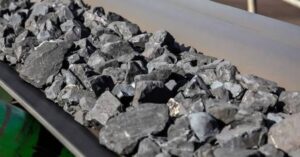
In August of this year, Ukraine increased its manganese ore exports by 30% compared to the previous month—to 3,511 thousand metric tons from 2,701 thousand metric tons.
According to statistics released by the State Customs Service (SCS), a total of 28,158 thousand metric tons of manganese ore were exported over the first eight months of this year, compared to 8,014 thousand metric tons during the same period last year.
In July of this year, Ukraine increased its manganese ore exports by 14.9% compared to the previous month—to 2,701 thousand metric tons from 2,350 thousand metric tons; in June, exports rose by 36.6% compared to May—to 2,350 thousand metric tons from 1,720 thousand metric tons; in May, it reduced exports by a factor of 3.1 compared to April—to 1,720 metric tons from 5,319 metric tons; in April, it increased exports by a factor of 2.8 compared to March—to 5,319 metric tons from 1,932 metric tons; in March, exports fell by a factor of 3.1 compared to the previous month—to 1,932 thousand metric tons from 6,072 thousand metric tons—and by a factor of 2.4 compared to January, when 4,553 thousand metric tons were exported.
In monetary terms, exports of this raw material amounted to $4.843 million in January–August (for the first 8 months of 2025 – $1.329 million).
In January–August 2026, Ukraine imported 23,099 thousand metric tons of ore worth $3.578 million, whereas there were no imports last year.
As previously reported, Ukraine reduced its manganese ore exports by 50.4% in 2025 compared to the same period last year—to 22,281 thousand metric tons—but stepped up shipments in August–December. While shipments totaled 2,977 thousand metric tons over the first seven months of 2025, exports more than doubled in August, when 5,037 thousand metric tons were shipped; in September, they amounted to 1,725 thousand metric tons; in October—3,993 thousand metric tons; in November—3,860 thousand metric tons, and in December—4,689 thousand metric tons.
In monetary terms, exports for the entire year 2025 fell by 45.2% compared to 2024—to $3,599 million. The majority of exports went to Slovakia (99.22% of shipments in monetary terms) and Poland (0.78%). Over the course of the year, the country imported 37,006 thousand metric tons from Ghana worth $5.546 million. All shipments took place in November. In 2024, 84,293 thousand metric tons of ore worth $18.302 million were imported.
The Pokrovsk Mining and Processing Plant (PGZK, formerly the Ordzhonikidze Mining and Processing Plant) and the Marganetsk Mining and Processing Plant (MGZK, both located in Dnipropetrovsk Oblast), which are part of the “Privat” Group, ceased the extraction and processing of raw manganese ore in late October–early November 2023, while the NZF and ZZF plants halted the smelting of ferroalloys. In the summer of 2024, the ferroalloy plants resumed production.
PGZK and MGZK did not produce any output in 2024, whereas in 2023, PGZK produced 160.31 thousand metric tons of manganese concentrate, while MGZK was idle.
In 2025, PGZK produced 63.9 thousand metric tons of manganese concentrate worth 342.138 million UAH and sold 25.4 thousand metric tons worth 216.309 million UAH. In 2026, the plant plans to increase manganese concentrate production by 3.44 times compared to the previous year—to 220 thousand metric tons.
In Ukraine, manganese ore is mined and processed by the Pokrovsk and Marganets Mining and Processing Plants.
The consumers of manganese ore are ferroalloy plants.
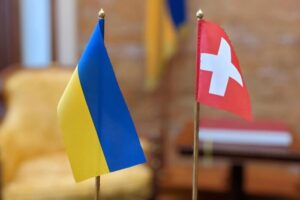
On September 10, 2026, the Switzerland-Ukraine Municipal Cooperation Forum was held in Basel, focusing on the development of partnerships between Ukrainian and Swiss cities and the implementation of joint projects to rebuild and strengthen the resilience of communities, according to the Embassy of Ukraine to the Swiss Confederation and the Principality of Liechtenstein.
The forum brought together representatives of central and local authorities from Ukraine and Switzerland, as well as relevant organizations from both countries. It was jointly organized by the Swiss government, the cities of Basel, Bern, and Zurich, the Verkhovna Rada of Ukraine, the Embassy of Ukraine in Switzerland, the Ukrainian Association of Switzerland, and the Support and Recovery Platform.
Konradin Kramer, President of the Government of the Canton of Basel-Stadt; Iryna Venediktova, Ambassador of Ukraine to Switzerland; Vitaliy Bezgin, Minister of Community and Territorial Development of Ukraine; and Jacques Herber, the Swiss Federal Council’s delegate for Ukraine, delivered welcoming remarks to the participants.
Under the slogan “Building Partnerships. Achieving Results,” participants discussed the transition from inter-municipal contacts to specific investment and infrastructure projects. The main areas of cooperation identified were energy supply and energy efficiency, water infrastructure, local governance, and the development of public services.
The forum’s program included two panel discussions—one on the political foundations of municipal partnerships in reconstruction and the other on practical models for implementing such projects. Separate City Labs working sessions were held, during which representatives of Ukrainian and Swiss cities jointly developed specific proposals for further cooperation.
Municipal partnerships are one of the areas of Switzerland’s long-term support for Ukraine. The Swiss cooperation program with Ukraine for 2025–2028 specifically provides for support to local and regional authorities in the reconstruction and modernization of urban infrastructure and the provision of basic services, particularly in the areas of transportation, energy, water supply, healthcare, and education.
Swiss cities are already participating in practical projects in Ukraine. In particular, Basel is transferring up to 25 trams to Lviv as part of a program that Switzerland is funding with CHF 2.5 million from 2024 to 2028. Previously, Bern also donated trams to Ukraine.
Switzerland views the development of direct ties between cities as one of the mechanisms for Ukraine’s reconstruction. The country’s national program notes that Vinnytsia, Odesa, Sumy, and Kharkiv, among others, have previously expressed interest in partnerships with Swiss cities.
Holding the forum in Basel is intended to facilitate the transition from general agreements between communities to specific joint projects that can leverage Swiss technology, municipal expertise, and funding for the reconstruction of Ukraine’s infrastructure.



