

The updated licensing requirements for motor carriers could take effect in Ukraine by the end of 2026, according to Volodymyr Golubosh, deputy head of the State Service of Ukraine for Transport Safety.
According to “Interfax-Ukraine”, the draft of the new licensing conditions was published by Ukrtransbezpeka on March 18. The agency then collected and reviewed proposals from stakeholders, and the finalized document was resubmitted for approval.
“We expect that after amendments are made to the legislation and the new procedure is approved, the updated conditions will take effect by the end of this year,” Golubosh said during the conference “Regional Dialogues with Business on European Integration: The Transportation Sector” in Lviv.
The changes are part of the harmonization of Ukrainian transportation legislation with European Union standards, specifically EU Regulations No. 1071, No. 1072, and No. 1073. According to a representative of Ukrtransbezpeka, Ukraine must fulfill the relevant European integration obligations by April 2027.
The draft amendments are being developed by Ukrtransbezpeka in collaboration with the Ministry of Community and Territorial Development. Its goal is to modernize the road transport licensing system and bring Ukrainian requirements in line with European market access rules.
The new approach stipulates that a license will confirm more than just a company’s formal right to provide transportation services. Carriers will also be required to demonstrate their ability to organize operations professionally and safely.
Specifically, the right to operate in the licensed road transport sector will be granted to companies and entrepreneurs who can demonstrate professional competence, financial capacity, and integrity.
The introduction of these criteria is intended to bring the operating rules for Ukrainian road carriers in line with the requirements of the EU’s single transport market and serve as one of the steps toward integrating Ukraine’s transport sector into the European space.
EUROPEAN INTEGRATION, LICENSE, ROAD TRANSPORT, TRANSPORTATION, UKRAINE

From September 1 to 21, 2026, Ukraine exported 1.6 million metric tons of agricultural products, which represents 43% of the volume that would have been exported had the logistics system been operating at full capacity, Minister of Agrarian Policy and Food Taras Vysotsky said at a briefing on Thursday.
He specified that 275,000 metric tons of oilseeds were shipped abroad, or 75% of the volume that would have been exported under normal logistics conditions; 190,000 metric tons of oil (55%); 173,000 metric tons of meal (41%); while grain exports totaled 960,000 metric tons (38%).
“We see that the share of grains (compared to potential volumes – IF-U) is the smallest, and, accordingly, the share of oilseeds, oil, and meal is larger. Therefore, yes, as of today, the priority remains on exporting value-added products,” Vysotsky said.
As reported, during the first 15 days of September, Ukraine exported 131,000 metric tons of oil, which accounted for 62% of the volume that would have been exported during this period if the ports had been operating freely.
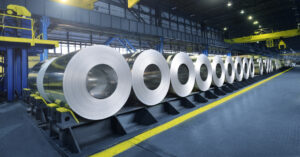
Ukrainian steel mills produced 277,000 metric tons of steel in August 2026, which is 2.3 times less than in August of last year, when output totaled 649,000 metric tons.
Compared to July of this year, when 457,000 metric tons of steel were produced, August’s figure fell by another 39.4%.
Amid this sharp drop in output, Ukraine fell to 33rd place among the 70 steel-producing countries tracked by World Steel, the global steel industry association.
As recently as July 2026, Ukraine was ranked 26th, and in August 2025, it held the 21st position.
Thus, in just one year, the country lost 12 positions in the monthly global ranking.
At the same time, the results for the first eight months look better than those for August. From January through August 2026, Ukraine produced 4.30 million metric tons of steel, which is 12.5% less than the 4.91 million metric tons produced during the same period last year.
In terms of cumulative production over eight months, Ukraine ranks 24th in the world.
By comparison, for the full year of 2025, Ukraine produced 7.41 million metric tons of steel—2.2% less than in 2024—and ranked 21st among global producers.
Thus, August became one of the weakest months for the Ukrainian steel industry in 2026: production was 40% lower than in July and less than half of last year’s level.
The decline in Ukraine is occurring much faster than the global trend: in August, global steel production fell by only 1.2%, to 144.2 million metric tons, and for January–August, by 0.7%, to 1.225 billion metric tons.
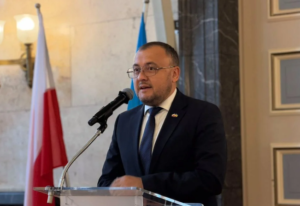
On September 23, 2026, the Honorary Consulate of Ukraine officially opened in Katowice, Poland, and will be located at ul. Wita Stwosza 2.
According to the Consulate General of Ukraine in Kraków, the opening ceremony was attended by Vasyl Bodnar, Ukraine’s Ambassador to Poland; Oresta Starak, Ukraine’s Consul General in Kraków; Luiza Gananya, Ukraine’s Honorary Consul in Katowice; Silesian Voivode Marek Wujcik, Marshal of the Silesian Voivodeship Wojciech Saluga, and Katowice Mayor Marcin Krupa.
The event was also attended by representatives of the diplomatic corps, local government bodies, and the Ukrainian community.
Vasyl Bodnar, Ukraine’s Ambassador to Poland, stated that the opening of the Honorary Consulate is an important step in the development of cooperation between Ukraine and the Silesian Voivodeship.
“We expect that the Honorary Consulate will become a close partner to the Ukrainian community, support Ukrainian citizens, and at the same time contribute to the development of contacts between Ukraine and the Silesian Voivodeship,” Bodnar noted.
He also thanked Honorary Consul Luiz Ganani for his willingness to carry out this mission, and the authorities of the Silesian Voivodeship and the city of Katowice for their support of Ukraine.
The consulate is expected to promote the development of Ukrainian-Polish interregional cooperation, expand contacts with local authorities, businesses, and civil society organizations, and provide support to Ukrainians living in the Silesian Voivodeship.
The Silesian Voivodeship is one of Poland’s largest industrial and economic regions, and Katowice is its administrative center. The opening of the Ukrainian Honorary Consulate creates an additional platform for the development of regional, economic, cultural, and humanitarian ties between Ukraine and Poland.
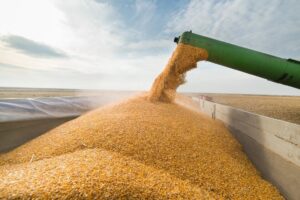
The European Union is not yet ready to review the volume of quotas for Ukrainian agricultural products, but Ukraine will continue the dialogue on expanding them, particularly with regard to bioethanol, said Minister of Agrarian Policy and Food Taras Vysotsky at a briefing on Thursday.
“The current socio-political situation in the EU does not allow for a review of agricultural product quotas in any category. We will nevertheless continue the dialogue and make our case for what is important,” he said.
According to the minister, one of the areas where Ukraine considers it appropriate to review the quota is bioethanol. Among his arguments, he cited the reduction in EU corn production for bioethanol to about 15 million metric tons and the European Union’s continued imports of corn.
“Essentially, increasing the quota is really just a way to allow the export of bioethanol, which will then be re-exported to Ukraine,” Vysotsky noted.
The head of the Ministry of Agrarian Policy added that Ukraine imports gasoline from the EU that contains about 7% bioethanol.
“We are requesting a quota to export approximately the same amount of bioethanol that Ukraine already imports as part of fuel—in gasoline from the European Union—plus 60,000 metric tons,” the minister explained.

Ukraine’s Cyber Police have warned citizens about a scam involving fake electricity bills, which may be sent via email or messaging apps purportedly on behalf of the Ministry of Energy or other government agencies.
According to the statement, scammers may inform recipients of alleged outstanding balances, send payment invoices, or demand immediate payment. To make their messages more convincing, they use official logos, the names of government agencies, and formatting that resembles genuine communications.
The main goal of the attackers is to trick users into clicking a link to a phishing website. There, they may be asked to enter their credit card information, username, password, SMS verification code, or other personal information. Malware may also be distributed under the guise of a bill or document. As a result, scammers can gain access to bank accounts, email, social media, and other accounts.
The Cyber Police emphasize that the Ministry of Energy of Ukraine does not send electricity bills to consumers and does not collect utility payments. Bills are issued directly by the electricity suppliers with whom consumers have signed contracts.
Signs of a fraudulent message may include a demand for immediate payment via a link provided, information about a non-existent debt, a sender’s email address that does not belong to an official institution, a request to enter bank details or a password, as well as unknown attached files.
Grammatical errors, unusual phrasing, and attempts to create a sense of urgency should also raise red flags.
It is recommended to verify information about electricity payments only through your provider’s official website or app. The cyber police advise against clicking on links in suspicious emails and against entering personal or banking information on websites linked to via email or messaging apps.
If a user has already clicked on a suspicious link, entered banking information, or lost funds, they should contact their bank as soon as possible to block their payment instruments. It is also important to save the correspondence, links, phone number, and other evidence to report the incident to law enforcement.
Additional information about current fraud schemes and ways to protect yourself can be found on the “Cyber Brama” portal at stopfraud.gov.ua.



