
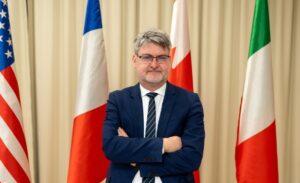
French diplomat Gaël Vésier, who served as Ambassador Extraordinary and Plenipotentiary of the French Republic to Ukraine from 2023 to 2026, has been awarded an international prize in the field of diplomacy as part of the 30th anniversary nationwide “Person of the Year 2025” program.
Gaël Vésier was born in 1972. He graduated from ESSEC Business School and Sciences Po, the Paris Institute of Political Studies, and also holds a degree in history. He began his diplomatic career at the French Ministry of Foreign Affairs in 1997.
Throughout his career, Vésier has served twice at the Permanent Mission of France to the European Union in Brussels, where, among other roles, he served as spokesperson and headed the press office. He also worked at the Permanent Mission of France to the United Nations in New York and held a number of positions at the headquarters of the French Ministry of Foreign Affairs.
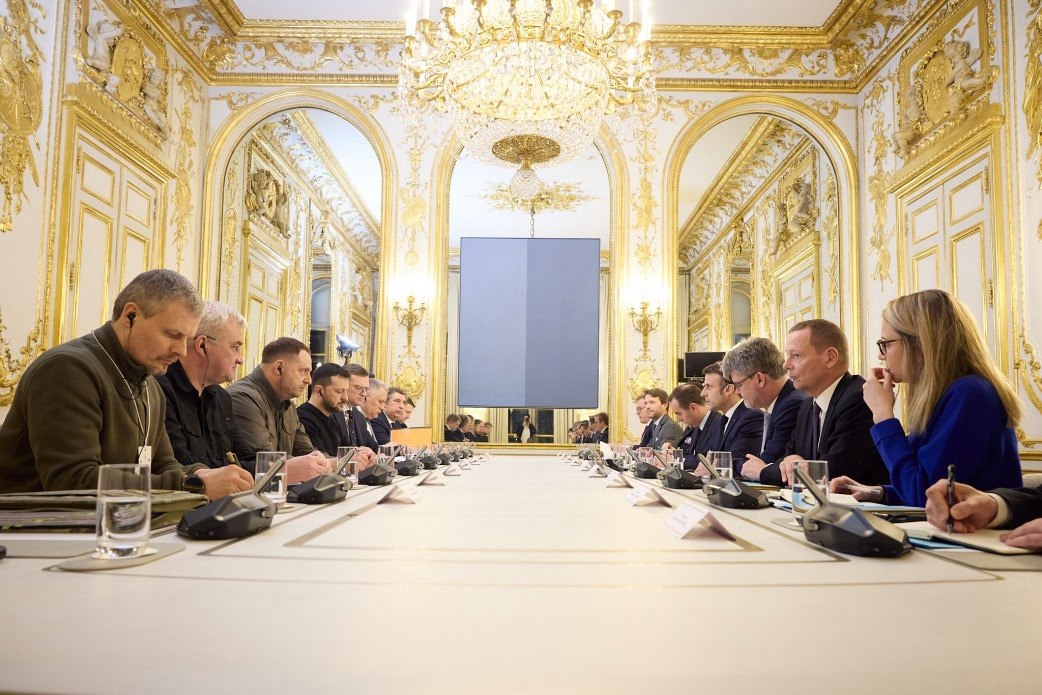
From 2004 to 2005, Vésier served as a technical advisor in the office of French Prime Minister Jean-Pierre Raffarin and was responsible for relations with EU countries, the Balkans, and Eastern Europe. From 2017 to 2019, he headed the offices of the ministers and state secretaries for European affairs Marielle de Sarnez, Nathalie Loiseau, and Amélie de Montchalin.
Prior to his appointment to Kyiv, Vésière served as France’s ambassador to Croatia from 2019 to 2023. On August 20, 2023, he officially took office as France’s ambassador to Ukraine.
His diplomatic mission in Ukraine concluded in July 2026. During a farewell meeting, Ukrainian Foreign Minister Andriy Sybiga highlighted Vesier’s contribution to strengthening the Ukrainian-French strategic partnership, deepening political dialogue, defense cooperation, and coordination between the two countries on the international stage.
Effective July 17, 2026, Vesier was appointed director of the Crisis Response and Support Center at the French Ministry of Europe and Foreign Affairs. The corresponding decree by French President Emmanuel Macron was signed on July 9.
Brice Rocfay has become the new Ambassador Extraordinary and Plenipotentiary of France to Ukraine; on July 30, 2026, he presented his credentials to Ukrainian President Volodymyr Zelenskyy.
Gaël Vésier is a recipient of French state honors, including the National Order of Merit. Throughout his diplomatic career, he has specialized primarily in European politics, international security, and France’s relations with Central and Eastern European countries.
Open4business – information partner

The Kyiv and Lviv regions together accounted for over 1.1 million square meters of new residential construction reported in Ukraine from January through June 2026.
According to the State Statistics Service, 599,300 square meters were reported in the Kyiv region and 501,500 square meters in the Lviv region.
Another 437,900 square meters were accounted for by Kyiv, 328,700 square meters by the Odesa region, and 248,400 square meters by the Ivano-Frankivsk region.
The concentration is particularly noticeable in terms of the number of future apartments. In the Kyiv region, approximately 9.1 thousand apartments were announced; in the Lviv region, 7.2 thousand; and in the Ivano-Frankivsk region, 5.8 thousand
Together, these three regions alone accounted for over 22 thousand apartments—that is, a significant portion of the total new supply of multifamily housing announced nationwide in the first half of the year.
The regional breakdown reflects an ongoing redistribution of development activity. Kyiv and the Kyiv region remain the largest metropolitan market, while the Lviv and Ivano-Frankivsk regions maintain a significant volume of construction in the western part of the country.
At the same time, the trend is uneven: in the Kyiv region, the volume remained virtually unchanged from last year’s level, while in Kyiv it decreased by 10.7%, and in the Ivano-Frankivsk region—by 20.5%.
Source: State Statistics Service of Ukraine.
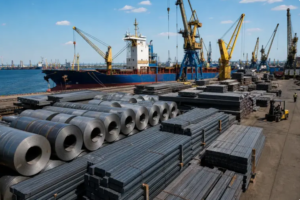
In January–August of this year, Ukrainian companies reduced their consumption of rolled metal by 9.64% compared to the same period last year, down to 2.546 million metric tons.
According to a press release from the “Ukrmetallurgprom” association, 1.151 million metric tons were imported during this period, accounting for 37% of the domestic rolled steel consumption market.
According to “Ukrmetallurgprom,” in January–August 2026, Ukrainian steel mills produced 3.591 million metric tons of rolled steel (84.4% of the level recorded during the same period in 2025), of which, according to the State Customs Service of Ukraine, approximately 2.196 million metric tons—or 61.2%—were exported. In
January–August 2025, the share of exports was 58.3% (2.481 million metric tons out of a total rolled steel production of 4.256 million metric tons).
“In January–August 2026, the domestic market capacity was 2.546 million metric tons of rolled metal products, of which 1.151 million metric tons, or 45.21%, consisted of imports. In January–August 2025, the domestic market capacity was 2,815,500 metric tons, of which 1,042,500 metric tons, or 37%, were imported. “Thus, in January–August 2026, the domestic market capacity decreased by 9.64% compared to January–August of last year, while the share of imports increased by 8.21%,” the press release states.
The share of semi-finished products in export shipments in January–August 2026 was 41.44%, which is significantly higher than the figure for the same period last year (32.37%). The share of flat-rolled products in exports matches that of January–August of last year (44.22% and 44.38%, respectively), while the share of long products is noticeably lower (14.34% versus 23.26%, respectively).
The structure of imports in January–August of this year is characterized by a noticeable dominance of flat-rolled products over long products (67.98% and 25.97%, respectively); however, in January–August 2025, the dominance of flat-rolled products over long products was significantly greater (70.24% and 20.96%).
According to the State Customs Service, the main export markets for Ukrainian rolled metal in January–August 2026 were the European Union (82.3%), the rest of Europe (9.1%), and the CIS (6.7%).
Among steel importers for the first 8 months of 2026, other European countries ranked first (49.0%), followed by Asian countries (26.1%), and the EU-27 (16.8%).
As previously reported, Ukraine’s rolled metal market grew by 21.73% in 2025 compared to 2024, reaching 4 million 1.6 thousand metric tons. Imports totaled 1 million 603.6 thousand metric tons, accounting for 40.07% of domestic rolled metal consumption.
Ukraine’s rolled steel market shrank by 6.26% in 2024 compared to the previous year—to 3,288,400 metric tons—while in 2023 it increased 2.19-fold compared to 2022—to 3,505,600 metric tons.

According to “Serbian Economist”, Serbia handed over to Ukraine a 48-year-old woman whom Ukrainian law enforcement officials suspect of organizing a network providing sexual services in Kyiv, the Life website reported. Following an international manhunt, her whereabouts were traced to Serbia, after which the extradition process was carried out.
According to investigators, back in 2022, the group created a channel on a messaging app where they posted photos and videos of women, along with a list of services and prices. After receiving an advance payment, clients were directed to hotels and rented apartments in Kyiv; according to the police, the meetings were organized, in particular, during curfew hours.
Two alleged participants in the scheme—a 47-year-old woman and a 36-year-old man—were charged back in 2022. A third suspect fled Ukraine after the scheme was uncovered and went into hiding abroad.
After her extradition from Serbia, she was notified of charges under Part 2 of Article 303 of the Criminal Code of Ukraine—pimping committed against several individuals, repeatedly, and by a group of persons acting in prior conspiracy. The maximum penalty under this article is up to seven years of imprisonment. The court ordered her to be held in custody with the option of posting bail in the amount of 1.47 million UAH.

Commercial fishermen in Ukraine’s water bodies harvested 5.1 thousand metric tons of aquatic biological resources from January through August 2026, according to the State Agency for the Development of Land Reclamation, Fisheries, and Food Programs (State Fisheries Agency).
Silver crucian carp accounted for the largest share of the catch—1,500 metric tons, or 31% of the total. Other major species caught included bream—1,100 metric tons, roach—793 metric tons, silver bream—448 metric tons, pikeperch—272 metric tons, and herbivorous species, including silver carp and white amur, — 212 metric tons, perch — 123 metric tons, and Black Sea herring — 103 metric tons.
The largest volumes of aquatic biological resources since the beginning of the year were harvested in the Kremenchuk Reservoir—2,300 metric tons—and the Kamyanskoe Reservoir—over 1,000 metric tons. In the lower Dniester, including the lakes and the Turunchuk branch, as well as the Dniester Estuary, the catch totaled 445 metric tons.
In the Dnipro Reservoir, 416 metric tons of aquatic biological resources were harvested; in the Kyiv Reservoir, 306 metric tons; and in the Kaniv Reservoir, 294 metric tons. In the waters of the Dnipro-Bug estuary system and the Danube River, the catch totaled 118 and 117 metric tons, respectively.
The smallest catch volumes were recorded in the Berezan and Tiligul estuaries—23 and 21 metric tons, respectively—as well as in the Chernihiv region: 9 metric tons in the Dnipro River and 5 metric tons in the Desna River, including lakes.
Due to the Black and Azov Seas being blocked as a result of Russia’s military aggression, fishing for marine species—including sprat, glos, mullet, anchovy, rapana, shrimp, and pilengas—is currently virtually nonexistent; these species accounted for a significant share of the fish market in the pre-war years, the report states.
BIOLOGICAL RESOURCES, CATCH, FISH, State Agency for Fisheries, UKRAINE

According to Experts.news, DLS became the largest company in Ukraine’s tobacco sector by revenue in the first half of 2026, generating 61.08 billion UAH, according to data from OpenDataBot.
The company is part of the DL Solution financial and industrial group.
Philip Morris Sales and Distribution took second place with revenue of 32.15 billion UAH, while JT International Company Ukraine came in third with 23.6 billion UAH. The company represents brands such as Winston, Camel, Sobranie, LD, Monte Carlo, and Winchester on the Ukrainian market.
In fourth place is British American Tobacco Sales and Marketing Ukraine, with revenue of 19.94 billion UAH. The company works with brands such as Kent, Dunhill, glo, Vuse, and Velo.
Rounding out the top five is the distributor Global Tobacco, which generated 11.69 billion UAH in revenue.
The top ten also includes DK “Mirana” — 10.65 billion UAH, Imperial Brands Ukraine—10 billion UAH, JT International Ukraine—4.96 billion UAH, Philip Morris Ukraine—4.41 billion UAH, and Halychyna-Tabak—4.26 billion UAH.
The combined revenue of the ten largest companies reached approximately 182.7 billion UAH, accounting for about 92% of the total revenue of the companies included in OpenDataBot’s comparative sample.
At the same time, the five largest companies alone accounted for about 148.5 billion UAH, or approximately three-quarters of the combined revenue of the analyzed companies.
In total, 41 tobacco companies that filed financial reports for both the first half of 2025 and for 2026 generated 198.18 billion UAH in revenue, which is 10% more than in the previous year.
Source: OpenDataBot.



