

In Ukraine, 107,400 sole proprietors in the retail sector operate outside of brick-and-mortar stores, including those engaged in online sales, according to data from Opendatabot as of early September 2026 and its analysis by the Experts Club analytical center.
This category accounts for about 16% of all 659,090 sole proprietors operating in the Ukrainian retail sector.
The largest group remains entrepreneurs selling in non-specialized stores—about 208,000, or 32% of the total.
Another 159,900 sole proprietors, or 24%, operate in markets and from retail stalls.
In specialty stores, 82,800 entrepreneurs sell various categories of goods. Another 47,600 sole proprietors specialize in the sale of food, beverages, and tobacco products.
Overall, 659,090 entrepreneurs are currently active in the retail sector in Ukraine. After a decline in the number of sole proprietors in 2025, the segment returned to growth: during the first eight months of 2026, the number of new registrations exceeded the number of closures by 8,200.
The data was published by Opendatabot on September 11, 2026, based on the Unified State Register.
Original source: Opendatabot – Structure of Sole Proprietorships in Retail

The Ukrainian engineering and construction company “Rauta” has been included in the list of taxpayers with a high level of voluntary compliance with Ukrainian tax legislation, the company reported, citing Order No. 600 of the State Tax Service dated August 31, 2026.
According to Rauta, the company fulfills its tax obligations in a timely and complete manner and has no tax arrears.
“Responsible business is not just about fulfilling obligations, but first and foremost about the values that guide the company every day. Honesty in all aspects of our work and the conscientious payment of taxes are our contribution to strengthening Ukraine’s economy,” said Andriy Ozeychuk, director of Rauta.
On September 7, the State Tax Service reported that as of August 2026, 9,706 business entities had been included in the new list of taxpayers with a high level of voluntary compliance with the law—the highest number since the list was first compiled. Compared to August 2025, their number increased by nearly 36%.
Of the total, 9,132 are legal entities, including 5,068 companies under the general taxation system, 484 “Diya.City” residents, 1,707 legal entities that are Group III single-tax payers, and 1,873 Group IV single-tax payers. Another 574 entities on the list are individual entrepreneurs.
The companies included in the list paid 192.7 billion UAH in taxes to the consolidated budget from January through June 2026, representing 16.23% of all tax revenues for that period. The State Tax Service intends to publish the official list, approved as of August, on its website on September 18. Notifications were sent to the included taxpayers via their online accounts on September 1.
The State Tax Service compiles this list quarterly. General requirements include having no tax arrears or violations of reporting deadlines, not being classified as a high-risk VAT payer, and having no sanctions or bankruptcy proceedings. For legal entities under the general tax system, the list also takes into account the level of corporate income tax and VAT payments compared to industry averages, as well as employee salary levels.
Rauta has been operating in the Ukrainian construction market for over 25 years and specializes in the design, supply, and installation of structures for commercial and industrial buildings, the renovation of facilities, and general contracting. The company is the exclusive supplier in Ukraine of commercial products from the Finnish Ruukki Group. According to Rauta, the company has completed over 1,000 projects and supplied more than 2 million square meters of sandwich panels since its inception.

To help Ukraine repair and strengthen its energy infrastructure ahead of another winter under attack from Russia, Canada has announced new support.
The announcements were made during Ukrainian President Volodymyr Zelenskyy’s visit to Canada and his meeting with Canadian Prime Minister Mark Carney
According to the website of the Office of the Prime Minister of Canada, the Canadian government will provide the European Bank for Reconstruction and Development with new loan guarantees totaling nearly 435 million Canadian dollars to support energy security, including the purchase of natural gas during the winter and backup generators for electricity production during shortages.
Canada is allocating 200 million Canadian dollars in concessional loans through Export Development Canada to support Ukraine’s reconstruction. As emphasized by the Prime Minister’s Office, this will help Ukraine repair critical infrastructure while providing Canadian companies with the opportunity to support critical projects.
The support package includes an additional 10 million Canadian dollars for the Ukraine Energy Support Fund, bringing the total to $100 million, to support Ukraine’s energy infrastructure, including the procurement and delivery of critical energy equipment to enhance Ukrainians’ resilience to energy disruptions.
In addition, Canada announced a contribution of 2 million Canadian dollars to the International Energy Agency’s (IEA) Joint Work Program to support the development of Ukraine’s energy resources. This funding will strengthen Ukraine’s energy resilience, provide regulatory support, and promote clean energy projects.

IDS Ukraine increased its e-commerce sales volume by 49% in real terms in the first half of 2026, according to the group’s CEO, Marco Tkachuk.
However, online platforms and marketplaces currently account for only about 1% of the company’s total sales. A significant portion of online orders is processed through the online services of IDS Ukraine’s major retail partners.
Given the growth of this channel, the company estimates that online sales will account for 5–6% of total sales in the coming year.
At the same time, IDS Ukraine is developing its own B2B platform, e-Morshynska, for traditional retail. Currently, it serves approximately 21,000 retail outlets.
The platform already accounts for about 10% of IDS Ukraine’s sales in the traditional retail channel and allows stores to place orders independently without the involvement of a sales agent.
Digitalization has become one of the group’s largest areas of capital investment. Over the past four years, IDS Ukraine has allocated 363.4 million UAH to digital transformation and software. At the same time, the company is in the final stages of implementing an ERP system for inventory management and supply planning.

Raiffeisen Bank has launched financial leasing for business clients in Ukraine and has signed its first agreement under this new initiative with one of Ukraine’s leading agricultural producers, the bank’s press office reported.
Under the first agreement, the agricultural producer will upgrade its fleet of machinery. Going forward, the bank’s clients will be able to use financial leasing to purchase agricultural machinery and equipment, passenger and cargo vehicles, commercial vehicles, and other fixed assets.
“Businesses today need solutions that allow them to continue investing, modernize production, and plan for growth even amid a full-scale war. The launch of financial leasing expands these opportunities for our clients,” said Natalia Gurina, Chair of the Management Board of Raiffeisen Bank.
The bank plans to develop this service for Ukrainian and international companies operating and investing in Ukraine.
The launch of this new instrument draws on the experience of the international Raiffeisen Bank International (RBI) group, where financial leasing is already in use in other European markets. Harald Kröger, Deputy Chairman of the Supervisory Board of Raiffeisen Bank and Head of Structured Finance and Investment Banking at the RBI group, assesses the potential for its development in Ukraine as significant.
As previously reported, in late 2024, the then-Chairman of the Management Board of Raiffeisen Bank, Oleksandr Pysaruk, announced in an interview with the Interfax-Ukraine news agency the financial institution’s intention to resume plans to develop its leasing business in Ukraine. According to him, even before the full-scale war, the bank had already reached an agreement with its shareholder to ramp up the leasing company’s operations and was preparing a corresponding business plan.
At the time, Pysaruk expressed hope that the bank would be able to resume implementing these plans as early as 2025.
Raiffeisen Bank is the largest Ukrainian bank with foreign capital. Since October 2005, the bank has been part of the Austrian banking group RBI. Currently, the Raiffeisen Group owns 68.21% of the bank’s shares, while the European Bank for Reconstruction and Development holds 30%.
According to the National Bank, as of August 1, 2026, with total assets of 282.37 billion UAH, it ranked fourth among Ukraine’s 59 banks.
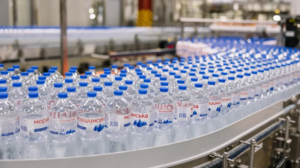
The expansion of its product portfolio allowed IDS Ukraine to offset the loss of profitability following the termination of its contract with Borjomi, which had previously accounted for about a quarter of the group’s profit, said IDS Ukraine CEO Marko Tkachuk.
One of the key factors was the aseptic production line installed even before the full-scale invasion, which allowed the company to expand its production of flavored water and enter new beverage categories.
IDS Ukraine is currently developing “Volya” energy drinks, the “Lemonade” line, flavored waters, and Morshynska Tea.
The company’s sales of non-carbonated flavored water grew by 68%, and its market share approached half of the corresponding segment of the Ukrainian market.
Morshynska Tea, launched in the spring of 2026, has proven particularly successful. Initially, the company viewed it as a test product; however, in some retail chains, it already accounts for over 10% of the iced tea segment. IDS Ukraine intends to expand this line of business. The company officially announced its entry into the
RTD teas on April 1, 2026.
Another new product in 2026 was packaged edible ice made from “Morshynska” water. Sales were temporarily suspended after warehouses with refrigeration equipment were destroyed and logistics became complicated. The company expects to bring the product back to the market in the summer of 2027. The edible ice product was launched in late June 2026.



