

Raiffeisen Bank has launched financial leasing for business clients in Ukraine and has signed its first agreement under this new initiative with one of Ukraine’s leading agricultural producers, the bank’s press office reported.
Under the first agreement, the agricultural producer will upgrade its fleet of machinery. Going forward, the bank’s clients will be able to use financial leasing to purchase agricultural machinery and equipment, passenger and cargo vehicles, commercial vehicles, and other fixed assets.
“Businesses today need solutions that allow them to continue investing, modernize production, and plan for growth even amid a full-scale war. The launch of financial leasing expands these opportunities for our clients,” said Natalia Gurina, Chair of the Management Board of Raiffeisen Bank.
The bank plans to develop this service for Ukrainian and international companies operating and investing in Ukraine.
The launch of this new instrument draws on the experience of the international Raiffeisen Bank International (RBI) group, where financial leasing is already in use in other European markets. Harald Kröger, Deputy Chairman of the Supervisory Board of Raiffeisen Bank and Head of Structured Finance and Investment Banking at the RBI group, assesses the potential for its development in Ukraine as significant.
As previously reported, in late 2024, the then-Chairman of the Management Board of Raiffeisen Bank, Oleksandr Pysaruk, announced in an interview with the Interfax-Ukraine news agency the financial institution’s intention to resume plans to develop its leasing business in Ukraine. According to him, even before the full-scale war, the bank had already reached an agreement with its shareholder to ramp up the leasing company’s operations and was preparing a corresponding business plan.
At the time, Pysaruk expressed hope that the bank would be able to resume implementing these plans as early as 2025.
Raiffeisen Bank is the largest Ukrainian bank with foreign capital. Since October 2005, the bank has been part of the Austrian banking group RBI. Currently, the Raiffeisen Group owns 68.21% of the bank’s shares, while the European Bank for Reconstruction and Development holds 30%.
According to the National Bank, as of August 1, 2026, with total assets of 282.37 billion UAH, it ranked fourth among Ukraine’s 59 banks.
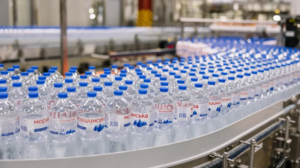
The expansion of its product portfolio allowed IDS Ukraine to offset the loss of profitability following the termination of its contract with Borjomi, which had previously accounted for about a quarter of the group’s profit, said IDS Ukraine CEO Marko Tkachuk.
One of the key factors was the aseptic production line installed even before the full-scale invasion, which allowed the company to expand its production of flavored water and enter new beverage categories.
IDS Ukraine is currently developing “Volya” energy drinks, the “Lemonade” line, flavored waters, and Morshynska Tea.
The company’s sales of non-carbonated flavored water grew by 68%, and its market share approached half of the corresponding segment of the Ukrainian market.
Morshynska Tea, launched in the spring of 2026, has proven particularly successful. Initially, the company viewed it as a test product; however, in some retail chains, it already accounts for over 10% of the iced tea segment. IDS Ukraine intends to expand this line of business. The company officially announced its entry into the
RTD teas on April 1, 2026.
Another new product in 2026 was packaged edible ice made from “Morshynska” water. Sales were temporarily suspended after warehouses with refrigeration equipment were destroyed and logistics became complicated. The company expects to bring the product back to the market in the summer of 2027. The edible ice product was launched in late June 2026.
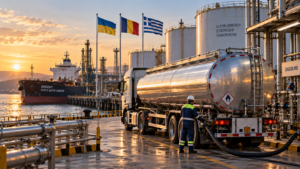
In August 2026, Ukraine significantly reduced purchases of motor gasoline from the southern direction: imports from Romania decreased by approximately one third, while those from Greece fell by 40%, according to calculations by the Experts Club analytical center and data from the A-95 Consulting Group.
Supplies of Romanian gasoline amounted to 23.4 thousand tonnes compared with 34 thousand tonnes in July.
Imports from Greece decreased to 15 thousand tonnes from 24.9 thousand tonnes a month earlier.
Thus, total supplies from the two countries decreased over the month from approximately 58.9 thousand to 38.4 thousand tonnes.
“The main reason for the significant drop in imports from the south was the price factor. In August, when the market was no longer threatened by a shortage, companies reduced purchases of more expensive fuel from Romania and Greece,” the A-95 Consulting Group reported.
A similar trend was also observed in the diesel fuel market.
At the same time, the bulk of Ukrainian gasoline imports continued to arrive from the northwestern direction. In August, Lithuania supplied 51.8 thousand tonnes of gasoline, while Poland supplied 40.1 thousand tonnes.
These two countries accounted for about 60% of total imports.
Overall, gasoline supplies from abroad in August amounted to 152 thousand tonnes, which is 7% less than a year earlier. Since the beginning of 2026, Ukraine has imported 1.12 million tonnes of gasoline — 16% more than in January-August 2025.
The decline in purchases from the southern direction shows that after supply stabilized, Ukrainian traders began more actively redistributing flows in favor of cheaper European sources.
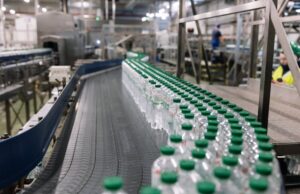
From February 2022 to February 2026, the IDS Ukraine Group of Companies allocated 875 million UAH of its own funds to business development, the company’s CEO, Marko Tkachuk, said in an interview with Interfax-Ukraine. External financing was virtually unavailable to the group during this period.
Of the total amount, 161 million UAH was invested in equipment upgrades, 220 million UAH in the refrigerated fleet, and 87 million UAH in infrastructure projects.
The largest single area of investment was digital transformation and software, in which the company invested 363.4 million UAH.
IDS Ukraine invested another 43.6 million UAH directly in ensuring the energy independence of its facilities. A powerful generator was installed at the plant in Morshyn, and a solar power plant was built in Myrhorod. The company’s total in-house power generation capacity reached 1.6 MW.
Even with backup capacity, it is not yet possible to completely replace the centralized power supply. In Myrhorod, during a blackout, one or two of the four power lines may remain operational, and at the “Oskar” plant in Morshyn, one of the five lines may remain operational. This allows production of the most in-demand drinking water to continue even during prolonged outages.
Separately, IDS Ukraine has invested 9.2 million UAH in providing backup power to schools and kindergartens in Myrhorod and the Morshyn community. The project covers educational institutions attended by more than 6,000 children. The company announced that this program will be completed on August 31, 2026.
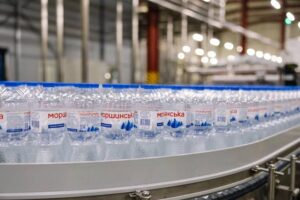
According to the results of the first half of 2026, the IDS Ukraine group of companies increased its share of the Ukrainian bottled water market by 0.9 percentage points in volume terms—to 40.7%, said the group’s CEO, Marko Tkachuk, in an interview with the Interfax-Ukraine news agency.
In monetary terms, the company’s share grew by 1.3 percentage points to 39.9%. In the still water segment, IDS Ukraine holds about 60% of the market in monetary terms and approximately half in volume terms. The market share of its flagship brand, “Morshynska,” stands at 30.3% in liters.
In the first half of the year, IDS Ukraine generated nearly 3.95 billion UAH in revenue. Net profit totaled approximately 188 million UAH, and EBITDA was 440.5 million UAH. The company paid 534.9 million UAH in taxes and fees, an increase of 8.6% compared to the previous year. These figures were also published by IDS Ukraine on August 28, 2026.
However, actual sales in the first half of the year were 7% lower than the initial plan. Compared to the same period in 2025, bottled water sales rose by 2%, and net revenue increased by 11%. By August, the company had already exceeded its monthly sales target by 15%.
IDS Ukraine is one of the largest bottled water producers in Ukraine. The group’s portfolio includes the brands “Morshynska,” “Myrhorodska,” “Alaska,” and others. The group’s history in its current form dates back to the merger of a number of producers and distribution companies in 2004.

In August of this year, 4,200 electric vehicles (new and used) were added to Ukraine’s vehicle fleet, which is 47% fewer than in the same month last year, according to a report by “Ukravtoprom” on its Telegram channel.
At the same time, compared to July of this year, electric vehicle registrations rose by 7.7%.
As usual, passenger cars accounted for the majority of registered electric vehicles—4,074, of which 503 were new (-73%) and 3,571 were used (-37%).
Of the 160 commercial BEVs, only two were new (in August 2025, 24 out of 175 were new).
The most popular new electric vehicles in July 2026 were the BYD Sea Lion 06 EV—102 units; the Zeekr 001—46 units; the Zeekr 7X—44 units; the MG4 EV—36 units; and the Toyota BZ4X—33 units.
Among used vehicles, the most frequently first-registered models were the Tesla Model Y—494 units, the Tesla Model 3—480 units, the Nissan Leaf—454 units, the Chevrolet Bolt—199 units, and the Hyundai Ioniq 5—160 units.
As previously reported, a sharp increase in demand for electric vehicles began last summer due to plans to introduce a value-added tax (VAT) on the customs clearance of electric vehicles starting January 1, 2026. Specifically, in December—the last month during which electric vehicles could be cleared through customs without
VAT—demand for them increased 8.6-fold compared to December 2024, reaching 32,800 units.
In total, 110,200 electric vehicles were added to Ukraine’s vehicle fleet in 2025—twice as many as in the previous year. New vehicles accounted for 20% of the total, compared to 24% in 2024.



