

Ukrainian and Uzbek companies intend to expand cooperation in mechanical engineering, energy, IT, the food industry, and the textile industry. Participants at the Ukrainian-Uzbek Business Forum, which took place on July 13, 2026, in Lviv, discussed prospects for implementing joint projects.
According to the Ukrainian Chamber of Commerce and Industry, the forum was opened by Gennady Chizhikov, President of the Ukrainian Chamber of Commerce and Industry, and Davron Vakhobov, Chairman of the Uzbek Chamber of Commerce and Industry. The event was attended by approximately 90 representatives from the business community, government agencies, industry associations, and chambers of commerce and industry from both countries.
Alisher Kurmanov, Ambassador Extraordinary and Plenipotentiary of the Republic of Uzbekistan to Ukraine, also took part in the forum. The participation of the head of the Uzbek diplomatic mission underscored the intergovernmental level of the meeting and Tashkent’s interest in developing direct contacts with Ukrainian businesses. Kurmanov has headed the Uzbek Embassy in Ukraine since 2020.
The forum participants were addressed by Khristina Kalish, head of the Department of Economic Policy of the Lviv Regional Military Administration; Natalia Karpenchuk-Konopatskaya, vice president of the Lviv Chamber of Commerce and Industry; Mirziyod Yunusov, chairman of the “Uzeltexsanoat” Association; Mirziyod Yunusov, Oleg Revchuk, head of the Ukrainian side of the Ukrainian-Uzbek Business Council, and Erkindjon Malikov, chairman of the Association of Exporters of Uzbekistan.
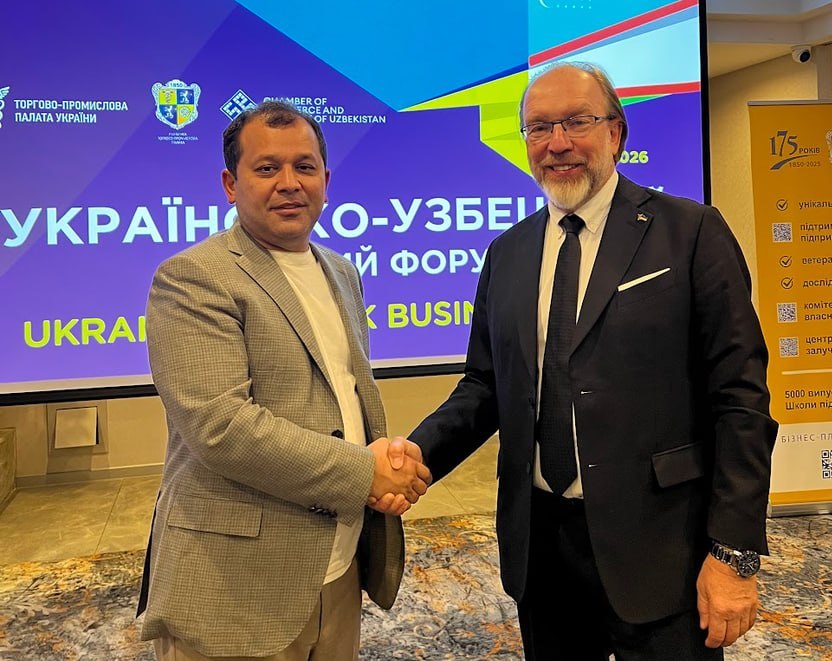
According to Chizhikov, the interest of Uzbek partners extends beyond traditional supplies of food and pharmaceutical products.
“We are ready to offer high-value-added niches—machinery manufacturing, energy equipment, and IT solutions for ‘smart’ cities. This is the level of cooperation that matches the ambitions of both our countries,” stated the president of the Ukrainian Chamber of Commerce and Industry.
Participants identified the development of new logistics routes between Ukraine and Central Asia as one of the main areas of cooperation. The Ukrainian side views Uzbekistan as a regional transportation and trade hub that can provide access to the markets of neighboring countries.
The Ukrainian Chamber of Commerce and Industry proposed that Uzbek logistics operators and customs services work together to create “green corridors.” Such routes could speed up the delivery of Ukrainian agricultural and food products to Uzbekistan, as well as the transport of Uzbek textiles through Ukraine to European countries.
Forum participants held direct B2B negotiations. Promising areas of cooperation identified included pharmaceuticals, machinery and industrial equipment manufacturing, energy, agricultural processing, food products, textiles, chemical products, and digital solutions for municipal services.
Industrial cooperation holds additional potential. Ukrainian companies can supply Uzbekistan with energy and technological equipment, components, pharmaceutical products, and value-added agricultural products. Uzbek enterprises, in turn, are interested in expanding exports of textiles, raw cotton, polymer materials, fertilizers, and other chemical products.
The legal framework for investment cooperation is provided by a bilateral agreement on the promotion and mutual protection of investments, signed in 1993. A preferential trade regime is also in effect between the countries, and imports of goods from Ukraine to Uzbekistan are exempt from customs duties under existing free trade agreements.
According to data from the Ukrainian Chamber of Commerce and Industry, trade turnover between Ukraine and Uzbekistan reached $315 million in 2025, an increase of 14% compared to 2024. Ukrainian exports totaled $186.5 million. Based on these figures, imports of Uzbek goods into Ukraine can be estimated at approximately $128.5 million, and Ukraine’s trade surplus at approximately $58 million.
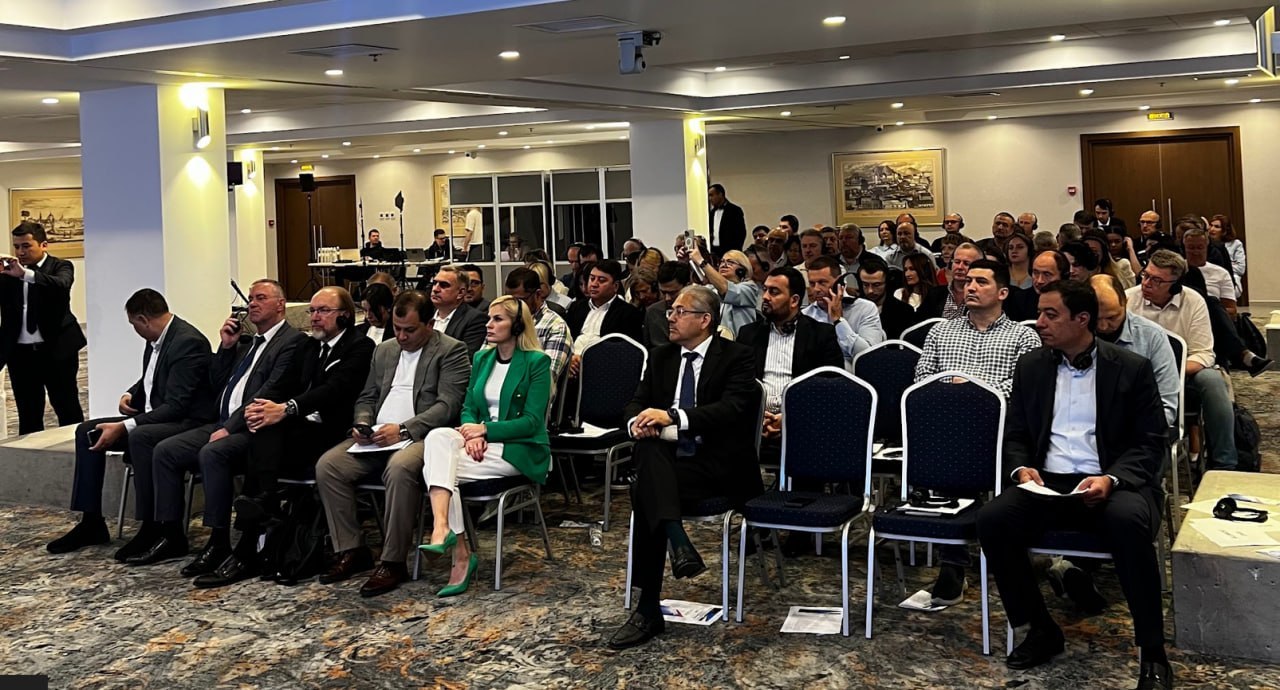
Thus, the latest complete annual data indicate a trade volume of about $315 million. This figure remains significantly below the potential of the two markets; however, the 14% growth indicates a gradual recovery of economic ties.
Ukrainian exports to Uzbekistan consist primarily of pharmaceutical products, machinery and equipment, meat and meat products, confectionery, and other food products. Ukraine imports mainly textiles, cotton and textile raw materials, polymer materials, fertilizers, and chemical products from Uzbekistan.
In the medium term, growth in trade volume will depend on shipping costs and transit times, the restoration of reliable transport corridors, the availability of cargo insurance, and companies’ ability to organize regular shipments. Uzbekistan could become one of the main gateways for Ukrainian manufacturers to Central Asian markets, while Ukraine is of interest to Uzbek businesses as a potential route to the EU market.
The Ukrainian Chamber of Commerce and Industry is a non-governmental, self-governing organization representing the interests of Ukrainian businesses. The Chamber promotes exports, organizes business missions, and provides services related to product certification, force majeure certification, international arbitration, and the search for foreign partners.
The Chamber of Commerce and Industry of Uzbekistan represents the interests of the republic’s entrepreneurs, participates in the development of exports, the attraction of investments, the organization of business missions, and the establishment of contacts between Uzbek and foreign companies.
The “Uzeltexsanoat” Association brings together enterprises in Uzbekistan’s textile, apparel, and knitwear industries. It participates in the modernization of enterprises, the development of value-added cotton processing, and the promotion of finished textile products to foreign markets.
The Uzbekistan Exporters Association provides companies with support in entering foreign markets, finding buyers, and organizing export shipments.
BUSINESS FORUM, LVIV, UKRAINE, UZBEKISTAN, Vakhobov, ЧИЖИКОВ



