
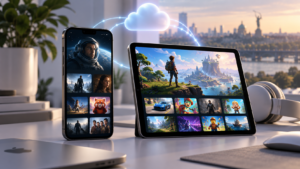
By the end of September 2026, Apple will expand the iCloud+ package in Ukraine to include access to the Apple TV streaming service and the Apple Arcade gaming platform at no additional charge with all paid plans.
Ukraine has officially joined the list of over 100 countries and territories where Apple is rolling out its new subscription model. At the same time, Apple TV is expanding into 59 new markets and, once the rollout is complete, will be available in approximately 170 countries worldwide.
According to the Ukrainian iCloud website, the cheapest iCloud+ plan—50 GB—costs $0.99 per month and will include Apple TV and Apple Arcade. The 200 GB plan costs $2.99, 2 TB costs $9.99, 6 TB costs $34.99, and 12 TB costs $69.99 per month.
Apple TV provides access to original series, movies, and documentaries from Apple Originals, while Apple Arcade features over 200 games without ads or in-app purchases.
An iCloud+ subscription can be shared with up to five family members via Family Sharing. Each user’s personal files, settings, and recommendations remain separate.
For users who already pay for iCloud+, Apple TV and Apple Arcade should be added automatically at no additional cost. If a user previously subscribed to Apple TV or Apple Arcade separately, Apple plans to transition that access into iCloud+, while progress and saves in Apple Arcade games will remain accessible.
On Apple’s official Ukrainian website, the new bundle is currently listed as coming “soon,” as the company is rolling it out gradually through the end of September.
In addition to Ukraine, the program includes Serbia, Montenegro, Moldova, Georgia, Armenia, Turkey, Kazakhstan, Azerbaijan, the Western Balkan countries, as well as India, Singapore, the UAE, Saudi Arabia, and dozens of countries in Africa, Asia, and the Middle East.

In response to the recent fines imposed by the European Union on the American tech companies Apple, Google, and Amazon, U.S. President Donald Trump called the move “discrimination” and promised additional investigations and tariffs.
“The European Union is at it again and, as always, has targeted major American companies directly! After fining Apple $15 billion, Meta $3 billion, Amazon $2.5 billion, and many others for no reason at all, we have just been informed that Google—a truly cutting-edge and amazing company—has been fined another $1 billion without any explanation,” he wrote on the social media platform Truth Social.
Trump emphasized that the total amount of fines imposed on Google exceeded $18 billion.
“This illegal and highly discriminatory practice began at such high levels during the first year of Joe Biden’s administration, but it will not continue under a Trump administration,” he stressed.
Trump noted that the U.S. “will immediately launch a Section 301 investigation into the practice of ‘robbing’ American companies and, as a result, American taxpayers.”
The U.S. president promised a “very high price” for the European Union for “this illegal and highly unethical behavior.”
“The fines will be completely rescinded, and we expect a substantial tariff to be imposed on them as soon as possible,” Trump promised.
As reported, the European Commission (EC) announced on Thursday its decision to impose a fine of 890 million euros on Google for violating the Digital Markets Act (DMA).
Source: https://truthsocial.com/@realDonaldTrump/posts/116976043318889040
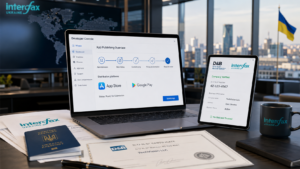
If you are creating your own application and registering a corporate developer account in the Apple App Store or Google Play, you will most likely be required to provide a D-U-N-S Number when completing the documentation. For many Ukrainian technology companies, this requirement comes as a surprise at the final stage of launching a product.
A D-U-N-S Number, also known as a DUNS number, is a unique nine-digit identifier of a legal entity in the international Dun & Bradstreet system. It allows digital platforms, banks, investors and foreign partners to compare information about a company and verify that it is genuinely registered, has a confirmed address and a defined legal status.
Apple requires a D-U-N-S Number when registering a company or another organisation in the Apple Developer Program. The corporation uses it to verify the applicant’s legal name, address and status.
The company must be an independent legal entity capable of entering into agreements with Apple. A trademark, project name, branch or conventional commercial name is not suitable for such registration. It is the official name of the legal entity that will be displayed in the App Store as the seller of the application.
In addition to a D-U-N-S Number, the organisation will need:
If the application is registered by an individual or an independent developer, Apple does not require a D-U-N-S Number. However, in this case, the developer’s personal name, rather than the name of the company or brand, will be indicated in the App Store as the seller.
Google also requires a D-U-N-S Number when creating a developer account on behalf of an organisation. The number is used to verify the company together with the Google payment profile data, official registration documents and the identity document of the authorised representative.
An organisational account is recommended for companies that release commercial products. For financial applications, cryptocurrency wallets, healthcare services, VPN applications and government digital products, Google explicitly requires registration on behalf of an organisation.
During registration, the data in Google Payments, the developer profile and the Dun & Bradstreet database must match. Differences in the spelling of the company name, address, postal code or legal form may result in additional verification or a delay in activating the account.
A D-U-N-S Number is not a licence, quality certificate or guarantee that an application will be approved. Apple and Google independently verify the software product, compliance with platform rules, security and developer information.
However, obtaining the number creates an international company profile that can be used far beyond the App Store and Google Play. Foreign corporations use D-U-N-S when registering suppliers, checking counterparties, granting commercial credit and organising international procurement. The identifier may also be required during negotiations with investors, banks, distributors and major customers.
“A D-U-N-S Number gives a company the opportunity to be recognisable in the international environment and reduces the barrier of first contact,” said Maksym Urakin, Director for Development and Marketing at Interfax-Ukraine and Head of the D&B-Interfax-Ukraine business unit.
According to him, it is particularly important for Ukrainian IT companies to create a verifiable digital profile in advance. A developer may have a high-quality product and a strong team, but for an American platform, it is initially an unknown legal entity whose data must be verified.
A D-U-N-S Number helps link the application not only to the account of a specific programmer, but also to an officially registered Ukrainian company. This is important for further scaling, attracting investment, selling corporate subscriptions and entering the markets of the United States, the EU, the Middle East and Asia.
Before submitting an application, the company should prepare the official name of the legal entity in Ukrainian and English, its registered address, contact telephone number, information about the manager, legal form, registration date and information on the number of employees.
Before applying for a new number, it is necessary to check whether a D-U-N-S Number has already been assigned to the company. If the number exists but the profile contains outdated information, it is better to update the data rather than create a new record.
Particular attention should be paid to the English spelling of the company name and address. This information must be displayed identically in D&B, registration documents, Apple Developer, Google Payments and on the corporate website.
Obtaining the number does not always happen instantly. Apple recommends allowing up to five business days for the assignment of a D-U-N-S Number through its associated process and up to two additional days for the updated data to be transferred to its system. In other cases, international processing of the application may take several weeks, so it is better to begin the procedure before the planned publication of the application.
The official representative of Dun & Bradstreet in the Ukrainian market is the Interfax-Ukraine news agency. Its specialised D&B-Interfax-Ukraine unit helps companies obtain a D-U-N-S Number and work with the international business data database.
Specialists can help check whether a number has already been assigned, prepare information about the legal entity, submit an application and eliminate discrepancies in the corporate profile. At the same time, the final decision on registering a developer account is made directly by Apple or Google.
For information on obtaining a D-U-N-S Number, companies may contact the specialised D&B resource at dnb.ua or call +38 (044) 270-65-74.
For Ukrainian developers, a D-U-N-S Number is becoming a practical element of entering the international digital market. The sooner a company brings its legal documents, website, corporate email and international business profile into alignment, the lower the risk of delays when launching an application in the App Store or Google Play.
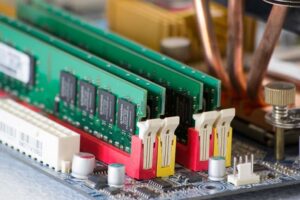
A sharp rise in global RAM (DRAM) prices and the possible end of Apple’s preferential contracts with key suppliers Samsung and SK Hynix in 2026 could lead to higher prices for iPhones, Macs, and other Apple devices. However, Apple itself has not yet announced any price increases, and expert estimates remain forecasts.
According to industry sources, Apple’s long-term DRAM supply agreements are nearing their end, and as early as January 2026, the company may be forced to pay Samsung and SK Hynix significantly higher prices for memory. This is reported, in particular, by Wccftech, noting that the bargaining position of memory manufacturers has strengthened amid a global shortage and a boom in demand from AI data centers.
The DRAM market is already experiencing a massive price rally. According to TrendForce, the cost of advanced memory for 2025 has increased by approximately 50%, and in the fourth quarter, additional growth of about 30% is expected, with a possible further increase of 20% in early 2026. Taken together, this could lead to a doubling of prices for high-performance memory in a relatively short period of time.
Separately, Reuters reported that Samsung raised its contract prices for 32GB DDR5 modules to $239 at the end of 2025, up from $149 in September — an increase of nearly 60% amid worsening shortages and a shift in supply toward the server and AI segments.
Analysts note that Apple is traditionally protected from short-term price spikes thanks to large long-term contracts and purchase volumes. According to Macworld, it is these agreements that have so far allowed the company to keep its internal memory costs under control, despite rising prices on the open market. However, as these contracts expire and suppliers move to shorter-term and more expensive deals, pressure on device costs will increase.
Against this backdrop, some research and industry resources predict that in 2026, smartphone and laptop manufacturers, including Apple, will be faced with a choice: either raise retail prices, reduce the amount of RAM in basic configurations, or accept lower margins. A number of analytical reviews are already warning of a possible increase in the cost of smartphones and PCs in 2026 due to a shortage of memory and an increase in its cost.
At the same time, there have been no official statements from Apple about a planned increase in product prices in connection with the situation on the DRAM market. The industry media experts surveyed emphasize that the final decision will depend on the company’s strategy: part of the cost increase may be offset by more expensive memory upgrades, part by a selective revision of prices for new models, and part by internal reserves and optimization.
Apple Inc. will surpass South Korea’s Samsung Electronics in global smartphone shipments in 2025 for the first time in 14 years, according to experts at Counterpoint Research.
According to the company’s forecast, iPhone shipments to the global market will reach 243 million units this year, while Samsung smartphone shipments will total around 235 million units.
Apple’s share of the global smartphone market at the end of the year is expected to be 19.4%, while Samsung’s will be 18.7%.
The optimistic forecasts for Apple are linked to the success of the iPhone 17 line, which the company unveiled in September. Counterpoint calls sales of this line of devices during the current holiday season “outstanding.”
Sales of iPhone 17 smartphones in the first four weeks after their launch were 12% higher than the previous iPhone 16 line, Counterpoint notes. In China, a key market for Apple, sales of these devices during the same period exceeded the previous line’s results by 18%.
Meanwhile, Samsung is facing difficulties due to growing competition from Chinese manufacturers in the budget and mid-range price segments, which is limiting the South Korean company’s sales.
Counterpoint analysts expect Apple to maintain its sales leadership in the global smartphone market until the end of 2029.
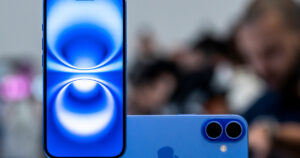
Apple Inc. intends to continue increasing investment in business development in China and further strengthening cooperation with the aim of achieving mutually beneficial development, said the company’s chief executive Tim Cook at a meeting with China’s Minister of Industry and Information Technology Li Lichen.
The minister noted that China’s massive domestic market and comprehensive industrial system have enormous potential in terms of investment and consumption, according to Xinhua News Agency.
“We hope that Apple will continue to develop the Chinese market, actively participate in China’s reindustrialization, and work with Chinese companies to promote innovative development across the entire production chain,” Li Lichen said.
He added that China is committed to a policy of openness to the outside world, intends to promote the application of intelligent technologies in industrialization and the intelligent transformation of industry, and will contribute to the creation of a favorable business environment for enterprises with foreign capital participation, including Apple.



