
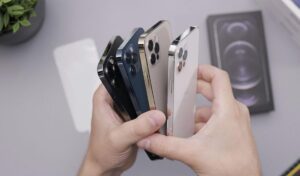
Ukraine is beginning to implement mandatory IMEI declaration for mobile phones upon import; the relevant order has already been signed by the Ministry of Finance, according to Artem Shevchenko, CEO of “Citrus.”
“In my view, this is the most important decision for the Ukrainian mobile phone market in recent years. The order has already been signed by the Ministry of Finance of Ukraine and registered by the Ministry of Justice of Ukraine. This means that the decision has already been made and the practical implementation phase is beginning,” he said on LinkedIn.
Shevchenko added that, according to estimates by the Bureau of Economic Security (BES), this change in regulations could generate over 5 billion UAH in additional revenue for the state budget annually and significantly reduce opportunities for “gray market” smartphone imports. The “Citrus” team actively participated in consultations with the EBS regarding this initiative, discussing the technical aspects of implementation and mechanisms that will help make the new system as effective as possible.
Until now, the IMEI was not specified during customs clearance, which meant the state was unable to track the path of a specific mobile phone from the moment of its import to its sale to the end consumer.
“Now the foundation for such a system has been laid. The first stage is mandatory IMEI declaration upon import. The next step should be to include the IMEI on the fiscal receipt. The BEB is already working on this mechanism in collaboration with the Ministry of Finance of Ukraine and the State Tax Service of Ukraine. In effect, this means that every mobile phone will have a traceable path from the moment it crosses the border until it is sold. “Once this mechanism is fully implemented, the legal sale of mobile phones without a match between the IMEI declared at the time of import and the IMEI indicated on the fiscal receipt will become virtually impossible,” Shevchenko said.
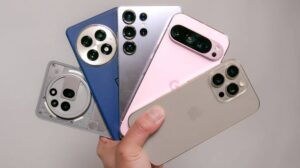
Global smartphone shipments in the second quarter of 2026 decreased by 6.7% compared to the same period last year—to 277.5 million units, according to preliminary estimates by the International Data Corporation (IDC). This marks the second consecutive quarter of decline.
The decline in shipments is due to a shortage of memory chips and record-high prices for them.
“The cost of memory chips has risen by nearly 300% over the past year; it now accounts for more than 65% of the cost of goods sold in the low-end price segment, making it increasingly difficult for manufacturers with budget-friendly product lines to survive,” said Nabila Popal, senior research director at IDC. “The memory crisis favors premium players and works against vendors operating in the low-end price segment.”
For the second quarter in a row, Apple Inc. and Samsung have demonstrated stability, remaining the only vendors in the top five to report sales growth, she noted. Apple achieved record results in the second quarter thanks to the success of the iPhone 17 and concerns about future price increases.
“This crisis has split the smartphone market into two parts,” said Francisco Geronimo, vice president of global client devices at IDC. “At the top are Apple and Samsung.”
They are pulling ahead of other companies, in part because they sell devices in which memory chips account for a smaller share of the cost. “At the bottom, manufacturers focused on low-cost, mass-produced devices are suffering—and so are their customers,” the expert said.
IDC, memory, SHIPMENT, smartphone, ЧИП

Google has updated its statistics on the distribution of Android versions, and according to the published data, only about 58% of devices run on OS versions that continue to receive critical security fixes, while more than 40% of smartphones – over 1 billion devices worldwide – remain on versions for which such patches are no longer released.
The materials indicate that Android 13-16 are considered supported versions. At the time of data collection, the share of Android 16 was estimated at 7.5%, Android 15 at 19.3%, Android 14 at 17.9%, and Android 13 at 13.9%.
A Google representative emphasized that the built-in Google Play Protect protection continues to work on devices starting with Android 7 and provides real-time application verification, but it does not replace system security updates that close vulnerabilities at the OS level.
In the Android Security Bulletin for February 2026, Google also recommends that users update to the latest version of Android whenever possible and install security updates regularly, as additional security mechanisms are implemented in new versions of the platform.
Apple Inc. will surpass South Korea’s Samsung Electronics in global smartphone shipments in 2025 for the first time in 14 years, according to experts at Counterpoint Research.
According to the company’s forecast, iPhone shipments to the global market will reach 243 million units this year, while Samsung smartphone shipments will total around 235 million units.
Apple’s share of the global smartphone market at the end of the year is expected to be 19.4%, while Samsung’s will be 18.7%.
The optimistic forecasts for Apple are linked to the success of the iPhone 17 line, which the company unveiled in September. Counterpoint calls sales of this line of devices during the current holiday season “outstanding.”
Sales of iPhone 17 smartphones in the first four weeks after their launch were 12% higher than the previous iPhone 16 line, Counterpoint notes. In China, a key market for Apple, sales of these devices during the same period exceeded the previous line’s results by 18%.
Meanwhile, Samsung is facing difficulties due to growing competition from Chinese manufacturers in the budget and mid-range price segments, which is limiting the South Korean company’s sales.
Counterpoint analysts expect Apple to maintain its sales leadership in the global smartphone market until the end of 2029.

Smartphone shipments in China in the second quarter grew by 10% year-on-year to more than 70 million units, according to analyst firm Canalys. For the first time in history, the top five positions in the list of the largest smartphone vendors in China are held by local companies, said Canalys analyst Lucas Zhong.
The market leader was the vivo brand, which increased sales by 15% year-on-year to 13.1 million smartphones and gained a market share of 19%. OPPO took second place with a market share of 16%, despite a 1% decline in sales. HONOR was third (15% of the market, 10.7 million devices sold), Huawei was fourth (also 15%, 10.6 million), and Xiaomi (SPB: 1810) was fifth (14%, 10 million).
The American Apple Inc. sold only 9.7 million smartphones in China last quarter, which dropped it out of the top 5 leading suppliers. Its market share dropped to 14% from 15% in the first quarter and 16% in the second quarter of last year.
According to a preliminary estimate by another research company, International Data Corporation (IDC), smartphone sales in China in April-June increased by 8.9% year-on-year to 71.6 million. According to the company, Apple is also not among the top five leaders in the Chinese market.



