
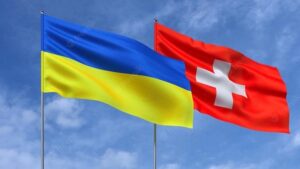
Switzerland is investing approximately $36 million (30 million Swiss francs) in the development of a competitive and sustainable private sector in Ukraine as part of the “CORE: Competitiveness for Ukraine’s Recovery 2026–2031” program, with Ukrainian businesses and organizations receiving the majority of these funds in the form of grants.
According to the Ministry of Economy and Environment of Ukraine following the program’s presentation in Kyiv on November 4, funding is provided through the Swiss State Secretariat for Economic Affairs (SECO), and the program is implemented by a consortium of Helvetas and NIRAS in cooperation with the International Labor Organization (ILO).
Grant support is provided under four main components: the development of regulatory solutions and public-private dialogue; the development of priority economic sectors and business associations; co-investment grants for the modernization of small and medium-sized enterprises (SMEs); and the improvement of labor policy and labor productivity.
In addition, the program provides for the launch of the “Strategic Advice Window,” which will provide the Ministry of Economy and Environment, business associations, and SMEs with access to international and Swiss experts. Most of the grant funds will be allocated based on the results of competitive selection processes following preliminary consultations with potential applicants.
As noted, the CORE program is part of a broader support package for Ukraine from Switzerland totaling 5 billion Swiss francs through 2036 (of which 1.5 billion francs are earmarked for 2025–2028). The parties signed a memorandum on the implementation of the initiative in Davos in January 2026.
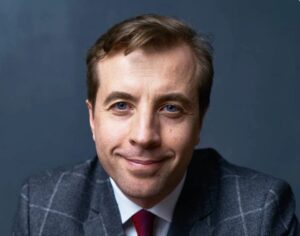
The model for reforming the military conscription system proposed by the Cabinet of Ministers in late October of this year requires significant refinement, as it does not align with either economic or security logic, stated Andriy Dligach, founder and chairman of the Advanter Group.
“Reserves are a tool for preserving the human capital necessary for the country’s defense capability. The economy does not compete with the military; it finances it. It is business that ensures production, pays taxes, and generates resources for defense,” he emphasized in a post on his Facebook page.
According to him, Ukrainian businesses are currently on the brink of collapse: average corporate revenue stands at about 85% of the 2025 level, financial reserves are running out, and further draft calls for critically important personnel could bring business operations to a halt.
Dligach is convinced that reforming the system should begin with an audit of human resource utilization in the Defense Forces, as well as an assessment of opportunities for rotation and optimization. As one promising model, he proposes introducing the “2+2” principle (two years of military service and two years of civilian work), while simultaneously developing recruitment efforts and boosting motivation.
Commenting on the fight against corruption in the area of personnel reserving, the expert noted that this problem should be solved not by destroying businesses, but by creating the possibility of reserving at least 15% of key personnel. According to his calculations, this would reduce the demand for corruption, contribute to bringing salaries out of the shadows, and could bring the economy approximately 250 billion UAH.
“The military and the economy are not competitors, but two components of national security. Without a strong economy, there will be no resources for a strong military. Therefore, Ukraine needs a comprehensive human capital management strategy that will ensure defense capability, preserve businesses, and enable the country to withstand a protracted war,” Dligach concluded.
As previously reported, on October 23, the Cabinet of Ministers completed the implementation of changes to the reservation system, decoupling the criticality of enterprises from economic indicators and updating sectoral and regional criteria. The government also lowered the maximum reservation rate for the energy and defense industries from 100% to 95%, with the option to submit a substantiated request to a special Coordination Center if an increase in the quota is necessary, and announced a mechanism for 100-percent reserving, provided that the mobilization obligation regarding the regular voluntary enlistment of employees into military service is fulfilled.
The government has also established a Coordination Center for organizing the reserving of conscripts during periods of mobilization and martial law, in accordance with Resolution No. 1328 of October 23. The Deputy Minister of Economy and Environment and the Deputy Minister of Defense have been appointed co-chairs of the Coordination Center, and the center’s main tasks include reviewing proposals from government agencies regarding the determination of the criticality of enterprises, increasing the volume of reservations, and providing recommendations on the revocation of relevant decisions within one month or within seven business days in cases requiring urgent consideration.
Prime Minister Serhiy Koretskyi explained that the changes are necessary due to the high rate at which deferrals are being granted and the need to prevent abuse, where companies are artificially created for mass reservations without actually participating in the fulfillment of critical tasks.
The Federation of Employers’ Unions (FEU) and the Union of Industrialists and Entrepreneurs (UIE) put forward a number of proposals regarding the resolution. In particular, the FEU proposed establishing a two-month transition period in the event the “criticality” criterion is abolished, extending the validity of current decisions set to expire in November–December, and removing the limited list of industries to ensure equal access for businesses. For its part, the SUP called for retaining the current criticality criterion until its expiration for enterprises that meet the requirements, shortening the document review periods, clarifying the concept of “involvement in production processes” for employees in the defense industry and the energy sector, and ensuring that the liability of managers for violations of military registration is proportionate.
Source: https://www.facebook.com/share/p/19GUkU4VLU/
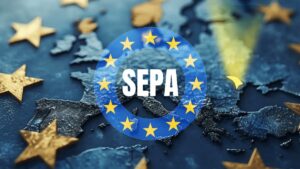
Ukraine could reduce the costs incurred by citizens and businesses for international transfers in euros by EUR70–100 million annually after joining the Single Euro Payments Area (SEPA). At the same time, to begin the integration process, the Verkhovna Rada must adopt a package of legislative amendments that will bring Ukrainian financial legislation into compliance with European requirements.
According to a special report by the Interfax-Ukraine news agency published on October 30, 2026, parliament has until mid-November to consider the necessary bills so that Ukraine can submit an application to the European Payments Council (EPC).
According to estimates by the Ministry of Finance of Ukraine, joining SEPA will reduce the cost of cross-border payments, speed up settlements with European counterparties, and lower financial costs for Ukrainian exporters.
The main bill is No. 14327-d, registered on April 6, 2026. Along with it, parliament must consider bills No. 15501 and No. 15503, which concern bringing legislation into compliance with European Union requirements and EPC criteria. As of early November, the main bill is awaiting consideration, Bill No. 15501 is being reviewed by a committee, and Bill No. 15503 is also awaiting consideration.
SEPA (Single Euro Payments Area) is a unified European payments area that provides standardized bank transfers in euros between participating countries. It allows cross-border payments to be made under rules similar to those for domestic banking transactions.
As of fall 2026, the SEPA area covers 41 countries and territories, including all EU member states, the United Kingdom, Switzerland, Norway, Iceland, Liechtenstein, as well as a number of Balkan countries and Moldova.
Businesses that regularly conduct transactions with European partners stand to benefit the most from Ukraine’s accession to SEPA. This primarily applies to IT companies, service exporters, logistics operators, e-commerce businesses, and small and medium-sized enterprises.
Currently, international transfers often pass through several correspondent banks, which increases fees and makes it difficult to predict when funds will be received. Using SEPA will reduce the number of intermediaries and make fees more predictable.
As noted by Olga Vasilevska-Smaglyuk, deputy chair of the parliamentary committee on finance, tax, and customs policy, even a fee of 20–50 euros per international payment represents a significant expense for companies that carry out dozens or hundreds of such transactions.
For individuals, SEPA can simplify money transfers between Ukraine and EU countries, as well as payments for tuition, rent, and services, and the receipt of income from foreign clients.
A telling example is Moldova, which joined the SEPA geographical area in March 2025, and whose banks began corresponding operations on October 6 of that same year. According to estimates by the National Bank of Moldova, the average cost of a cross-border transfer in euros fell from EUR20–150 to approximately EUR1. The total savings for citizens and businesses over 12 months are estimated at EUR16.4 million.
At the same time, for Ukraine, joining SEPA requires not only the technological modernization of banks but also strengthened financial monitoring, transparency regarding information on the ultimate beneficial owners of companies, and compliance with international standards for combating money laundering and terrorist financing.
Once the legislative changes are adopted, Ukraine must undergo an assessment by the European Payments Council. If the decision is positive, individual banks and payment institutions will be able to begin the technical integration process with the relevant payment schemes.
However, integration with SEPA will not mean Ukraine’s transition to the euro or the automatic lifting of currency restrictions imposed by the National Bank during martial law. Bank fees will also not necessarily be reduced to zero, although a significant reduction in the cost of international payments in euros is expected.
The National Bank of Ukraine has already implemented a series of technological changes in preparation for future integration. Specifically, in April 2023, the Electronic Payments System transitioned to the international ISO 20022 standard and began operating 24 hours a day, and since December 2024, it has supported instant credit transfers.
Further accession to SEPA will mark another stage in Ukraine’s financial integration with the European Union and may help boost the competitiveness of Ukrainian companies in the European market.
Source: “Interfax-Ukraine,” special report dated October 30, 2026.
bank transfer, BUSINESS, EUROPEAN UNION, financial integration, SEPA, UKRAINE
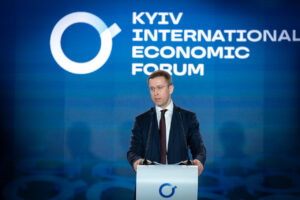
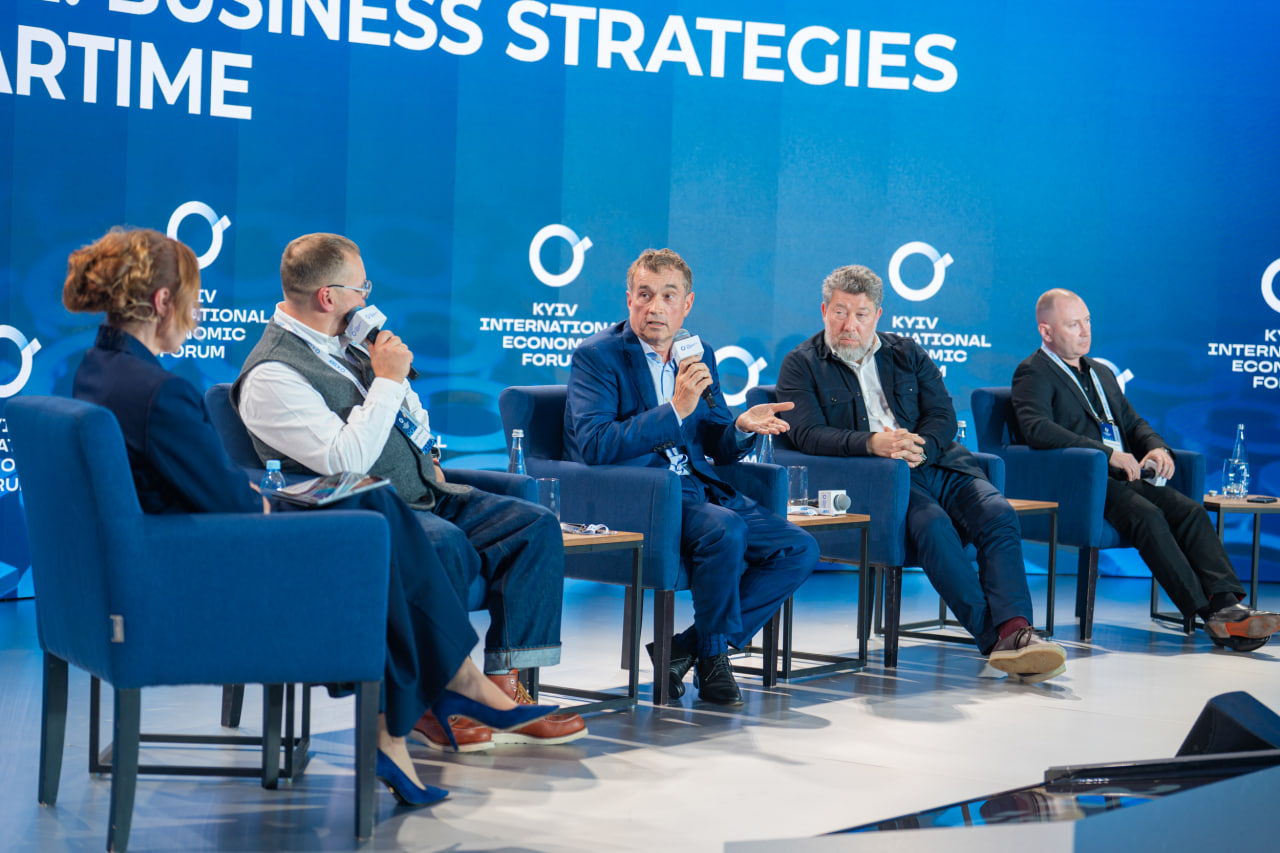
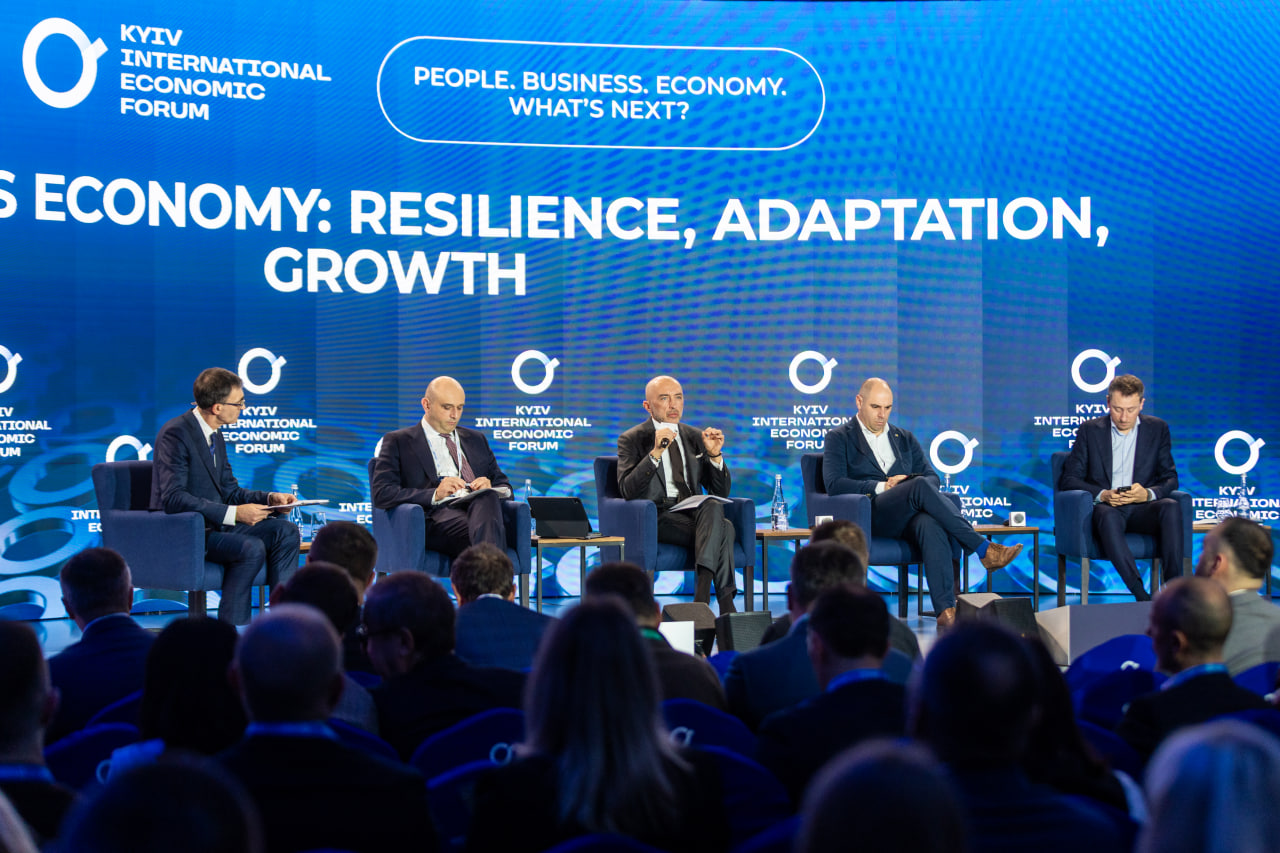
Kyiv hosted the 12th Kyiv International Economic Forum (KIEF), dedicated to the performance of the Ukrainian economy amid escalating war risks. Discussions centered on how businesses can adapt to new threats, maintain production, and find resources for recovery and development.
Opening the forum, Ukrainian Prime Minister Serhiy Koretskyi stated that Russia has intensified its attacks on the Ukrainian economy. According to his estimates, direct losses exceeded $7.7 billion, and more than 1 million square meters of real estate have been damaged or destroyed. By the end of the year, the prime minister said, the budget will fall short of planned revenues by about $1.5 billion.
At the same time, he emphasized that despite the consequences of the war, the economy continues to function thanks to the resilience of entrepreneurs and their teams, and support for business remains one of the government’s priorities.
“We realize how important it is right now to support Ukrainian businesses in return for this resilience, in return for this dedicated work,” noted Serhiy Koretskyi.
Despite limited budgetary resources, the government is continuing its lending programs and developing mechanisms to insure against war risks. Under the “5–7–9%” program, 580 billion hryvnia in loans have already been issued since the program’s inception. 457 companies have already insured their property under the loss compensation program administered by the Export-Credit Agency, with a potential payout of over 9 billion hryvnia. The next step is a broader system of war risk insurance, to which the state plans to allocate $1 billion and attract an additional $3 billion from international partners.
Among the external challenges are the tightening of EU trade restrictions on Ukrainian exporters, particularly producers of metallurgical and agricultural products. Business representatives spoke of reduced access to the European market, while Ukraine’s representative to the EU, Taras Kachka, discussed accelerating integration into the EU’s internal market and expanding the industrial visa-free regime.
The labor shortage also remains acute. Experts estimate migration losses at approximately 5 million people, while businesses are facing a shortage of skilled workers. Among possible solutions, participants discussed dual education and creating conditions to encourage Ukrainians to return by offering jobs and affordable housing.
The overall business sentiment at KIEF is cautious but pragmatic. The impact of the attacks varies by industry, but companies agree on the need to hope for the best while remaining prepared for various scenarios. Companies are reviewing safety protocols, setting up shelters, and developing their own response systems. In particular, Vyacheslav Klimov, co-owner of the NOVA Group, said that “Nova Poshta” has implemented its own air defense project, which has already shot down Russian drones. Companies are also developing their own fire departments.
“The top priority for Ukrainian businesses is how to adapt to the new challenges of the war and get through this winter. It’s not easy for anyone, so it’s especially important to support one another. If I need services or partners, I turn first and foremost
to Ukrainian companies. This is a matter of principle: by buying goods and services from one another, we support businesses, preserve jobs, and help our economy survive,” emphasized Vasyl Khmelnytsky, initiator of the Kyiv International Economic Forum (KIEF) and founder of the UFuture holding company.
The business community’s main requests to the government are predictable regulations, insurance against war risks, and solutions to the labor shortage. Businesses have learned to operate amid constant threats, but the costs of security and recovery are limiting opportunities for new investments.
“We have held the KIEF both under pandemic restrictions and after the start of the full-scale invasion. This year, the question of how not only to keep businesses running during the war but also to avoid losing opportunities for development has become particularly acute. There are no ready-made solutions to all problems, so it is important to combine business expertise with the capabilities of the government and international partners,” said KMEF CEO Yuriy Pivovarov.
Title partners of the forum: UFuture, Mastercard, AEQUO, PrivatBank, Kyivstar
Forum partners: Sense Bank, NEQSOL Holding, PUMB, DTEK, Ajax Systems, Uklon, General Chereshnya, Biopharma, Eclectic Talents Group, TERWIN, CEO Club Ukraine, BALEX, Naftogaz Group.
Open4Business is the forum’s media partner.

In Ukraine, 50 of the 478 individuals registered as owners or beneficiaries of at least 50 companies have addresses in the temporarily occupied territories or in areas of active combat. These findings are contained in a study by the analytical service “OpenDataBot,” published on October 26, 2026, based on data from the Unified State Register.
According to the study, 42 mass owners of companies have registered addresses in the temporarily occupied territories of Ukraine. This represents nearly one in ten people on the overall list.
The largest number of such entries are in the Donetsk region—17—and the Luhansk region—16.
Another five mass owners are registered at addresses in Crimea, and four in the Kherson region.
The largest number of businesses among individuals with addresses in the temporarily occupied territories is linked to Ruslan Merzlyakov of Donetsk, who is listed as the owner or beneficiary of 2,221 companies.
He also ranks second in the overall Ukrainian ranking of mass owners of businesses.
Next in this group is David Stepanyan from Mariupol, who is linked to 205 companies.
Third is Yevgeny Gasyukov from the city of Khrustalny in the Luhansk region, under whose name 171 companies are registered.
Separately, analysts identified eight mass owners with registered addresses in areas of active hostilities.
Two such addresses were recorded in each of the Dnipropetrovsk, Donetsk, Zaporizhzhia, and Kherson regions.
The largest number of companies in this category is linked to Yuriy Terekhov from Kherson—275 enterprises.
He is followed by Sergey Khmelevsky from Nikopol in the Dnipropetrovsk region, with 255 companies, and Dmitry Zakhoda from Kherson, with 152 enterprises.
In total, the registered addresses of 50 major owners are linked to territories that are under Russian occupation or are located in zones of active hostilities.
At the same time, the authors of the study specifically note that an owner’s legal address does not necessarily correspond to the location where their enterprises actually conduct business.
Thus, the presence of a registered address in an occupied territory does not indicate that all enterprises associated with the individual in question continue to operate under occupation.
Furthermore, the registry data alone does not allow for determining the actual location of a specific owner or drawing conclusions about their activities in Russian-controlled territory.
As Miroslav Laba, a tax and regulatory policy specialist at the Economic Expert Platform, notes, a large number of companies linked to a single individual can create additional risks for management transparency and tax oversight.
According to him, the use of nominee owners is one of the risk factors that requires attention from regulatory authorities.
At the same time, the expert emphasizes that owning a large number of companies is not, in and of itself, a violation of the law.
As of October 2026, there were a total of 478 mass company owners in Ukraine. The leader of the national ranking is Kyiv resident Vitaliy Ilnitsky, who is linked to 5,889 legal entities.
Source: “OpenDataBot,” study “478 Mass Owners of Companies in Ukraine,” October 26, 2026.

Kyiv ranks first among Ukraine’s regions in terms of the number of individuals registered as owners or beneficiaries of at least 50 companies. As of October 2026, there were 131 such owners in the capital out of 478 nationwide, according to data from an OpenDataBot study published on October 26.
Thus, Kyiv accounts for more than a quarter of all so-called mass company owners listed in the Unified State Register.
Second place goes to the Kyiv region, where 34 individuals are registered, each linked to at least 50 companies.
In third place is the Dnipropetrovsk region with 27 such owners.
Next are the Donetsk region, where 24 mass company owners are recorded, and the Kharkiv region with 18 entries.
Combined, Kyiv and the Kyiv region have 165 mass owners, accounting for more than a third of the national total.
At the same time, the largest owners by number of affiliated companies are also predominantly based in the capital.
Vitaliy Ilnitsky of Kyiv ranks first in the Ukrainian ranking with 5,889 companies. Another Kyiv resident, Vladislav Melekhin, ranks third with 858 companies.
Kateryna Doroshenko of Kyiv ranks fifth with 674 registered companies.
The largest mass owner outside Kyiv is Ruslan Merzlyakov from Donetsk, who is listed as the owner or beneficial owner of 2,221 companies.
According to the study’s methodology, mass owners are defined as individuals with registration ties to at least 50 legal entities.
However, the owner’s address listed in the registry does not necessarily correspond to the location where the companies they own actually operate.
Therefore, the concentration of mass owners in Kyiv does not mean that a corresponding proportion of these companies conducts business directly in the capital.
The structure of ownership of a large number of legal entities deserves special attention. Miroslav Laba, an expert on tax and regulatory policy at the Economic Expert Platform, notes that the registration of hundreds of companies under a single individual may be a sign of nominal ownership.
At the same time, he emphasizes that the mere fact that a single individual owns or manages a large number of companies does not, in and of itself, violate the law.
According to the expert, to ensure transparency in business activities, it is important to identify the actual managers and individuals who make business decisions.
In total, according to “OpenDataBot,” as of October 2026, there were 478 individuals registered in Ukraine, each of whom is linked to 50 or more companies.
Source: “OpenDataBot,” study dated October 26, 2026.



