

The volume of passenger car imports to Ukraine, including cargo-passenger vans and race cars (UKT ZED code 8703), amounted to $3.81 billion in January–October 2026, which is 21% less than the figure for the same period in 2025 ($4.82 billion).
According to statistics released by the State Customs Service of Ukraine, in October, specifically, passenger car imports fell by 37.4% compared to October of last year—to $405.8 million, which is also 1.5% less than in September of this year.
The top three suppliers of passenger cars to Ukraine over the first 10 months have consistently been the United States, Germany, and Japan, whereas a year ago they were Germany, the United States, and China. Specifically, car shipments from the U.S. fell by 12.3% to $736.2 million, from Germany by 28% to $605.8 million, and imports from Japan reached $526.4 million, whereas last year, cars worth $663 million were imported from China.
Imports of passenger cars from other countries during this period totaled $1.93 billion, which is 22.2% less than last year’s figure.
At the same time, Ukraine exported a total of $4.05 million worth of such vehicles over the 10-month period, mainly to Georgia, the Czech Republic, and Germany, whereas last year, exports totaled $7.2 million, with shipments primarily going to the UAE, Canada, and the U.S.
As previously reported, in 2025, passenger cars worth nearly $6.15 billion were imported into Ukraine, a 40.2% increase over the 2024 figure. The top three exporters were the United States, Germany, and China. Car exports totaled $10.1 million (2.7 times less).
The significant increase in passenger car imports to Ukraine starting in the summer of 2025 was driven by news that VAT exemptions on electric vehicle imports would be abolished as of January 1, 2026, and imports have already declined significantly since the beginning of this year.

According to Interfax-Ukraine, following audits of agencies under its jurisdiction, Ukraine’s State Agency for Infrastructure Recovery and Development canceled purchases of luxury cars in the regions totaling 7 million hryvnia and imposed a moratorium on such tenders.
In particular, the purchase of a Toyota Land Cruiser for 4.26 million hryvnias for the Recovery Service in Lviv Oblast was canceled, and the tender for a luxury car worth 2.9 million hryvnias for the Recovery Service in Kharkiv Oblast was canceled.
“Luxury cars—only at your own expense! The purchase of a Toyota Land Cruiser for 4.26 million hryvnias for the Restoration Service in Lviv Oblast is unacceptable. I share the public’s outrage and thank the journalists who brought this situation to light,” emphasized Ivan Fedorov, head of the State Agency for Infrastructure Restoration and Development of Ukraine, on Telegram.
As reported by “Nashi Hroshi,” on November 2, following the results of a tender, the Infrastructure Recovery and Development Service in Lviv Oblast ordered a passenger car for 4.26 million hryvnias from “Diamant” Service Center LLC. The contract called for the delivery by November 20 of a 2026 Toyota Land Cruiser GR Sport 3.3 Twin Turbo passenger car.
Fedorov emphasized that, at his instruction, audits have been launched at institutions under the jurisdiction of the Recovery Agency. In particular, problematic procurements were also identified in the Kharkiv region, where officials sought to acquire a Toyota Land Cruiser Prado, for which a budget of 2,915,750 hryvnias had been allocated.
“In the Lviv region, the vehicle will be returned to the dealer, and 4.26 million UAH will be refunded to the account. In the Kharkiv region, the tender was canceled on November 6 at my instruction. A moratorium on the procurement of luxury vehicles has been implemented within the Agency’s system. The relevant personnel decisions have already been made. As the head of the Agency, I am responsible for the operation of the entire system. Budget funds must be directed toward people’s real needs, infrastructure protection, and the country’s recovery,” Fedorov emphasized.
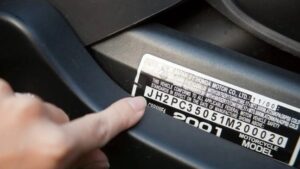
Kyiv accounts for 28% of the offenses registered in Ukraine during the first nine months of 2026 related to the forgery, destruction, or replacement of VIN codes and other vehicle identification numbers. This was reported by OpenDataBot, citing data from the Office of the Prosecutor General of Ukraine.
In the first nine months of this year, 599 offenses under Article 290 of the Criminal Code of Ukraine were recorded in Ukraine. The highest number of cases was recorded in Kyiv—169. Dnipropetrovsk Oblast ranked second with 114 cases, and Odesa Oblast ranked third with 45.
In total, these three regions account for 328 cases, or about 55% of all offenses registered during this period.
Compared to the same period in 2025, the number of such offenses increased by 22%—from 387 to 599.
At the same time, the rate of cases referred to court remains low. In the first nine months of 2026, only five criminal cases under Article 290 of the Criminal Code were referred to court—about 1% of the total number of offenses recorded during this period.
In total, from 2020 through September 2026, 11,417 such offenses were recorded in Ukraine. 7,152 cases remain on record, and 69 cases have been referred to court over nearly seven years.
The destruction, forgery, or alteration of a vehicle’s identification number is punishable by a fine ranging from 2,550 to 4,250 UAH, community service for up to two years, probation, or restriction of liberty for up to three years.
Source: OpenDataBot.
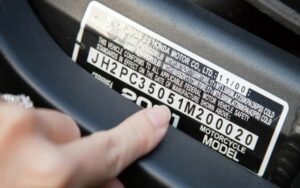
Only 5 criminal cases involving the forgery, destruction, or replacement of VIN codes and other vehicle identification numbers were referred to court in Ukraine during the first nine months of 2026. This represents about 1% of the 599 offenses registered during this period, according to OpenDataBot, citing data from the Office of the Prosecutor General of Ukraine.
In total, from 2020 through September 2026, 11,417 criminal offenses were registered in Ukraine under Article 290 of the Criminal Code of Ukraine. Of these, 7,152—or about 63%—remain on the docket. In nearly seven years, only 69 cases were sent to court—about 1% of the total number of recorded offenses.
According to OpenDataBot, in previous years, about 40% of such cases were closed for various reasons, including the absence of an incident or the lack of elements constituting a criminal offense. In 2026, one in five open cases was closed, and the number of active cases stands at 473.
At the same time, the number of registered offenses is increasing compared to last year. In the first nine months of 2026, 599 such cases were recorded, compared to 387 during the same period in 2025—a 22% increase.
The highest number of offenses related to the forgery, destruction, or alteration of vehicle identification numbers was recorded in Kyiv—169 cases, or 28% of the total. In the Dnipropetrovsk region, 114 cases (19%) were recorded, and in the Odesa region, 45 (8%). Thus, these three regions account for more than half of all offenses recorded over the nine-month period.
Under Article 290 of the Criminal Code of Ukraine, the destruction, forgery, or replacement of a vehicle’s identification number is punishable by a fine ranging from 2,550 to 4,250 UAH, community service for up to two years, probation, or restriction of liberty for up to three years.
Source: OpenDataBot.

Transportation tax revenues to local budgets for January–August 2026 increased by 58.7% compared to the same period last year, from 88 million UAH to 237.5 million UAH, the State Tax Service of Ukraine (STS) reported on Tuesday.
The largest amount of transportation tax revenue went to the Kyiv city budget—68.1 million UAH. The regional rankings are also led by Dnipropetrovsk (21.3 million UAH), Odesa (17.9 million UAH), and Kyiv (17.5 million UAH) regions.
The STS explains that the vehicle tax is a component of the property tax and is fully allocated to local budgets. Local communities can use the funds received to finance socially important initiatives and develop local infrastructure.
The vehicle tax is levied on passenger cars that are no more than five years old, provided their average market value exceeds the threshold established by law. In 2026, this threshold will be over 3.2 million UAH.
The list of passenger cars subject to the vehicle tax in 2026 has been published on the official website of the Ministry of Economy and Environment of Ukraine.
The tax rate is fixed at 25,000 UAH per year for each taxable vehicle. The vehicle owner in whose name the vehicle is registered is liable for the vehicle tax. The actual user of the vehicle—such as a lessee or a person using it under a power of attorney—is not liable for this tax.
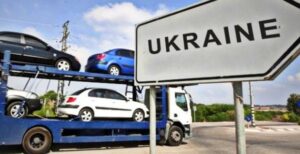
In September 2026, Ukrainians purchased 21,500 used passenger cars imported from abroad, which is 8% less than in the same month of 2025, according to a report by Ukravtoprom on its Telegram channel.
Compared to August of this year, demand for such cars rose by 4.4%.
Gasoline-powered cars accounted for the largest share of this segment of the auto market in September, increasing their share by 7 percentage points compared to September 2025—to 52%.
Next came electric vehicles, whose share fell to 18% from 29% last year, while the share of diesel cars decreased by 2 percentage points to 16%. They outpaced hybrids, which accounted for 11% (5%). The share of cars with LPG systems remained unchanged at 3%.
The average age of imported used cars was 8.7 years.
The Volkswagen Golf confidently tops the list of the ten most popular imported used models with 954 units. Next are the VW Tiguan with 807 units, the Audi Q5 with 658 units, the Skoda Octavia with 655 units, the Nissan Rogue—626 units, the Renault Megane—559 units, the Tesla Model Y—512 units, the Nissan Leaf—484 units, the Tesla Model 3—468 units, and the Volkswagen Passat—409 units.
As reported with reference to “Ukravtoprom,” in 2025, Ukrainians purchased 274,300 used passenger cars imported from abroad, which is 24% more than in 2024. Following the Volkswagen Golf, the top three most popular models included two Tesla electric vehicles—the Model Y and the Model 3.



