

As of June 4, Ukraine had exported 38.505 million tons of grains and legumes since the beginning of the 2024-2025 marketing year (July-June), of which 202,000 tons were shipped this month, according to the press service of the Ministry of Agrarian Policy and Food, citing data from the State Customs Service. were shipped this month, according to the press service of the Ministry of Agrarian Policy and Food, citing data from the State Customs Service.
According to the report, as of June 7 last year, total shipments amounted to 47.734 million tons, including 802,000 tons in June.
At the same time, in terms of crops, since the beginning of the current season, 14.906 million tons of wheat (43,000 tons in June), 2.305 million tons of barley (no exports), 10,800 tons of rye (0), corn – 20.728 million tons (158 thousand tons).
Total exports of Ukrainian flour since the beginning of the season as of June 4 are estimated at 65.4 thousand tons (in June – 0.4 thousand tons), including wheat flour – 61 thousand tons (0.4 thousand tons).
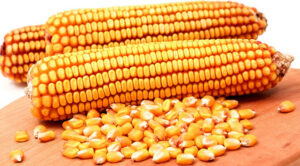
Corn exports from Ukraine in May 2025 reached over 2 million tons, becoming one of the highest figures in recent months, according to the analytical cooperative “Pusk,” created within the framework of the All-Ukrainian Agrarian Council.
According to analysts, at least 850,000 tons of corn have already been contracted for June, and this figure is not final. Total exports in June are expected to exceed 1 million tons.
“This indicates that traders have previously concluded contracts. Therefore, deliveries of the old crop are continuing quite actively,” experts noted.
At the same time, the situation on the export market is complicated by price pressure. Thus, the cost of American corn is currently held at $230 per ton, while prices for Ukrainian corn have risen to $256-260 per ton.
“In the current conditions, we cannot compete with American suppliers on the European market. Ukrainian corn is sold in small batches — 2-5 thousand tons — mainly to Greece and Cyprus. For comparison, the US exports only large volumes of 25 thousand tons,” analysts explained.
An additional factor is limited grain reserves: only 1-1.5 million tons of corn remain on the domestic market. This means that there are already very few volumes available for large-scale exports.
“We expect the market to become less liquid in June. Price benchmarks will gradually decline to around $215 per ton in ports. From the second half of the month, demand will decline significantly, and the market will begin to focus on the new harvest,” Pusk predicts.

In 2024, Ukraine exported 118,000 tons of dairy products, which is almost twice as much as imports, which reached 60,000 tons, according to the infographic “Dairy Map of Ukraine” for 2024, prepared by the Association of Milk Producers (AMP).
“Despite military losses, targeted shelling and destruction, a forced new wave of closures and relocations of farms from war-torn regions, exhausting blackouts and record heat in June-September 2024, which caused more than 50% of industrial farms to experience a significant drop in milk yields, the Ukrainian dairy industry has demonstrated significant achievements,” the industry association said.
As of January 1, 2025, the number of cows in the industrial sector increased by 1% compared to the previous period. The top five regions in terms of industrial livestock numbers, which together account for 51% of the total industrial cow population in Ukraine, are Poltava (52,700 head), Cherkasy (44,000 head), Chernihiv (35,400 head), Kyiv (34,000 head), and Vinnytsia (31,500 head).
At the same time, the largest increase in the industrial cow population last year was recorded in Mykolaiv (+14%), Ternopil (+10%), Khmelnytskyi (+5%), Cherkasy (+4%), and Kyiv (+3%) regions.
At the same time, there were losses, primarily in the frontline regions, in particular in Zaporizhzhia (-88%), Kharkiv (-47%), Sumy and Chernivtsi (-22%), as well as in Chernihiv (-11%).
According to the AVM, last year more than 90% of raw milk sent for processing was obtained from industrial farms. The leading regions in terms of production were Poltava (445.2 thousand tons), Cherkasy (371.5 thousand tons), Chernihiv (268.3 thousand tons), Kyiv (266.5 thousand tons), and Vinnytsia (260.2 thousand tons).
The largest increase in raw milk production over the year was recorded in the Mykolaiv (+18%), Ternopil (+13%), Khmelnytskyi (+9%), and Zhytomyr and Poltava (+8%) regions. In contrast, a significant decline in production was recorded in the Zaporizhzhia (-87%), Kharkiv (-45%), and Sumy (-6%) regions.
Despite blackouts and abnormal heat in June-September 2024, which led to a 25% reduction in milk yields in more than half of farms, industrial dairy farms (MTF) showed record productivity growth last year. In particular, the average milk yield in the industrial sector reached 8,167 kg/cow per year, which is almost 20% higher than in pre-war 2021.
Analysts noted five regions with the highest productivity of industrial cows in 2024, including: Ternopil (9,905 kg/cow per year), Mykolaiv (9,189 kg/cow per year), Khmelnytskyi (8,817 kg/cow per year), Poltava (8,447 kg/cow per year), and Cherkasy (8,443 kg/cow per year).
In addition, milk quality indicators have improved, with 55% of milk delivered for processing being extra grade and 25.3% being premium grade.
As for the average consumption of dairy products in Ukraine, analysts noted a 4% increase in 2024 to 209.3 kg/person compared to previous and pre-war years. Thus, despite the full-scale invasion, emigration, and reduced purchasing power, Ukrainians maintain stable demand for dairy products.
At the same time, exports of dairy products last year amounted to 118,020 tons, with cash proceeds of $296.81 million (+16% compared to 2023 and +20% compared to 2021).
The top five export categories included dry and condensed milk (25%), cheese (18%), butter (16%), casein (14%), and ice cream (14%).
Last year, 60.27 thousand tons of dairy products worth $290.34 million were delivered to Ukraine, with cheese accounting for 78% of imports. In monetary terms, the value of deliveries increased by 10% by 2023 but decreased by 24% by 2021.
Ukraine maintained a positive foreign trade balance in dairy products last year, exporting almost twice as much as it imported (118 thousand tons against 60 thousand tons), with almost the same value ($296.81 million in exports against $290.34 million in imports).
“This indicates the high added value of imported goods (mainly cheese) and a larger volume of exports (e.g., milk powder, butter, casein),” analysts concluded.
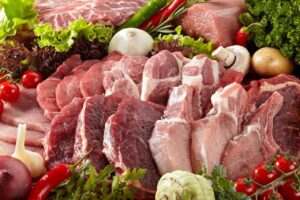
Albania is considering importing beef, lamb, and processed products from Ukraine, and also wants to increase exports of root vegetables to the Ukrainian market, according to the Ministry of Agrarian Policy and Food following a meeting between its head, Vitaliy Koval, and the Ambassador of the Republic of Albania to Ukraine, Ernal Fil.
The minister noted that in 2025, Ukraine shifted its state policy towards livestock farming and began to increase the production of cattle, red meat, and processed products, which attracted the interest of Albania, where demand for meat products has grown due to an increase in tourism.
“Albania is interested in importing meat (beef and lamb) and processed products from Ukraine. At the same time, they want to increase the supply of root vegetables to the Ukrainian market, especially in February-May, when we have less of our own. To do this, certain trade procedures between the countries need to be simplified,” Koval said.
The parties agreed at the ministerial level to discuss steps to strengthen cooperation in the agricultural sector at the embassies.
The head of the Ministry of Agrarian Policy emphasized that, in addition to cooperation in the agricultural sector, Ukraine and Albania have many points of contact. In particular, the agricultural sector accounts for a significant share of GDP in both countries and provides employment for a large number of people.
To intensify cooperation, Koval proposed holding the inaugural meeting of the Ukrainian-Albanian Joint Commission this year.

Philip Morris Ukraine is considering the possibility of starting to export cigarettes from Ukraine, in particular to geographically close countries, said the company’s CEO Maxim Barabash during a roundtable discussion on “Current issues of Ukraine’s economic recovery and the role of state and business structures in this process” at the company’s new production facility in Lviv region.
“There is no potential for growth in cigarette production in Ukraine because it is a fairly stable market. As before the war, the potential lies in exports. We will look at which countries this can be done in,” he said.
Barabash recalled that before the full-scale aggression of the Russian Federation, the factory in Kharkiv produced 20 billion cigarettes, half of which were for export, including to Japan.
“Most likely, due to the war, it will be difficult to resume exports to Japan; it will take more time, but this does not mean that we are not looking at other countries. We can start exporting to geographically close countries first,” said the CEO.
As reported, with the start of the full-scale invasion, Philip Morris was forced to shut down its factory in Kharkiv and invested $30 million in opening a new production facility in May 2024 in the Lviv region, which has five production lines with a capacity of 10 billion cigarettes per year and reached its planned capacity this year.
The company also invested an additional UAH 60 million in the construction of its own shelter on the factory premises for 170 employees and local residents.
According to YouControl, Philip Morris Ukraine increased its revenue by 86.7% to UAH 21.62 billion in 2024, while its net loss decreased by 30.1% to UAH 1.20 billion.

As of May 26, Ukraine has exported 37.722 million tons of grain and leguminous crops since the beginning of the 2024/25 marketing year (MY), of which 2.454 million tons were shipped this month, according to the press service of the Ministry of Agrarian Policy and Food, citing data from the State Customs Service of Ukraine.
According to the report, as of May 29 last year, total shipments amounted to 46.353 million tons, including 4.947 million tons in May.
At the same time, in terms of crops, since the beginning of the current season, 14.635 million tons of wheat (732,000 tons in May), 2.293 million tons of barley (26,000 tons), 10,800 tons of rye (0), corn – 20.234 million tons (1.685 million tons).
Total exports of Ukrainian flour since the beginning of the season as of May 26 are estimated at 63.7 thousand tons (in May – 5.1 thousand tons), including wheat flour – 59.4 thousand tons (5 thousand tons).



