
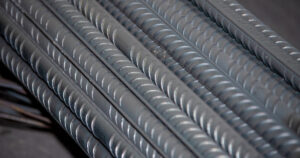
The Kametstal plant, part of the Metinvest mining and metallurgical group (Kamensk, Dnipropetrovsk region), has certified B500SP and B500B grade rebar for supply to Lithuania.
According to the company, Metinvest’s steel products are conquering EU construction sites.
At the same time, it is noted that at the end of 2025, Kametstal’s rebar took a new step in European geography: from the “green light” on the Romanian market for B500C class profiles in October to the official certification of B500SP and B500B classes for Lithuania in December.
“The certification process for B500SP and B500B grade rebar with a nominal diameter of 8 to 32 mm, produced on the 400/200 rolling mill, has been successfully completed. As a result, certificates have been obtained that enable Kametstal to supply its products to customers in Lithuania,” the company said in a statement.
It is noted that the certification was preceded by intensive preparation and coordinated work by a team of specialists from Kametstal and the management company of the Metinvest Group. An offline audit, during which an experienced expert, Valdemaras Gauronskis, director of the Construction Products Certification Center (Statybos produkcijos sertifikavimo centras – SPSC), visited Kametstal, took place at the end of October. Based on the results of the production inspection, a positive decision was made regarding the compliance of the specified grades of reinforcing steel with the Lithuanian standard.
Kametstal is part of the Metinvest Group.
CERTIFICATE, EUROPE, EXPORT, LITHUANIA, reinforcement, Каметсталь
In January 2026, Ukraine exported 5.0 million tons of agricultural products, which is 0.8% less than in the previous month, according to the Ukrainian Agribusiness Club (UAC).
According to analysts, in the first month of the year, there was an increase in exports only in the grain segment, while all other types of products saw a decline. Corn remains the main export item at present.
According to experts, in the structure of agribusiness exports in January 2026, grain crops increased by 13% compared to the previous month and amounted to 3.4 million tons (corn – 83%, wheat – 16%), oilseeds decreased by 32% to 351.7 thousand tons (soybeans – 63%, rapeseed – 35%, and sunflower – 1%), vegetable oils – by 6% to 479.7 thousand tons (sunflower oil – 82%, rapeseed oil – 10%, and soybean oil – 7%), oilcake after extraction of vegetable oils decreased by 32% to 411.0 thousand tons (sunflower – 73%, soybean – 27%), other types of agricultural products decreased by 15% to 349.9 thousand tons.

Centravis Production Ukraine (Nikopol, Dnipropetrovsk region), part of Centravis Ltd., produced 13.77 thousand tons of seamless stainless steel pipes in 2025, compared to 13.7 thousand tons in 2024, while in 2023–2024, the company’s annual production growth rate reached 12%.
As Centravis CEO Yuriy Atanasov said during an online press conference on Friday, Nikopol is currently under constant shelling.
“We continue to work in these difficult conditions. And production at the level of almost 14 thousand is an incredible victory. We are improving our financial position and reducing our credit position. We are raising salaries, and the average salary in the company has now reached UAH 39,000,” the CEO said.
According to him, in 2025, the company increased its export share from 90% to 96% and supplied more than 13,000 tons of seamless stainless steel pipes to world markets.
According to the press release, among Centravis’s contracts are cooperation with GE Steam Power, a division of General Electric specializing in equipment for steam power and industrial energy systems; a contract with Ellimetal NV, a Belgian company that processes and supplies high-tech metal solutions for heat exchange and industrial equipment; a contract with RFF Rohr Flansch Fitting, under which Centravis won the competition with leading European manufacturers and supplied pipes for the overhaul of a heat treatment furnace at the Voestalpine Donawitz plant (Austria), as well as a number of other projects.
The main focus is on maintaining and strengthening positions in the global market, working with high-tech customers, and implementing complex engineering solutions.
“For us, it’s not about quantity, but quality. We don’t compete with cheap Indian or Chinese pipes. Our priority is marginal projects with complex technical solutions and increased quality requirements. In this segment, we are able to compete with leading European and American manufacturers,” Atanasov emphasized.
He also recalled that in 2025, Centravis traditionally participated in key global industry events, including Adipec 2025 in the UAE and Made in Steel in Milan.
The press release also states that the economic results of 2025 enabled the company to increase investment in production, fulfill its social obligations, and contribute to Ukraine’s sustainability. Last year, investments amounted to UAH 159.6 million (+13.5%); the amount of taxes and fees paid increased by 24% to UAH 680.8 million; and funding for philanthropic projects reached UAH 11.5 million.
“We hope that 2026 will bring Ukraine lasting and just peace, and we will be able to focus on rebuilding the country, developing production, and exporting products made in Ukraine,” Atanasov concluded.
According to Centravis CFO Alexander Joseph, EBITDA in 2025 amounted to EUR 12 million, which is twice as much as in 2024.
As reported, the company planned to increase production to 15,000 tons in 2025.
Centravis was founded in 2000 and is one of the ten largest manufacturers of seamless stainless steel pipes in the world. Its main production facilities are located in Nikopol (Dnipropetrovsk region). In 2023, a branch of the company opened in Uzhhorod.
Centravis Ltd. was created on the basis of Nikopol Stainless Steel Pipe Plant CJSC and the service and trading companies of YVIS Production and Commercial Enterprise LLC. Its shareholders are members of the Atanasov family. Centravis Ltd. owns 100% of the shares of PJSC “Centravis Production Ukraine.”

Ukraine has opened three new markets for cattle exports to Algeria, according to a press release from the State Service of Ukraine for Food Safety and Consumer Protection. According to the report, the State Service for Food Safety and Consumer Protection, together with the Ministry of Foreign Affairs of Ukraine, Ukrainian diplomatic institutions, and relevant ministries, have agreed on three forms of veterinary documents with the veterinary service of the Ministry of Agriculture, Rural Development, and Fisheries of the People’s Democratic Republic of Algeria. These include, in particular, a veterinary health certificate form for the export of meat and breeding cattle, as well as cattle for fattening.
“The opening of three new export destinations for cattle to Algeria is an important result of the systematic work of the State Service of Ukraine for Food Safety and Consumer Protection. In total, five new markets for Ukrainian animal products have been opened since the beginning of the year, which creates additional opportunities for domestic producers and contributes to strengthening Ukraine’s position in the international trade arena,” emphasized Sergey Tkachuk, head of the State Service of Ukraine for Food Safety and Consumer Protection.
The agency emphasized that the opening of these export markets is an important step in deepening trade and economic cooperation between Ukraine and Algeria and confirms the compliance of Ukrainian products with the veterinary requirements of the importing country.
The agreed forms of veterinary certificates have already been published on the official web portal of the State Service of Ukraine for Food Safety and Consumer Protection in the section “International Cooperation” – “Veterinary and Safety” – “Certificates for export from Ukraine” at https://dpss.gov.ua/mizhnarodne-spivrobitnictv/veterinariya-ta-bezpechnist/sertifikati-na-eksport-z-ukrayini.
In 2025, the Export Credit Agency (ECA) provided support in the amount of UAH 10.43 billion, which is almost 39% more than in the previous year (UAH 7.53 billion), according to the agency’s website.
During the year, the ECA insured 84 loan agreements and supported 106 export agreements for 75 Ukrainian exporters, which exceeds the corresponding figures for 2024 (87 loans, 98 agreements, and 69 exporters).
The leaders among partner banks in 2025 were: Kreditvest Bank, Oschadbank, and Ukrgasbank.
The largest volumes of supported exports were recorded in Lviv, Khmelnytsky, Ternopil, and Volyn regions, as well as in Kyiv. The importing countries included Poland, Austria, the Czech Republic, Lithuania, and Germany.
In the structure of supported exports in 2025, the largest share was occupied by products of the woodworking and food industries, as well as the agricultural sector.
The top five commodity items included the production of wooden containers, the production of oil and animal fats, as well as the activities of intermediaries in the trade of food, beverages, and tobacco products.
The Export Credit Agency of Ukraine (ECA) is a state institution that supports non-commodity exports by insuring the risks of enterprises and banks. The agency insures foreign economic contracts, export credits, bank guarantees, and investment credits against military risks.

Ukraine has opened up new opportunities for exporting meat products to the Republic of Côte d’Ivoire, according to a press release from the State Service of Ukraine for Food Safety and Consumer Protection.
According to the press release, Ukraine and the Republic of Côte d’Ivoire have agreed on a veterinary certificate for the export of fresh, frozen, or processed beef and lamb meat and products, as well as a veterinary certificate for the export of fresh, frozen, or processed poultry meat and products.
“The opening of the first markets for the export of meat products to Côte d’Ivoire is another step in expanding the presence of Ukrainian producers in international markets. This is the result of consistent work by the State Service of Ukraine for Food Safety and Consumer Protection with the Ministry of Foreign Affairs (MFA), Ukrainian diplomatic institutions, and relevant ministries, and is also a confirmation of confidence in the Ukrainian food safety control system,” said Serhiy Tkachuk, head of the State Service of Ukraine for Food Safety and Consumer Protection.
The agency emphasized that the opening of these areas creates new opportunities for Ukrainian producers and exporters of meat products and contributes to the strengthening of Ukraine’s trade and economic relations with countries on the African continent.
Exports to Côte d’Ivoire of fresh, frozen, or processed meat, as well as poultry products, beef and lamb, and products made from them, are subject to a number of established requirements. Before exporting, exporters registered in Côte d’Ivoire must obtain a permit issued by the Côte d’Ivoire Ministry of Animal and Fish Resources. Each export operation is subject to the mandatory obtaining of an import permit issued prior to shipment.
The State Service of Ukraine for Food Safety and Consumer Protection has drawn the attention of exporters to the fact that the approved forms of veterinary certificates have already been published on the official web portal of the State Service of Ukraine for Food Safety and Consumer Protection in the section “Certificates for export from Ukraine” at the link: https://dpss.gov.ua/mizhnarodne-spivrobitnictv/veterinariya-ta-bezpechnist/sertifikati-na-eksport-z-ukrayini .



