
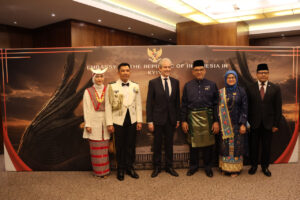
Indonesia is ready to expand practical cooperation with Ukraine, particularly in trade, investment, critical minerals, science, and the country’s future recovery, said Arif Muhammad Basalamah, Ambassador of the Republic of Indonesia to Ukraine.
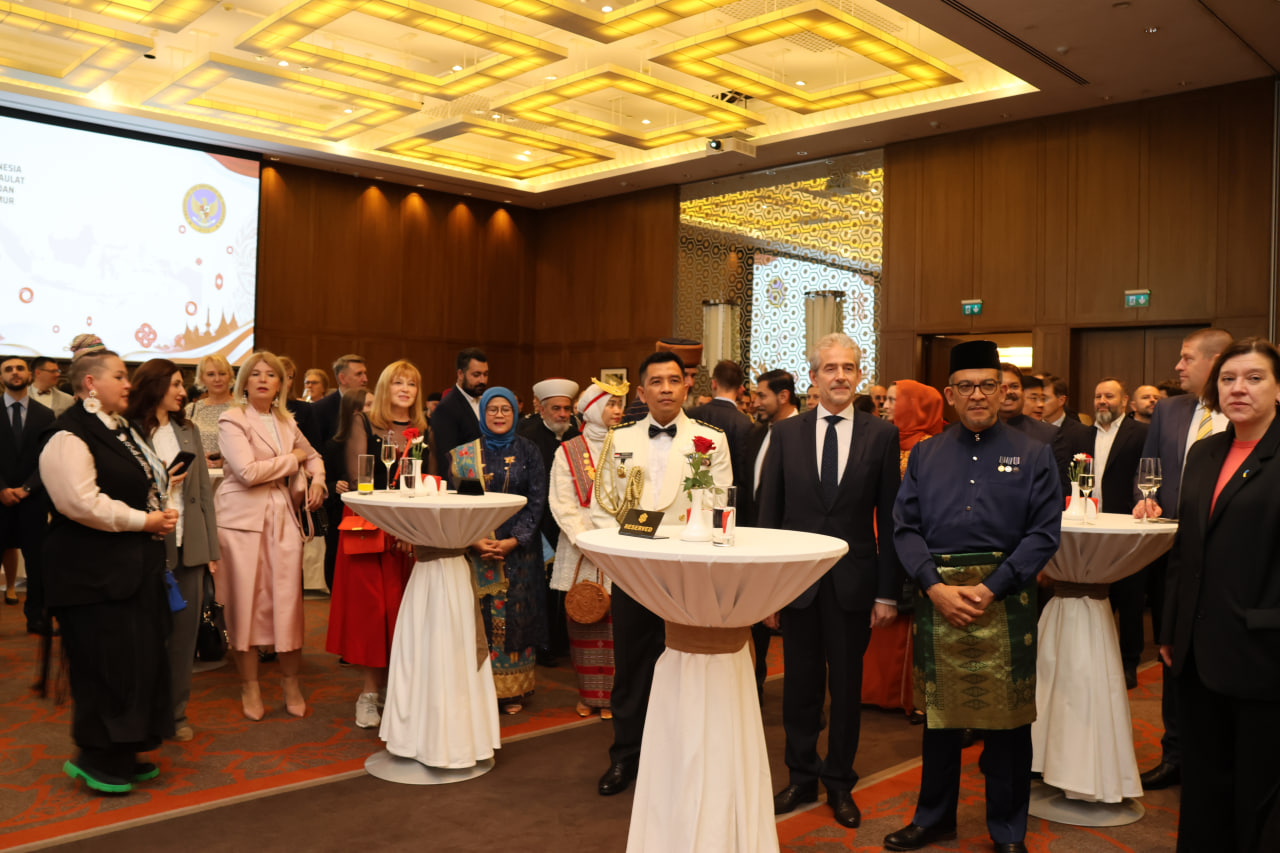
“Indonesia is ready to explore practical areas of cooperation that can contribute to recovery and reconstruction, while opening up new opportunities for our bilateral partnership,” he said during a diplomatic reception in Kyiv marking the 81st anniversary of Indonesia’s independence.
The reception took place on September 22 and was attended by representatives of the Ukrainian government, the diplomatic corps, international organizations, the business community, and the Indonesian community. In his speech, the ambassador specifically congratulated Andriy Dronyuk, Ukraine’s Deputy Minister of
Foreign Affairs for Digital Development, Digital Transformation, and Digitalization, and Artem Kunaev, chair of the Ukraine-Indonesia Interparliamentary Friendship Group.
Basalamah noted that, despite the war, political dialogue between the countries remains active, and cooperation continues to expand. At the same time, bilateral trade in 2025 fell to $492.6 million compared to a peak of $1.45 billion in 2021.
“We see opportunities to develop new areas of cooperation and to more fully realize the potential of a mutually beneficial economic partnership,” the ambassador emphasized.
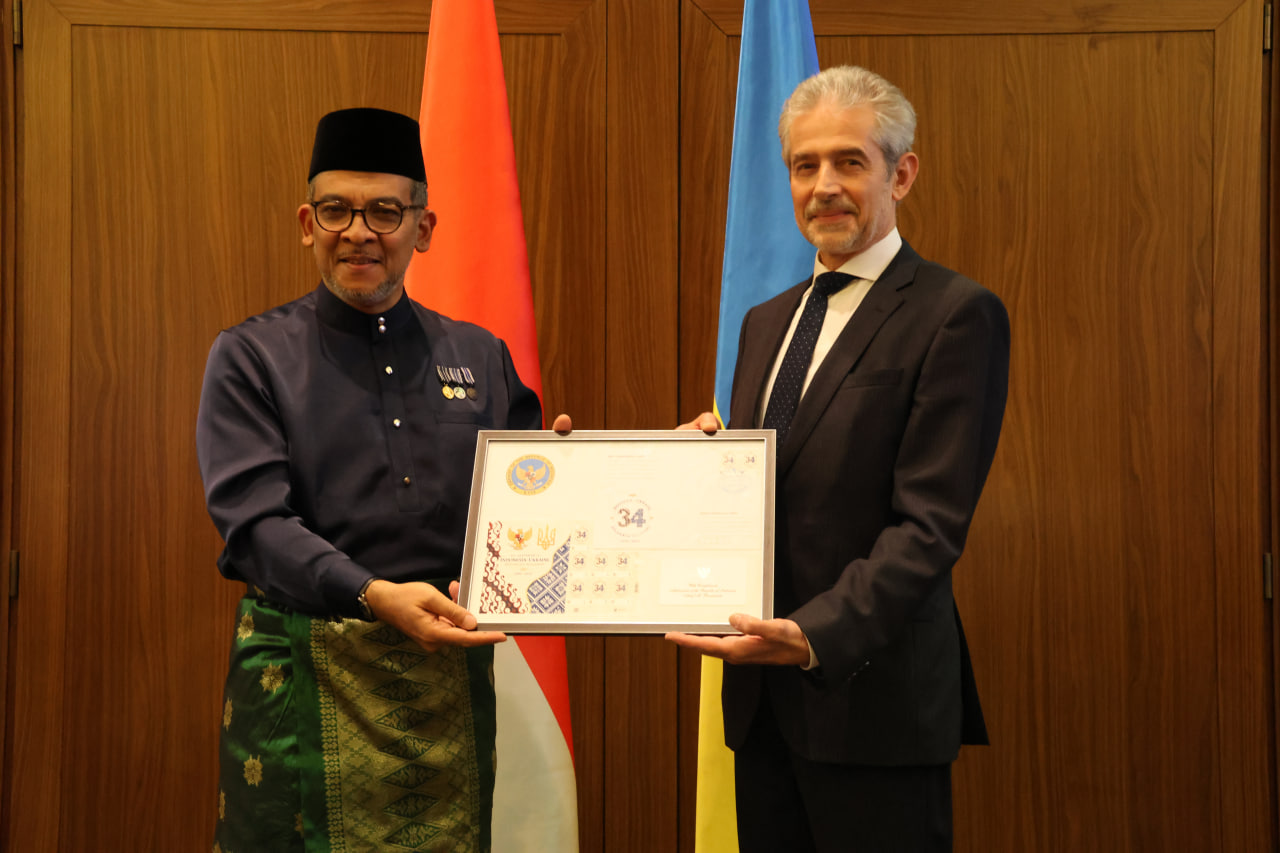
According to him, one such new area could be critical minerals and rare earth elements, where the parties see opportunities for research, technological cooperation, and future business projects. The Indonesian side is also interested in more active interaction between businesses from both countries in trade, investment, and joint production.
The ambassador invited Ukrainian companies to participate in Trade Expo Indonesia 2026, which will take place October 14–18 and is expected to serve as a platform for establishing contacts with Indonesian exporters and potential investment partners.
Basalamah identified tourism as another area for expanding ties. According to him, more than 18,000 Ukrainian citizens had already visited Indonesia by 2026.
“We hope that as transportation links improve and when circumstances permit, more Ukrainians will have the opportunity to discover Indonesia—its natural beauty, cultural heritage, and diverse culinary traditions,” the diplomat said.
The ambassador also highlighted the intensification of educational and scientific ties. He noted that in 2026 alone, the Indonesian Embassy in Kyiv facilitated the signing of four agreements between universities in Ukraine and Indonesia. Ukrainian students can also study in Indonesia through the Darmasiswa and KNB Scholarship programs.
In addition, Indonesia’s National Agency for Research and Innovation and Ukraine’s National Antarctic Scientific Center recently signed an agreement on cooperation in the field of Antarctic and tropical research. The document opens up opportunities for joint research projects and scientific exchange.
Speaking about the war, Basalamah noted that Indonesia continues to advocate for the use of dialogue and diplomacy to achieve lasting peace, as well as adherence to the principles of the UN Charter.
“Peace means that people can live in safety, rebuild their communities, provide education for their children, and look to the future with hope,” he said.
Diplomatic relations between Ukraine and Indonesia were established on June 11, 1992, several months after Indonesia recognized Ukraine’s independence on December 28, 1991.
The Embassy of the Republic of Indonesia in Kyiv began operations in January 1994. Currently, Arif Muhammad Basalamah serves as Indonesia’s Ambassador Extraordinary and Plenipotentiary to Ukraine.
The Embassy of Ukraine in Jakarta was opened in the second half of the 1990s; the official opening of the diplomatic mission took place on May 16, 1997. Currently, the position of Ambassador Extraordinary and Plenipotentiary of Ukraine to Indonesia is vacant. Following the conclusion of Vasyl Hamyanin’s mission, the
Ukrainian Embassy in Jakarta has been headed by Yevheniia Shynkarenko, Chargé d’Affaires ad interim of Ukraine. As of September 2026, she continued to serve as the head of the Ukrainian diplomatic mission in Indonesia.

Indonesia is expanding the use of digital technologies to monitor foreign nationals, including artificial intelligence, facial recognition systems, specialized databases, and drones for border surveillance.
Hendarsam Marantoko, Director General of Indonesia’s Immigration Service, stated that in the future, technology should account for about 70% of the immigration system’s operational infrastructure. The statement was made during the opening of the Immigration Lounge in Bali.
Part of the new system is already operational. Ngurah Rai International Airport in Bali uses automated border gates and facial recognition to verify passengers against their travel documents and immigration databases. In April 2026, this technology helped identify a foreign national arriving in Bali who was wanted by U.S. law enforcement agencies.
Another key component is the Subject of Interest (SOI) system. It is integrated with the central immigration information system SIMKIM and enables officials to check, in near real time, on foreigners of heightened interest to law enforcement agencies, analyze their data, and decide on further actions.
At the same time, Indonesia is developing the “Digital Fence” project. The Immigration Service, in collaboration with the Bandung Institute of Technology, is working on using drones to patrol hard-to-reach border areas and detect people crossing the border outside of official checkpoints.
The digitization of border control also affects ordinary foreigners legally residing in or vacationing in the country. Hotels, apartments, guesthouses, and other lodging facilities use the APOA app—Aplikasi Pelaporan Orang Asing—to submit information about foreign residents to immigration authorities. In 2026, the authorities continue to expand the use of this system.
At the same time, on-the-ground monitoring is being strengthened. The country operates the PIMPASA program—Petugas Imigrasi Pembina Desa—under which immigration officers are assigned to specific communities and collaborate with local authorities and residents. Their tasks include gathering information on the whereabouts and activities of foreign nationals and the early detection of potential violations.
This new model is being applied particularly actively in Bali, where authorities intensified checks on foreign nationals in 2026. During the first phase of Operation Dharma Dewata, the immigration service identified 62 foreign nationals with various violations. In the next phase, another 66 people were detained or summoned for inspection. Among the most common violations cited were failure to comply with registration and public order rules, misuse of a residence permit, and overstaying the permitted period of stay.
However, tighter controls do not mean the introduction of new restrictions directly on the purchase of real estate or the acquisition of residence permits by foreigners. The focus is primarily on deeper digital integration of existing immigration controls: the authorities want to know when and through which port of entry a person entered the country, on what basis they are in Indonesia, where they reside, and whether their actual activities correspond to the type of visa or residence permit they hold.
For foreign property owners, investors, and long-term residents of Bali, the practical implication of these changes is that discrepancies between visa status and actual activities will become easier to detect. This applies, for example, to working on a tourist visa, overstaying one’s visa, or engaging in commercial activities without the appropriate authorization.
Indonesian authorities view these tighter controls as part of a broader immigration strategy. In June 2026, the head of the immigration service identified its three main elements: strengthening border controls, monitoring foreigners within the country, and integrating digital services.

Indonesian authorities have begun reviewing the residency and taxation rules for foreign digital nomads and other remote workers, whose numbers are growing, particularly in Bali and other popular tourist regions of the country.
Hendarsam Marantoko, Director General of the Indonesian Immigration Service, announced at a press conference that the agency, in collaboration with the tax service and other government agencies, is exploring possible legislative changes regarding foreign professionals who are physically present in Indonesia but work for companies abroad.
According to Marantoko, the current system creates a legal conflict. Standard work visas are primarily intended for foreigners employed by Indonesian employers, whereas digital nomads earn their income outside the country. The authorities need to determine whether they should be considered primarily as long-term foreign visitors who spend money on housing, food, and services, or as working residents subject to tax obligations.
That said, a separate legal framework for remote work in the country already exists. The current visa classification includes the E33G Remote Worker category for foreigners who are employed by a company located outside Indonesia and perform this work from within the country.
One of the key issues in the upcoming review will be taxation. According to current guidelines from the Indonesian Directorate General of Taxes, a foreign national can generally obtain domestic tax resident status if they reside in the country for more than 183 days within a 12-month period or demonstrate an intention to reside permanently in Indonesia. These rules may also apply to digital nomads, depending on specific circumstances and international double taxation treaties.
The Indonesian authorities have not yet disclosed the specific details of the new rules or the timeline for their implementation. The Immigration Service has stated that official changes will be announced after the completion of an interagency review. At the same time, the authorities aim to preserve the economic benefits of having remote workers while strengthening oversight of immigration violations, overstaying visas, and undeclared economic activities.
Bali remains one of the world’s largest hubs for digital nomads: foreigners who live here long-term drive demand for rental housing, restaurants, coworking spaces, and other services. Therefore, changes to visa and, especially, tax regulations could directly affect a significant portion of foreigners who use the island as a permanent base for remote work.
Indonesia plans to allow limited dual citizenship for the first time for certain members of the national diaspora and highly skilled professionals. President Prabowo Subianto put forward the initiative, proposing that Parliament amend the citizenship law. The president presented the initiative during a speech in parliament on Indonesia’s 2027 state budget proposal.
According to him, the new policy will not apply to everyone who wishes to obtain a second passport. It involves limited dual citizenship for professionals and members of the diaspora in whom the state has an interest.
Among the potential categories, Prabowo named scientists, doctors, engineers, artificial intelligence specialists, researchers, entrepreneurs, artists, and athletes.
“We propose allowing dual citizenship for certain talents that the country needs,” the president stated.
According to him, the authorities should not force Indonesia’s most successful expatriates to choose between an international career and maintaining ties with their historical homeland.
It is expected that potential recipients of dual citizenship will undergo a separate selection process, including a background check. The rights and obligations of such citizens are to be defined separately by law, taking into account national security considerations.
Current Indonesian law generally does not recognize dual citizenship for adults.
Children who have acquired citizenship in two countries may temporarily retain both statuses; however, upon reaching the age specified by law, they must choose one citizenship.
Therefore, implementing Prabowo’s initiative will require amending the current law and obtaining parliamentary approval. A timeline for adopting the relevant amendments has not yet been announced.
The initiative is a continuation of a long-standing discussion on engaging the Indonesian diaspora. As far back as 2024, authorities publicly discussed the possibility of dual citizenship for former citizens and professionals of Indonesian descent.
The authorities cite the brain drain as one of the reasons for the reform. According to Indonesia’s Directorate General of Immigration, nearly 4,000 Indonesians obtained Singaporean citizenship between 2019 and 2022, renouncing their Indonesian passports. The authorities hope that the option to retain Indonesian citizenship will allow professionals to pursue international careers without severing their legal ties to the country.
The involvement of the diaspora is already particularly noticeable in sports. In recent years, the Indonesian national soccer team has included a number of players born primarily in the Netherlands who have Indonesian roots. The authorities implemented special procedures for them to obtain citizenship.
Ahead of a possible reform, Indonesia launched the Global Citizenship of Indonesia (GCI) program.
It allows former Indonesian citizens and certain foreigners of Indonesian descent to obtain a permanent residence permit with the right to enter the country multiple times without renouncing their existing foreign citizenship. However, GCI does not constitute Indonesian citizenship and does not entitle holders to an Indonesian passport.
The program applies, in particular, to former Indonesian citizens, their descendants, and certain categories of family members with ties to Indonesia.
The limited dual citizenship currently being proposed should go much further and allow certain members of the diaspora to simultaneously retain their foreign citizenship and restore or obtain Indonesian citizenship.
CITIZENSHIP, DUAL CITIZENSHIP, IMMIGRATION, INDONESIA, ДІАСПОРА

Indonesia intends to transform Bali from a primarily tourist destination into an international financial hub capable of competing for capital with Singapore, Hong Kong, Dubai, and London.
The Kura Kura Bali SEZ is set to become the project’s key hub. Indonesian authorities view it as a future financial cluster where investment firms, family offices, funds, and technology and service companies focused on international capital can be based.
Indonesia’s Coordinating Minister for Economic Affairs, Airlangga Hartarto, stated that the development of a financial center in Bali demonstrates the country’s transition to an economy with higher value-added. According to him, global competition today is not only in the sphere of raw material exports but also for the role of a regional center for finance, innovation, and investment.
The project is linked to Indonesia’s broader goal of reducing the economy’s dependence on commodity cycles, tourism, and traditional industries. The authorities want Bali to become not only a resort but also a hub for capital management, international business, technology projects, and investment structures.
For the real estate market, this could become a new driver of demand. If the project is implemented, interest in office, residential, and hotel real estate in Bali could grow, as well as in mixed-use properties targeting expats, entrepreneurs, financial professionals, and investors. This could be particularly noticeable in areas connected to Kura Kura Bali and the infrastructure of the future business cluster.
However, experts point out that Bali’s path to becoming a full-fledged financial center will be challenging. The island will have to compete with established hubs that already have developed financial regulation, a judicial system, banking infrastructure, international talent, and the trust of institutional investors. The South China Morning Post notes that the project faces systemic and infrastructure constraints, despite its ambitious agenda.

The results of a sociological survey conducted in March 2026 by the research company Active Group in collaboration with the Experts Club information and analytical center show that Indonesia remains one of the countries with the highest level of neutral perception among Ukrainians. According to the study, 71.6% of respondents chose a neutral assessment, indicating limited involvement of this country in Ukraine’s informational and economic space.
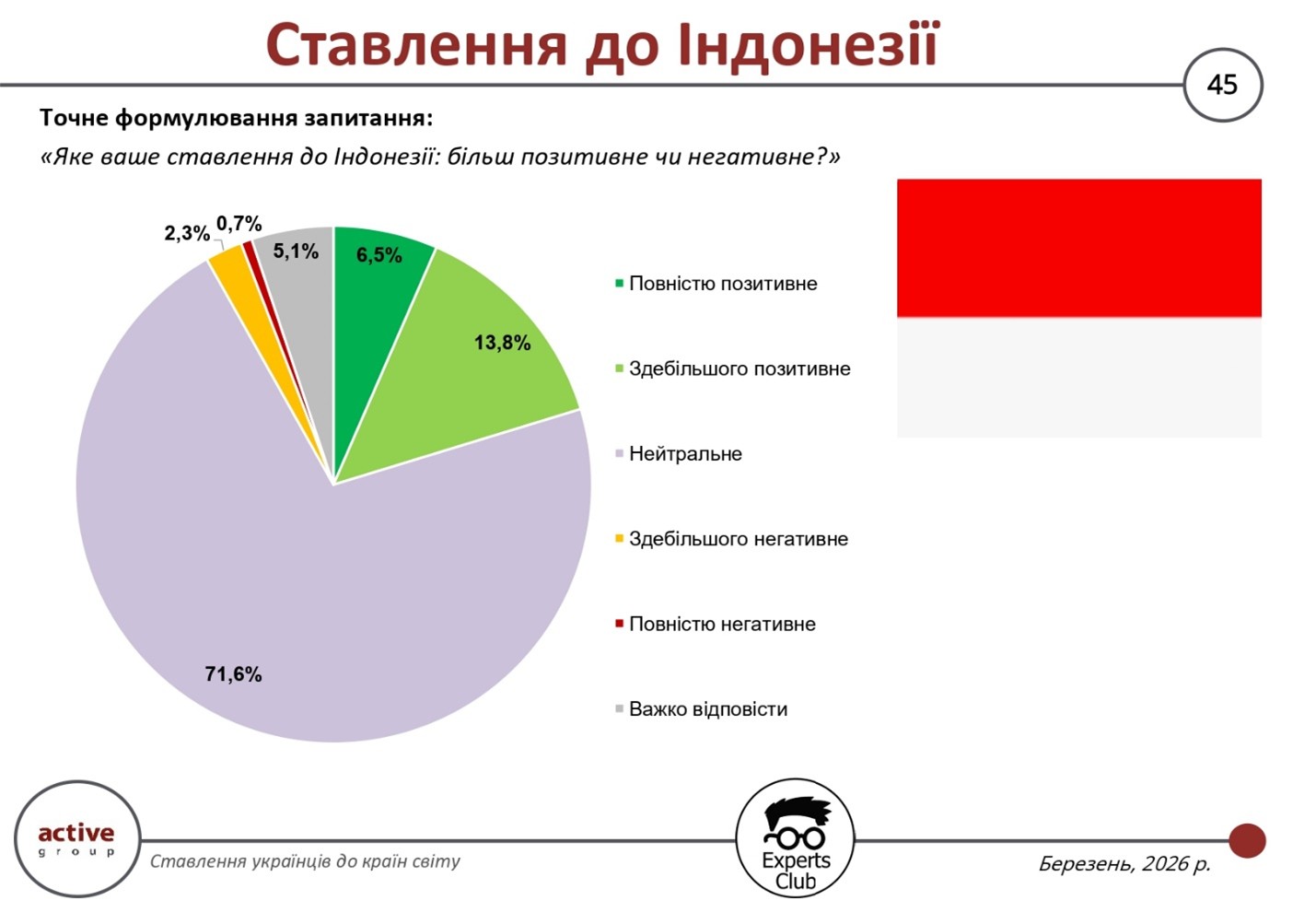
The share of positive attitudes toward Indonesia stands at 20.3%. Specifically, 6.5% of respondents indicated a “completely positive” attitude, and 13.8% — “mostly positive.” At the same time, negative assessments remain minimal — a total of 3.0%, of which 2.3% answered “mostly negative” and only 0.7% — “completely negative.” Another 5.1% of respondents were unable to determine their position.
This pattern of responses is typical for countries that do not have a significant influence on Ukraine’s domestic agenda or are not associated with key political, security, or economic processes. The high proportion of neutral assessments indicates not a negative perception, but rather the absence of a clearly formed image of the country in the public consciousness.
“When we see over 70% neutral responses, it means that the country is effectively outside the active information field of Ukrainians. In such cases, perceptions are formed not through experience or interaction, but through fragmented impressions. That is why even a slight increase in economic or humanitarian contacts can quite quickly shift the balance of assessments in a positive direction,” noted Maksym Urakin, founder of the Experts Club information and analytical center.
Thus, Indonesia remains a country with the potential to build a positive image among Ukrainians; however, this potential has not yet been realized due to low visibility and limited practical interaction. If bilateral contacts are intensified, particularly in the economic and educational spheres, the neutral segment could become the foundation for growing positive perceptions.
According to a study conducted by the Experts Club information and analytical center based on data from the State Customs Service, Indonesia ranks 32nd in terms of total trade in goods with Ukraine, amounting to $578.3 million. At the same time, Ukraine has a small trade surplus, as exports to Indonesia slightly exceed imports.
The study was presented at the Interfax-Ukraine press center; the video can be viewed on the agency’s YouTube channel. The full version of the study can be found at this link on the Experts Club analytical center’s website.
ACTIVE GROUP, EXPERTS CLUB, INDONESIA, Pozniy, SOCIOLOGY, SURVEY, UKRAINE, URAKIN



