
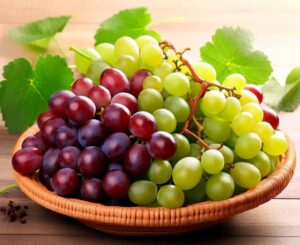
The cost of grapes in Ukraine in 2026 remained roughly at the same level as last season, despite a significant increase in the cost of fertilizers, plant protection products, fuel, and logistics, which is leading to a decline in the profitability of grape-growing operations.
Tetyana Shmaglyuchenko, head of the company “VIN’S,” discussed this in an interview with the agricultural publication SEEDS.
According to her, prices for most grape varieties have essentially remained at last year’s levels. Only a few large rosé varieties have become slightly more expensive. At the same time, production costs have increased significantly.
Producers cite rising costs of mineral fertilizers, vine protection products, and fuel as the main factors. Logistics have added to the burden, especially for farms in Bessarabia, where transportation costs have risen due to infrastructure damage and restrictions on traditional routes.
The situation is further complicated by a decline in the harvest. According to producers’ estimates, the gross grape harvest at some farms this season could be 20–30% lower than last year. Winter frosts and a cold spring have negatively affected yields.
The war is also directly affecting vineyards in southern Ukraine. Some vineyards have sustained damage as a result of hostilities, falling drone debris, and other war-related factors.
The combination of virtually unchanged selling prices, rising production costs, and reduced harvests is forcing producers to seek additional sources of income.
One such avenue is the further processing of grapes. Farms are investing in the production of fruit leather, raisins, and other products with higher added value, and are using infrared dryers and vacuum equipment to process fruit puree.
Another trend is cooperation with producers of other fruits. This allows for the production of combined products using local peaches, plums, and other raw materials.
Producers are also investing in energy self-sufficiency. In particular, solar power plants are used to power wells and irrigation systems, which helps to partially reduce dependence on external energy supplies.
At the same time, some farms are considering a shift from selling fresh grapes to winemaking. With grant support from the FAO, technical grape varieties are being planted that can later be used for wine production.
Thus, for Ukrainian viticulture in 2026, the key challenge will be not so much a lack of demand for products as the gap between the selling price and the cost of production. Under these conditions, processing allows farms to derive greater added value from their own raw materials while simultaneously maintaining production capacity and preserving employment for workers after the harvest season ends.
Viticulture remains one of the most labor-intensive sectors of horticulture in Ukraine. Most commercial grape production is concentrated in the southern regions of the country and in Zakarpattia, and a significant portion of the industry has been directly affected by the full-scale war.
Source: SEEDS.

Kuyalnik Salt Works LLC plans to invest over $20 million in a project to extract excess salt from the Kuyalnik Estuary and process it into table salt, according to the publication SEEDS.
The Odesa Regional Military Administration and the company signed a memorandum of cooperation on the implementation of investment and environmental projects in the Kuyalnik Estuary area. The Odesa Regional Military Administration officially confirmed the investor’s intention to invest over $20 million in the project.
According to SEEDS, Kuyalnik Salt Works LLC was established in 2026. The company plans to extract excess salt from the estuary and process it into food products. The estimated production capacity is approximately 300,000 metric tons of salt per year.
This volume accounts for about three-quarters of Ukraine’s salt imports in 2025. According to the State Customs Service, last year Ukraine imported about 415,000 metric tons of salt worth $49.6 million.
Thus, the implementation of this project could significantly reduce Ukraine’s dependence on imported table salt, and once production reaches full capacity, it could lay the groundwork for resuming salt exports.
The need to develop new salt sources increased sharply after the Artemsil plant in Soledar shut down in 2022. Prior to the full-scale invasion, Ukraine was a major producer and exporter of salt; however, after losing access to its key production facilities, it became heavily dependent on supplies from abroad.
The project on the Kuyalnik Estuary also has an environmental component. According to the Odesa Regional State Administration, the memorandum provides for the development of environmental protection infrastructure, the implementation of modern environmental solutions, and the execution of “green” projects. The issue of utilizing the estuary’s salt resources has been under consideration for over a year, with the participation of the Cabinet of Ministers, scientists, and relevant experts.
Before commencing industrial extraction, the company must still complete the procedures required by law, including an environmental impact assessment and obtaining the necessary permits for the use of natural resources. The Kuyalnik Estuary has special environmental protection and resort status.
Original source of the article: SEEDS – “Investor Plans to Invest Over $20 Million in Processing Salt from the Kuyalnik Estuary for Food Use”.
this)
INVESTMENT, Kuyalnik Estuary, ODESA REGION, PROCESSING, SALT

In the 2025–26 marketing year, rapeseed processing in Ukraine increased 2.7-fold, and rapeseed oil exports increased 2.5-fold compared to the previous marketing year. In total, 42% of the rapeseed harvest was processed domestically (last year this figure was 15%), which is an all-time record since the crop began to be grown in Ukraine. Foreign exchange earnings from rapeseed oil exports more than tripled, reaching $588 million.
This was reported by Dmytro Kysilevsky, Deputy Chairman of the Verkhovna Rada Committee on Economic Development, citing data from the “Ukroliyaprom” association. He also noted that the share of domestic processing of the soybean harvest in the 2025–26 marketing year rose from 39% to 54.2% (also a historic record for processing). Despite a decline in the soybean harvest from 6.6 million metric tons to 4.8 million metric tons, foreign exchange earnings from exports of soybean oil and meal rose by 12.3%, to $1.02 billion.
Compared to the previous marketing year, the harvested areas for these crops changed insignificantly: rapeseed +15.7%, soybeans -3.9%. In total, the area planted with these crops increased from 3.25 million hectares to 3.37 million hectares.
According to the Ministry of Agrarian Policy, additional revenue to the state budget from export duties on soybeans and rapeseed amounted to 2.174 billion UAH for the marketing year, i.e., for the period from September 2025 to August 2026.
“These figures show that export duties on soybeans and rapeseed have been effective: the share of processing has increased—Ukrainian plants have seen higher utilization rates; the area under cultivation has expanded—farmers consider these crops profitable to grow; and the budget has received additional revenue from duties as well as from plant operations. Step by step, Ukraine is moving away from low-value commodity exports, increasing processing, foreign exchange earnings, and tax revenues, and developing new plants that offer decent wages for Ukrainians. “When Ukraine exports processed products rather than soybeans and rapeseed, the growth in foreign exchange revenue per metric ton of exports ranges from 30% to 50%,” noted Dmytro Kysilevsky.
On July 16, 2025, the Verkhovna Rada of Ukraine approved the introduction of a 10% export duty on soybeans and rapeseed. The duties took effect on September 4, 2025.
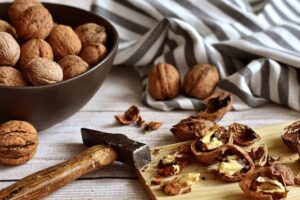
A fully operational set of nut processing equipment is offered for sale—from initial cracking and cleaning to calibration, sorting, and drying of the kernels. The facility is equipped with everything necessary to organize a complete production cycle and may be of interest to both existing processors looking to expand their capacity and entrepreneurs considering launching a turnkey nut processing business.
The cost of the complete equipment set is $27,000.
The core of the production line is a system with a capacity of 60–80 kg per hour, costing $15,000. It includes an impact machine for cracking nuts, a small aspiration unit that removes up to 15% of impurities, a vertical conveyor, a cracking machine with millstones, a large aspiration system for primary cleaning that removes up to 80% of debris and shells, as well as two conveyor sorting tables.
The owner has extended the large conveyor table to facilitate manual sorting of the product. On the small table, nut fragments are separated from the remaining shells.
To increase productivity, the line has been supplemented with a vibrating hopper for uniform feed of raw materials, costing $1,000.
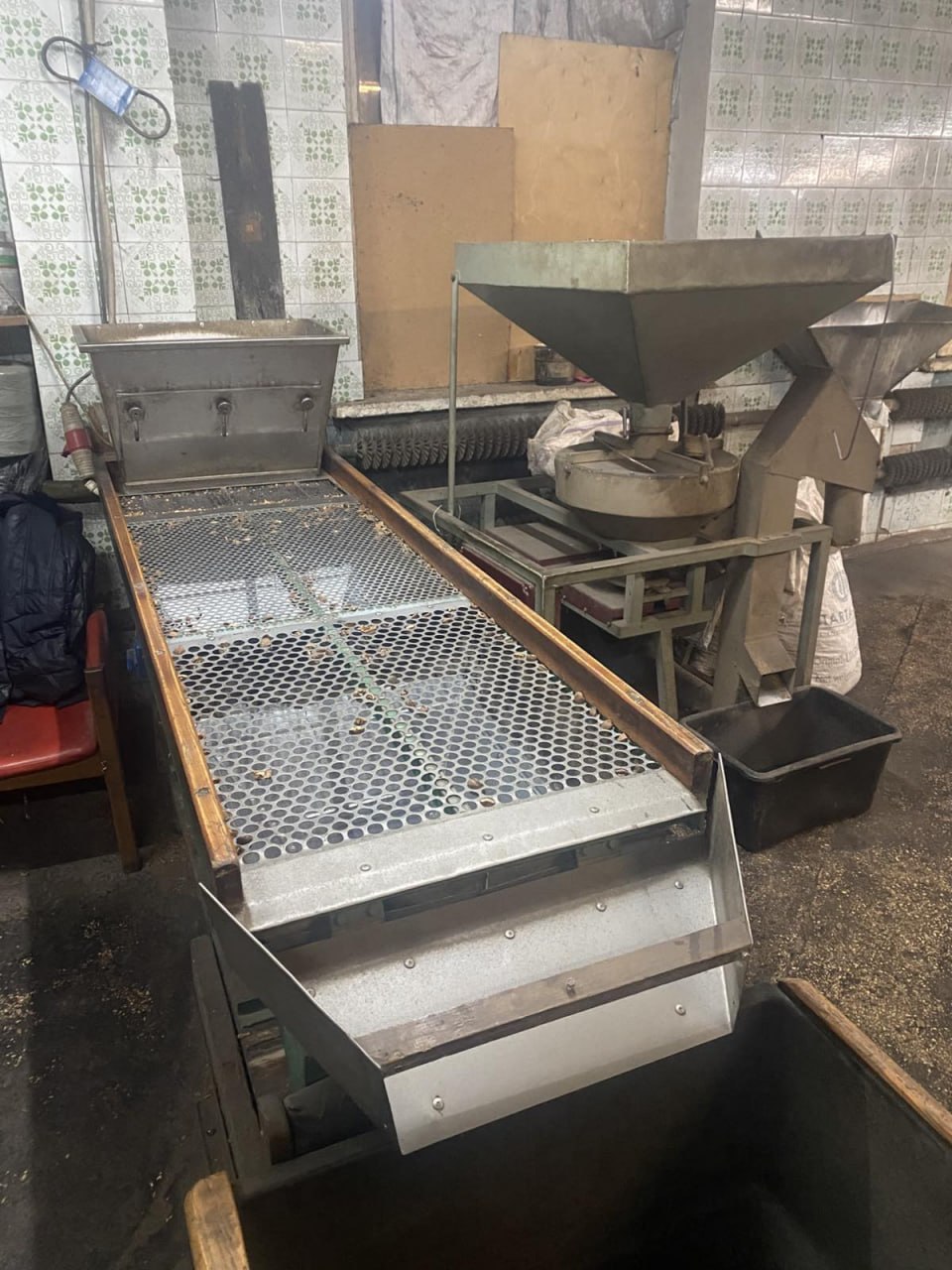
Another unit, costing $1,500, includes a vibrating hopper to separate shells from uncracked nuts and an additional large-capacity dust extraction system. Afterward, the uncracked nuts can be fed to a separate machine for re-cracking, costing $1,000.
For product sorting, the set includes a calibrator with 5 mm, 13 mm, and 19 mm openings—$1,000.
The set also includes a kernel drying unit with a capacity of up to 200 kg per load. The set includes the drying unit itself and a heat gun. The cost of the equipment is $500.
A separate advantage of the complex is a refrigeration unit costing $4,000, which has seen virtually no use and allows for the proper storage of finished kernels and the maintenance of product quality.
For waste processing, there is a machine worth $500 that grinds eggshells into a fine powder. This not only reduces the volume of production waste but also allows the eggshells to be treated as a separate product for further use or sale.
Along with the main equipment, the buyer receives a substantial set of production inventory with a total estimated value of approximately $1,500. This includes two scales, a hydraulic pallet jack, about 150 plastic crates, 40–50 pallets,two containers or devices for transferring products, bags and consumables, ties, lubricants, fasteners, cables, a spare engine for the drying cannon, a capacitor for the calibrator, tools, and other small items necessary for operation.
Additionally, the complex may include a nut dryer for nuts in the shell, valued at $1,000. It is currently located at the supplier’s orchard. This equipment also offers an additional commercial advantage: the supplier uses the dryer and, in return, sells the owner of the complex a harvest of premium-grade nuts. Thus, along with the equipment, it is potentially possible to retain the already established relationships with the raw material supplier.
If necessary, the price can be reduced to $25,500 by excluding the in-shell nut dryer and the shell crusher from the deal. The remaining equipment forms a single production line and is essential for full-scale, streamlined processing.
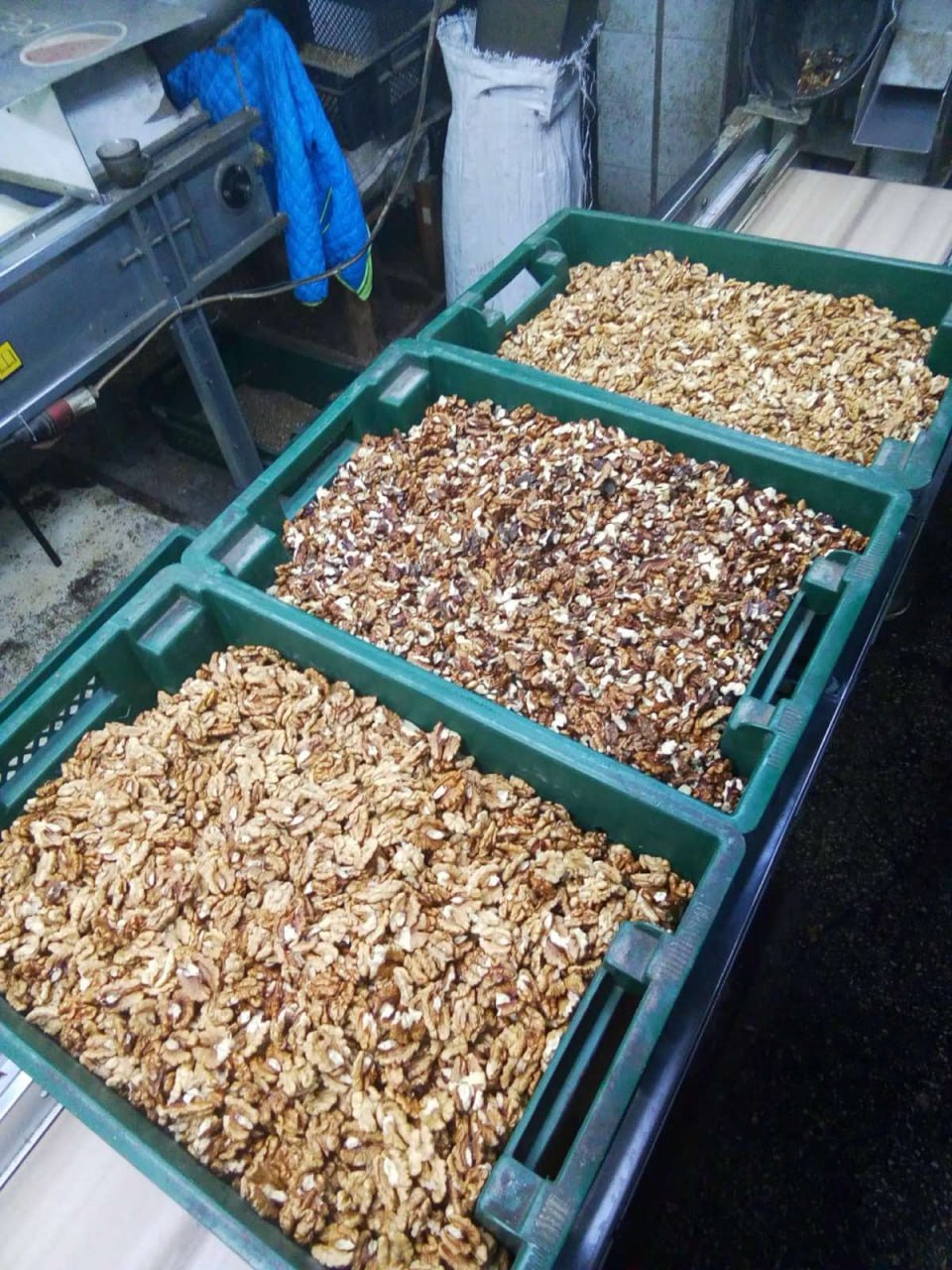
In fact, the buyer receives not a set of individual machines, but a ready-to-use production line: raw material feed → cracking → aspiration cleaning → re-cracking → sorting → grading → drying → storage of finished kernels.
The complex is suitable for processing your own harvest, purchasing nuts from farms and orchardists, producing kernels for wholesale and retail sales, as well as for the further development of shell processing operations.
The price of the complete complex is $27,000.
Optimized configuration: $25,500.
Main production line capacity: 60–80 kg/hour.
Kernel dryer loading capacity: up to 200 kg.
+380639425723
Dmytro
BUSINESS, EQUIPMENT, MANUFACTURING, NUTS, PROCESSING, PRODUCTION

The volume of processing of major oilseeds in Ukraine during the 2026/27 marketing year could reach 16.9 million metric tons, which is 14% higher than the previous season’s figure, according to a forecast by the U.S. Department of Agriculture.
In the 2025/26 marketing year, processing is estimated at 14.8 million metric tons, while in the 2024/25 marketing year it stood at about 15.7 million metric tons. Thus, the new forecast exceeds even the relatively high pre-war levels of previous seasons.
At the same time, exports of oilseeds from Ukraine are projected at 4.95 million metric tons, compared with 4.12 million metric tons in the 2025/26 marketing year. The increase could be about 20%.
However, seed exports will still be significantly lower than the 2024/25 marketing year figure—7.39 million metric tons. Compared to that figure, the projected volume is about one-third lower.
This trend indicates a continued shift toward increasing domestic processing of raw materials rather than exporting them in their unprocessed form.
According to the April report by the USDA agricultural attaché in Kyiv, the growth of processing is also driven by excess capacity at Ukrainian oilseed and fat processing plants, a shortage of sunflower seeds in the previous season, and changes in the trade regime for rapeseed and soybeans. The USDA office expected this trend to continue into the 2026/27 marketing year.
Ukraine primarily processes sunflower seeds, as well as soybeans and rapeseed. A recovery in the sunflower seed harvest to 13 million metric tons will allow plants to increase their production of oil and meal while simultaneously boosting exports of higher-value-added products.
Source: USDA Foreign Agricultural Service, September report Oilseeds: World Markets and Trade dated September 11, 2026.

The Ukrainian flour milling company “DykankaMlyn” has completed the latest phase of its production modernization in partnership with the Swiss technology company Bühler, installing an automated system for micro-dosing ingredients into flour.
The new equipment allows for the automatic addition of dry gluten, vitamins, and other micro-components based on the actual flow of flour. This enables the company to produce products with specified characteristics and expands its capacity to fulfill export orders.
The system consists of flow scales, two micro-dosing units, and an integrated control system. The flow scales continuously measure the volume of flour, after which the automated system calculates the required amount of ingredients. The operator sets the desired addition percentage, and the subsequent dosing is adjusted automatically.
The equipment was installed without shutting down the mill. The mechanical work took about two to three days, while the electrical connection and commissioning took about a week.
“Our collaboration with Bühler began many years ago with roller sharpening and technical consulting. Then came the optical sorter, followed by two inline whiteness meters and an automatic moistening system. When the question of the next stage of modernization arose, we already had our own experience working with Bühler equipment and understood what results we expected,” noted Volodymyr Lenets, head of “DykankaMlyn.”
A unique feature of the project was that the Bühler equipment was integrated into an existing mill from another manufacturer. This approach allows the company to modernize individual process units in stages, without having to completely overhaul production, and to spread capital expenditures across several phases.
According to Andriy Sharan, CEO of Bühler Ukraine, the “DykankaMlyn” project demonstrates the ability to integrate modern technological solutions into existing production lines and gradually increase the company’s level of automation.
One of the practical applications of the new system will be adjusting the gluten content in flour to meet the requirements of specific customers. For the baking and confectionery industries, stable protein and gluten levels are key characteristics of raw materials, as they directly affect the dough’s processing properties.
Another area of application is the production of fortified flour with added vitamin and mineral complexes. Such products may be in demand in foreign markets, as in a number of countries, the fortification of flour with certain vitamins and minerals is mandated by national legislation or food program standards.
Automated dosing allows manufacturers to control the accuracy of ingredient addition and their uniform distribution in the finished product, which is important for confirming compliance with export requirements.
“Microdosing can solve a production challenge while also serving as a commercial tool. If a company can demonstrate the accuracy and uniformity of its product, this strengthens its position in negotiations with buyers and opens up more opportunities to operate in export markets,” Sharan noted.
“DykankaMlyn” specializes in the production of wheat flour and semolina. The company’s products are sold in Ukraine and exported. The production facility operates its own laboratory to monitor the quality of grain and finished products.
Bühler is a Swiss technology group and one of the world’s leading manufacturers of equipment and integrated solutions for the grain processing and food industries. In Ukraine, the company collaborates with flour mills, grain processing plants, and food manufacturers.



