
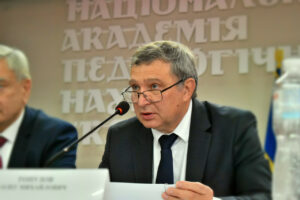
The General Assembly of the National Academy of Pedagogical Sciences of Ukraine elected Oleg Topuzov as president of the Academy for a five-year term—from September 18, 2026, to September 17, 2031.
According to the results of a secret ballot, 185 assembly members supported his candidacy, nine voted against, and two ballots were deemed invalid. Topuzov was the only candidate for the position.
He succeeded Vasily Kremen, who had led the academy since 1997. The General Assembly unanimously elected Kremen as honorary president of the National Academy of Pedagogical Sciences for life.
In presenting the academy’s development program, Topuzov outlined four core principles of operation: continuity, competence, openness, and effectiveness.
“My task is not to start from scratch. My task is to preserve the best of what we have and, together with you, to usher in a new phase of our academy’s development,” he stated.
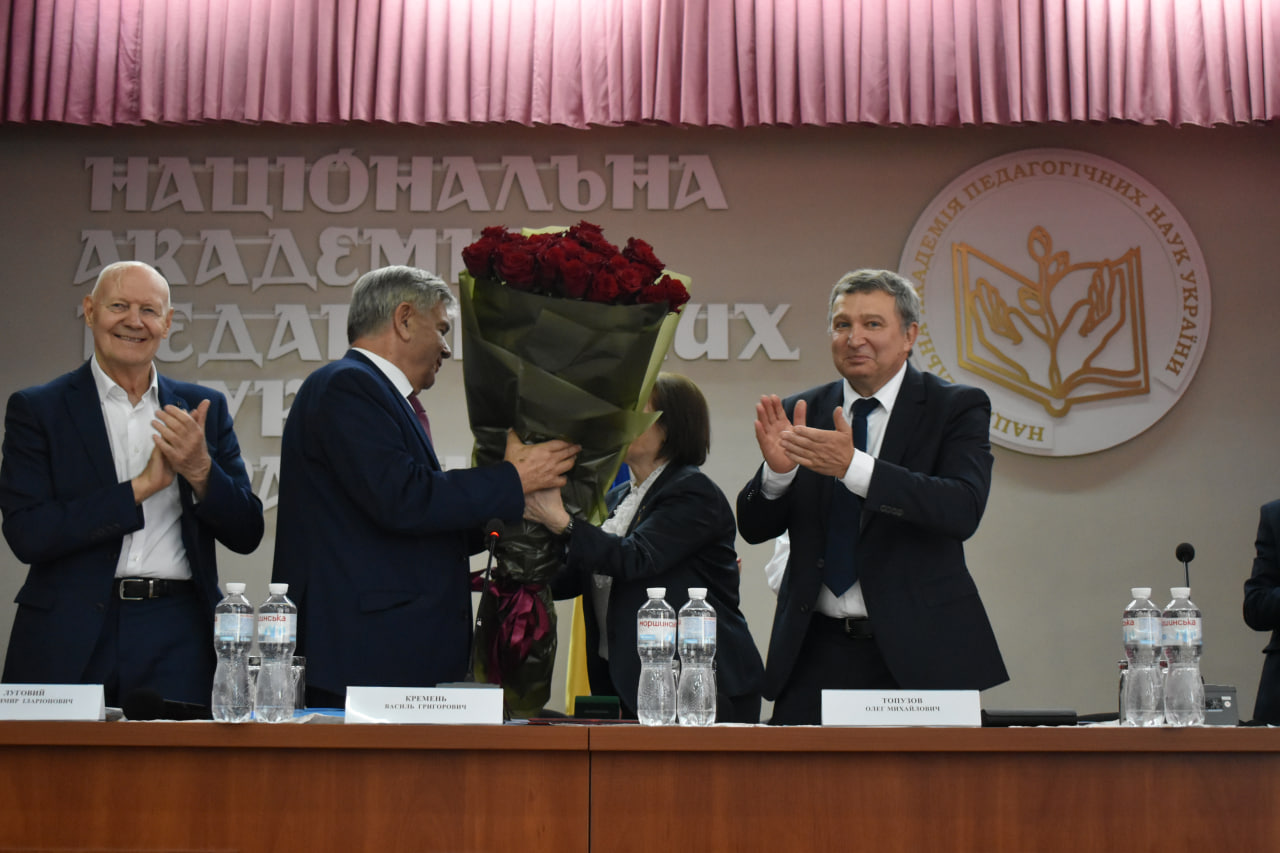
Among the main areas of focus for the new leadership, Topuzov highlighted strengthening the influence of educational science on the formation of state education policy, rebuilding human capital, overcoming educational gaps, supporting young scholars, and researching the impact of artificial intelligence on the education system.
One of the key initiatives is to be a systematic foresight study on the development of education in Ukraine through 2035. It will cover possible scenarios for the development of preschool, K-12, vocational, higher, and adult education, taking into account demographic changes, labor market needs, technological development, and European integration.
“Our research should not end with just monographs, articles, or recommendations. It must influence government decisions,” Topuzov emphasized.
He identified scientific support for education during wartime and postwar reconstruction as a separate priority. This refers, in particular, to the psychological resilience of children and youth, support for educators, inclusion, and the reintegration of veterans and Ukrainians returning from abroad.
According to the new president of the National Academy of Pedagogical Sciences, Ukraine’s recovery must begin with the restoration of human capital.
Topuzov also proposed launching a university-wide program titled “Artificial Intelligence and the Future of Education.” Research should cover changes in the role of teachers, approaches to assessing knowledge, issues of academic integrity, and the competencies students will need over the next 10–20 years.
The NAPN’s European integration will involve expanding joint research, participating in international consortia and programs such as Horizon Europe, Erasmus+, and COST, promoting academic mobility, and increasing the number of joint international publications.
For young researchers, there are plans to create the “Young Scientist of the National Academy of Pedagogical Sciences of Ukraine” program, which will provide grant support, mentorship, international mobility, and participation in major research projects.
During the annual meeting, the results of the NAPN’s activities for 2017–2026 were also presented. During this period, the Academy’s institutions completed 163 fundamental and 195 applied research projects, produced more than 14,000 scientific articles, and published over 250 monographs, preprints, and other scientific works.
The NAPN’s electronic library collection has grown to 40,000 full-text resources, and the number of downloads has reached 19 million. The Academy’s institutions participated annually in nearly 50 international scientific and educational projects and programs.
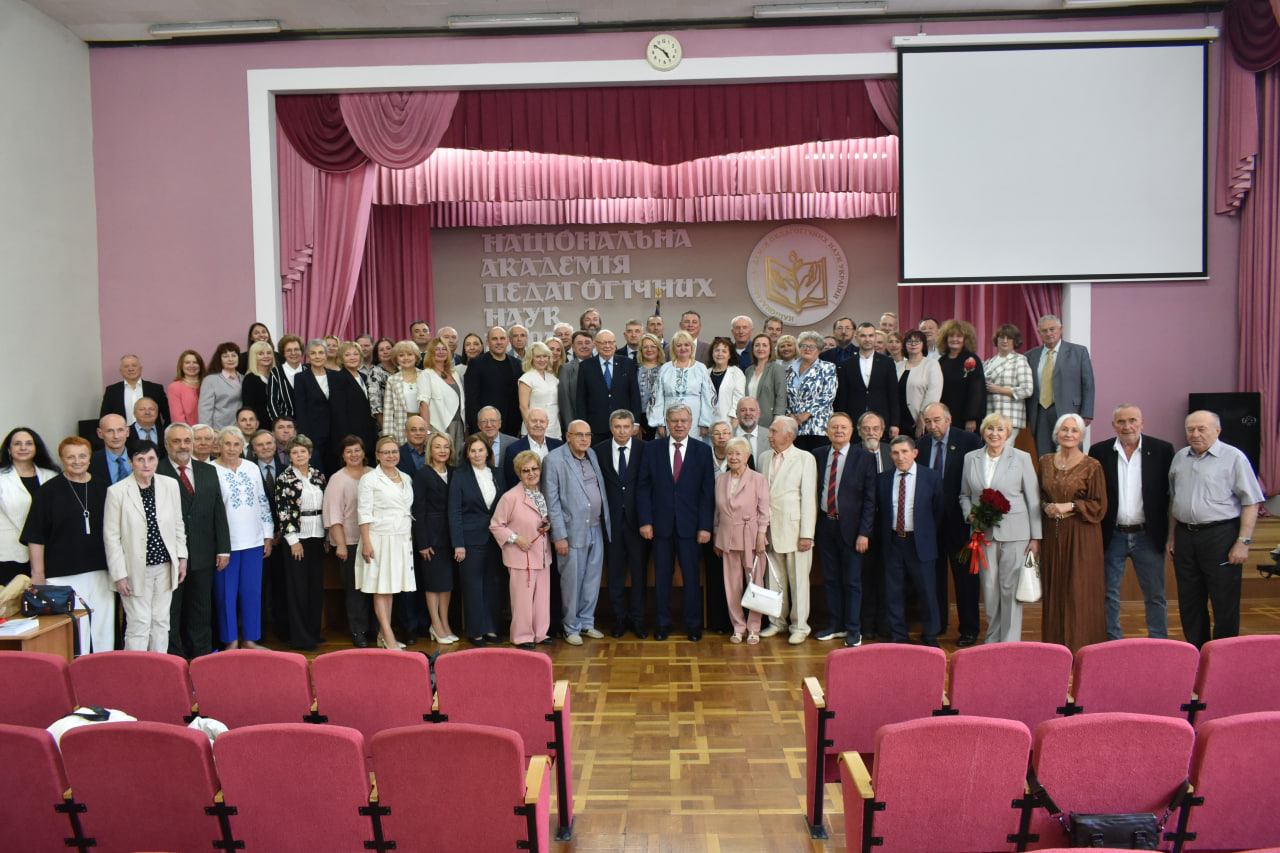
During the meeting, the Academy’s new leadership was also formed. Volodymyr Lugovoy and Vitaliy Panko were elected vice presidents of the National Academy of Pedagogical Sciences, and a new presidium was formed consisting of 29 members, 22 of whom had not previously served on it.
The National Academy of Pedagogical Sciences of Ukraine conducts fundamental and applied research in the fields of education, pedagogy, and psychology; participates in the development of educational standards, curricula, and textbooks; and provides scientific support for reforms in the education system.
Ukrainian universities are joining the European Researchers’ Night initiative, which will take place on September 25 this year. Specifically, Zaporizhzhia Polytechnic National University will host “Science Night 2026” on that day, while Lviv Polytechnic is coordinating a separate European Researchers’ Night 2026–2027 project as part of the Horizon Europe program.
According to Zaporizhzhia Polytechnic, “Science Night 2026” will take place on September 25 on the university campus and will be aimed primarily at schoolchildren, prospective students, and young people. The program includes interactive experiments, scientific demonstrations, a children’s science conference, and international events featuring foreign partners. The event will be held with due consideration for the security situation; the university notes that shelters are available.
A separate international conference as part of “Science Night” is also scheduled for September 25. Researchers from European universities are expected to participate.
In addition, for the first time at this level, Ukraine is represented by a separate project in the European Researchers’ Night program. Lviv Polytechnic has become the coordinator of the international project STEM for Science, Technology, Awareness & Researchers (STEM4STAR), selected for funding under the
European Researchers’ Night and Researchers at Schools 2026–2027 program of Horizon Europe.
According to the university, 241 applications from various European countries were submitted to the competition, and funding was recommended for 49 projects. STEM4STAR received the highest scores from experts across all criteria. The project involves organizing science festivals, European Researchers’ Night events, demonstrations of modern technologies, geospatial games, mapping challenges, mapathons, STEM programs, and startup competitions in Lviv. Some sessions will also take place in schools and colleges across Western Ukraine.
European Researchers’ Night is a pan-European initiative funded by the EU through the Marie Skłodowska-Curie Actions. In 2026, the main event will take place on September 25. According to the European Research Council, over 1 million participants are expected across approximately 40 countries. Universities and research institutions will host open labs, experiments, science shows, discussions, exhibitions, and interactive events for the general public.

Forbes has published its 50 Over 50: Innovation 2026 list, which includes 50 women over the age of 50 who continue to exert a significant influence on science, medicine, artificial intelligence, robotics, biotechnology, space research, industry and the technology business. The ranking was published on August 11, 2026, and is part of the broader Forbes 50 Over 50 project, which includes a total of 200 women in four categories — Innovation, Impact, Investment and Lifestyle.
An important clarification is that Forbes does not assign all 50 participants positions from No. 1 to No. 50. On the main Innovation page, the names are listed alphabetically. The de facto exception was Ritu Narayan, founder of the transportation startup Zum, whom both the company and the entrepreneur herself describe as the “No. 1 honoree” in the Innovation category and the face of the issue’s cover. However, Forbes did not publish a complete numerical ranking of the remaining 49 positions.
Narayan, who grew up in India and built her career in Silicon Valley, created Zum, a technology platform modernizing the U.S. school bus system using artificial intelligence, GPS and electric vehicles. Forbes values the startup at approximately $1.7 billion, with 2025 revenue of $333 million.
The 50 honorees also include Stanford professor Zhenan Bao, who works on electronic skin and wearable electronics; 2025 Nobel Prize laureate Mary Brunkow; NASA science program leader Nicola Fox; MIT School of Engineering dean Paula Hammond; MIT professor and developer of wireless medical technologies Dina Katabi; Takeda head Julie Kim; astrophysicist and dean of MIT’s School of Science Nergis Mavalvala; former Yahoo chief and Dazzle AI founder Marissa Mayer; HubSpot chief Yamini Rangan; Cummins leader Jennifer Rumsey, and many others.
An analysis by Experts.News reveals an interesting geography of the list. Forbes itself does not publish separate statistics by nationality, so it is more accurate to speak about the countries of birth and origins of the participants. By this measure, the United States clearly dominates: most of the women in the Innovation-50 were born and built their careers specifically within the American scientific and entrepreneurial environment.
Among the participants born outside the United States, several countries stand out. Serbia is represented by two natives — Vunjak-Novakovic and Matarić. India — Ritu Narayan and Yamini Rangan. China — Zhenan Bao and Michelle Zhou. Morocco — Bahija Jallal and Wafaa Mamilli. Serbia therefore belongs to a small group of countries that produced two participants in the Innovation-50. Zhou’s Chinese origin is confirmed by the Association for Computing Machinery, while Mamilli herself lists Casablanca as her city of birth; Roche lists her citizenships as French, Moroccan and U.S.
Among other countries, Pakistan, Syria, South Korea, Thailand, France, the United Kingdom and Israel each have one participant on the list. For example, Nergis Mavalvala was born in Lahore, Pakistan; Dina Katabi in Damascus; Julie Kim in Seoul; Thai Lee in Thailand; Aude Oliva in France; Nicola Fox in Hitchin, England; and Daphne Zohar in Israel.
At the same time, the list’s main geographical conclusion concerns not so much passports as the concentration of talent within the American innovation ecosystem. Even most of the women born in Serbia, India, China, Pakistan, Syria, South Korea or France now work at American universities and companies — MIT, Stanford, Columbia, USC, Berkeley, HubSpot, Cummins and other organizations. Four participants on the list are associated with MIT alone — Paula Hammond, Dina Katabi, Nergis Mavalvala and Aude Oliva.
For a Ukrainian audience, it is notable that there are no Ukraine-born women in the Forbes 50 Over 50: Innovation 2026 category. However, the structure of the list itself demonstrates a model that is also relevant to Ukraine: a significant share of the most successful scientists and technology entrepreneurs are migrants or people originating from other countries who developed and implemented their innovations after integrating into major international universities, research centers and venture ecosystems. In this respect, the example of the two women born in Belgrade is particularly illustrative for Eastern European countries.
The full Innovation-50 includes Maya Ajmera, Lauren Antonoff, Katrina Armstrong, Zhenan Bao, Wendy Barnes, Charlie Blackwell-Thompson, Karen Blanks Ellis, Marsha Anderson Bomar, Christine Brown, Mary Brunkow, Jennifer Tour Chayes, Karen S. Carter, Margaret Dawson, Cindy Eckert, Karen Eng, Katie Farmer, Nicola Fox, Paula T. Hammond, Lisa Harris, Lisa Gelobter, Jacqueline Hinman, Colette D. Honorable, Janice Bryant Howroyd, Bahija Jallal, Sabrina Martucci Johnson, Dina Katabi, Julie Kim, Debra Laskin, Tessa Lau, Thai Lee, Emily Liman, Wafaa Mamilli, Christina Maslach, Maja Matarić, Nergis Mavalvala, Marissa Mayer, Vivienne Ming, Aude Oliva, Ritu Narayan, Yamini Rangan, Shubhi Rao, Jennifer Rumsey, Heather Shoemaker, Ellen Stofan, Gordana Vunjak-Novakovic, Susie Wee, Beth Wozniak, Laura Yecies, Michelle Zhou and Daphne Zohar.
Thus, the 2026 Forbes list demonstrates two trends at once. The first is that an innovation career after the age of 50 increasingly continues for decades and can lead to major scientific and entrepreneurial achievements well beyond the traditional career peak. The second is that the United States remains the main center of attraction for such specialists, while simultaneously making use of the talents of scientists and entrepreneurs born in dozens of other countries.
Original source: Forbes — 2026 50 Over 50: Innovation

Andriy Butenko, Ukraine’s Minister of Education and Science, together with Marcin Kulasek, Poland’s Minister of Science and Higher Education, opened a new International Center for the Shared Use of Scientific Equipment on Mount Pip Ivan and signed a declaration of cooperation.
“We agreed to develop the Carpathians as a shared European space for science and education: joint research, student and researcher exchanges, and support for young researchers. A telescope has been installed here under a dome, specifically designed for challenging high-altitude weather conditions. Next, a robotic system will be added to the telescope—and it will be possible to control it remotely. This is one of four high-altitude observatories of this caliber,” Budenko wrote on Facebook.
According to him, the observatory was restored by the Vasyl Stefanyk Carpathian National University in collaboration with Polish partners.
“They will work here together, but the equipment is also open to others: any research team will be able to submit an application,” the minister said.
He noted that astronomy is not the only field of study here, as the Chornogora range features high-altitude flora and distinct ecosystems where the climate and nature can be studied. There are meteorological laboratories on site.
The minister recalled that the observatory was built back in 1938 as a research station for the University of Warsaw. Later, the Soviet authorities destroyed it, and for decades, ruins stood on the mountaintop. Ukrainians and Poles restored it together. The project began back in 2012.

The updated Rapid Damage and Needs Assessment (RDNA5) showed $13.9 billion in losses and $33.5 billion needed to restore education and science in Ukraine, according to the Ministry of Education and Science.
“The education and science sectors have also suffered significant losses. Total losses are estimated at $13.9 billion and cover the infrastructure and assets of all subsectors, from preschool education to scientific institutions,” the ministry said in a statement.
It is noted that the most damage was recorded in scientific infrastructure, higher education institutions, and schools, particularly in the Kharkiv, Zaporizhzhia, Dnipropetrovsk, Mykolaiv, Kherson, Sumy, Chernihiv, Kyiv, Luhansk, and Donetsk regions, as well as in the city of Kyiv.
“For the complete restoration and reconstruction of the education and science sector for 2026-2035, the total need is estimated at $33.5 billion,” the ministry added.
The priority areas for support are: reconstruction of educational institutions; restoration of face-to-face learning through the construction and modernization of shelters and the introduction of temporary solutions to ensure access to face-to-face learning; comprehensive overcoming of learning losses (improved teaching practices, flexible catch-up programs, and psychosocial support are needed to compensate for lost learning time and overcome psychological trauma).
“When we talk about the damage caused by Russia to the Ukrainian education and science system, we are not just talking about destroyed buildings. It is limited access to education, lost opportunities, and educational gaps that affect children’s future earnings and the country’s economic potential — and these consequences are exacerbated as long as the war continues,” the press service quotes Minister of Education and Science Oksen Lisovyi as saying.
The RDNA5 report was prepared jointly with the World Bank, the European Commission, and the UN. It covers the period from February 24, 2022, to December 31, 2025. The total cost of recovery in Ukraine as of December 31, 2025, is $588 billion (over EUR500 billion) over the next decade, which is almost three times Ukraine’s projected nominal GDP for 2025.
As we know, personnel are everything. This is not just an empty phrase, because in science, where training sometimes takes decades, the future of a country is determined by the availability of qualified researchers.
After the collapse of the USSR, where scientists occupied an honorable place in the hierarchy of professions, Ukraine acquired one of the largest research systems in Europe. The scientific school of the Ukrainian SSR era was known for its advanced technologies and groundbreaking ideas. Subsequently, in the early years of independence, changes in the structure of the economy began. While in 1991-1995 the share of industry in GDP exceeded 40%, by 2024 it had fallen to 19.0%, and the service sector had taken the lead, growing from 40% to over 70%.
The country’s economic problems and economic transformation also led to a reduction in funding for science. The dynamics of this reduction are shown below:
Table 1. Dynamics of expenditure on research and development in 2010-2023.
|
Years |
Research and development expenses – total, million UAH | Share of research and development expenditure in GDP, % |
| 2010 | 8107,1 | 0,75 |
| 2011 | 8513,4 | 0,65 |
| 2012 | 9419,9 | 0,67 |
| 2013 | 10248,5 | 0,70 |
| 2014 | 9487,5 | 0,60 |
| 2015 | 11003,6 | 0,55 |
| 2016 | 11530,7 | 0,48 |
| 2017 | 13379,3 | 0,45 |
| 2018 | 16773,7 | 0,47 |
| 2019 | 17254,6 | 0,43 |
| 2020 | 17022,4 | 0,41 |
| 2021 | 20973,8 | 0,38 |
| 2022 | 17117,8 | 0,33 |
| 2023 | 21348,1 | 0,33 |
The share of science spending in gross domestic product (GDP) has been steadily declining since 2010 and has fallen to 0.33% in recent years. Back in 2017, the World Bank noted that “…the current innovation policy and corresponding state funding do not meet the critical needs of the Ukrainian national innovation system.” A significant reduction in funding has led to the disappearance of a number of scientific institutions (SIs) and a decline in the prestige of scientific work. Young people are not going into science because of low salaries and the low status of scientists. It cannot be otherwise, given that the salary of a senior researcher at the National Academy of Sciences of Ukraine is 13,034 hryvnia.
All this has led to increased migration, a decrease in the number of scientists, and a loss of opportunities to reproduce human resources. The number of personnel in the field of research and development (R&D) has decreased sevenfold: from more than 400,000 people in 1991 to 63,800 in 2024. Below you can see the dynamics of the number of personnel engaged in R&D.
Fig. 1. Dynamics of the number of personnel employed in R&D in Ukraine

Table 2. Dynamics of the number of personnel employed in R&D in Ukraine
| Years | Number of employees involved in scientific research and development – total, persons | Including | ||
| researchers | technicians | support employees | ||
| person / as a percentage of the total number of employees involved in scientific research and development | person / as a percentage of the total number of employees involved in scientific research and development | person / as a percentage of the total number of employees involved in scientific research and development | ||
| 2010 | 182484 | 133744 / 73.3 | 20113 / 11.0 | 28627 / 15.7 |
| 2011 | 175330 | 130403 / 74.4 | 17260 / 9.8 | 27667 / 15.8 |
| 2012 | 164340 | 122106 / 74.3 | 15509 / 9.4 | 26725 / 16.3 |
| 2013 | 155386 | 115806 / 74.5 | 14209 / 9.2 | 25371 / 16.3 |
| 2014* | 136123 | 101440 / 74.5 | 12299 / 9.0 | 22384 / 16.5 |
| 2015 | 122504 | 90249 / 73.7 | 11178 / 9.1 | 21077 / 17.2 |
| 2016 | 97912 | 63694 / 65.1 | 10000 / 10.2 | 24218 / 24.7 |
| 2017 | 94274 | 59392 / 63.0 | 9144 / 9.7 | 25738 / 27.3 |
| 2018 | 88128 | 57630 / 65.4 | 8553 / 9.7 | 21945 / 24.9 |
| 2019 | 79262 | 51121 / 64.5 | 7470 / 9.4 | 20671 / 26.1 |
| 2020 | 78860 | 51427 / 65.2 | 7117 / 9.0 | 20316 / 25.8 |
| 2021 | 68808 | 44321 / 64.7 | 5879 / 8.6 | 18288 / 26.7 |
| 2022* | 53221 | 36084 / 67.8 | 5020 / 9.4 | 12117 / 22.8 |
| 2023 | 58567 | 38845 / 66.3 | 4542 / 7.8 | 15180 / 25.9 |
| 2024 | 63847 | 42670 / 66.8 | 5148 / 8.1 | 16029 / 25.1 |
The period of sharp decline in the number of R&D personnel (1991-1999) was characterized by a drop in funding. Subsequently, in 2000-2008, the number of research personnel stabilized at 200,000. The financial crisis accelerated negative trends in the dynamics of R&D personnel. This was followed by the annexation of Crimea and parts of the eastern regions, and the war. In 2024, the UNESCO report “Analysis of war damage to the Ukrainian science sector and its consequences” noted that as a result of the Russian Federation’s aggression, 12% of scientists were forced to emigrate or move within the country. Of these, 6.3% were forced to emigrate to other countries, and 5.5% became internally displaced persons. About 30% of all scientists began to work remotely. In other words, there was a “brain drain” from science. According to some data, more than 20,000 R&D workers were temporarily displaced or left Ukraine in 2022. Thus, losses associated with the war were added to the traditional outflow of scientific personnel. Changes in the structure of science have also led to the disappearance of the previously massive category of designers and technologists. Ukraine’s recovery will take place through investment projects that will require a huge amount of design and technological documentation, which no one is left to prepare.
Table 3 shows that, in addition to the decline in the number of scientists, there is also an aging of science. The most numerous age group in science is scientists over 65 years of age. Scientists aged 55 and older make up about 40% of scientists.
Table 3 Number of researchers involved in R&D by age:
| up to and including 25 years of age | 25-29 years | 30-34 years | 35-39 years | 40-44 years | 45-49 years | 50-54 years | 55-59 years | 60-64 years | 65 years old and older | |
| 2016 | 1876 | 6418 | 7863 | 7488 | 6216 | 4936 | 5816 | 6593 | 6328 | 10160 |
| 2020 | 949 | 3165 | 5418 | 6239 | 5714 | 4927 | 4123 | 4957 | 5191 | 10744 |
| 2016 | 2.9% | 10.1% | 12.3% | 11.8% | 9.8% | 7.7% | 9.1% | 10.4% | 9.9% | 16.0% |
| 2020 | 1.8% | 6.2% | 10.5% | 12.1% | 11.1% | 9.6% | 8.0% | 9.6% | 10.1% | 20.9% |
The situation with personnel in science is such that it can be described in the words of Ernest Hemingway: “Ask not for whom the bell tolls, for it tolls for thee.” And without personnel, there will be no science.
In the structure of science funding, the largest share is concentrated in the business sector – 59.9%, in the public sector it is 33.4%, and in the higher education sector – about 6.7% of expenditures. In terms of personnel, the public sector accounts for 49%, the business sector for 34.6%, and higher education for 16.4%. Scientific institutions and universities are predominantly state-owned. Research in universities is not a key activity and is largely separate from teaching.
The main channels of public funding are the Ministry of Education and Science, sectoral academies, and the National Research Fund of Ukraine. Another source is the foreign sector. In the pre-war period, foreign sources accounted for 20-25% of R&D funding in Ukraine. In the context of the war, foreign partners have stepped up grant funding.
For many years, Ukrainian science has been unsuccessfully trying to establish links with business due to the lack of a comprehensive policy aimed at supporting such cooperation. However, these efforts are often fragmented, short-term, and insufficiently integrated into national innovation and industrial strategies. The lack of coordination between universities, business, and government agencies hinders the development of an innovation system.
Another feature of Ukrainian science is the almost complete absence of funding from regional sources, which is incomprehensible given the decentralization and significant increase in community budgets, which are not being used for regional science. It appears that local authorities know nothing about science and do not want to use it.
The negative changes in the state of Ukraine’s scientific human resources urgently require state intervention to stabilize and further reduce these influences. The state body responsible for the development of science, the Ministry of Education and Science, is monitoring these trends and attempting to change the situation.
Recently, the Ministry of Education and Science prepared the Concept for the Support and Development of Human Resources in the Field of Scientific and Scientific-Technical Activities, “National System of Researchers of Ukraine” (NSR), which was approved by the Cabinet of Ministers of Ukraine. The concept “aims to identify, recognize, support, and promote the best Ukrainian scientific and scientific-pedagogical workers who have achieved outstanding results in scientific and scientific-technical activities and made a significant contribution to the development of science in the country, as well as to provide them with further individual financial support.” Support will be provided to scientists on the basis of questionnaires, regardless of their current ability to conduct research.
The proposed NSD is based on a rating assessment of scientists’ achievements, with additional funding for the best researchers. However, distributing money based on questionnaires among a limited number of scientists, as is essentially proposed, is not rational.
The set of indicators for determining the best mainly duplicates the indicators used in state certification of institutions. It is unclear how the summarization will be carried out and how the characteristics of different scientific disciplines will be taken into account. And how, for example, can a representative of fundamental science be compared with someone from an industry or a theoretical physicist with a lawyer? Furthermore, scientists perform different functions in scientific teams: some generate ideas, some conduct experiments, etc.
Furthermore, with the support of individual scientists, the place and role of creative teams and infrastructure and information support are completely negated. Scientists do not work alone, but as part of teams with their own functions.
The use of mechanistic approaches to ratings will primarily support scientists with many years of experience in science and managers (they have better publication indicators, in particular thanks to the opportunities for co-authorship and the “duration” of scientific work). It is impossible to apply the same requirements to everyone. Therefore, the general ranking of Ukrainian scientists is an artificial measure. In developed countries, such rankings are not conducted. The idea of distributing funds among scientists based on rankings is not new. In Ukraine, there was an attempt to create something similar in the Lviv region. There are no mentions of its results.
Another example of support for scientists at the national level is Mexico, where the NSD has been operating since the mid-1980s as a response to the mass emigration of scientists to the United States. It is difficult to assess the effectiveness of this system because, in addition to it, the government has applied other incentives, in particular various grant programs. However, the level of emigration of scientists from Mexico remains high, and the results of the impact of the creation of the NSD are unclear to its initiators. Other Latin American countries with similar problems have not introduced it.
Ukraine needs solutions that are not copies of foreign models, but responses to its own challenges. To overcome Ukraine’s personnel problems in science, it is necessary to:
1. Strictly comply with the provisions of the Law of Ukraine “On Science and Scientific Activity” with a level of funding for science at 1.7% of GDP.
2. Make scientific work prestigious by significantly increasing scientists’ salaries, which will ensure the competitiveness of Ukrainian science.
3. Ensure acceptable basic funding for universities and substantial funding on a competitive basis, as well as partial funding for regional science and education institutions from local budgets.
4. Create and implement mechanisms for financing regional science aimed at solving regional problems from community budgets.
5. Introduce a number of specialized competitions at various levels (national, regional, departmental, etc.), including in cooperation with foreign partners, where the customers would be national government bodies, regions, and private companies seeking to solve priority problems. This will lead to the financing of scientific teams for work on relevant projects, rather than individual scientists receiving rent for questionnaires.
6. Allow only organizations from the “Register of Scientific Institutions” to participate in competitions for research using budget funds.
Today, Ukrainian science is on the brink of survival. Without systematic action on the part of the state and society, we risk losing the intellectual capital necessary for the restoration and modernization of the country.
Author: Volodymyr Khaustov, scientific secretary of the State Institution “Institute of Economics and Forecasting of the National Academy of Sciences of Ukraine”, Honored Economist of Ukraine, Candidate of Technical Sciences.



