
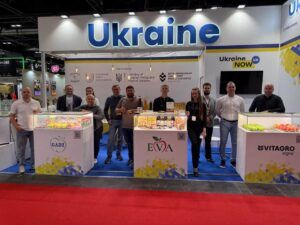
Ukrainian fruit and vegetable producers presented a unified national booth at the international Fruit Attraction 2026 exhibition, which is taking place October 6–8 in Madrid, according to Volodymyr Pechko, honorary chairman of the “UKRSADVINPROM” public association.
According to him, Ukraine’s participation in the exhibition has not only promotional but also practical export significance, as it gives producers the opportunity to work directly with international buyers, importers, retailers, and distributors.
“For Ukrainian producers, this is an opportunity to directly present their products to international buyers, find new partners, establish export contacts, and demonstrate that the Ukrainian horticulture and berry sector continues to operate, develop, and enter international markets even amid the war,” Pechko noted.
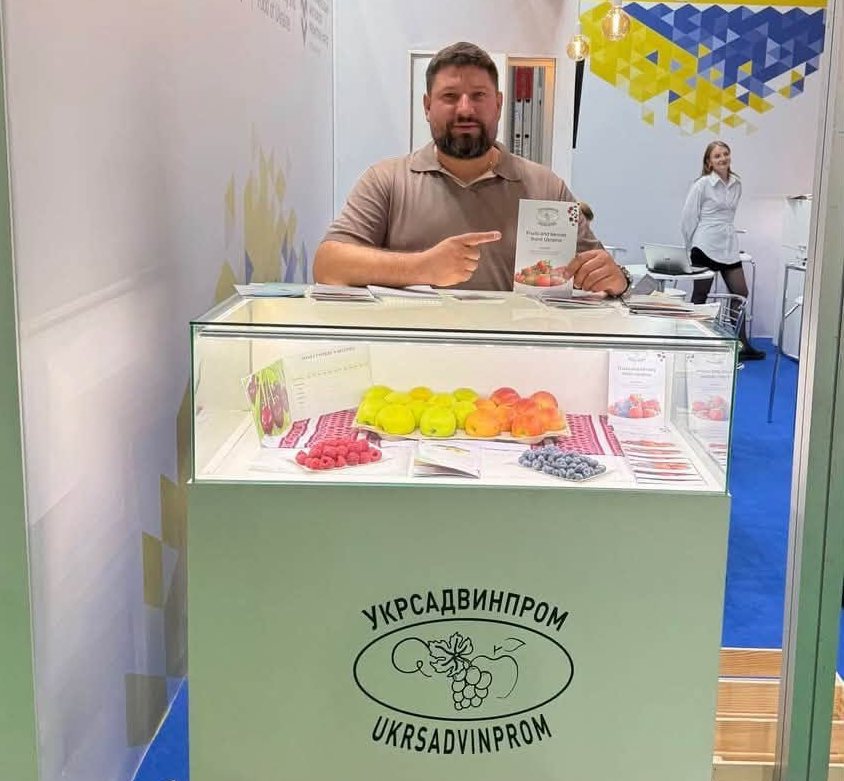
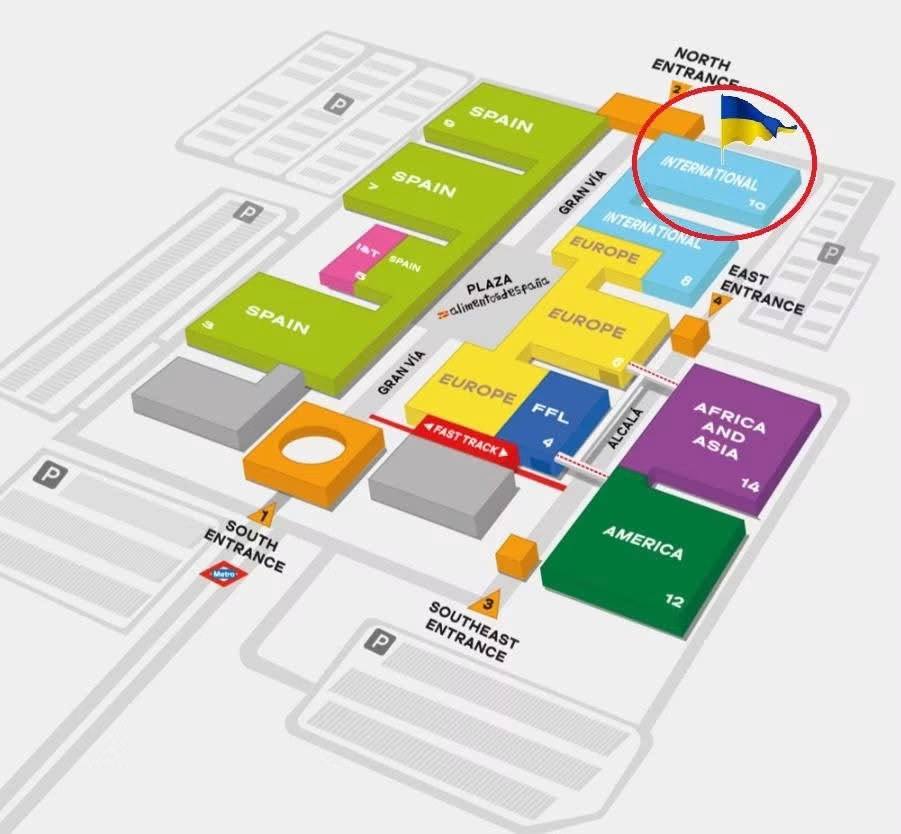
Fruit Attraction is one of the largest international trade shows in the fruit and vegetable sector. It is organized by IFEMA MADRID and FEPEX. In 2026, the exhibition will be held for the 18th time and has brought together approximately 2,500 companies from 78 countries. The exhibition covers 162,000 square meters, and organizers expect over 121,000 trade visitors from more than 150 countries.
The Ukrainian national pavilion features “Vitamin 2025,” the “Gadz” farm, “Agrarian Company 2004” LLC, “Gribnyi Biznes” LLC, “Alta Kraina,” the “Korsun” agricultural firm, the “Vladam” farming enterprise, the “Yu-Food” public association, and the “UKRSADVINPROM” public association.
The national pavilion is organized by the “UKRSADVINPROM” Public Association, headed by Volodymyr Pechko. The organization represents the interests of Ukrainian producers in the horticulture, berry, grape, winemaking, and nut sectors.
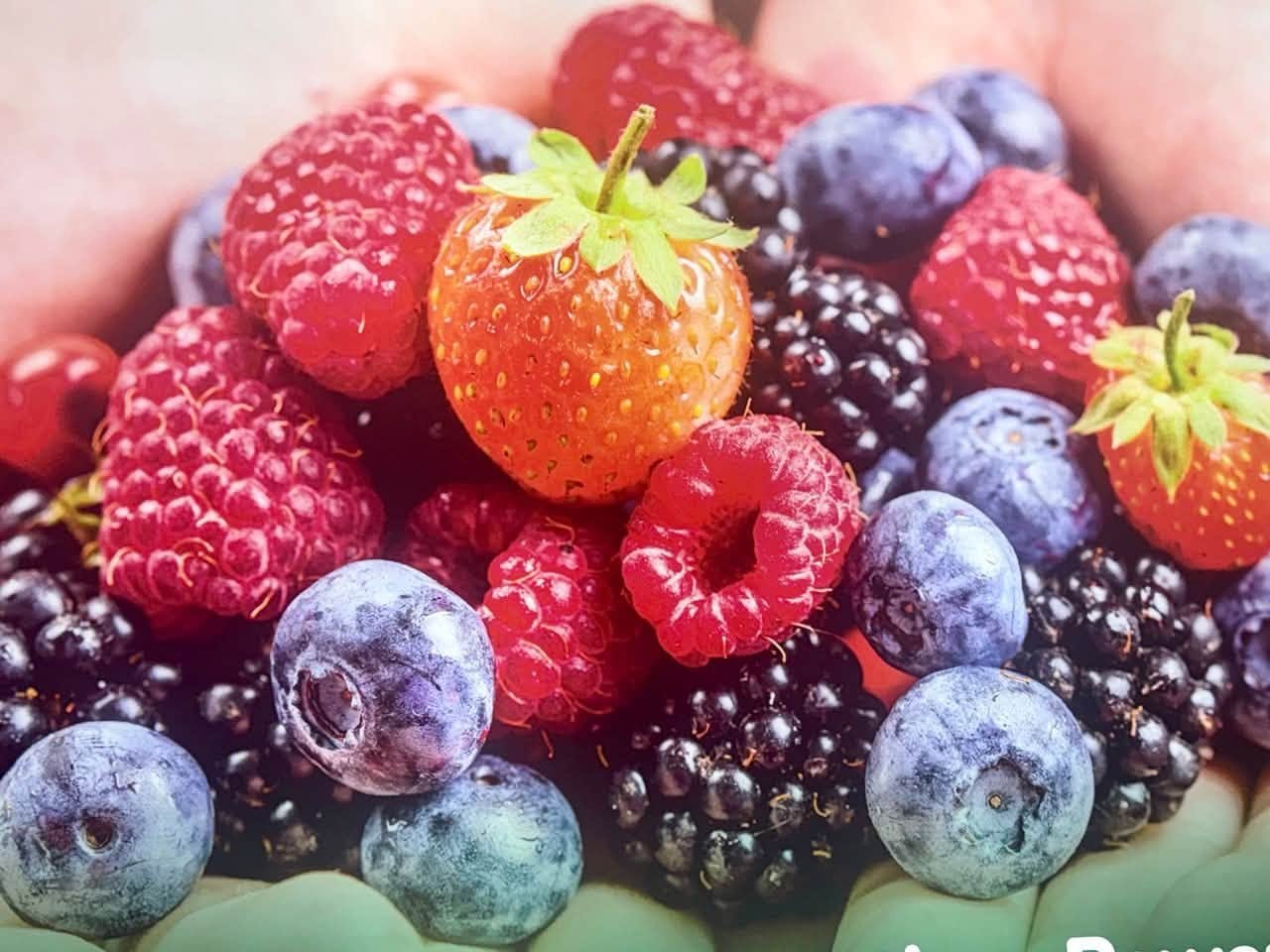
According to Pechko, participation in such international events allows not only individual companies to be represented but also helps shape a cohesive image of Ukraine as a reliable producer and exporter of high-quality agricultural products.
The national pavilion was organized with the support of the International Trade Centre as part of the EU4Business project, funded by the European Union, under the patronage of the relevant Ukrainian ministries and the Embassy of Ukraine in Spain.
Fruit Attraction is being held in Madrid from October 6 to 8. The exhibition covers the entire fruit and vegetable supply chain—from the production of fresh fruits and vegetables to processing, packaging, logistics, technology, and international trade.
agricultural sector, EXPORTS, Fruit Attraction, HORTICULTURE, UKRAINE, UKRSADVINPROM, ПЕЧКО

The Ukrsadvinprom Trade Center has begun forming a Ukrainian delegation to participate in the SIAL Paris 2026 international food industry exhibition, which will take place October 17–21 at the Paris Nord Villepinte Exhibition Center in France.
Ukrainian producers of food and beverages, fruits, vegetables, berries, nuts, and processed products, as well as other companies in the agri-food sector, are invited to participate.
Ukrsadvinprom expects that participation in the exhibition will allow Ukrainian companies to present their products to international importers, distributors, and buyers; conduct negotiations on future contracts and shipments; and find new partners and expand their export markets.
As is traditional at SIAL, special attention is given to new products, food industry technologies, packaging, and changes in consumer demand. For Ukrainian companies, the exhibition can serve as a platform both for finding direct buyers and for studying the requirements of major international markets.
According to the organizers, SIAL Paris is held every two years and expects to welcome approximately 295,000 trade visitors from about 200 countries in 2026. Around 8,000 exhibitors are expected to participate, showcasing approximately 400,000 products. The total exhibition area will exceed 280,000 square meters.
The exhibition brings together food and beverage manufacturers, international retail chains, importers and exporters, distributors, foodservice companies, and representatives of the food industry. SIAL Paris is positioned by its organizers as one of the world’s largest professional platforms for the food sector and innovations in the agri-food industry.
Ukrsadvinprom notes that Ukrainian companies that participated in international exhibitions alongside the association in previous years used such events to establish new business contacts, expand their export markets, and develop partnerships with foreign buyers.
Information on the terms of participation for Ukrainian producers at SIAL Paris 2026 is available from “Ukrsadvinprom” via email at info@ukrsadvinprom.com.
“Ukrsadvinprom” is the Public Union “Association of Gardeners, Grape Growers, and Winemakers of Ukraine,” which brings together approximately 200 producers of fruits, berries, nuts, and grapes. The organization supports companies in the industry, develops exports, promotes Ukrainian products in foreign markets, handles certification, and establishes contacts with foreign buyers. Members of the association export their products to international markets. The head of “Ukrsadvinprom” is Volodymyr Pechko.
SIAL Paris is an international trade show for the food industry held in Paris every two years. In 2026, it will take place from October 17 to 21 at Paris Nord Villepinte. The exhibition covers ten key sectors of the food industry—from fresh produce, meat, fish, dairy products, and beverages to groceries and food processing solutions.
Organizers expect approximately 8,000 participating companies and industry representatives from 200 countries.
EXPORT, MANUFACTURER, SIAL, trade show, UKRSADVINPROM, ПЕЧКО
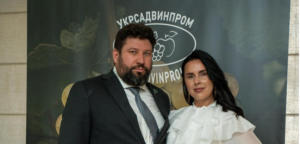
Ukrainian local and craft wineries can expand their presence in national retail chains, but to do so, producers must meet retailers’ requirements regarding quality, safety, documentation, and supply stability.
This was discussed during the National Roundtable “Local Grape Varieties: Heritage, Sustainability, and Rural Development,” organized by the Public Association “UKRSADVINPROM” to mark the 10th anniversary of the Association’s activities.
Olena Gordon, a representative of the “Ukraine Food Retail Alliance” (UFRA)—which includes leading Ukrainian food retail chains such as ATB-Market, Silpo, VARUS, NOVUS, and KOLO—noted that local producers can enter retail chains provided they meet standards and are ready to scale up production.
For Ukrainian winemakers, this means that having a high-quality product is no longer the only requirement for increasing sales through retail channels. Retail chains expect suppliers to provide stable shipments, a clear quality control system, production traceability, the necessary certifications, regulatory approvals, and a willingness to work within a long-term partnership framework.
Roundtable participants noted that retailers’ interest in craft wineries and local producers is growing amid rising demand for Ukrainian products. In the context of the war, supporting domestic producers is viewed not only as a consumer choice but also as a key element of the country’s economic resilience.
For the producers themselves, collaboration with retail chains can be a crucial step in scaling their businesses. A presence on the shelves of national retailers boosts brand recognition, expands access to consumers, and helps foster a culture of Ukrainian wine consumption.
At the same time, participants in the discussion emphasized that craft winemaking requires a distinct approach. Small producers cannot always operate according to the logic of mass industrial production; therefore, flexible collaboration models, professional support, assistance with certification, and clear rules for market entry are essential for the segment’s development.
The HoReCa sector and wine tourism could serve as additional channels for promoting Ukrainian wine. Restaurants, tasting events, festivals, and wine tours provide opportunities to introduce consumers to local grape varieties, create an emotional connection with producers, and gradually build demand that can subsequently support retail sales.
The roundtable also noted that the development of local grape varieties could become part of a broader strategy for promoting Ukrainian wine. Volodymyr Pechko, Chairman of the “UKRSADVINPROM” Public Association, emphasized that Ukraine needs to more actively showcase its own varieties and build a wine identity around them. In particular, “Odesa Black” and “Sukholimansky” were cited as flagship varieties of Ukrainian breeding.
For retailers, local varieties could become a distinct competitive niche, as they allow retailers to offer customers not just Ukrainian wine, but a product with provenance, history, and regional identity. This approach could boost interest in Ukrainian wines both in the domestic market and, in the long term, in export markets.
Participants in the event also emphasized the need to create a Vineyard Register and conduct a comprehensive inventory of vineyards in accordance with EU approaches. This is important for the sector’s transparency, the development of geographical indications, Ukraine’s integration into the European system of support for viticulture, and the future use of EU financial instruments.
The “UKRSADVINPROM” General Association is an industry association operating in the fields of horticulture, viticulture, and winemaking. The organization brings together market participants, takes part in industry discussions, promotes the interests of Ukrainian producers, and supports the development of high-value-added products. In 2026, the Association celebrated its 10th anniversary.
craft wine, local producer, RETAIL, UKRSADVINPROM, WINEMAKING, ПЕЧКО
The development of local grape varieties in Ukraine is already moving from the level of professional discussion to practical implementation and is becoming one of the key areas for enhancing the competitiveness of Ukrainian winemaking, building regional brands, and promoting high-value-added products in domestic and international markets.
This was discussed during the National Roundtable “Local Grape Varieties: Heritage, Sustainability, and Rural Development,” organized by the UKRSADVINPROM Association to mark the 10th anniversary of the Association’s activities.
Participants in the event noted that local grape varieties are already becoming for Ukrainian producers not only an agricultural resource but also an element of cultural heritage, regional identity, and the future export specialization of Ukrainian winemaking. It is precisely around these varieties that the new identity of Ukrainian wine is taking shape—with its own history, origin, taste, and distinctiveness.
Volodymyr Pechko, Chairman of the “UKRSADVINPROM” Public Association, emphasized that Ukrainian winemaking already has its own foundation for development, and this foundation is linked to the promotion of domestic grape varieties. According to him, the flagship and ambassadorial varieties of Ukrainian wine could be, first and foremost, “Odesa Black” and “Sukholymansky,” which reflect Ukrainian breeding, authenticity, and the country’s wine identity.
Special attention was given to the creation of a Vineyard Register and the conduct of a comprehensive inventory of vineyards in accordance with EU approaches. This work is intended to serve as a practical foundation for Ukraine’s further integration into the European system of support for viticulture and winemaking, as well as for the potential use of EU financial instruments following the country’s accession to the European Union.

Pechko also reported that approximately 10,000 hectares are currently under vineyards in Ukraine. According to him, the reduction in vineyard acreage requires additional attention from the government and the industry, as it is impossible to ensure the stable growth of winemaking without preserving and developing the raw material base.
Interest from retailers and the HoReCa sector in local producers is already becoming an important factor for the Ukrainian wine market. Olena Gordon, a representative of the “Ukraine Food Retail Alliance” (UFRA)—which includes leading Ukrainian food retail chains such as ATB-Market, Silpo, VARUS, NOVUS, and KOLO—noted that local producers can enter retail chains provided they meet standards and are ready to scale up production.
This factor is particularly important for craft wineries, which are already creating a strong local product and have their own history, but face the chains’ requirements regarding supply stability, quality, safety, documentation, and production traceability.
Representatives of the restaurant and hotel sectors, in turn, noted that Ukrainian consumers’ interest in domestic wines is already growing. There is potential for promoting Ukrainian wine both domestically and abroad; however, strengthening the industry’s position requires systematic promotion—participation in international exhibitions, professional presentations, tastings, and “blind tastings,” which allow for an objective demonstration of product quality.
Wine tourism is already emerging as a distinct promotional tool. Festivals, tastings, and the development of wine routes help forge an emotional connection between producers and consumers, introduce Ukrainian wine to a wider audience, and create additional opportunities for the development of rural areas.
According to the participants, craft winemaking requires a distinct approach to regulation and development, as it cannot be evaluated using the same criteria as mass industrial production. For the sector to grow, it is important to foster a culture of Ukrainian wine consumption, support local producers, and develop the domestic market, which can serve as a foundation for future exports.
Mykola Patyka, Vice President of the National Academy of Agrarian Sciences of Ukraine, highlighted the role of science in preserving and developing the genetic potential of Ukrainian grape varieties. Scientific support, breeding, research into the adaptability of varieties, and work with genetic resources are essential for ensuring that local varieties become not only part of the country’s heritage but also a competitive product in the modern market.
The development of local grape varieties is already laying the groundwork for the emergence of new regional brands and geographical indications, the revitalization of rural areas, and increased recognition of Ukrainian products in international markets. For the industry, this means a shift from the general idea of promoting Ukrainian wine to a more specific model—one with its own varieties, origin, history, quality standards, and distribution channels.
The “UKRSADVINPROM” General Association is an industry association operating in the fields of horticulture, viticulture, and winemaking. The organization brings together market participants, takes part in industry discussions, promotes the interests of Ukrainian producers, and supports the development of high-value-added products. In 2026, the Association celebrated its 10th anniversary.
GRAPES, local variety, UKRSADVINPROM, WINE, WINEMAKING, ПЕЧКО

GS “UKRSADVINPROM” celebrated its 10th anniversary by hosting a national roundtable titled “Local Grape Varieties: Heritage, Sustainable Development, and Rural Development.”
The event was attended by representatives of the Ministry of Economy, Environment, and Agriculture of Ukraine, industry associations, academia, the retail sector, the HoReCa sector, winemaking enterprises, and experts from the agricultural sector.
Deputy Minister Denys Bashlyk congratulated the Union on behalf of the ministry, noting UKRSADVINPROM’s contribution to the development of horticulture, viticulture, and winemaking in Ukraine.
Roundtable participants discussed the development of local grape varieties as a means of preserving Ukrainian identity, cultural heritage, and regional distinctiveness. It was noted that the competitiveness of Ukrainian winemaking should be built not only around the “Made in Ukraine” principle but also around the “Developed in Ukraine” approach, where domestic breeding achievements become part of the national brand.
Particular attention was paid to the need to create a Grape Register and conduct a comprehensive inventory of vineyards in accordance with EU approaches. Meeting these requirements could open up access for Ukraine to European industry support instruments following the country’s accession to the European Union.
Vladimir Pechko, Chairman of the “UKRSADVINPROM” Public Association, noted an alarming trend of shrinking vineyard areas. According to him, approximately 10,000 hectares are currently under vine in Ukraine, a situation that requires additional attention from both the government and the industry.
Participants in the event also emphasized the importance of supporting Ukrainian producers amid the war, developing craft winemaking, promoting Ukrainian wines in domestic and international markets, and enabling producers to participate in international exhibitions, professional presentations, and tasting events.
The “UKRSADVINPROM” General Association brings together participants in the horticulture, viticulture, and winemaking sectors; it participates in promoting Ukrainian products, developing industry policy, and protecting the interests of producers.

The 50% increase in minimum wholesale and retail prices for alcoholic beverages provided for in the draft law No. 11416d on introducing a number of amendments to the Tax Code of Ukraine will have a positive impact on the country’s alcohol market, Volodymyr Pechko, chairman of the board of the public association UkrSadVinProm, told Interfax-Ukraine.
He reminded that the minimum retail prices for wine and spirits have not been raised since 2018, and they are regulated by the Cabinet of Ministers.
“This will lead to an increase in tax revenues to the state budget and resolve the issue of counterfeit products,” assured the head of the industry association.
Mr. Pechko pointed out that there is currently very cheap wine on store shelves that is of extremely poor quality.
“Such a product sometimes costs 40-45 UAH/l. And compare this price with juices, which are much more expensive – this is basically impossible. In order to sell cheaply, unfortunate producers are forced to mix something into their product or dilute wine with water. Accordingly, the decision proposed by the parliament will “knock out” unscrupulous producers from the market,” explained the head of Ukrsadvynprom.
Pechko confirmed that as a result of such actions by the parliament, wine will become more expensive for the end consumer, noting that this process in relation to alcoholic beverages in the country has been going on for a long time. He explained the rise in prices for wine and vodka products by the rise in gas prices, which led to higher prices for glass containers.
In addition, crop protection products have risen in price in the 2024 season, and the price of grapes is breaking records, having almost doubled. “If wine hasn’t risen in price at the same time, it should raise questions and concern consumers. A 50% increase in the minimum retail price for alcoholic beverages is a very modest price increase. Currently, the minimum retail price subject to excise tax is 42 UAH/l, while it should be at least 95 UAH/l,” Pechko said.
The head of Ukrsadvynprom advised consumers to choose wine at a price of at least UAH 130, 150, 200 per bottle in order not to risk their health and to be sure of the quality of the product they buy.
As reported, the Verkhovna Rada adopted the law (No. 11416d) on amendments to the Tax Code regarding the peculiarities of taxation under martial law, which provides for an increase in the military tax from 1.5% to 5% starting October 1, and a 50% increase in the bank profit tax in 2024. Other new provisions include the introduction of advance payments on gas station profits, pegging the advance payment rate for currency exchange offices to the euro, increasing the minimum tax liability for agricultural land and increasing the rent for crushed stone extraction, but at the same time exempting from taxation the funds received by citizens under the national cashback program.



