
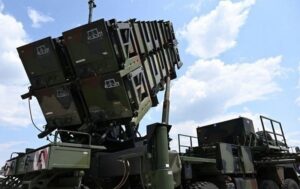
Germany is currently unable to provide Ukraine with additional Patriot air defense missile systems from the Bundeswehr’s stockpiles, as further reductions in its own reserves would pose critical risks to the country’s defense capabilities. However, previously agreed-upon deliveries of missiles for Ukraine’s air defense remain in effect.
German Defense Minister Boris Pistorius made this statement in an interview with newspapers of the Funke Media Group, published on November 7, 2026.
According to the head of the German Defense Ministry, Germany has already transferred several Patriot systems and a significant number of guided missiles for them to Ukraine; however, further allocation of weapons from existing stockpiles is not possible at this time.
“We have already transferred several systems and a large number of guided missiles. We cannot do more at this time. Anything we transfer now, we will not be able to replenish in the near future. This would create gaps in our defense that we cannot afford,” Pistorius said.
The minister emphasized that Germany has made a significant contribution to strengthening Ukraine’s air defense, while a number of other countries have provided significantly less assistance.
In this regard, Berlin is counting on increased support from international partners who have additional Patriot systems and interceptor missiles at their disposal.
According to Pistorius, the issue of further supplying Ukraine with air defense systems must be seriously discussed at the next meeting of the Contact Group on Ukraine’s Defense in the “Ramstein” format, scheduled for November 17 in Brussels.
As early as November 2, Pistorius reported that Germany, together with the United Kingdom, is working on a plan to provide additional air defense systems to Ukraine.
According to him, the supply situation remains challenging, as the United States is providing only limited quantities of new Patriot systems and corresponding guided missiles. An additional challenge is that production of PAC-2 GEM-T missiles in Germany is only just beginning to ramp up.
Berlin and London plan to prepare proposals for the Contact Group meeting to involve other countries that possess the necessary stockpiles.
It is anticipated that additional deliveries could be made from the reserves of allies who maintain such capabilities without significantly weakening their own defense systems.
Pistorius’s statement came three days after the German defense minister held talks with Ukrainian President Volodymyr Zelenskyy in Berlin.
On November 4, Zelenskyy announced that Ukraine has a valid contract to purchase German-made PAC-2 missiles for Patriot systems for the next two years.
“We have a substantial contract to purchase German-made PAC-2 missiles for the next two years. We are working to expedite deliveries. This would significantly help Ukrainians get through this winter,” the Ukrainian president stated.
According to him, Russian strikes on energy infrastructure continue almost daily, and the most challenging situation involves intercepting ballistic missiles due to a shortage of ammunition for the Patriot systems.
Following the talks, the parties agreed to further explore options for accelerating PAC-2 deliveries and also discussed providing Ukraine with IRIS-T systems and ammunition for F-16 fighter jets.
Earlier, the German government confirmed an agreement to fund the delivery of several hundred Patriot missiles over the coming years.
Specifically, in April 2026, Berlin announced funding for a Ukrainian contract with the American company Raytheon to supply several hundred interceptor missiles. In August, a representative of the German Ministry of Defense further confirmed that this involved several hundred PAC-2 guided missiles, scheduled for delivery in the coming years.
Thus, Pistorius’s current statement primarily concerns the inability to allocate additional ready-to-deploy systems and weapons from German military reserves, rather than the termination of previously concluded contracts for the production and procurement of missiles.
Ukraine uses Patriot systems to counter Russian missile attacks, particularly strikes on energy infrastructure, industrial facilities, and populated areas. These systems are especially important for intercepting ballistic missiles, against which the capabilities of other air defense systems are significantly limited.
At the same time, the effectiveness of Ukraine’s air defense depends not only on the number of launchers but also on the availability of sufficient stocks of interceptor missiles, the stability of logistics routes, and the production capabilities of partner countries.
Accelerating the production of PAC-2 and PAC-3 missiles, as well as organizing additional deliveries from allied reserves, remain key areas of international support for Ukraine.
According to the German Ministry of Defense, the scope for further transfers of weapons from national stockpiles is limited by the need to maintain the Bundeswehr’s combat readiness and fulfill Germany’s obligations to NATO.
Under these circumstances, further strengthening of Ukraine’s air defense will depend on expanding missile production, fulfilling existing contracts, and the participation of other countries in supplying systems and ammunition.

According to Serbian Economist, the Italian company Beretta Holding, the Croatian government, and Croatian investor Ivan Kapetanović have signed a memorandum of understanding to implement a project for the country’s first small-caliber ammunition manufacturing plant.
The document was signed on July 30 at the “Banski Dvori” government complex in Zagreb in the presence of Croatian Prime Minister Andriy Plenković. It was signed by Defense Minister Ivan Anušić, Beretta Holding President and CEO Pietro Gussalli Beretta, and Kapetanović.
The plant is planned to be built near the town of Obrovac in Zadar County. The exact location of the site has not yet been officially disclosed.
The total volume of joint investments is estimated at 125 million euros. Beretta is set to receive 50% of the capital of the future joint venture plus one share, which will give the Italian group control. The remaining stake will be divided between the Croatian government and private investor Ivan Kapetanović.
Beretta will also be responsible for technology transfer, supply chain management, and the establishment of production lines. The plant is scheduled to begin operations by mid-2029.
According to Italian media reports, once the plant reaches its design capacity, it will be able to provide approximately 250 jobs and generate 70–80 million euros in annual revenue.
The facility is expected to produce small-caliber ammunition, including rounds for machine guns mounted on armored vehicles, as well as ignition capsules. According to Pietro Gussalli Beretta, some of this ammunition is currently produced at the group’s Swiss facility, while the Beretta plant in Germany is fully occupied with the production of fuses.
The chairman of Beretta Holding described the project as a long-term investment that is not solely tied to the current growth in demand for ammunition. It is expected that the new plant’s products will be supplied not only to the Croatian Army but also to European and global markets.
However, the signed memorandum is currently a framework document. It provides for the further preparation of a final agreement and the establishment of a special project company in Croatia.
Beretta Holding brings together manufacturers of small arms, ammunition, optics, and related equipment. The history of this family-owned company dates back to the 16th century. The group has facilities in Italy, Germany, Switzerland, Sweden, Hungary, the United States, and other countries.
https://t.me/relocationrs/3371

Ukraine allocates $45–50 billion annually to weapons production, and funding for the Armed Forces is secured, stated Ukrainian President Volodymyr Zelenskyy.
“Ukraine is currently allocating $45–50 billion annually to weapons production. We have managed to reach what I consider to be a very high level. We have the funds to finance the Armed Forces of Ukraine. We must ensure precisely this sufficient level of funding for both production and the army, and not just for now, for these years, but for the long term,” Zelenskyy said at a press conference with NATO Secretary General Mark Rutte on Wednesday.
The head of state noted that Ukraine is working to provide “this level of funding, unprecedented in our history,” exclusively for all types of domestically produced weapons.
On April 20, Zelenskyy stated that Ukraine is investing $30 billion in the defense industry for 2026, but the defense sector is ready to produce $60 billion worth of goods.

According to the Ministry of Internal Affairs, 780,465 lost and stolen firearms have been recorded since the start of the full-scale war. Weapons reported missing during the war currently account for 66% of the total entries in the registry. This year, 149,000 new entries were added to the registry—almost as many as in all of 2025. Automatic weapons, hunting rifles, and carbines are the most commonly stolen and lost. Nearly half of the lost and stolen weapons are in Mykolaiv, Kyiv, and Donetsk regions.
780,465 weapons have been lost or stolen in Ukraine since the start of the full-scale invasion. This accounts for 66% of the total number of lost and stolen weapons—1.17 million units.
The highest number of reports of lost weapons appeared in the first year of the full-scale invasion—266,086 units. In 2023, the number of lost and stolen weapons decreased, but starting in 2024, the figure began to rise again. This year is on track to set a record: 149,760 weapons are already listed as missing this year. By comparison, nearly as many losses were recorded over the entire previous year: 179,315 cases.
The registry saw a significant increase in March: as many as 130,000 entries. However, it is worth noting that 60% of these entries pertain to weapons that went missing during the first year of the full-scale conflict (2022). Currently, the registry records two dates: the date of loss/theft and the date of entry into the registry.
Most cases of lost weapons are recorded fairly promptly—within a week of the disappearance: 512,350 cases. At the same time, 173,980 entries are added with a delay of over a year.
Only 4% of entries concern stolen weapons; the vast majority are marked as lost.
Which weapons are most frequently reported missing?
Automatic rifles (252,369 units), hunting shotguns (210,712), and carbines (102,616) are the most commonly lost or stolen. The undisputed “leader” is the AK-74 automatic rifle: every fourth entry in the Registry pertains to this specific model.
One in five cases of lost and stolen weapons occurs in the Mykolaiv region: 169,172 weapons. It is followed by Kyiv (104,864 weapons) and the Donetsk region (86,188).
Together, these three regions account for nearly half of all lost and stolen weapons in the country.



According to a report by Interfax-Ukraine, the architecture of the Unified Weapons Registry (UWR) eliminates the possibility of any “gray areas” or uncertified third-party software integrations; the goal of the UWR is to provide citizens with a modern service, and the state with reliable control, emphasizes Maksym Khimchenko, director of the state-owned enterprise “Infotech.”
In an exclusive interview with the Interfax-Ukraine agency, Khimchenko explained that the weapons registry is a system that is constantly being improved.
According to the director of “Infotech,” when the registry was launched in 2023, it was built on a fundamentally different foundation.
“We had to deal with a colossal volume of fragmented data that had accumulated over decades in various formats. We carried out a titanic effort: we unified this data and created an electronic classifier of weapons, ammunition, and explosives (WAME),” Khimchenko emphasized.
He explained that now each item has a clear digital profile, which prevents the kind of manipulation typical of the old “manual” management system.
The director of “Infotech” noted that the creation of a branched system of user accounts in the ERZ has changed the philosophy of interaction. “Today, the ERZ is a unified ecosystem where each participant has their own secure workspace—the architecture eliminates the possibility of any ‘gray areas’ or uncertified third-party software connections from the very beginning,” he noted.
Khimchenko added: “This is our own product, where the path of a weapon from the store to the owner is completely transparent. Our goal is to provide citizens with a modern service and the state with ironclad control.”
He emphasized that the path toward tightening regulations and creating a proprietary closed ecosystem was the only correct one for national security.
Speaking about feedback on the operation of the weapons registry, the director of “Infotech” noted that the Ministry of Internal Affairs is engaged in an open dialogue with market participants.
“They voice their needs and comments, after which we work through them together, formulate requirements, prepare functional specifications, and move on to technical implementation and deployment,” said Khimchenko.
State Enterprise “INFOTECH” is the operator and developer of the Ministry of Internal Affairs’ digital systems, ensuring their creation, operation, and 24/7 support.
https://interfax.com.ua/news/general/1162589.html
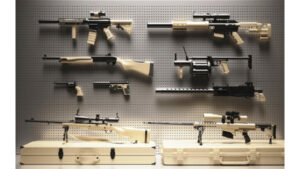
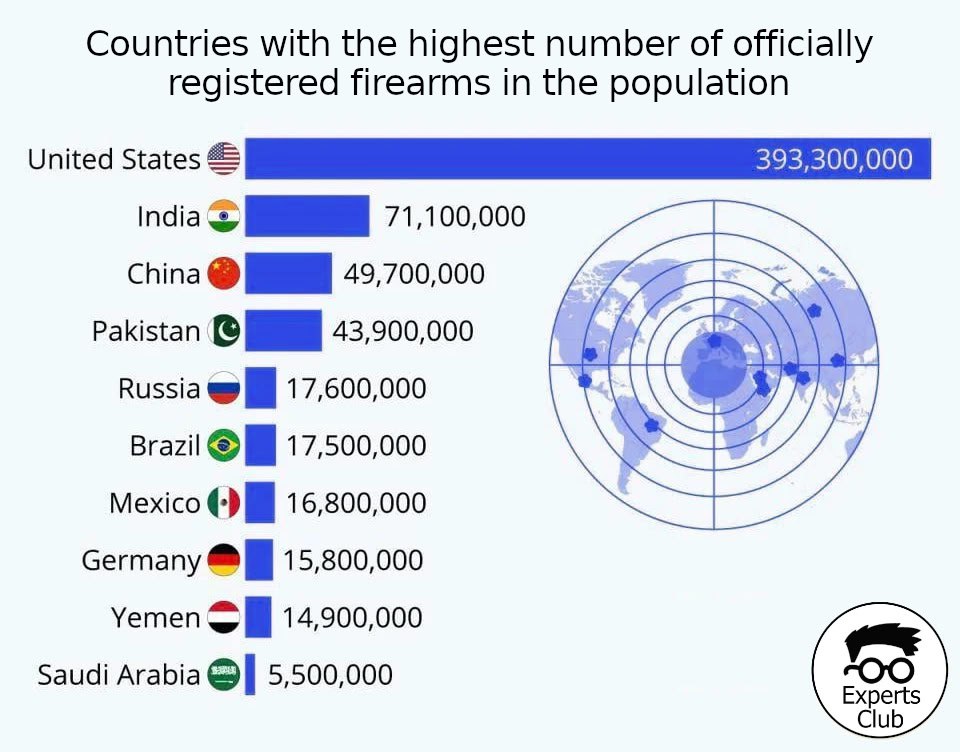
The global ranking of armed populations, compiled on the basis of the Small Arms Survey, shows that the ten countries with the largest number of civilian weapons include the United States, India, China, Pakistan, Russia, Brazil, Mexico, Germany, Yemen, and Saudi Arabia. Ukraine is not on this list, but even before Russia’s full-scale invasion, the country was among the states with a significant amount of weapons in the hands of citizens. The Experts Club Analytical Center analyzed global and Ukrainian statistics.
According to the Small Arms Survey for 2017-18, there were about 4.4 million civilian weapons in Ukraine—approximately 9.9 guns per 100 inhabitants. Of these, only about 800,000 were officially registered, and about 3.6 million belonged to the illegal segment.
According to the National Police database, as of July 31, 2018, there were 892,854 registered weapons in the country. In 2021, the Ministry of Internal Affairs estimated the number of weapons legally owned by citizens at approximately 1.3 million, against the backdrop of tighter regulations and growing public interest in self-defense after 2014.
The full-scale war of 2022 dramatically changed the picture. Against the backdrop of the formation of territorial defense and volunteer units, the state massively transferred small arms to citizens; at the same time, a significant number of captured and illegal firearms ended up in the hands of the population. Estimates today vary widely: according to Interior Minister Ihor Klymenko, Ukrainians may have between 1 and 5 million weapons, while a number of think tanks put the figure at 4–5 million, of which 2–3 million may be in illegal circulation.
Research by Small Arms Survey using sociological surveys shows that up to 11% of Ukrainian households may have at least one weapon, which on a national scale gives a range of 865,000 to 1.42 million armed households. At the same time, the share of households that openly report the presence of weapons in 2023–2024 remains at 5–6%, which indicates both a high level of distrust and the sensitivity of the issue in wartime.
To bring order, Ukraine has launched a Unified Weapons Register. By July 2024, 63% of households that own weapons stated that some or all of their weapons were registered; among those who are aware of the system, 74% claim to have registered all their weapons, but about 10% continue to keep unregistered weapons.
Thus, while before the war there were approximately 1.3 million registered weapons in Ukraine and several times more illegal firearms, now, against the backdrop of full-scale hostilities, there are millions of weapons, a significant portion of which must gradually be registered or confiscated.
This makes the issue of civilian weapons control one of the key issues for post-war security, law enforcement reform, and Ukraine’s negotiations with the EU on the harmonization of weapons legislation.
Source: https://expertsclub.eu/ukrayina-na-tli-svitovogo-rynku-czyvilnoyi-zbroyi/



