
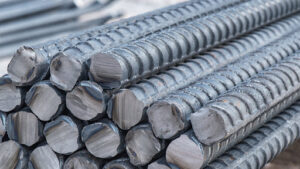
PrJSC “Promarmatura” (Dnipro) has allocated 4 million 65.383 thousand UAH of its retained earnings for dividend payments.
According to the company’s filing with the National Securities and Stock Market Commission’s disclosure system, this decision was adopted at an extraordinary general meeting of shareholders held remotely on June 19.
“The retained earnings earned by the company as of the end of 2025, amounting to 127.280 million UAH, shall be distributed as follows: a portion of the retained earnings in the amount of 4 million 65.383 thousand UAH shall be allocated for payment to the company’s shareholders in the form of dividends; the remaining portion of retained earnings shall not be distributed but shall remain at the company’s disposal for the fulfillment of its statutory purposes. The company’s reserve capital shall not be replenished, as it has been fully formed,” the meeting’s resolutions state.
At the same time, the total dividend per common share was approved at 24.50 UAH.
Dividend payment schedule: the company will pay dividends in installments on a monthly basis throughout the dividend payment period.
As previously reported, according to the annual report of PrJSC “Promarmatura,” the company posted a net profit of 4.198 млн UAH for 2025, compared to a loss of 2.304 млн UAH in 2024. Net revenue for this period rose to 250.448 million UAH from 188.732 million UAH. The company’s retained earnings as of the end of 2025 amounted to 127.280 million UAH. In 2023, the plant reported a net profit of 11.407 million UAH, compared to a net loss of 29.995 million UAH in 2022.
Promarmatura was founded in December 1994 and operates in the pipeline valve market.
According to data from the National Securities and Stock Market Commission (NSSMC) for the first quarter of 2026, two individuals—Ukrainian citizens Igor Mezebovsky and Oleksandr Chelyadin—each own 50% of the shares in the private joint-stock company.
The company’s authorized capital is 7.218 million UAH.
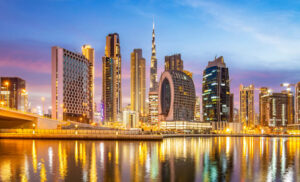
British citizens have taken the top spot among foreign real estate buyers in Dubai, displacing Indian investors from the leading position, according to real estate brokerage Betterhomes, based on data from March–April 2026.
British nationals have become the largest group of foreign homebuyers in the emirate. They are followed in the ranking by citizens of India, Australia, and Egypt. Transaction volumes by nationality are not disclosed, so the ranking reflects the brokerage firm’s internal statistics rather than the official report from the Dubai Land Department.
This change in leadership reflects a shift in the structure of international demand for Dubai real estate. Indian buyers have long been considered one of the key groups in the emirate’s market; however, in 2026, activity among British buyers increased amid interest in living and investing in the UAE, tax considerations, demand for rentals, and investors’ desire to diversify their capital outside the UK.
Overall, foreign demand remains one of the main drivers of the Dubai market. According to Betterhomes, 44,493 residential transactions worth 139.2 billion dirhams were recorded in Dubai during the first quarter of 2026. The number of transactions rose by 4% year-over-year, while their value increased by 21%. At the same time, the market has become more selective: buyers are evaluating property quality, location, price, and long-term potential more carefully.
Apartments currently account for the bulk of international purchases. Compact one- and two-bedroom units are in the highest demand, as they offer a lower entry price and are suitable for rental or resale. Dubai Marina remains the most active location in this segment. Other sought-after areas include Jumeirah Village Circle, Jumeirah Lake Towers, and Downtown Dubai.
Villas account for a smaller share of transactions but remain an important segment for buyers who view Dubai not only as an investment market but also as a place for long-term family living. Spacious five-bedroom homes are particularly in demand in this segment.
Townhouses enjoy more consistent demand, especially in new gated communities. Among the most active areas are DAMAC Lagoons, Tilal Al Ghaf, and Mohammed Bin Rashid City.
According to Betterhomes, investors remain the core group of buyers in the Dubai market. In the first quarter of 2026, they accounted for 57% of transactions, compared to 50% a year earlier. This confirms that for many foreign buyers, real estate in Dubai remains primarily an investment vehicle—with an eye toward rental income, appreciation, and high liquidity.
Ukrainians are not mentioned in the published list of leading nationalities. At the same time, Ukrainian buyers are quite active in the UAE real estate market, but according to available data, they are not among the leading national groups of homebuyers in Dubai.

According to Experts.new, the global aviation industry faced a new fuel crisis in 2026: a sharp rise in jet fuel prices, supply disruptions caused by the conflict surrounding Iran, and logistical risks in the Middle East are forcing airlines to revise their schedules, cut unprofitable flights, and prepare for fare increases.
The trigger for a new wave of discussion was a report by the German magazine *Spiegel* claiming that Lufthansa was allegedly preparing to ground up to 40 aircraft due to a fuel shortage. However, the magazine later retracted the report, and Lufthansa told Reuters that the information was incorrect and likely based on an outdated internal memo. According to Reuters, *Spiegel* acknowledged that it had used outdated information.
At the same time, the underlying issue of pressure on the aviation market from fuel prices remains relevant. Back in the spring, Lufthansa was indeed considering contingency plans, including a 2.5–5% reduction in capacity and the possible temporary grounding of 20–40 less fuel-efficient aircraft. This was not an immediate decision but rather a set of measures to be implemented should the situation regarding kerosene prices and availability worsen.
The biggest blow to the industry has been the cost of fuel. In June, the International Air Transport Association (IATA) nearly halved its profit forecast for the global aviation industry for 2026—to $23 billion. According to IATA’s estimates, airlines’ fuel costs could rise to $350 billion this year, and fuel’s share of operating expenses could reach 31.4%, up from 25.4% a year earlier.
This is critical for the aviation industry: fuel is traditionally one of the largest expense items, and a sharp spike in prices quickly turns some routes into money-losers. Short European flights, regional routes, older aircraft with high fuel consumption, and carriers with limited hedging capabilities are particularly vulnerable.
In early June, the European Commission stated that, at that time, there were no signs of an aviation fuel shortage in Europe. At the same time, officials in Brussels acknowledged that regional airports could be the most vulnerable, and that the main risk to passengers is not a physical shortage of jet fuel but rising ticket prices.
Major airlines are already responding to the situation. European carriers are warning that as old fuel hedges expire, rising jet fuel costs will have a greater impact on fares. Some companies are cutting flights, revising schedules, canceling less profitable routes, and accelerating the retirement of older aircraft.
Lufthansa announced in the spring that it would be cutting back part of its short-haul program, and other European carriers have also warned of the risk of fare increases. In the U.S., according to the Department of Transportation, major airlines’ fuel costs rose sharply in March: they increased by $1.8 billion, or 56%, over the course of the month.
Globally, the situation is being complicated by several factors at once. The conflict surrounding Iran has heightened risks to supplies transiting the Middle East; the closure or restriction of air corridors has increased route lengths and fuel consumption; and disruptions in maritime logistics along strategic routes have raised the cost of oil and petroleum product shipments.
An additional factor for Europe has been the controversy surrounding future EU regulations on methane emissions from oil and gas imports. Germany, Italy, the Netherlands, the Czech Republic, and a number of other countries are advocating for a postponement of some of the requirements, warning that the new rules, set to take effect in 2027, could complicate imports not only of gas but also of petroleum products, particularly aviation kerosene.
Thus, while there is no confirmed systemic kerosene shortage on the European market yet, three persistent trends are evident: aviation fuel has become significantly more expensive, airlines are cutting unprofitable routes, and they are preparing to pass on some of the costs to passengers.
For passengers, this means that tickets on certain routes may become more expensive, especially on long-haul flights and routes with low load factors. For airlines, it means that fleet efficiency is once again becoming a key factor in competitiveness. Old aircraft, which were viable when fuel prices were low, are quickly becoming economically unviable amid high jet fuel prices.
In 2026, the aviation market is, in essence, undergoing a new post-pandemic stress test: demand for flights remains strong, but route profitability is deteriorating. Therefore, the main trend in the coming months will not be a halt to aviation, but a more expensive and selective flight network, where carriers will retain only those routes that can withstand the pressures of fuel costs, demand, and operating expenses.

U.S. President Donald Trump said Friday that he is prepared to impose 100% tariffs on any country that imposes a digital services tax on American companies.
“Many European countries are discussing the immediate implementation of a digital services tax on American companies. Some of these countries are close to putting their words into action,” the U.S. leader wrote on the social media platform Truth Social.
“Please let this statement serve to make it clear that any country that imposes such a tax will immediately face 100% tariffs on any goods exported to the U.S.,” he emphasized.

Reigning unified world boxing champion Alexander Usyk will vacate all his heavyweight titles. He announced this on his Instagram page.
Usyk stated that he is giving up all his championship belts—“to make them available to other boxers.” The Ukrainian boxer noted that the decision to relinquish his titles is a conscious one and opens up new opportunities for him.
“I want to vacate all the belts I hold today so that the guys waiting in line for them can fight. Friends, I’m giving up the belts, but I’m not leaving the sport, because I have one last dance,” he said in a video message.
The mining and metallurgical group Metinvest is seeking a new investor to finance a EUR3 billion ($3.4 billion) steel plant in Italy, as the Ukrainian group seeks to reduce its liabilities, according to Bloomberg.
According to the agency, the group is seeking an additional partner for the project at the site of a former steel mill in Piombino on the Tuscan coast. The company wants to strengthen its financing “in light of war-related risks, given Metinvest’s significant operational presence in Ukraine.”
However, as noted, some potential lenders have become more cautious due to heightened geopolitical risks, including the recent conflict in the Middle East.
“As for the debt capital structure, we have good visibility on it, and we are continuing our dialogue with financial institutions to finalize this matter as well,” a Metinvest representative told the agency.
It is worth noting that the Italian government has designated this initiative as a “national strategic project,” and Metinvest Adria—a joint venture (JV) established last year with the Danieli Group to build this state-of-the-art facility—refers to the project as “the revival of steel in Italy.” It is expected to produce 2.7 million metric tons of low-carbon steel per year and create 1,100 jobs in the region.
According to the initial plan, financing was to consist of debt, government grants, and contributions from the JV partners to the share capital. Metinvest agreed to contribute more than EUR500 million, or 75% of the total equity, but is now seeking to reduce this amount to less than EUR300 million.
Bloomberg adds that Metinvest reported receiving “significant support from all stakeholders,” particularly from the Italian government, which has already approved grants and loan guarantees and allocated funds for the construction of a new berth at the Port of Piombino.
“Metinvest’s financial position deteriorated after the company had to use its cash reserves in April to redeem $428 million in bonds. Some of the company’s assets in Ukraine were lost or damaged as a result of the Russian invasion. Operations were also negatively impacted by high energy costs and a labor shortage,” the report states.
In addition, the report notes that S&P Global Ratings upgraded Metinvest’s credit rating this month following the bond repayment, but maintained a “negative” outlook on the business, emphasizing the need to build up cash reserves. According to S&P, Metinvest’s free cash flow stood at $150 million as of early May.
Metinvest is exploring the possibility of raising long-term financing and recently held meetings with investors to discuss the pricing and structure of a potential bond issuance. Like most Ukrainian companies, Metinvest has not tapped the bond market since the start of the full-scale invasion in 2022. Despite this, the group has managed to meet its financial obligations and reduce its debt burden, according to a Bloomberg report.
Metinvest is a vertically integrated group consisting of mining and metallurgical enterprises. Its facilities are located in Ukraine—in the Donetsk, Luhansk, Zaporizhzhia, and Dnipropetrovsk regions—as well as in the European Union, the United Kingdom, and the United States. The holding company’s main shareholders are the SCM Group (71.24%) and Smart Holding (23.76%). Metinvest Holding LLC is the management company of the Metinvest Group.



