

Before purchasing equipment abroad, a Ukrainian company should check the seller, its financial condition, address, owners and ability to fulfil the contract.
The purchase of industrial equipment abroad often requires a substantial advance payment. Depending on the terms of the contract, a Ukrainian buyer may transfer 30–70% of the price to the supplier before the equipment is manufactured or shipped.
The larger the advance payment, the more important it is to make sure that the foreign company actually exists, has the stated specialisation, production capabilities and experience in fulfilling similar contracts.
A professional website, presentation, photographs of the equipment and active correspondence are not sufficient proof. Fraudsters may use other people’s images, create companies with similar names or send invoices containing the bank details of a third party.
Before concluding a contract, it is advisable to check the seller’s exact legal name, registration number, address, date of incorporation, status, executives, owners, corporate affiliations, financial indicators and payment history.
D&B’s Business ID Report and Business Information Report may contain registration details, information about operations, corporate structure, financial indicators, credit ratings, payment behaviour and legally significant events.
“The more attractive the offer and the larger the advance payment, the more thorough the seller’s verification should be. Photographs of the equipment, a website and a corporate presentation do not confirm that the company has the necessary assets, experience and ability to fulfil the contract,” said Maksym Urakin, Director of Development and Marketing at Interfax-Ukraine, Head of the D&B–Interfax-Ukraine business unit and PhD in Economics.
The bank details should be separately cross-checked against the legal entity specified in the contract. A change of bank account immediately before payment, a request to transfer money to another company or the use of a bank in a third country requires an additional explanation.
The risk can be reduced through staged payments, a documentary letter of credit, a bank guarantee, insurance, an independent inspection of the production facility or an inspection of the equipment before shipment.
If the seller is an intermediary, the buyer should understand who directly manufactures the equipment, who is responsible for the warranty and who will bear the obligations in the event of a delay or technical defect.
Verification is also necessary after the contract has been signed, especially if manufacturing takes several months. A deterioration in financial condition, a change of ownership or the cessation of operations may affect the fulfilment of the order.
Dun & Bradstreet has operated in the field of business information and risk assessment since 1841. The company provides international business reports and data on companies’ payment behaviour, corporate affiliations, creditworthiness and ownership structures.
Interfax-Ukraine is D&B’s official representative in Ukraine. The agency’s specialised unit helps Ukrainian companies order checks on foreign manufacturers, sellers and suppliers. Interfax-Ukraine has operated since 1992 and is an independent Ukrainian news agency.
For enquiries, please visit D&B’s specialised website at dnb.ua, email Urakin@interfax.kyiv.ua or call +38 (044) 270-65-74.

According to “Serbian Economist”, owners from Ukraine own 21 yachts registered under the Montenegrin flag, placing Ukraine fifth among all countries in terms of the number of vessels in the Montenegrin registry and fourth among foreign owners.
As of August 12, 2026, the Montenegrin Yacht Registry contained a total of 576 vessels, according to an updated list from the country’s Maritime Safety Authority. Only 79 yachts are registered to individuals or legal entities from Montenegro itself, while owners from other countries own 497 yachts, or 86.3% of the total fleet.
Serbia remains the clear leader. Individuals and legal entities from Serbia own 193 yachts, or 33.5% of the total registry. Russia ranks second with 112 yachts and a 19.4% share. Together, owners from these two countries own 305 vessels—nearly 53% of all yachts flying the Montenegrin flag.
The ranking of the largest owner countries is as follows:
Rank Owner Country Yachts Share of the Register
1 Serbia 193 33.5%
2 Russia 112 19.4%
3 Montenegro 79 13.7%
4 United States 27 4.7%
5 Ukraine 213.6%
6 Bosnia and Herzegovina 18 3.1%
7 Israel 11 1.9%
8 Germany 10 1.7%
9–10 Switzerland 9 1.6%
9–10 Estonia 9 1.6%
11 United Kingdom 8 1.4%
The number of Ukrainian-owned yachts in the Montenegrin registry has increased significantly in just the last three months.
As of May 12, 2026, the registry listed 536 yachts, 17 of which were owned by Ukrainians. At that time, Ukraine ranked behind Bosnia and Herzegovina, whose owners held 18 yachts.
By August 12, the number of yachts owned by Ukrainians had risen from 17 to 21, as a result of which Ukraine overtook Bosnia and climbed to fifth place in the overall ranking.
Overall, since the end of 2025, the Montenegrin registry has grown by 51 yachts, and by 40 since May alone. At the same time, the current composition of the registry indicates that this growth is driven primarily by foreign owners.
In May, the owners of registered yachts represented 49 countries. Among them, in addition to the largest groups from Serbia, Russia, the United States, Ukraine, and other European countries, were owners from Canada, Turkey, Norway, as well as jurisdictions such as the British Virgin Islands, the Seychelles, Vanuatu, the Marshall Islands, and Belize.
At the same time, owners from EU countries account for a relatively small portion of the registry. In May, they accounted for only about 7.8% of the yachts. The most prominent EU countries were Germany and Estonia.
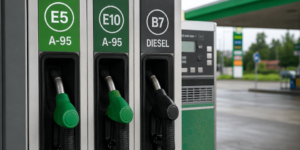
According to the Experts Club analytical center, citing data from the A-95 Consulting Group, the Ukrainian gasoline market continues to be concentrated around supplies from Poland and Lithuania: in July 2026, these two countries accounted for 55% of total imports.
Ukraine received 56,100 tonnes of gasoline from Lithuania and 51,700 tonnes from Poland. Together, this amounted to around 107,800 tonnes out of total imports of approximately 196,000 tonnes.
The Polish supply route is demonstrating particularly high growth rates. Compared with July last year, the volume of supplies increased by 68% and reached its highest level since August 2025.
Imports from Lithuania increased by 16% year-on-year.
The ORLEN oil refining group plays a key role in both supply routes. The group’s facilities in Poland and Lithuania supplied around 97,000 tonnes of gasoline to the Ukrainian market.
A-95 estimates ORLEN’s share at more than half of total imports. Comparing the rounded figures of 97,000 tonnes and the total volume of 196,000 tonnes, this represents approximately half of the market.
The high level of concentration has a dual effect.
On the one hand, the large and stable refineries in Poland and Lithuania allow Ukraine to rapidly increase purchases during periods of higher demand and compensate for the loss of other suppliers.
On the other hand, more than half of the available supply comes from only two geographical routes, while a very significant share of deliveries is linked to a single refining group.
Poland’s importance increased particularly after Ukraine switched to E10 gasoline. The change in standards limited the possibility of using some traditional sources, including certain Greek refineries.
At the same time, Greece has not disappeared from the market entirely. In July, Ukraine imported around 25,000 tonnes of gasoline produced by Motor Oil.
Germany became another rapidly growing supply route. It supplied 21,000 tonnes of gasoline, 78% more than in July 2025. The UPG network imported the entire volume.
Thus, the structure of imports in July demonstrates two parallel trends: ORLEN’s growing role as a key supplier and simultaneous attempts by Ukraine’s largest fuel retail networks to diversify purchases through Germany, Romania and Greece.
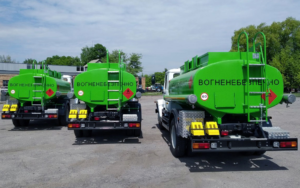
According to the Experts Club analytical center, citing data from the A-95 Consulting Group, Ukraine imported about 196,000 tonnes of gasoline in July 2026, the highest figure since August 2025.
At the same time, data from an infographic published by the A-95 Consulting Group show that the volume of supplies increased by approximately 51% compared with June. In June, the main supply routes accounted for about 130,000 tonnes of gasoline, whereas in July the figure reached around 196,000 tonnes.
The sharp increase in imports occurred despite the Ukrainian market’s transition to the E10 standard on July 1, which requires the mandatory addition of bioethanol to gasoline. The new requirement temporarily narrowed the range of available foreign suppliers.
In particular, the Greek Hellenic Petroleum refinery does not produce gasoline of the required standard. Its products had previously been used by Ukrainian traders during periods of increased demand.
At the same time, the beginning of July coincided with rising petroleum product prices on the global market and increased domestic demand.
A-95 noted that the situation was most strained during the first half of the month. However, the increase in supplies made it possible to stabilize the market in the second half of July. Importers also contracted the necessary volumes for August in advance.
Poland and Lithuania became the main sources of additional supply. Imports from Lithuania increased from 40,500 tonnes in June to 56,100 tonnes in July, while imports from Poland rose from 30,700 tonnes to 51,700 tonnes.
Supplies from Germany also increased noticeably, from 16,900 tonnes to 20,900 tonnes. Around 34,000 tonnes arrived from Romania, compared with 31,200 tonnes one month earlier.
At the same time, imports from Moldova decreased from 9,600 tonnes to 5,800 tonnes.
Thus, July became a test of the Ukrainian market’s ability to rapidly restructure external supplies following changes to gasoline quality requirements. Despite the initial contraction of the available supply base, importers managed to increase supplies by approximately one and a half times within a single month.
Coal’s share of electricity generation in the European Union fell to a historic low of 9.2% in 2025. Eurostat published these figures on August 13, 2026.
In the EU in 2025, bituminous coal accounted for 3.7% of gross electricity generation, or 105,600 GWh, while brown coal and lignite accounted for another 5.5%, or 154,200 GWh. Combined, their share totaled 9.2%.
A year earlier, coal’s share had fallen below 10% for the first time in recorded history. By comparison, in 1990, coal accounted for more than one-third of the EU’s total electricity, and in 2000, it accounted for 30.4%.
Coal’s position among the main power generation technologies has also changed. In 1990, hard coal and lignite ranked second and third, respectively, in the EU’s electricity mix. By 2025, they had fallen to seventh and sixth place. They were surpassed by nuclear power, natural gas, hydropower, wind, and solar generation. Solar power surpassed coal in relevant metrics as early as 2024.
The decline in coal’s role in the EU is accompanied by a reduction in both its production and consumption.
In 2025, hard coal consumption in the European Union is estimated at approximately 107 million metric tons, and lignite consumption at 184 million metric tons. Both figures represent all-time lows.
Some countries have already completely phased out certain types of coal-fired power generation. Portugal stopped using hard coal for electricity generation in 2021, and Slovakia ended lignite mining in 2024. Currently, only eight EU countries continue to produce lignite.
Poland remains an exception within the European Union: it is the only EU country where coal is still the largest source of electricity, accounting for more than half of total generation when hard coal and lignite are combined.
Source: Eurostat, the article “Record low coal share in EU electricity production,” published on August 13, 2026, and the updated statistical article “Coal production and consumption statistics.”
The State Tax Service of Ukraine (STS) has reminded taxpayers of the possibility of exemption from value-added tax (VAT) liabilities in the event of the destruction or loss of goods due to force majeure during a state of war or a state of emergency.
The agency’s website states that, pursuant to paragraph 32¹ of Subsection 2 of Section XX of the Tax Code of Ukraine (TCU), goods purchased by a taxpayer for use in taxable transactions but lost as a result of force majeure are not considered to have been used in non-taxable transactions or outside of business activities. In such cases, the taxpayer is not required to accrue VAT liabilities under paragraph 198.5 of Article 198 of the Tax Code.
At the same time, the service emphasized that this provision may be invoked only if there is proper documentary evidence. To this end, the taxpayer must have source documents confirming the destruction or loss of the goods, as well as a certificate of force majeure issued by the Ukrainian Chamber of Commerce and Industry (UCCI) or an authorized regional chamber of commerce and industry within seven days of the date of application. The existence of such a certificate is a mandatory condition for applying the exemption.
In addition, the State Tax Service noted that VAT amounts included in the tax credit upon the purchase of property that was subsequently destroyed are not included in the calculation of the budget refund. They are carried forward to the tax credit for the next reporting period until they are fully offset.
Sources: https://tax.gov.ua/media-tsentr/novini/1038742.html



