
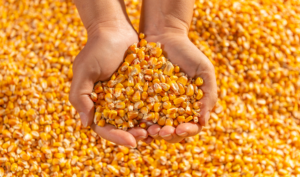
The U.S. Department of Agriculture (USDA) has raised its forecast for U.S. corn exports in the 2026/27 season amid ongoing supply constraints from Ukraine.
In the August World Agricultural Supply and Demand Estimates (WASDE) report, released on August 12, the forecast for U.S. corn exports was raised by 75 million bushels to 3.3 billion bushels, or approximately 83.8 million metric tons. Compared to the July estimate, the increase amounts to about 1.9 million metric tons, or 2.3%.
The USDA explicitly attributes the increase in the U.S. export forecast to rising global demand and limited export capacity from Ukraine.
At the same time, the agency lowered its forecast for Ukrainian corn exports in the 2026/27 marketing year by 1 million metric tons—from 23 million to 22 million metric tons. Meanwhile, the estimate for Ukraine’s corn harvest itself, on the contrary, was increased by 1.8 million metric tons—from 30 million to 31.8 million metric tons.
Thus, Ukraine may harvest more corn than the USDA expected just a month ago, but a smaller portion of the harvest will be able to reach foreign markets.
As a result, the forecast for Ukraine’s ending corn stocks has been increased from 2.06 million to 4.86 million metric tons—more than 2.3 times the previous figure. At the same time, the USDA left its forecast for domestic consumption virtually unchanged.
The situation on the global market is different. The USDA raised its forecast for global corn trade in the 2026/27 season by 0.6 million metric tons—from 209.88 million to 210.48 million metric tons.
The United States is the main source of this additional supply. At the same time, the USDA lowered its export forecast not only for Ukraine but also for the European Union.
The U.S. agency also raised its forecast for EU corn imports, while estimates for purchases by China and Turkey were lowered.
The growth in U.S. exports is occurring against the backdrop of a virtually unchanged forecast for U.S. corn production. The harvest is expected to reach about 16 billion bushels and could be the second-largest in the country’s history. However, the increase in export demand will lead to a reduction in U.S. ending stocks by 137 million bushels—to 1.7 billion bushels.
The USDA also raised its forecast for the average corn price for U.S. farmers by $0.10 to $4.50 per bushel.
Consequently, difficulties with Ukrainian corn exports are already beginning to shift the global market in favor of competing suppliers. The U.S. stands to increase shipments by nearly 2 million metric tons compared to the previous forecast, while Ukraine risks accumulating significant additional domestic stockpiles.

In January–July of this year, Ukrainian companies increased their consumption of rolled metal by 0.27% compared to the same period last year, reaching 2.309 million metric tons.
According to a press release issued by the “Ukrmetallurgprom” association on Friday, 1.063 million metric tons were imported during this period, accounting for 46.06% of the domestic rolled steel consumption market.
According to “Ukrmetallurgprom,” in January–July 2026, Ukrainian steel companies produced 3.322 million metric tons of rolled steel (91.7% of the figure for the same period in 2025), of which, according to the State Customs Service of Ukraine, approximately 2.076 million metric tons—or 62.5%—were exported. In January–July 2025, the share of exports was
60.2% (2.182 million metric tons out of a total rolled steel production of 3.622 million metric tons).
The share of semi-finished products in export shipments in January–July 2026 was 42.58%, which is significantly higher than the figure for the first seven months of 2025 (32.58%). The share of flat-rolled products in exports from January through July 2026 was slightly lower than in January through July 2025 (43.74% and 44.55%, respectively). The share of long products, however, is noticeably lower than in January–July 2025 (13.68% in 2026 versus 22.87% in 2025).
The structure of imports in January–July 2026 is characterized by a marked dominance of flat-rolled products over structural steel (66.59% and 26.94%, respectively); however, in January–July 2025, the dominance of flat-rolled products over long products was significantly greater (74.77% and 20.19%, respectively).
“In January–July 2026, the domestic market capacity was 2.309 million metric tons of rolled steel, of which 1.063 million metric tons, or 46.06%, consisted of imports. In January–July 2025, the domestic market capacity was 2,302,700 metric tons, of which 862,700 metric tons, or 37.46%, were imported. “Thus, in January–July 2026, the domestic market capacity increased by 0.27% compared to January–July 2025, with a simultaneous 8.58% rise in the share of imports,” the press release states.
According to the State Customs Service, the main export markets for Ukrainian rolled metal in January–July of this year were the European Union (81.9%), the rest of Europe (9.6%), and the CIS (6.5%).
Among steel importers for the first seven months of 2026, other European countries ranked first (49.8%), followed by Asian countries (25.5%), and EU-27 countries (16.0%).
As previously reported, Ukraine’s rolled metal market grew by 21.73% in 2025 compared to 2024, reaching 4 million 1.6 thousand metric tons. Imports totaled 1 million 603.6 thousand metric tons, accounting for 40.07% of domestic rolled metal consumption.
Ukraine’s rolled metal market in 2024 contracted by 6.26% compared to the previous year—to 3,288.4 thousand metric tons, while in 2023 it grew 2.19 times compared to 2022—to 3,505.6 thousand metric tons.
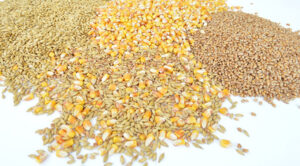
As of August 12, 2026, Ukraine had exported, since the start of the 2026/27 marketing year (MY, July–June), 2.952 million metric tons of grains and legumes, which is 4.8% more than it exported by the same date last year, when the figure stood at 2.818 million metric tons.
According to the Ministry of Agrarian Policy and Food, citing data from the State Customs Service (SCS), total exports of grains, legumes, and flour reached 2.955 million metric tons, compared to 2.826 million metric tons on the same date a year ago—an increase of 4.6%.
By crop type, wheat exports fell by 18.3%—to 1.239 million metric tons from 1.517 million metric tons, respectively. Specifically, 175,000 metric tons of wheat were exported in August of this year, compared to 759,000 metric tons a year ago.
Barley exports fell by 28.1%, to 333 thousand metric tons from 463 thousand metric tons; specifically, 37 thousand metric tons of this product were shipped abroad in August, compared to 206 thousand metric tons in August 2025.
Corn exports as of the reporting date for the season increased by 66.4%, to 1.376 million metric tons from 827,000 metric tons a year ago; in August, 68,000 metric tons of corn were shipped to other countries, compared to 184,000 metric tons in August of last year.
As was the case last year, no rye was exported.
Flour exports since the start of the 2026/27 marketing year have decreased by 54.1% to 2,800 metric tons. As of the same date last marketing year, they stood at 6.1 thousand metric tons. In grain equivalent, flour exports totaled 3.7 thousand metric tons, compared to 8.1 thousand metric tons a year earlier.

In its August forecast, the U.S. Department of Agriculture (USDA) lowered its forecast for soybean and soybean meal exports from Ukraine in the 2026/2027 marketing year (marketing year, September 2026–August 2027) by 0.25 million metric tons—to 2.15 million metric tons and 1.25 million metric tons, respectively.
The USDA attributes these changes to a reduction in planted acreage and a decline in this year’s soybean harvest.
Overall, the forecast for oilseed exports from Ukraine in the 2026/2027 MY has also been reduced by 0.25 million metric tons—to 4.85 million metric tons—but this is higher than the 4.24 million metric tons in the 2025/2026 MY, although significantly lower than the 7.39 million metric tons recorded the year before.
As for oilseed processing, the U.S. Department of Agriculture expects it to reach 16.9 million metric tons in Ukraine during the 2026/2027 marketing year, which is 0.3 million metric tons less than in the July report. This is higher than the figures for both the 2025/2026 marketing year (14.8 million metric tons) and the 2024/2025 marketing year (15.7 million metric tons).
The USDA also lowered its estimate for sunflower oil exports from Ukraine in the 2025/2026 marketing year by 0.275 million metric tons, to 4.1 million metric tons.
All other estimates for harvest, processing, production, and exports for the 2025/2026 and 2026/2027 marketing years remain unchanged.
Thus, the overall forecast for vegetable oil exports from Ukraine in the 2026/2027 marketing year remains at 6.13 million metric tons, compared to 5.15 million metric tons in the 2025/2026 marketing year, including, respectively, sunflower oil at 4.95 million metric tons versus 4.1 million metric tons, sunflower meal at 3.3 million metric tons compared to 2.9 million metric tons in the 2025/26 marketing year, and sunflower seeds at 0.1 million metric tons versus 0.04 million metric tons
According to estimates by the U.S. Department of Agriculture, sunflower processing in Ukraine this marketing year will increase to 12.775 million metric tons from 10.8 million metric tons a year earlier, domestic consumption of sunflower meal will rise to 1.875 million metric tons from 1.65 million metric tons, and oil consumption will increase to 0.47 million metric tons from 0.455 million metric tons.
The USDA forecasts this year’s sunflower harvest at 13 million metric tons, with sunflower oil production at 4.418 million metric tons and meal production at 5.204 million metric tons.

The national postal operator, JSC “Ukrposhta,” in partnership with the Ukrainian company “Modern-Expo,” is launching the production and installation of 1,000 new street-side mail kiosks, primarily in Kyiv, Odesa, Lviv, Dnipro, and other major cities across the country, the company’s CEO, Ihor Smilianskyi, announced on the company’s Telegram channel on Thursday.
According to him, these mail kiosks will be equipped with mailboxes that will allow users to both receive packages and send letters.
According to a press release from “Ukrposhta,” the company is inviting homeowners’ associations, property management companies, and representatives of residential complexes to collaborate.
It is anticipated that representatives of homeowners’ associations, property management companies, or residential complexes can submit an application on the national postal operator’s website to have the mail kiosks installed at the appropriate locations.
Ukrposhta explains that the company will prioritize residential complexes in major cities where there is no nearby brick-and-mortar post office, and where it is possible to place a parcel locker near the building’s entrance or in an open area of the residential complex in a location accessible to residents.
Other criteria include the availability of a solid, level surface; the ability to connect to a 220-volt power supply; and reliable mobile network coverage in the relevant area.
It is noted that coffee shops, stores, pharmacies, gas stations, and other businesses are also invited to collaborate.
“We will definitely contact you to inspect the location, agree on the installation site and terms of cooperation. And if everything is in order—we’ll sign a contract and install the parcel locker,” added Smiliansky.
Among other things, he also noted that the company will continue to purchase and install parcel lockers and expand its network through its partners’ parcel lockers.
Separately, the national postal operator announced that the cost of using parcel lockers remains unchanged—starting at 45 UAH. A customer’s package will be stored there for seven calendar days.
Ukrposhta also took the opportunity to reiterate its plans to install 1,000 parcel lockers nationwide, as well as 600 express pickup lockers directly in post offices.
As previously reported, Ukrposhta posted a net profit of 296.7 million UAH for the second quarter of 2026, compared to a net loss of 108 million UAH in the same period of 2025.
According to the report, Ukrposhta operates 7,200 customer service locations, including 2,000 mobile postal branches that serve 21,300 settlements.
DELIVERY, homeowners’ association, LOGISTICS, parcel locker, UKRPOSHTA

In the first half of 2026, PJSC “Podillya Food Company” increased its net profit by 42.4% compared to the first half of 2025, reaching 587.25 million UAH.
As the company reported in the National Securities and Stock Market Commission’s (NSSMC) disclosure system, it increased its revenue 2.4-fold to 2.48 billion UAH.
According to the report, gross profit rose 4.1-fold to 541.74 million UAH, while operating profit increased by 44% to 710.91 million UAH.
Since the beginning of the year, the company’s assets have increased by 0.8% to 9.46 billion UAH, while equity rose by 12.4% to 5.34 billion UAH, including retained earnings, which increased by 12.4% to 5.33 billion UAH.
The company’s current assets increased by 5.3% over the first half of the year to 6.36 billion UAH; specifically, trade and other current receivables rose by 2% to 3.36 billion UAH, while total liabilities decreased by 11% to 4.12 billion UAH.
According to the report, in the second quarter of 2026, “Podillya Food Company” continued to invest in the acquisition, modernization, and maintenance of fixed assets—including production equipment, vehicles, infrastructure facilities, and auxiliary equipment. Specifically, the company acquired new agricultural machinery—including mineral fertilizer spreaders, a generator, and seed cleaning equipment—as well as a disc harrow; for its dairy operations, it purchased a new cooling panel and a milk pasteurizer.
Going forward, “Podillya” plans to focus on increasing the yield of sugar beets and grain crops using precision farming technologies, specifically variable-rate fertilizer application and GPS-monitored machinery. The company is also considering expanding its portfolio of leased land and upgrading its fleet of agricultural machinery with energy-efficient models.
In addition, “Podillya” is analyzing the possibility of investing in a production line for granulated beet pulp and molasses, which will allow the company to diversify its revenue streams and ensure zero-waste production.
In the livestock sector, “Podillya” plans to gradually increase the size of its dairy herd and replace low-productive animals with breeding stock possessing high genetic potential. Plans also include the renovation of barns and the automation of feeding processes to increase average daily milk yields.
PJSC “Podillya Food Company” is part of the “Ukrprominvest-Agro” agricultural holding. It owns a land bank of 51,000 hectares. It specializes in growing sugar beets, wheat, corn, and barley, as well as in swine farming (21,000 head), and maintains a herd of 3,000 head of cattle. It has a grain storage facility with a capacity of approximately 60,000 metric tons. The company employs 5,500 people.
“Ukrprominvest-Agro” is engaged in crop cultivation, sugar and flour production, and meat and dairy livestock farming. The group’s land bank exceeds 116,500 hectares. The agricultural holding is located primarily in regions that have not been invaded by Russian occupiers.
The group’s sugar business consists of two sugar factories in the Vinnytsia region. Total grain storage capacity for agricultural crops is 120,000 metric tons.
“Ukrprominvest-Agro” comprises “Agroprodinvest Group” LLC, “PK Podillya” PJSC, PK Zorya Podillya LLC, Vinnytsia Bakery Products Plant No. 2 LLC, Dniproagrolan Agricultural Farm, Ivankivtsi Agricultural Farm, Mas-Agro LLC, Pravoberezhne LLC, and Progress-NT LLC.
Since December 2019, the agricultural holding has been owned by Oleksiy Poroshenko, the son of the former president of Ukraine.
In 2025, the “Podillya” Food Company saw its revenue decrease by 39.5%—to 3.18 billion UAH—and its net profit decrease by 36.1%—to 698.8 million UAH.



