

In January–May of this year, Ukrainian companies increased imports of copper and copper products by 9.4% in monetary terms compared to the same period last year, reaching $85.297 million.
According to customs statistics released by the State Customs Service of Ukraine on Friday, exports of copper and copper products during the period increased by 1.3% to $39.247 million. In May, copper imports totaled $20.421 million, while exports amounted to $9.237 million.
As reported, in 2025, Ukrainian companies increased imports of copper and copper products by 23.2% in monetary terms compared to the previous year, reaching $173.453 million, while exports of copper and copper products rose by 17.7% to $103.848 million.
Copper is widely used in electrical engineering, in the production of pipes, for creating alloys, in medicine, and in other industries.
Earlier, the Experts Club information and analytical center released a video dedicated to global copper production and leading producing countries – https://youtube.com/shorts/_h8iU50z8C0?si=a-XkgGEfeUxseQNa

According to Fixygen, the shareholders of Metallurgtransremont will hold a general meeting remotely on July 7. According to information posted by the company on June 4, 2026, the notice of the general meeting has been published on the company’s website and in the disclosure system. The meeting will be held remotely.
Details of the agenda are not disclosed in the provided table.
Metallurgtransremont PJSC is registered in Dnipro. The company has historically been involved in the repair and maintenance of railway rolling stock and industrial transport for the metallurgical sector.

Tractor imports to Ukraine in January–May 2026 totaled $360 million, which is slightly (by 1.2%) higher than the figure for the same period in 2025 ($355.9 million), according to statistics from the State Customs Service.
According to the published data, tractor imports in May rose by nearly 9% compared to May of last year but fell by 21.6% compared to April of this year, to $65.5 million.
In January–May 2026, tractors were imported mainly from Germany (19.8% or $71.4 million), the United States (nearly 19.1% or $71.3 million), and China (18.6% or $66.6 million), whereas last year the United States was the leader ($70.1 million), followed by Germany ($61.4 million), and China in third place ($61.3 million).
According to statistics from the State Customs Service, in January–May 2026, tractors worth $3.94 million were exported, mostly to Belgium (26.16%), while last year exports totaled $2.5 million, with the majority of shipments going to Romania (43.7%).
As reported, tractor imports to Ukraine in 2025 totaled $845.7 million, exceeding the 2024 figure by 7.9%; the main suppliers were the United States ($179.7 million), Germany ($145 million), and China ($142.8 million).
Exports totaled $6.6 million, compared to $5.4 million in 2024, with the majority going to Romania, Belgium, and Germany.

Imports of electric generator sets and rotating electrical converters to Ukraine in January–May 2026 fell by 33.3% compared to the same period in 2025—to $421.7 million, according to statistics from the State Customs Service.
According to the data, imports of this equipment in May 2026 fell by 46% compared to May 2025, but increased slightly compared to April 2026, reaching $62.4 million.
Most frequently in January–May, electric generators and converters were imported from the Czech Republic (19.9% of total imports of these products, or $83.9 million), China (19.7%, $82.9 million), and Turkey (16.5%, $69.5 million), whereas last year the top sources were the Czech Republic ($120 million), Austria ($88.6 million), and the United States ($78.83 million).
Exports of electric generators from Ukraine during this period were insignificant—$2.3 million, mainly to Latvia.
At the same time, according to data from the State Customs Service, imports of electric motors and generators increased more than 2.4-fold over the first five months of this year—to $486.6 million; specifically, $120.1 million worth were imported in May—2.4 times more than in May 2025.
As in the previous year, China remains the main supplier of this equipment (accounting for 93% of imports from January to May).
In addition, imports of electric batteries and separators to Ukraine during this period increased 3.8-fold—to $1.47 billion, with the majority coming from China ($1.31 billion, or 89.3%), as well as from the Czech Republic ($35.3 million) and Latvia ($17.4 million).
Last year, in January–May, the largest suppliers were China with a 75.9% share ($290.6 million), Taiwan with 5.8% ($22 million), and Vietnam with 4.3% ($16.5 million).
In May, imports of this equipment increased 3.5-fold compared to May 2025 and by 9.7% compared to April 2026, reaching $333 million.
Over the first five months, Ukraine exported $18.1 million worth of batteries, primarily to Poland, France, and Germany, while last year exports totaled $20.7 million, mostly to the same countries.
As reported, at the end of July 2024, Ukraine exempted the import of electric generator equipment and batteries into the country from customs duties and VAT.
According to the State Customs Service, in 2025 Ukraine increased imports of electric generators and converters by 2.3 times compared to 2024—to $1.69 billion—and batteries by 55% to $1.48 billion. At the same time, in January 2025, imports of electric generators increased eightfold compared to January 2024, and imports of batteries tripled.
BATTERIES, electric generators, IMPORTS, STATE CUSTOMS SERVICE

The volume of passenger car imports into Ukraine, including cargo-passenger vans and racing cars (HS code 8703), amounted to $1.71 billion in January–May 2026, which is 16.6% less than the figure for the same period in 2025 ($2.05 billion).
According to statistics released by the State Customs Service of Ukraine, specifically in May, passenger car imports fell by 23.6% compared to May of last year, while compared to April 2026, they rose by 11.2% to $400.4 million.
The top three suppliers of passenger cars to Ukraine over the five-month period were the United States, Germany, and Japan, while in the previous year these were the same countries, but Germany was the largest exporter, followed by the United States and Japan. Specifically, car imports from the U.S. fell by 5.6% to $317.4 million, from Germany by nearly 30% to $272.6 million, while from Japan they rose by 7.3% to $246.9 million.
Imports of passenger cars from other countries during this period totaled $874.6 million—20.3% less than last year’s figure.
At the same time, over five months, Ukraine exported such vehicles worth only $0.99 million, whereas last year, total shipments to the UAE, the Czech Republic, and Slovakia amounted to $2.69 million.
As reported, in 2025, passenger cars worth nearly $6.15 billion were imported into Ukraine, which is 40.2% more than in 2024. The top three exporters were the United States, Germany, and China. Cars worth $10.1 million were exported (2.7 times less).
The significant increase in passenger car imports to Ukraine in the final months of 2025 was driven by news that VAT exemptions on electric vehicle imports would be abolished as of January 1, 2026, while imports had declined significantly since the start of the current year. However, starting in March, a slow but gradual recovery of the passenger car market began, including the market for electric vehicles.
CAR MARKET, IMPORTS, PASSENGER CARS, STATE CUSTOMS SERVICE, UKRAINE
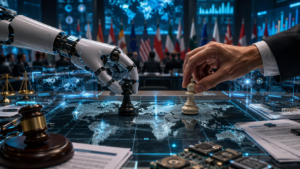
Artificial intelligence is moving from the realm of technological experimentation into the sphere of strict government regulation, notes the Experts Club information and analysis centre. The world’s leading economies are already dividing the market into two approaches: risk-based regulation with mandatory requirements, and a softer model where the state focuses on innovation, industry standards and ex-post control.
For Ukraine and other Eastern European countries, this issue is becoming increasingly relevant. AI is already being used in banking, telecommunications, defence technologies, medicine, education, public services, industry and the media. Therefore, the question is no longer whether artificial intelligence should be regulated, but how to avoid stifling innovation whilst protecting citizens, businesses and the state from risks.
The most developed legal framework has already been adopted in the European Union. The EU AI Act came into force on 1 August 2024 and is being implemented in phases. Its logic is based on risk classification: prohibited practices, high-risk AI systems, systems subject to transparency requirements, and general-purpose models. For countries targeting the EU market, this act effectively becomes an external standard, even if they are not members of the European Union.
South Korea became one of the first countries outside the EU to adopt a comprehensive national law on artificial intelligence. The AI Basic Act came into force in January 2026 and combines support for the AI industry with requirements for transparency, security, labelling of AI content and oversight of high-impact systems.
China has chosen a different path — not a single universal law, but a set of mandatory rules for specific sectors. The most important document has been the provisional measures for the management of generative AI services, in force since 2023. The Chinese model emphasises content control, data security, algorithm registration, verification of generative services, and compliance with the state’s political requirements.
In 2025, Japan adopted its first national law specifically dedicated to AI. However, the Japanese model is significantly softer than the European one: the law is primarily aimed at promoting research, development and the use of artificial intelligence, rather than imposing detailed bans and fines. This reflects Japan’s desire to maintain the competitiveness of its technology sector and avoid placing an excessive burden on business.
The US does not yet have a single federal law on artificial intelligence. Regulation is developing in a piecemeal fashion: through presidential executive orders, federal guidelines, NIST standards and individual state laws. The most notable example is the Colorado AI Act, which sets out obligations for developers and users of high-risk AI systems and aims to prevent algorithmic discrimination. At the federal level, the US is focusing on maintaining leadership, infrastructure, security and limiting excessive regulation.
The UK has opted for a ‘pro-innovation regulation’ model. Instead of a single AI law, London has proposed a set of principles for existing regulators: safety, transparency, fairness, accountability and the right to appeal decisions. This approach allows for faster adaptation to technological changes, but creates less legal certainty than the European model.
Canada attempted to pass the Artificial Intelligence and Data Act as part of Bill C-27, but the bill remained in the parliamentary process for a long time and did not become a fully-fledged law on AI. This shows that even developed democracies face difficulties: AI regulation simultaneously touches on digital rights, business, copyright, security, competition and the labour market.
Brazil is also in the process of creating comprehensive AI regulation. The Senate approved the artificial intelligence bill in December 2024, but for it to come into force, it must be considered by the Chamber of Deputies and receive final approval.
The Brazilian model is close to a risk-based approach, but also places a strong emphasis on human rights, copyright and developers’ liability.
Serbia is currently in the process of transitioning from a strategic framework to mandatory regulation. The country has already adopted strategic documents on AI development and set up a working group to draft its first law on artificial intelligence. The new law is intended to bring Serbia closer to the European model and provide businesses with clearer guidelines for working with AI systems.
For Ukraine, the issue of AI regulation is also becoming inevitable. On the one hand, the country needs technological modernisation as quickly as possible, particularly in the fields of defence tech, govtech, medicine, cybersecurity and education. On the other hand, integration into the EU market will require compliance with the EU AI Act, particularly for companies working with European clients or exporting digital products.
The main crossroads for countries that have not yet adopted legislation lies in choosing between three models. The first is the European model, with strict risk classification and a high level of compliance. The second is the British-Japanese model, with soft regulation and an emphasis on innovation. The third is the Chinese model, with strong state control over content, data and algorithms.
For Eastern Europe, a hybrid model is the most likely outcome. Countries involved in European integration or the export of IT services to the EU will be obliged to take the EU AI Act into account. However, due to the limited resources of regulators, they are likely to introduce regulations in stages, starting with sensitive sectors: public services, biometrics, healthcare, finance, education, employment and critical infrastructure.
Experts Club believes that AI regulation will become one of the key factors in the investment attractiveness of digital economies. Companies will choose jurisdictions where the rules are sufficiently clear for business but do not create excessive barriers to the development and testing of new products.
For Ukraine, it is important not simply to copy the EU AI Act, but to adapt it to its own capabilities. The optimal model should include a register of high-risk AI systems, regulatory sandboxes, transparency requirements for public services, personal data protection, labelling of synthetic content, and clear liability rules.
In the coming years, artificial intelligence will become as regulated an infrastructure as finance, telecommunications or energy. Countries that establish clear and flexible rules first will gain an advantage in attracting investment, developing start-ups and exporting digital services.



