
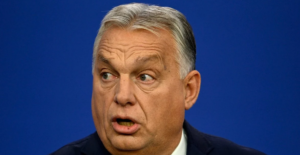
Former Hungarian Prime Minister Viktor Orbán has been re-elected as leader of the Fidesz party for a one-year term, despite the party’s defeat in the April parliamentary elections and a drop in its poll ratings.
At the party convention, 729 delegates voted for Orbán out of 737 valid ballots. There were no votes against, and eight delegates abstained. Orbán was the only candidate for the party leadership.
The re-election confirmed that Orbán retains control over Fidesz even after losing power. The party moved into opposition after 16 years in power, losing the April elections to the Tisza party led by Péter Magyar.
According to Reuters, recent polls show a sharp shift in the political balance in Hungary: support for Fidesz has dropped to about 17%, while Tisza received about 55%. In the elections, Mályi’s party secured a parliamentary majority sufficient to overhaul parts of the political and institutional system established under Orbán.
At the convention, Orbán acknowledged responsibility for Fidesz’s defeat and stated that the party must learn to operate under new conditions—no longer as the ruling party, but as the opposition. At the same time, his re-election indicates that there is currently no public alternative to the former prime minister within Fidesz.
For Hungary, this means that Orbán remains a key figure in the right-wing opposition and the main political opponent of Péter Magyar’s government. In the coming year, Fidesz will likely attempt to restructure the party, retain its core supporters, and formulate a strategy for returning to power.
Péter Magyar, a former member of the Fidesz political system, founded the Tisza party after breaking with Orbán’s inner circle and became the main beneficiary of public discontent with corruption, the state of institutions, and Fidesz’s prolonged dominance. His election victory marked Orbán’s biggest political defeat since 2010.
Viktor Orbán is a Hungarian politician and one of Europe’s most prominent right-wing leaders. He first served as Prime Minister of Hungary from 1998 to 2002, then returned to power in 2010 and led the government for 16 years. During Orbán’s tenure, Fidesz established a model of governance that the politician himself called “illiberal democracy.” His governments pursued a strict immigration policy, tightened control over institutions and the media, and clashed with the EU over issues of the rule of law.
Ukraine has implemented about 15% of the reforms outlined in the 10-point plan agreed upon with the European Union as part of its preparations for accession negotiations, The Guardian reports, citing an assessment by EU officials.
According to the publication, the plan was agreed upon in December between European Commissioner for Enlargement Marta Kos and Ukrainian Deputy Prime Minister Taras Kachka. It includes priority steps in the areas of the rule of law, anti-corruption policy, the judicial system, and the prosecutor’s office.
Specifically, the program calls for measures to strengthen the independence of Ukraine’s National Anti-Corruption Bureau (NABU) and the Specialized Anti-Corruption Prosecutor’s Office (SAPO), the adoption of an anti-corruption strategy, and reforms to the procedures for appointing judges and prosecutors.
The Guardian notes that European officials acknowledge the efforts of Ukraine and Moldova to carry out reforms under difficult circumstances; however, in the case of Ukraine, this assessment is accompanied by disappointment over the insufficiently rapid implementation of agreed-upon priorities.
The publication appeared against the backdrop of the start of the first phase of Ukraine and Moldova’s EU accession negotiations. This stage concerns the so-called first cluster of negotiations—issues of the rule of law, democracy, the functioning of institutions, and fundamental reforms.
For Ukraine, these areas are key, as without progress in the anti-corruption and judicial spheres, further advancement through the negotiation clusters will be difficult. The EU traditionally views the independence of anti-corruption bodies and the quality of the prosecution service and judicial system as the foundation for all other reforms.
Ukraine applied for EU membership in February 2022 following the start of Russia’s full-scale invasion. In June 2022, the country received candidate status, and in 2024, the EU formally opened accession negotiations. However, practical progress in the negotiations depends on the implementation of reforms and the unanimous support of all EU member states.
The Guardian reports that EU accession requires a candidate country to adopt thousands of European laws and decisions, as well as approval from all current EU members. Therefore, even with political support for Ukraine, the integration process could take years.
Source: The Guardian – “Ukraine and Moldova to enter first phase of EU membership negotiations”.

According to Serbian Economist, North Macedonian President Gordana Siljanovska-Davkova stated that the European Union needs to revise its methodology for accession negotiations, as the current format, in her words, should not be based on the principle of “shut up and listen.”
Siljanovska-Davkova emphasized that North Macedonia does not accept such an approach to dialogue with the EU. According to her, the negotiation process should be based on equality, respect, and clear criteria, rather than on political demands that go beyond the classic conditions for accession.
The criticism came amid a protracted deadlock in North Macedonia’s European integration. The country received candidate status back in 2005, but its path to the EU was blocked for many years, first by a dispute with Greece over the country’s name, and then by disagreements with Bulgaria regarding history, language, and the rights of the Bulgarian minority.
Following the 2018 Prespa Agreement, the country changed its name from Macedonia to North Macedonia, which paved the way for NATO accession and was intended to accelerate European integration. However, the negotiation process later stalled again due to demands related to the inclusion of Bulgarians in the country’s constitution.
In 2022, the EU agreed on the so-called French proposal, which was intended to lift the Bulgarian veto and unblock the negotiations. However, in Skopje, this formula sparked heated political controversy: some political forces believe that bilateral historical and identity issues should not become part of European criteria.
Siljanovska-Davkova has previously criticized the EU’s approach, stating that enlargement must return to the Copenhagen criteria, the principles of meritocracy, reforms, and the rule of law, rather than depend on additional bilateral requirements.
Formally, the country remains on the European path; however, without constitutional changes and a political compromise with Bulgaria, the opening and advancement of negotiation chapters remain complicated.
Currently, the official candidate countries for EU membership are Albania, Bosnia and Herzegovina, Georgia, Moldova, Montenegro, North Macedonia, Serbia, Turkey, and Ukraine. Kosovo is viewed by the EU as a potential candidate, but its status is complicated by the fact that five EU member states do not recognize Kosovo’s independence.
Turkey’s history shows that candidate status alone does not guarantee accession.
Turkey applied for membership in the then-European Economic Community as far back as 1987, received candidate status in 1999, and accession negotiations began in 2005.
However, Turkey’s negotiations with the EU have effectively reached an impasse and have not progressed for many years. The main reasons are the EU’s concerns regarding the state of democracy, human rights, the rule of law, and media freedom, as well as political disagreements with certain EU member states. While Turkey formally remains a candidate country, its EU membership is not considered a realistic scenario in the near future.
For North Macedonia and other candidate countries, the Turkish example serves as a reminder that the accession process can take decades. Therefore, Skopje is pushing for a more predictable and politically balanced methodology, under which progress toward the EU would depend primarily on reforms rather than on new bilateral blockages.
https://t.me/relocationrs/3030

A revision of EU air passenger rights regulations could pose a serious challenge to the business model of Wizz Air and other ultra-low-cost carriers, which generate profits not only through base fares but also through a wide range of additional paid services.
European institutions are discussing updates to rules related to compensation for flight delays and cancellations, passengers’ rights to carry-on baggage, seating arrangements for families, transparency regarding additional fees, and the handling of complaints. For traditional airlines, this means an increased compliance burden, but for ultra-low-cost carriers, the potential impact could be greater, as a significant portion of their revenue comes from ancillary revenue—baggage fees, seat selection, priority boarding, rebooking, and other services.
Wizz Air is one of the most prominent examples of this model in Europe. The company’s base fare typically includes a minimal set of services, while many aspects of the trip are paid for separately. Wizz Air’s official website states that passengers may bring one carry-on bag measuring up to 40 x 30 x 20 cm on board free of charge, provided it fits under the seat. Larger carry-on bags, checked baggage, seat selection, and a range of other services are subject to additional fees.
It is this business model that allows low-cost carriers to offer low base fares while simultaneously increasing average revenue per passenger through additional services. If the EU introduces stricter requirements for free carry-on baggage, seating children next to accompanying adults, or limits certain fees, a portion of airlines’ revenue could come under pressure.
The key debate centers on the revision of Regulation (EC) No 261/2004, which governs compensation and assistance to passengers in the event of denied boarding, flight cancellations, and long delays. According to the European Parliament’s analytical service, the EU Council proposed in 2025 to change the compensation thresholds, specifically to set longer delay thresholds for payments, while the European Parliament advocates for maintaining stricter passenger protections and additional rights, including stricter rules on carry-on baggage and a ban on unfair ancillary charges.
For Wizz Air, the risk lies in the fact that the regulator could affect two pillars of the business model at once: revenue from ancillary services and operational discipline. Ultra-low-cost carriers operate with high fleet load factors, tight schedules, and rapid aircraft turnaround. Any new requirements regarding passenger service, compensation, connections, baggage, or seating could increase costs and reduce flexibility.
The issue of carry-on baggage could become particularly sensitive. Currently, many European low-cost carriers distinguish between a small bag stored under the seat and a full-sized cabin bag placed in the overhead compartment.
If the new version of the rules establishes passengers’ right to a larger allowance of free carry-on luggage, this will cut into one of the usual sources of additional revenue. Additionally, airlines may face an operational challenge: the cabins of narrow-body aircraft simply lack the physical space to accommodate full-sized carry-on luggage for all passengers.
The second sensitive issue is seating families together. If airlines are required to seat children next to their parents or accompanying adults for free, this will limit the monetization of seat selection. For passengers, this will be an improvement in service, but for low-cost carriers, it will mean a loss of revenue from seat selection.
The third area is compensation for delays and cancellations. The current EC261 regulation provides for payments ranging from 250 to 600 euros depending on the flight distance under certain conditions. Wizz Air explicitly lists these compensation amounts under EC261 on its website.
Airlines and industry associations warn that expanding passenger rights could significantly increase their costs. According to estimates cited in industry discussions, the current EC261 regime already costs European carriers approximately €8 billion per year, and expanding the requirements could increase this amount.
However, for passengers and consumer organizations, the argument is the opposite: the European air travel market has become more complex, and many fees and restrictions have become opaque. From this perspective, tightening the rules should not destroy the low-cost model, but rather make it more transparent—so that the final ticket price is clearer from the very beginning of the purchase.
For the markets of Central and Southeastern Europe, potential changes are particularly important. Wizz Air holds a strong position in Hungary, Romania, Poland, Serbia, North Macedonia, Albania, Bosnia and Herzegovina, and other countries in the region. For many airports and passengers, the company has become a key provider of affordable international flights. Any change in the low-cost carrier economy could affect flight frequency, prices, and route availability.
On the other hand, pressure on Wizz Air does not necessarily mean abandoning the current model. The company can adapt by raising base fares, introducing new package deals, optimizing schedules, revising baggage policies, digitizing claims processing, and increasing the share of direct sales. Low-cost carriers have already gone through similar regulatory cycles and typically responded not by exiting the market, but by adjusting their fare structures.
The key question for Wizz Air and other ultra-low-cost carriers is how far the EU will go. If the reforms are limited to clarifying compensation and procedures, the impact will be manageable. However, if the rules affect free baggage, family seating, and additional fees, the pressure on ancillary revenue could become significant.
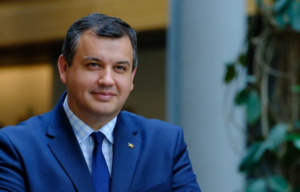
Eugene Tomac, a native of southern Odessa region and a Romanian Member of the European Parliament, withdrew his candidacy for the post of prime minister after failing to form a cabinet within the 10-day deadline set by law. Romanian President Nicușor Dan subsequently nominated Adrian Veștu—deputy leader of the National Liberal Party, former Minister of Development, and head of the Brașov County Council—as the new candidate for prime minister.
Tomac was nominated on June 4 as an independent candidate tasked with forming a technocratic government and leading the country out of the political crisis. However, the parliamentary parties did not provide him with sufficient support. According to Reuters, political leaders preferred the option of a minority government rather than a technocratic cabinet.
The political crisis in Romania began after the collapse of the pro-European coalition and the resignation of Ilie Bolojan’s government. The fall of the cabinet complicated economic decision-making, jeopardized access to European funding, and increased pressure on the national currency.
Eugene Tomac was born in 1981 in the Ukrainian part of historic Bessarabia, in what is now the Odessa region. At age 17, he moved to Romania under a scholarship program for ethnic Romanians from neighboring countries. He later graduated from the University of Bucharest, where he studied history, journalism, and politics.
In Romania, Tomac served as State Secretary at the Ministry of Foreign Affairs, a member of parliament, and leader of the People’s Movement Party (PMP); since 2019, he has been a member of the European Parliament. In the European Parliament, he represented Romania and advocated for a pro-European course, support for Moldova, and the strengthening of the eastern flank of the EU and NATO.
The new prime minister-designate, Adrian Vestea, now has 10 days to form a cabinet and secure a vote of confidence in parliament. President Dan described him as a pro-Western politician, a man of dialogue, and an administrator with experience in managing budgets and European funds.
Romania remains one of the largest countries in Eastern Europe, a member of the EU and NATO, and an important neighbor of Ukraine. Therefore, the protracted government crisis in Bucharest is significant not only for domestic politics but also for regional stability, the economy, and the coordination of the EU’s Eastern European policy.
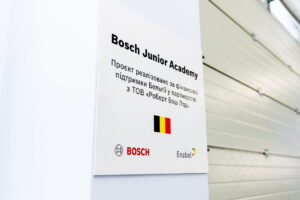
On June 9, the Bosch Junior Academy—a modern educational and innovation hub focused on automotive maintenance, diagnostics, and repair—opened in Chernihiv, according to a statement from the press office of Robert Bosch Ltd. to the Interfax-Ukraine news agency.
The new educational facility is operating on the premises of the Chernihiv Higher Vocational School. Investments in the material and technical infrastructure of the Bosch Junior Academy project in Ukraine have exceeded EUR 100,000 at this stage. Students will train using state-of-the-art Bosch diagnostic equipment, which is used in leading auto service centers worldwide, and the training process is designed to closely mimic the working conditions of a modern auto service center.
This project was implemented in partnership between the Belgian Agency for International Cooperation (Enabel) and Bosch in Ukraine, with the support of the Ministry of Education and Science of Ukraine and the Chernihiv Regional Military Administration.
“For us, this project is an attempt to create a new model of cooperation between the government, business, and vocational education. We want to explore how the private sector can be integrated into the training of specialists so that educational programs align with the real needs of the labor market. “Bosch was one of the first private companies to offer its assistance to Ukraine, and today we are continuing this cooperation by creating real opportunities for professional development and employment for young people,” noted Dirk Depre, Director of Enabel in Ukraine.
According to Sergey Baranovsky, CEO of Robert Bosch Ltd., the opening of the Bosch Junior Academy in Chernihiv is an important step that underscores the company’s strategic vision for the development of vocational education in Ukraine.
The company noted that the first Bosch Junior Academy opened in Boryspil at the end of 2025. In 2026, the company, together with the Enabel agency, is continuing to expand its network of educational and innovation hubs: in addition to the newly opened academy in Chernihiv, preparations are underway to open another learning space in the city, and work is underway to launch the Bosch Junior Academy in Brovary.
These projects are part of Bosch’s long-term strategy aimed at supporting vocational education, developing the industry community, and strengthening the human capital of the Ukrainian labor market. Upon completion of the training, program participants receive internationally recognized certificates and qualifications that are accepted by the Bosch Service network in various countries around the world. The partnership with the Bosch Auto Service network opens up opportunities for students to complete internships and secure future employment: according to the latest survey, over 30% of interns have successfully found jobs within the network.
The Belgian Agency for International Cooperation (Enabel) supports Ukraine’s recovery, reconstruction, and European integration. In cooperation with the Ministry of Education and Science, Enabel supports the transformation of institutions in 12 regions into Centers of Professional Excellence. In the target regions of the BE-Relieve program—the Kyiv and Chernihiv regions—the agency is also investing in the development of Junior Academy hubs, construction of shelters, and innovative training and retraining programs for specialists.
Bosch in Ukraine is one of the leading suppliers of solutions for the automotive industry, the auto parts market, power tools, heating, air conditioning, and hot water supply systems, energy-efficient technologies, security systems, industrial solutions, and home appliances.



