

One of Ukraine’s largest pharmaceutical distributors, Optima-Pharm, Ltd. (Kyiv), saw its net profit drop by 53% in 2025—to nearly 1.67 billion UAH.
As the company reported in its 2025 annual report, sales of goods and services during this period increased by 2.9% to nearly UAH 76.251 billion, while revenue from goods sales rose by 2% to nearly UAH 70.944 billion.
Revenue from the sale of pharmaceuticals amounted to approximately UAH 59.821 billion, which is nearly equal to the 2024 figures; revenue from the sale of dietary supplements increased by 5% to UAH 6.506 billion; revenue from the sale of medical devices increased by 15% to more than UAH 2.643 billion; revenue from cosmetics sales decreased by 11% to 785.957 million UAH.
The company noted that several of Optima-Pharm’s owned and leased warehouses were destroyed as a result of rocket attacks; management assessed and recognized losses in the amount of 2.3 billion UAH.
“Some suppliers have agreed to replenish inventory levels at the company’s warehouses or compensate for the losses in other ways; management continues negotiations with others,” Optima-Pharm notes in the report.
As reported, in May, the Antimonopoly Committee of Ukraine (AMCU) fined “Optima-Pharm, LTD” 7.094 million UAH. The fine was imposed for providing the committee with incomplete information at the request of the AMCU’s deputy chairman.
Earlier, in July 2025, the AMCU fined “BaDM” and “Optima-Pharm, LTD” for violating competition law for a total amount of over 4.8 billion UAH (2.374 billion UAH for ‘BaDM’ and 2.432 billion UAH for “Optima-Pharm, LTD”).
Later, in October, the AMCU decided not to suspend its decision regarding “BaDM” and “Optima-Pharm, LTD,” which had challenged the committee’s decision in court.
In December 2025, the enforcement service, acting on a claim by the AMCU, initiated enforcement proceedings to collect the debt from the pharmaceutical distributor BaDM LLC; in April of this year, similar proceedings were initiated against the joint venture Optima-Pharm, LTD (Kyiv), which are the largest pharmaceutical distributors in Ukraine.
As reported, on November 18, Russian troops once again shelled Optima-Pharm’s warehouses; the company’s warehouse building in Dnipro was completely destroyed. Earlier, on October 25, Optima-Pharm’s warehouse complex and office in Kyiv were damaged by shelling, with losses estimated at $100 million; on August 28 of last year, another Kyiv warehouse belonging to the distributor was destroyed.
As reported to the agency “Interfax-Ukraine” by the AMCU, the committee currently has no information that the fines totaling nearly 4.807 billion UAH imposed on the two largest pharmaceutical distributors, BaDM LLC and Optima-Farm, Ltd. Joint Venture, following the committee’s lawsuit, have been collected.

FC “Dynamo Kyiv” defeated FC “Chernihiv” 1–3 in the final and claimed the Ukrainian Football Cup, according to Suspilne Sport.
According to the report, Dynamo won the Ukrainian Cup for the first time in five years; the previous two Cup tournaments were won by Shakhtar, which was eliminated by Dynamo in the Round of 16 this season. On its way to the final, Chernihiv eliminated Metalist 1925 and became the first First League representative in seven years to reach the tournament’s decisive match.
For Dynamo, the Ukrainian Cup title is the 14th in the club’s history; the Kyiv team last lifted the trophy in the 2020/21 season under Mircea Lucescu.

Watching short videos before bed may not only impair sleep quality but also contribute to daytime fatigue. This is the conclusion reached by researchers in China who studied the link between problematic short-video consumption and symptoms of insomnia among college students, according to a study published in the journal Personality and Individual Differences.
The authors analyzed data from 6,691 students in central China. The survey was conducted twice at three-month intervals: participants answered questions about their short-video viewing habits, sleep difficulties, daytime fatigue, mood, and reduced productivity.
The study revealed a bidirectional relationship: excessive use of short-form video platforms predicted an increase in sleep problems three months later, but the reverse effect was even stronger. People who felt tired, lethargic, or had a worsened mood during the day due to poor sleep were more likely to lose control over their video viewing and use it as a way to quickly relieve tension or boredom.
According to the researchers, daytime fatigue acts as a kind of “bridge” between insomnia and problematic use of digital platforms. Lack of sleep reduces self-control and the ability to resist instant gratification, while short videos offer a simple and almost effortless form of emotional release. As a result, a person may start watching videos again in the evening, fall asleep later, and feel even more tired the next day.
The authors note that short-video platform algorithms reinforce this cycle: a personalized feed holds the user’s attention, and the user often underestimates how much time they have already spent watching. Difficulty falling asleep proved to be a particularly significant factor, as it can trigger a persistent habit of delaying sleep.
For businesses and the digital services market, this study is important because it highlights not only the power of engaging algorithms but also the growing demand for digital well-being. Apps, educational platforms, employers, and healthcare services will increasingly take into account the impact of nighttime screen time on users’ productivity, mental health, and quality of life.
The researchers emphasize that the problem is not simply a matter of “weak willpower.” When a person sleeps poorly and feels tired during the day, their ability to control impulses decreases, and digital entertainment becomes the most accessible way to achieve short-term relief.
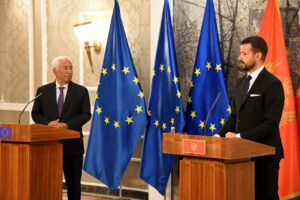
According to Serbian Economist, the event will take place at Porto Montenegro, and city authorities are already preparing temporary traffic restrictions, changes to access procedures, and enhanced security measures.
Montenegrin President Jakov Milatović and European Council President António Costa have sent joint invitations to the leaders of EU countries and Western Balkan states. The summit is set to bring together European leaders at a time when enlargement policy is once again high on the EU’s agenda.
The summit is expected to be attended by European Union member states and six Western Balkan countries: Albania, Bosnia and Herzegovina, Kosovo, Montenegro, North Macedonia, and Serbia. These six economies are traditionally part of the EU-Western Balkans format, which is used to discuss the region’s European integration, reforms, security, infrastructure, energy, and economic convergence with the EU.
Earlier, local authorities reported the arrival of over 30 European delegations, though the final number may be higher when accounting for representatives of EU institutions, EU member states, countries in the region, and accompanying teams.
For Montenegro, hosting the summit is of particular significance. Milatović called it a historic moment, as the country is hosting such a major meeting between the European Union and the Western Balkans for the first time.
Tivat will operate under special arrangements in connection with the forum. On June 4–5, the city expects temporary traffic restrictions, heightened security measures, and changes to access in the Porto Montenegro area, where the summit will take place. Short-term road closures are possible, primarily on the route from Tivat Airport to the city center, as well as special traffic arrangements on Arsenalska and Istarska Streets.
Some parking lots will be temporarily closed, and Tivat Airport will adjust its operations to accommodate the international forum. Authorities are also considering changes to school schedules on June 4–5 and are preparing a cultural program for residents and visitors on the city waterfront on June 4.
The main political theme of the summit is the European perspective for the Western Balkans. Against the backdrop of the war in Ukraine, intensifying geopolitical competition, and the EU’s desire to accelerate expansion, the region has once again found itself in the spotlight in Brussels. Montenegro and Albania are considered the most advanced candidates for EU accession, while Serbia, Bosnia and Herzegovina, Kosovo, and North Macedonia face more complex political and institutional dynamics.
For the region’s economy, the summit is important not only as a political meeting. The focus is expected to be on infrastructure connectivity, access to European funds, energy security, a common regional market, transport corridors, and investments.
https://t.me/relocationrs/2850
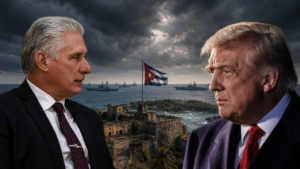
The United States is intensifying pressure on Cuba, and information has appeared in the American media that Donald Trump’s administration is increasingly considering the possibility of using military force against Havana. According to Politico, cited by Anadolu, frustration is growing in Washington that sanctions, energy pressure and attempts to restrict fuel supplies to the island have not forced the Cuban leadership to agree to the required economic and political changes. One Politico source said that the military option is now “on the table” to a greater extent than before.
Officially, Washington has not announced a decision to use force against Cuba. However, the fact of increased pressure is confirmed by the actions of the U.S. administration: on May 18, the State Department announced sanctions against 11 representatives of the Cuban regime and three entities linked to the Cuban authorities, while Reuters reported that the sanctions affected high-ranking political, military and intelligence representatives of Cuba.
Cuban President Miguel Díaz-Canel warned that any U.S. military action against Cuba would lead to “bloodshed” and serious consequences for peace and stability in the region. The reason for a new round of tension was, in particular, an Axios report that Cuba had allegedly received more than 300 military drones and discussed the possibility of using them against American facilities, including the Guantánamo base. Havana rejected these accusations and stated that the United States was creating a pretext for a possible intervention.
According to the assessment of the Experts Club analytical center, the situation does not yet mean an inevitable military scenario, but it shows a qualitative change in the American line: pressure on Cuba is ceasing to be only sanctions-based and diplomatic and is increasingly accompanied by military rhetoric. This increases the risk of miscalculation, especially amid the energy crisis on the island, domestic political pressure in the United States and the high sensitivity of the Guantánamo issue.
A comparison of the capabilities of the United States and Cuba shows not a symmetrical military confrontation, but a gap between a global superpower and a country whose defense model is designed primarily for territorial mobilization and resistance. Global Firepower ranks the United States first among 145 countries in the 2026 military strength ranking, while Cuba is characterized as a force with limited conventional capabilities and a strong reliance on a reserve-paramilitary system.
According to open estimates by Global Firepower, the United States has about 1.33 million active military personnel and about 799,500 reservists. The total number of military personnel is estimated at approximately 2.13 million people. By comparison, Cuba, according to the same database, has about 50,000 active military personnel, about 40,000 reservists and a large paramilitary component estimated at more than 1.1 million people.
In aviation and the navy, the gap is even more significant. The United States has global aviation, naval and logistical infrastructure, while the Cuban model, according to Anadolu, citing the IISS and Global Firepower, is focused not on projecting force beyond the country’s borders, but on asymmetric defense, deterrence and prolonged resistance.
A detailed comparison of artillery, mortars, drones and other categories of weapons in such material would be methodologically weak and politically risky: data on Cuba are incomplete, a significant part of the equipment is of Soviet or Russian origin and has an unknown degree of combat readiness, while information about drones is currently the subject of an information dispute between American sources and Havana. Therefore, it is more correct to speak not of “weapons parity,” but of different security models: the United States has global strike and expeditionary power, while Cuba has a defensive system designed for population mobilization, dispersal and political resilience.
“From a military point of view, the United States and Cuba are in incomparable weight categories. But precisely for this reason, a potential conflict would not be a classic clash of equal armies, but a crisis with extremely high political, humanitarian and regional risks. The history of the Caribbean Basin shows that even limited actions around Cuba can quickly become an international problem,” says Maksym Urakin, founder of the Experts Club analytical center.
According to him, the main risk lies not in Cuba’s ability to wage an offensive war against the United States, but in the possibility of uncontrolled escalation. “Cuba is objectively not a military power of the U.S. level, but it has symbolic and geopolitical significance, a developed system of internal mobilization and experience of living under pressure. Any use of force could cause not only military, but also migration, energy, diplomatic and regional consequences,” Urakin believes.
For Latin America, the possible use of force against Cuba would be a serious blow to regional stability. Even countries that are critical of the Cuban regime may not support direct military intervention, since the region retains a historically strong sensitivity to external U.S. interference. For Washington, this creates a risk of diplomatic isolation in part of the Western Hemisphere.
For the global economy, a direct conflict around Cuba would not have the same scale as a war in the Middle East or Eastern Europe, but it could hit the Caribbean region, tourism, migration flows, maritime shipping insurance and U.S. political relations with Latin America. The oil dimension remains a separate factor: Reuters reports that the United States has already tried to block most oil supplies from Venezuela to Cuba, which has intensified the fuel and energy crisis on the island.
Experts Club’s conclusion: the Politico information does not yet confirm that Washington has made a decision on a military operation against Cuba, but it does confirm a change in the atmosphere of American politics. Sanctions pressure, the energy blockade, reports about drones and Havana’s response statements form a dangerous linkage in which a diplomatic crisis could shift into the military sphere because of an error, provocation or domestic political calculation. For de-escalation, the sides need a channel of negotiations, since a force scenario around Cuba will almost certainly have consequences far beyond the island itself.

According to the Interfax-Ukraine Culture project, a panel discussion titled “The Ukrainian Film Industry: Sustainability, Distribution, and International Opportunities,“ dedicated to the development of the Ukrainian film market during the war, international distribution, and prospects for cooperation with the global film industry, the State Film Agency reports on its Facebook page.
”Despite the war, Ukrainian audiences continue to return to movie theaters and support local cinema. This creates not only cultural resilience but also a real market for Ukrainian cinema,” noted Andriy Nogin.
According to the NGO “UkrKinoFest,” participants in the discussion included Andriy Osipov, head of the State Agency of Ukraine for Cinema; Nataliia Movshovych, Deputy Minister of Culture of Ukraine; Andriy Nogin, General Producer of UnitedContentHUB and Head of the NGO “UkrKinoFest”; Kateryna Nahorna, International Sales Manager at FILM.UA Group; Valeria Sochivets, Co-founder of “Contemporary Ukrainian Cinema”; and Serhiy Lavrenyuk, General Producer at Solar Media Entertainment. The discussion was moderated by director and producer Ksenia Bugrimova.
During the discussion, participants discussed the state of Ukrainian commercial and auteur cinema, changes in audience preferences amid the war, new international distribution models, and the integration of the Ukrainian film industry into the global market.
In particular, Kateryna Nahorna presented the “Local for Local” international distribution model for Ukrainian-language releases abroad, targeting Ukrainian audiences outside the country. Case studies included “Mavka: The Forest Song,” the franchise “The Christmas Express / December 31st Express,” and the film “Mavka: The True Myth.”
“The Local for Local model demonstrates that Ukrainian cinema today has a global Ukrainian-speaking audience that can exist outside the bounds of traditional distribution,” Nagorna emphasized.
Valeria Sochivets highlighted the importance of supporting Ukrainian auteur cinema and the role of international festivals in maintaining the visibility of Ukrainian stories around the world. She also cited the example of the film “La Palissade” by director Philip Sotnychenko, which was presented at a number of international festivals.
Serhiy Lavrenyuk spoke about his experience collaborating with international studios, notably Lionsgate, and Ukraine’s potential as a creative and production partner for the global market.
“For major international companies, Ukraine today is not only a source of compelling stories but also a creative industry partner with talent, experience, and strong production capabilities,” Lavrenyuk noted.
The panel discussion was part of a series of industry events at the Ukrainian Pavilion in Cannes. The pavilion was organized by the NGO “UkrKinoFest” with the support of the Ukrainian State Film Agency.
As reported, the Ukrainian State Film Agency and the Tallinn Black Nights Film Festival discussed the promotion of Ukrainian cinema at international festivals. Also, Ukraine opened a national pavilion at the 79th Cannes International Film Festival.
In addition, Ukraine and Lithuania signed a memorandum on cooperation in the field of cinema during the Cannes Film Festival.
https://interfax.com.ua/news/culture/1169392.html



