

The Ministry of Culture of Ukraine has announced the inclusion of the transnational “Precucuteni-Ariusud-Cucuteni-Trypillia” Cultural Complex on UNESCO’s Tentative List.
“It comprises 15 archaeological sites located across eight regions of Ukraine, as well as 36 in Romania and 20 in the Republic of Moldova. The next step is the preparation of a complete nomination dossier for submission to UNESCO with the aim of including these sites on the World Heritage List,” the ministry’s statement reads.
It is noted that the included Ukrainian sites represent archaeological monuments that reflect the high level of development of settlements, planning, and material culture of the Eneolithic era on the territory of modern Ukraine.
As reported, on September 18, 2025, the ministries of culture of Ukraine, Romania, and Moldova signed a memorandum of understanding on cooperation in the preparation and promotion of a joint nomination dossier. The document formalized the three countries’ intention to jointly prepare and submit the transnational serial site “Precucuten-Ariusud-Cucuteni-Trypillia Cultural Complex” to the UNESCO World Heritage List.

The focus of summer vacations in Ukraine in 2026 has shifted toward mountain resorts and city tours, with budgets increasing by 25–40% compared to the previous vacation season, according to the analytics department of Ribas Hotels Group.
“Today, Ukrainians need rest and a safe place to recharge more than ever. And although access to international travel is currently limited, there are many places in Ukraine where you can relax on a variety of budgets,” noted Yelyzaveta Voloshyna, the company’s head of B2C sales and marketing.
At this stage, opportunities for seaside vacations are concentrated in the Odesa region.
The advantages of seaside resorts near Odesa include: a more peaceful vacation compared to the city, a family-friendly atmosphere in coastal villages, and lower costs compared to other leisure options. “But, unfortunately, choosing a seaside destination has its downsides, including security concerns and closed beaches, as well as underdeveloped infrastructure and a limited number of hotels where the price matches the quality,” Voloshina noted.
In recent years, demand for short getaways in cities and suburbs has been growing. Among the advantages is a developed infrastructure, which allows you to change your leisure plans on any given day if you wish. For example, in Odesa, with its officially open beaches, you can choose a day at the beach, a food tour, or exploring historical sites. There is also a wide range of vacation options to choose from, ranging from budget to premium. Most importantly, cities offer more accommodation options. The only downside to such a vacation in Odesa is the large number of people during the season.
At the same time, according to a study conducted by the company, mountain resorts lead the way in vacation plans. The pros of this type of vacation include: a greater share of modern amenities, safety, health benefits, a variety of activities, and many excursions. The cons include unstable weather, overcrowding, and high costs for lodging and attractions during peak season.
Regardless of the destination chosen, the “base” of the vacation budget will include four types of expenses. The largest share of the cost—40 to 50% of the vacation budget—will go toward accommodation. In high-end hotels, this share may be even higher, as the cost includes not just a bed, but also amenities: a spa, pools, and service.
According to Ribas Hotels Group estimates, this year the budget for accommodation in country estates or simple apartments is 800–1,500 UAH/night. For mid-range aparthotels and 3-star hotels, the cost is 1,800–3,500 UAH/night. Accommodation in hotels with a spa, pool, and excellent service will cost even more: 3,500–6,000 UAH per night. And a stay at a premium hotel will cost around 6,000–12,000+ UAH per night. For comparison: in 2025, guesthouses and basic apartments could be found for 600–1,200 UAH/night, 3-star hotels for 1,200 to 2,600 UAH/night, and hotels with a spa and pool in the range of 3,000–5,000 UAH/night.
In other words, in 2026, each segment became more expensive by an average of several hundred hryvnias per night (by 25–40%). The reason is the consistently high demand for domestic travel amid limited opportunities to travel abroad, as well as rising hotel operating costs: the cost of electricity for businesses in 2026 is 11.50–12.50 UAH per kWh, compared to 10.4 UAH in 2025; fuel prices have risen by 13.2% annually, according to the State Statistics Service.
Food and beverage costs rank second in terms of expenses, accounting for 20–30% of the total. This includes both main meals and “ambience” costs: coffee with a view, an evening cocktail, and regional cuisine. The food budget is typically calculated as 200–400 UAH per person for breakfast, 300–600 UAH for lunch, and 400–800 UAH for dinner.
“Thus, the average daily cost per person ranges from a minimum of 500–700 UAH to a comfortable 1,500–2,000 UAH,” said Voloshyna.
British mobile operator Vodafone Group reported a pre-tax profit in fiscal year 2026, compared to a loss a year earlier, with revenue increasing by 8%.
According to the company’s statement, pre-tax profit for the fiscal year ended March 31 was €1.86 billion, compared to a loss of €1.48 billion a year earlier, when it wrote down the value of assets in Germany and Romania by €4.5 billion.
Adjusted earnings before interest, taxes, depreciation, and amortization, including lease payments (EBITDAaL), rose 4% last year to €11.35 billion. Organic growth was 4.5%.
Vodafone’s annual revenue rose to €40.46 billion from €37.45 billion a year earlier.
Organic growth in service revenue—a key performance indicator for Vodafone—was 5.4%, with increases recorded in all regions except Germany (-0.2%). In the rest of Europe and Turkey, service revenue increased by 0.5% on an organic basis, in the UK by 0.3%, and in Africa by 12.9%.
The consensus forecast of analysts, compiled by Vodafone itself, projected annual revenue of €40.42 billion and adjusted EBITDAaL of €11.48 billion.
The company forecasts that in fiscal 2027, adjusted EBITDAaL will be €11.9–12.2 billion, and free cash flow excluding one-time items will be €2.6–2.9 billion.
In total, the company returned €3.1 billion to shareholders in the past fiscal year.
Vodafone shares are down 3.5% during Tuesday’s trading. Since the start of this year, their value has risen by 17.5%.

According to Serbian Economist, Serbia may decide on the location and technology for its future nuclear power plant in 2027, said Minister of Mining and Energy Dubravka Jedović-Handanović. According to her, the country has already entered the first phase of developing its nuclear program and has corrected a “historic mistake” by lifting the ban on considering nuclear energy.
The minister stated that an analysis is currently underway to determine where and how a nuclear facility could be integrated into Serbia’s power grid. A preliminary study has already examined possible options for connecting the future nuclear power plant to the grid, and next year the authorities expect to reach a decision on the site and technology.
Serbia views nuclear energy as part of a long-term response to rising electricity consumption, decarbonization, and the need for stable baseload generation. Serbia’s first nuclear power plant could be connected to the grid by 2040, and the country aims to become part of the global “nuclear renaissance.”
Authorities expect to complete the initial stages of preparation for construction by 2032. This involves not only selecting a site and technology but also establishing a regulatory framework, training personnel, forming a national organization to implement the nuclear program, assessing financing, and engaging with public opinion.
For Serbia, nuclear energy is becoming part of a broader discussion about the future structure of its energy mix. The country remains heavily dependent on coal-fired generation, while simultaneously developing solar and wind projects, battery storage, and gas infrastructure. However, for energy-intensive industries, data centers, artificial intelligence, and the future electrification of transportation, the authorities consider it necessary to have a stable source of baseload power.
Serbia’s most likely international partners for its nuclear program could be France, Russia, China, South Korea, the United States, Slovenia, and Hungary. France’s EDF has already presented Serbia with a roadmap for a nuclear program comprising 19 key steps: completion of studies by 2027, selection of technology and preparation of a construction contract by 2032, and commissioning of the nuclear power plant by 2040.
Russia, through Rosatom, has also discussed with Belgrade possible cooperation during the preparatory phase, primarily in the areas of knowledge exchange and support for the development of a nuclear program. However, political and sanctions-related risks make the Russian option more complicated, especially if Serbia aligns itself with European standards for financing and regulation.
China already has a memorandum of cooperation with Serbia in the nuclear sector, covering issues such as radioactive waste, radiation protection, personnel training, and technical support. South Korea’s KHNP has also signed a memorandum of cooperation with Serbia on nuclear energy and hydrogen, making Korea one of the potential technology partners.
The U.S. may be of interest to Serbia primarily through small modular reactors (SMRs) and technological cooperation, as Belgrade has previously spoken of seeking support to obtain approximately 1.2 GW of capacity based on SMR technology. Separately, the option of Serbia participating in the Hungarian Paks NPP by purchasing 5–10% of the capacity or a stake was discussed, which could be a faster way to access nuclear power generation without immediately building its own plant.
https://t.me/relocationrs/2800
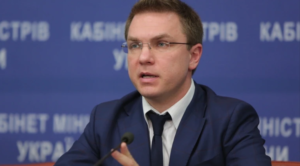
Artem Bidenko, president of the Ukrainian Publishers Association (UPA), states that pirated publications account for nearly a third of the book market, and most of them are sold through marketplaces and websites.
“When a Ukrainian book is pirated on the day of its release, legal publishers are physically unable to purchase the rights for an official translation—the rights holder sees that the market is flooded with counterfeits and refuses. This is how legal translation is systematically being killed off. This is how authors don’t receive royalties. This is how translators don’t receive fees. This is how the state loses tax revenue. And this is how readers end up with machine translations ‘on toilet paper’ instead of literature. According to our estimates, nearly a third of the market consists of illegal content,” Bidenko wrote on Facebook.
According to him, most illegal publications are sold through marketplaces and websites that are easily found via search engines.
“And it is Google that is currently the main sponsor of piracy in Ukraine, paradoxical as it may seem. Because the scheme is perfectly designed to bypass local blocks. The SBU blocks a domain—pirates register a new one within a day. The State Committee for Television and Radio Broadcasting blocks that one—the next one appears. At the level of Ukrainian internet providers, it’s an endless game of cat and mouse. But all these stores thrive on Google—through indexing, through Google Shopping, through ads, through reviews on Google Maps,” Bidenko noted.
In his view, if Google begins to heed official requests from the State Committee for Television and Radio Broadcasting and the SBU and de-index domains with confirmed piracy, it will become technically unprofitable for networks to launch yet another site, because without search engine results, no one will find them.
“This is a working mechanism. It is already used for the DMCA in the U.S., for child safety, and for sanctions lists. Today, the industry, together with the Ministry of Culture and the Ministry of Education and Science, has appealed to Google Ukraine with a request to implement a mechanism for blocking illegal content,” said the president of the UIA.

Kyiv Electric Locomotive Repair Plant JSC (KEVRZ), a subsidiary of Ukrzaliznytsia, reported a loss of UAH 20.2 million in January–March 2026, compared to a net profit of UAH 0.48 million for the same period in 2025.
According to the company’s interim financial report published in the disclosure system of the National Securities and Stock Market Commission (NSSMC), its net revenue increased by 14.6% to UAH 250.5 million.
The plant reported a gross loss of UAH 5.4 million compared to a gross profit of UAH 10.7 million a year earlier, with an operating loss of UAH 19.2 million compared to an operating profit of UAH 1.6 million.
The company notes that during the reporting period, it sold 18 refurbished electric locomotive sections for UAH 224.2 million (in the first quarter of 2025 – 8 sections for UAH 188.7 million), 25 wheel sets for UAH 10 million (35 sets for UAH 15.9 million), 104 traction motors and auxiliary machines for 14 million UAH (84 units for 11 million UAH).
KEVRZ was founded in 1868. It specializes in the overhaul of electric trains for Ukrainian railways, the repair of components and assemblies, electric machines, electric motors, and wheel sets, as well as the manufacture of spare parts.
The plant ended 2025 with a net profit of 70.2 million UAH—4.4 times more than the previous year—following a 34.2% increase in net revenue to 1.703 billion UAH. It repaired 51 electric sections, 223 wheel sets, 538 traction motors, and auxiliary machines.



