

The National Bank of Ukraine has increased the deadline for settlements on agricultural and specialized equipment export transactions carried out from March 1, 2026, from 180 to 270 days.
This applies to goods classified under UKT VED codes 8424, 8428, 8432, and 8716.
The NBU specifies that the decision was made following consultations with the Ministry of Economy, Environment, and Agriculture and taking into account the government’s proposals (Cabinet of Ministers Order No. 573-r of June 21, 2024).
The changes were approved by NBU Board Resolution No. 18 dated February 26, 2026, which comes into force on February 28, 2026.
The Ministry of Economy believes that extending the deadline “from 180 to 270 calendar days” will help exporters avoid the risks of reduced supplies due to long production cycles and the specifics of fulfilling foreign economic contracts, as well as support the continuity of contracts and the inflow of foreign currency earnings.
AGRICULTURAL MACHINERY, EXPORTS, foreign currency earnings, NBU, REGULATION

Kyiv ranked 254th out of 304 cities in the Quality of Life Index by City 2026 ranking published by Numbeo, with an index of 118.0 points.
The Hague in the Netherlands topped the ranking with a score of 230.1, followed by other Dutch cities in the top ten, including Utrecht, Eindhoven, Groningen, Rotterdam, and Amsterdam, as well as Luxembourg, Vienna, Ghent, and Nuremberg.
At the bottom of the list are Colombo (56.1), Manila (53.2), and Lagos (0.0).
Numbeo emphasizes that the 2026 version is a “historical snapshot” and is published periodically as a snapshot of data at a specific point in time, while the “current” ranking is updated continuously.
The Numbeo Quality of Life Index is a composite indicator calculated based on sub-indices of purchasing power, safety, healthcare, cost of living, housing affordability, travel time, pollution, and climate. The index is based on data and user surveys/contributions from website visitors, with Numbeo stating that it filters out potential spam and requires a sufficient number of participants for each location; the formula uses the Math.max(0, …) restriction, which may result in outsiders being assigned a value of 0.0.

From March 1, pensions in Ukraine will be indexed by 12%. The recalculation will be carried out automatically, so no applications need to be submitted, according to Denis Ulyutin, Minister of Social Policy, Family, and Unity of Ukraine
“The indexation will affect all pensioners, except those whose pensions are scheduled to be paid in 2025 and early 2026. The recalculation will be done automatically. No applications need to be submitted. Funds for the indexation have been allocated,” the minister’s press service quoted him as saying on Saturday.
As noted in a statement received by Interfax-Ukraine, all recalculations will be carried out in a timely manner and in full. The state will ensure that the indexation is carried out even under martial law. The financial resources for this have been allocated. In addition to indexation, work is continuing on comprehensive pension reform.
“We are currently finalizing the final calculations. It is important for us that the new pension system is financially sustainable for decades to come,” Ulyutin said.
According to him, a comprehensive bill is being prepared that will cover the solidarity system, professional pensions, and the voluntary accumulative part. The ministry plans to complete the preparation of the bill, hold public discussions, and submit the document to the Verkhovna Rada this year.

Several major oil companies have already suspended crude oil and fuel shipments through the Strait of Hormuz, and the price of Brent crude could rise from $73 to around $80 per barrel, Reuters reports.
“Four sources said on Saturday that some major oil companies and leading trading houses have suspended crude oil and fuel shipments through the Strait of Hormuz,” the agency said in a statement.
On Friday, Brent crude traded at around $73 per barrel, which is already 20% higher than at the beginning of the year.
William Jackson, chief economist for emerging markets at Capital Economics, said that even if the conflict is localized, the price of Brent crude could rise to around $80, which was the peak during the 12-day war in Iran in June last year.
On Saturday, the US and Israel launched strikes against Iran, targeting its leadership. “The strikes have caused concern in neighboring Arab oil-producing countries in the Persian Gulf, as fears of an escalation of the conflict have intensified, and Tehran has responded by firing missiles toward Israel,” the agency notes.
Iran is a major oil producer and is located across the Strait of Hormuz from the oil-rich Arabian Peninsula, through which about 20% of the world’s oil supplies pass. The conflict could limit oil supplies to the world market and cause prices to rise, Reuters writes.
On Sunday, OPEC+ may consider increasing oil production more than already planned.

The International Monetary Fund (IMF), in cooperation with Ukraine, is working to improve corporate governance in all state-owned enterprises, not just selected ones. This work includes transparency in the formation of supervisory boards, improving the efficiency of the decision-making process, and transparency, as reflected in the new four-year Extended Fund Facility (EFF) program, said Suchanan Tambunleurtchai, Deputy Head of the IMF Mission to Ukraine.
“One of the commitments made by the authorities is to start publishing the financial statements of key state-owned enterprises in order to make these key performance indicators available to the public so that the public and other stakeholders can also assess the performance of these state-owned enterprises,” she said at a briefing on Friday.
At the same time, Tambunleurtchai clarified that the IMF does not have specific quantitative targets for state-owned enterprises under the program.
According to Ukraine’s economic and financial policy memorandum published by the Fund on Friday, the publication of financial statements of leading state-owned enterprises in accordance with IFRS standards will resume by the end of June 2026, with appropriate edits to protect critical infrastructure and an extended publication period of up to one year.
“We will introduce mandatory annual financial audits for leading state-owned enterprises, for which adequate funding will be provided, by making appropriate legislative changes if necessary. We will ensure the publication of audit reports, starting with the 2025 financial audits, by the end of August 2026,” the memorandum also states.
By the end of June 2026, the development of an annual report for state-owned enterprises will also begin in accordance with the requirements of the Standard Operating Procedure (SOP), which will be appropriately expanded to include information on the financial performance of leading state-owned enterprises using a common set of indicators, payments to the state budget and fiscal support, specific PSO obligations, and quasi-fiscal activities of each enterprise. Such a report will be published annually, starting at the end of September 2026 for 2025, and will be gradually expanded to cover more state-owned enterprises.
In addition, Ukraine has committed to ensuring the publication of financial statements reflecting the separation of PSO-related and non-PSO-related activities for all state-owned enterprises subject to PSOs by the end of June 2027.
“We will amend the State Property Policy and the Law ”On Joint Stock Companies” (2465-IX) to provide that all charters of state-owned enterprises require a simple majority of votes for supervisory board decisions, except for the approval of the strategic development plan, and we will avoid provisions allowing veto or dominant majority requirements by the end of June 2026,” the memorandum also states.
According to the memorandum, all nominations and dismissals of CEOs of state-owned enterprises will be decided by a simple majority vote of the supervisory boards, with corresponding amendments to the charter, if necessary.
“We will ensure that a comprehensive financial audit, compliance audit, and performance audit for all non-defense state-owned enterprises by reputable independent auditors is initiated by the end of June 2026,” the document states.
Another commitment is to publish a revised State Ownership Policy by the end of May 2026, which will more closely align with the OECD Guidelines for Corporate Governance of State-Owned Enterprises, as recommended in the 2025 OECD Review.
The government also noted that, in close consultation with international partners, it is exploring options for improving the management of state-owned enterprises, which also includes the potential introduction of a centralized model. This involves, in particular, defining the roles and mandates of key state institutions involved in the management of state-owned enterprises, such as the Ministry of Finance, the Ministry of Economy, the Cabinet of Ministers, other relevant sectoral ministries, and the State Property Fund (SPF).
“We will ensure a strong role for the Ministry of Finance as the body responsible for financial oversight of state-owned enterprises, limit quasi-fiscal risks, and help protect debt sustainability. It is important that any new system of state-owned enterprise management should not erode the government’s authority over dividend policy, ensuring that dividends from state-owned enterprises are directed to the state budget and reported transparently to ensure accountability and oversight,” the memorandum also notes.
Overall, the ultimate goal of centralizing state-owned enterprise ownership should be to professionalize the state’s ownership function, and any centralized management system should operate with caution, the memorandum says.
“This should be based on a clear legal mandate, ensure proper oversight by the Ministry of Finance and fiscal transparency, include reliable safeguards against political interference to ensure professional merit-based management, and require strict, internationally agreed reporting and accountability,” the memorandum emphasizes.
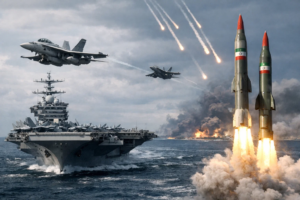
The gap in defense spending is extremely large: in 2024, the US spent about $997 billion, Israel about $46.5 billion, and Iran about $7.9 billion (SIPRI estimate).
The picture is different when it comes to human resources: the US has an active armed forces strength of around 1.32 million (estimate for 2025), Israel has regular forces of around 169,000 with extensive reliance on reserves, and Iran has around 610,000 active personnel (estimates citing IISS).
The key difference lies in “projection of force” and technological structure. The US remains the only country with a comparable set of tools for a long-term campaign far from its own territory, including a fleet of 11 nuclear aircraft carriers and supply, intelligence, and refueling infrastructure.
Israel, with significantly fewer resources, compensates for this with the quality of its air force and layered air defense and missile defense systems. In particular, Israel operates and is expanding its fleet of F-35Is (Adir), and its defense architecture includes Iron Dome, David’s Sling, and the upper echelon Arrow (Arrow-3).
Iran, in turn, is betting on asymmetric responses: missile and drone capabilities, distributed infrastructure, IRGC forces, and pressure through a network of allied non-state actors. According to US estimates, Iran has the largest arsenal of ballistic missiles in the Middle East; some reports also note long-term plans to develop long-range systems.
Finally, the “nuclear factor” works differently for the participants. SIPRI lists Israel as one of nine states possessing nuclear weapons (in the absence of official confirmation from Tel Aviv), while Iran does not officially possess nuclear weapons, and there is controversy over the scope and control regime of its nuclear program.

Personnel
Iran: approximately 610,000 active personnel, approximately 350,000 reservists (IISS estimate, Military Balance 2025).
Israel: 169,500 active personnel and 465,000 reservists (IISS, Military Balance 2023, according to Al Jazeera).
United States: total “authorized strength” for FY2026 – over 1.3 million (Army 454,000, Navy 334,600, Air Force 320,000, Marine Corps 172,300, Space Force 10,400, Coast Guard 50,000).
Conclusion based on “simple arithmetic”: the US has approximately 2.2 times more active personnel than Iran, and the US plus Israel have approximately 2.5 times more (but it is important to note that the US “theatrically available” force in the region is usually significantly smaller than the total number).

Land forces: tanks and artillery
Tanks: Iran – more than 1,500 main battle tanks; Israel – 2,200+ tanks.
The ratio of Israel to Iran is about 1.5:1 in terms of numbers.
Artillery systems: Iran – nearly 7,000 artillery systems (from towed guns to MLRS); Israel – 530 artillery systems (including self-propelled, towed, MLRS, and mortars in one summary).
In terms of the number of artillery systems, Iran appears to be significantly “heavier” (about 13:1), but this does not equate to an advantage in accuracy, reconnaissance, and counter-battery warfare.
In public reports, the US often cites not “all tanks in storage” but the structure of combat brigades: the US Army has 11 armored brigades (ABCT) in active service and 5 in the National Guard; each ABCT has 87 Abrams tanks. This gives a total of 1,392 Abrams tanks in the ABCT (not counting other places of service and reserves).

Aviation: a key advantage for the US
Iran: about 250 combat-ready aircraft (IISS).
Israel: 339 combat-ready aircraft, including 309 fighters/attack aircraft (the summary also provides the structure of the F-16, F-15, and F-35 fleet).
US: US Air Force alone (excluding Navy carrier-based aircraft and Marine Corps aircraft) – 2,027 fighter/attack aircraft in Total Force and 1,430 in Active Force; total Air Force fleet (Total Force) – 5,003 aircraft as of the end of FY2024.
In terms of combat aircraft, this means that the US Air Force’s fighter/attack class is approximately eight times greater than Iran’s estimated combat-capable aircraft, and Israel’s is approximately 35-40% greater than Iran’s in the same combat-capable category.

Navy: US – ocean power, Iran – betting on asymmetry
According to IISS estimates, Iran is building its maritime strategy around asymmetry – mines, anti-ship missiles, speedboats, and small submarines. It is separately noted that the Iranian Navy has more than 100 small high-speed attack boats.
The US has a different “base”: the size of its battle force is 293 ships as of October 1, 2025, and the minimum number of “at least 11 active aircraft carriers” is enshrined in law.
The US submarine component (official Navy fact files): approximately 24 Los Angeles-class submarines in service, 3 Seawolf-class and 24 Virginia-class, plus 14 Ohio-class strategic SSBNs; it is separately noted that 4 SSBNs have been converted to SSGNs.



