50.5% of Ukrainians said they had not seen any improvements after the medical reforms (in particular, the introduction of the National Health Service), 24.7% reported improvements, and another 24.8% were undecided.
At the same time, 64% of respondents said they had encountered unofficial payments in medical institutions, and 52.2% considered the medical system to be corrupt (another 44.3% considered it to be “partially corrupt”). This is according to the results of a survey conducted by the research company Active Group using the SunFlowerSociology online panel.
Active Group Director Oleksandr Pozniy noted that against the backdrop of more critical assessments of the reform, people often separate their trust in a particular doctor from their trust in the system as a whole.
“We can say that family doctors, especially those who have been specifically and consciously chosen, are trusted. It is quite a common situation when people may not trust the system, but trust a specific doctor they know. At the same time, reform exists when it changes everyday experience, and although some changes have taken place, there is still dissatisfaction with this reform,” he said at a press conference at the Interfax-Ukraine agency on Friday.

According to the study, Ukrainians most often assess the state of the healthcare system as “average” (54.6%), “rather poor” (18.7%), or “very poor” (7.2%); 2.9% said “very good” and 16.7% said “rather good.”
At the same time, the level of trust in family doctors remains relatively high: 29.5% of respondents said they completely trust them, 61.9% said they partially trust them, and 8.6% said they do not trust them.
The survey also identified problems with access to medical care and resources at the local level. In particular, 23.8% of respondents believe that it is “very easy” to get a consultation with a family doctor, 55.1% say it is “easy,” 18.1% say it is “difficult,” and 2.9% say it is “very difficult.” Only 10.1% responded that their local hospital has “enough” modern equipment and medicines, 45.8% said “somewhat enough,” and 32.4% said “no.”
In addition, according to respondents, the wait time for an appointment with a specialist exceeds one month in 11.5% of cases, lasts 2–4 weeks in 19.8% of cases, 1–2 weeks in 28.4% of cases, and up to one week in 40.2% of cases.
Active Group founder Andriy Yeremenko attributed some of the negative assessments to the scale of direct household expenses.

“In fact, we see that more than 90% pay for treatment in one way or another, although medicine is formally free. If you don’t have insurance, you still pay — either for medicine or for procedures. Therefore, the issue of financial accessibility remains key for most families,” he said.
According to the survey results, in 2024–2025, 68.2% of respondents said they paid for medical services or medicines themselves on a regular basis, 25.1% said they did so occasionally, and 6.7% said they did not pay.
At the same time, 20.9% reported spending more than 20% of their family budget on medicine, another 23.2% spent 11-20%, 39.8% spent 5-10%, and 16.1% spent less than 5%.
Maksym Urakin, PhD in Economics and founder of the Experts Club information and analytical center, commenting on the survey data, said that high proportions of healthcare costs affect not only well-being but also economic stability.

“As an economist, I want to emphasize that medicine is an integral part of a country’s economic stability, and when healthcare costs erode family budgets, it affects consumption and people’s ability to recover. In international monitoring methodology, it is considered catastrophic if a person spends more than 10% of their budget on medicines. And here we see a sign of a serious financial burden,” he stressed.
Separately, participants drew attention to the dynamics of medicine prices and the effectiveness of compensation mechanisms. Thus, 52.3% of respondents said that the prices of medicines they buy regularly had “increased significantly,” 43.9% said they had “increased slightly,” 3.6% said they had “remained unchanged,” and 0.2% said they had “decreased.”
Regarding the state program for reimbursement of the cost of medicines, 13.1% of respondents said they use it, 70.6% said they do not use it, and another 16.3% said they have heard of it but have not used it. Among those who received medicines under the program, 24.7% said they received them free of charge, and 75.3% said they paid extra.
Grigory Soloninka, a member of the board of the Kyiv Regional Organization “VULT” and professor at the Kyiv Medical University, believes that the pandemic and full-scale war have significantly influenced the perception of the reform, but there are also “positive elements.”

“To a certain extent, there are reforms: there are positive aspects and there are negative aspects. But this negativity was largely influenced, first of all, by the pandemic, then by the war — that is, our reforms began, perhaps, at the wrong time. But there are positives from these reforms, and we see that there is a good program for people over 40, screening,” he said.
The survey also separately assessed the impact of the war on the availability of medical services: 48.1% of respondents reported that they felt access had deteriorated due to the war, 36.9% said no, and 15% were undecided. Respondents identified the outflow of medical personnel (60.3%) as the most acute problem in healthcare during wartime, followed by the destruction of infrastructure (22.7%) and a shortage of medicines (13.4%).
The survey was conducted on February 11–12, 2026, using a self-administered questionnaire, with a sample of 1,000 respondents aged 18 and older throughout Ukraine, excluding temporarily occupied territories. The theoretical statistical error is up to 3.1% with a 95% confidence level.
ACTIVE GROUP, EXPERTS CLUB, Pozniy, SOCIOLOGY, SOLONINKA, SURVEY, URAKIN
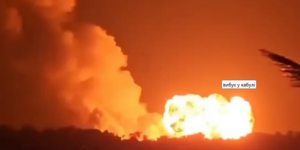
The Afghan TV channel Ariana News reported, citing local sources, that Afghan forces struck a “nuclear facility” in Pakistan, as well as a military base near Abbottabad (Khyber Pakhtunkhwa province).
At the same time, there was no independent confirmation of the claim that the “nuclear facility” had been hit at the time of publication. Reports by international agencies on the sharp escalation between Pakistan and the Afghan authorities referred to the use of drones and strikes on military targets, but without indicating that nuclear infrastructure had been hit. Specifically, Reuters reported that Afghan authorities said drones were used against military targets in Pakistan, while Pakistan’s information minister said attempted drone strikes were intercepted and damage was avoided.
The escalation between the countries in recent days has been accompanied by mutual strikes and conflicting statements from the sides about the results of the attacks.
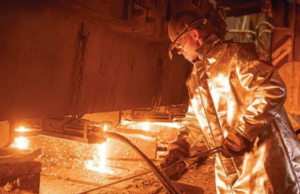
ArcelorMittal Krivoy Rog Mining and Metallurgical Combine PJSC (AMKR, Dnepropetrovsk region) has announced the forced termination of production activities of its subsidiary Foundry-Mechanical Plant LLC (LMZ).
According to the company’s press release on Friday, the decision to cease production activities of LMZ, which is an auxiliary division of AMKR’s main production facility, will take effect three months from the date of the announcement.
AMKR notes that the decision is dictated by the current economic and market circumstances in which the company is operating in Ukraine amid a full-scale war. AMKR. A key reason for the move is the high cost of electricity in Ukraine. Constant attacks on the energy infrastructure have led to electricity shortages and the need to import electricity at even higher prices, which has led to a significant increase in production costs and a drop in production. For example, due to the shortage of e/e in January 2026 compared to November 2025 figures, there was a 30% drop in pig iron production, a 40% drop in steel production and a drop in rolled steel production by up to 60%.
“Compared to 2024, when we asked the Ukrainian government to urgently develop measures to curb the growth of electricity prices and support producers in the mining and metallurgical industries, the price of electricity rose from $120 per MWh (in Q2 2024 with delivery without VAT) to $230 in February 2026, reaching up to $370 per MWh during peak hours,” the press release states.
An additional negative factor was the decision of the European Commission to introduce CBAM (cross-border carbon adjustment mechanism) from January 1, 2026 without any exemptions and transition period for Ukrainian producers. This resulted in the loss of the European market for a significant part of Ukrainian steel producers and critically affected their production volumes and utilization of certain divisions and capacities.
“It is worth noting that AMKR made significant efforts to reorient sales to the EU market after the outbreak of a full-scale war. However, the implementation of CBAM without taking into account the realities of the war in Ukraine thwarted these efforts,” the press release explains.
The company notes that the decision to close LMZ will result in the reduction of 1.7 thousand jobs, and together with the closure of the blooming shop and related production processes, the number of job cuts will exceed 2,400. At the same time, LMZ employees will be offered jobs at AMKR with the possibility of retraining at the employer’s expense.
Foundry-Mechanical Plant LLC (LMZ) is one of the largest machine-building enterprises in Ukraine. The enterprise is a powerful machine-building and repair-mechanical complex, which includes a number of machine-building chains and such production branches as foundry, forging and pressing, thermal, welding and surfacing production, mechanical processing, metalworking and assembly, production of rubber and technical products, repair of mechanical products and others.
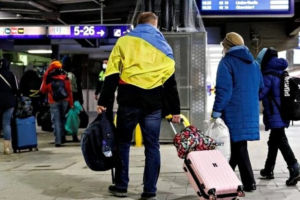
Ukrainians are currently receiving temporary protection in the European Union regardless of gender and age, and this arrangement has been extended until March 27, 2027, said European Commission spokesman Markus Lammert, commenting on discussions in member states about granting protection to Ukrainian men of conscription age.
“As far as I remember the rules for granting temporary protection, they make no distinction between women, children, and men of conscription age,” Lammert said at a briefing in Brussels on Friday.
When asked whether the EU should accept Ukrainian men of conscription age during the war in Ukraine and whether there is indeed a discussion at the European level about their temporary protection, given that the issue has been raised by the Luxembourg government and the Ukrainian authorities, the European Commission representative replied: “I am not aware of any discussion in Luxembourg. I can say that temporary protection is what we have decided at the EU level and at the level of member states until March 27 next year. The current rules remain in force, and that is all I can say at this point.”
National postal operator Ukrposhta has started auctions for the sale of 20 unused real estate objects with a total area of 32.8 thousand square meters with a starting price of more than UAH 200 million, the company’s CEO Igor Smilyansky said on Thursday.
According to his message in Telegram, the objects offered on the site Prozorro.Sale range from a small room in a village in Transcarpathia to a sorting center in Lviv with an area of 5.6 thousand square meters.
The head of the company expects profits from the sale in the tens of millions of hryvnias, which will be used for investments, as well as savings on the maintenance of these facilities and payment of taxes of more than 3 million hryvnias.
“The funds to be received from the sale, according to the decision of the shareholder ”Ukrposhta” Ministry of Development of Communities and Territories, will be immediately directed to investments in fixed assets,” Smilyansky said.
General Director of “Ukrposhta” specified that the starting price for investors, put up for auction sorting center, which was built in the 1920s in the heart of Lviv near the railway station, 56.9 million UAH.
The day before, Ukrposhta also completed the second auction of 716 units of decommissioned vehicles on Prozorro.Sales, receiving UAH 9 million, and is preparing to start the final sale of about 250 more cars.
In the fourth quarter of 2025, Ukrposhta made a net profit of UAH 257.9 million, which was 69.2% higher than in the same period of 2024 due to additional income from the sale of the company’s property, which amounted to UAH 168 million.
The national postal operator increased its revenue by UAH 10.7m in the fourth quarter compared to the corresponding period of 2024 – up to UAH 3bn 601.6m.