

The Ukrainian Foreign Ministry urges citizens to refrain from traveling to Israel and Iran due to the escalating security situation in the Middle East and the threat of missile attacks.
This was reported by the Consular Service Department of the Ukrainian Foreign Ministry on Facebook on Saturday.
Due to the escalating security situation in the Middle East and the threat of missile attacks, the Ukrainian Foreign Ministry recommends that Ukrainian citizens refrain from traveling to Israel until the situation stabilizes. It also reminds citizens of the current recommendation to leave Iran, which was announced in early January.
Citizens who are already in countries in the region are advised to remain vigilant, closely follow official reports, and always carry identification documents with them.

The top of the ITCI-2025 ranking is once again dominated by countries with the most “neutral” tax structures: Estonia is in first place, Latvia is in second, and Lithuania is in fifth (plus Hungary in ninth and the Czech Republic in tenth).
The Tax Foundation notes that Estonia’s leadership is supported by four elements: a 20% corporate tax levied only on distributed profits; a flat income tax of 20% (without taxation of personal dividends in the same format); a property tax focused on land value; the territorial principle of taxation of foreign income applies.
Latvia has “caught up” thanks to the introduction of a corporate income tax model similar to Estonia’s and relatively effective labor taxation. Lithuania stands out with its low corporate tax rate (17%) and strong capital cost recovery rules.
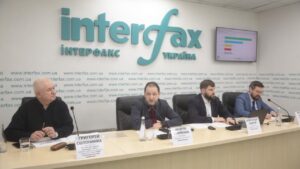
More than 15% of Ukrainians noticed that the cost of medicines increased by more than 50% during 2024-2025, while 52% of Ukrainians noted a 20%-50% increase in the cost of medicines.
According to Alexander Pozniy, director of the research company Active Group, this is evidenced by the results of a survey conducted by Active Group and the Experts Club analytical center in early February and presented to Interfax-Ukraine on Friday.
Pozniy noted that a third of those surveyed said that medicine prices had remained almost unchanged, while 2.6% said that they had even decreased.
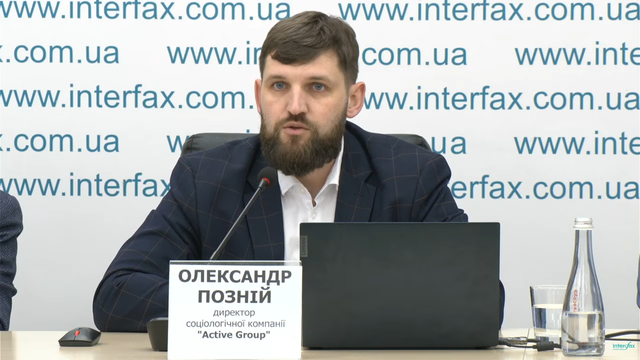
“In general, it can be noted that the cost of medicines has risen quite significantly, and this is noted by almost the absolute majority (of respondents),” he said, explaining that medicines account for about 10-20% of the household budget, which is why the price increase is so noticeable.
Pozniy noted that, according to the survey, when buying medicines, 25% of Ukrainians pay attention to price, while 24.5% pay attention to effectiveness.
“That is, slightly more than half pay attention to the combination of price and effectiveness of the selected medicines. Therefore, people try to find the optimal combination that would provide the best effect and the least financial burden in terms of treatment,” he said.
In addition, Pozniy said that 28.4% of respondents prefer Ukrainian medicines, while 33.4% prefer imported ones. For 38% of respondents, the country of origin of the drugs does not matter.
According to the results, 31.4% of respondents believe that using electronic prescriptions is very convenient, 44% believe it is somewhat convenient, 18.7% believe it is somewhat inconvenient, and only 5.9% believe it is very inconvenient.
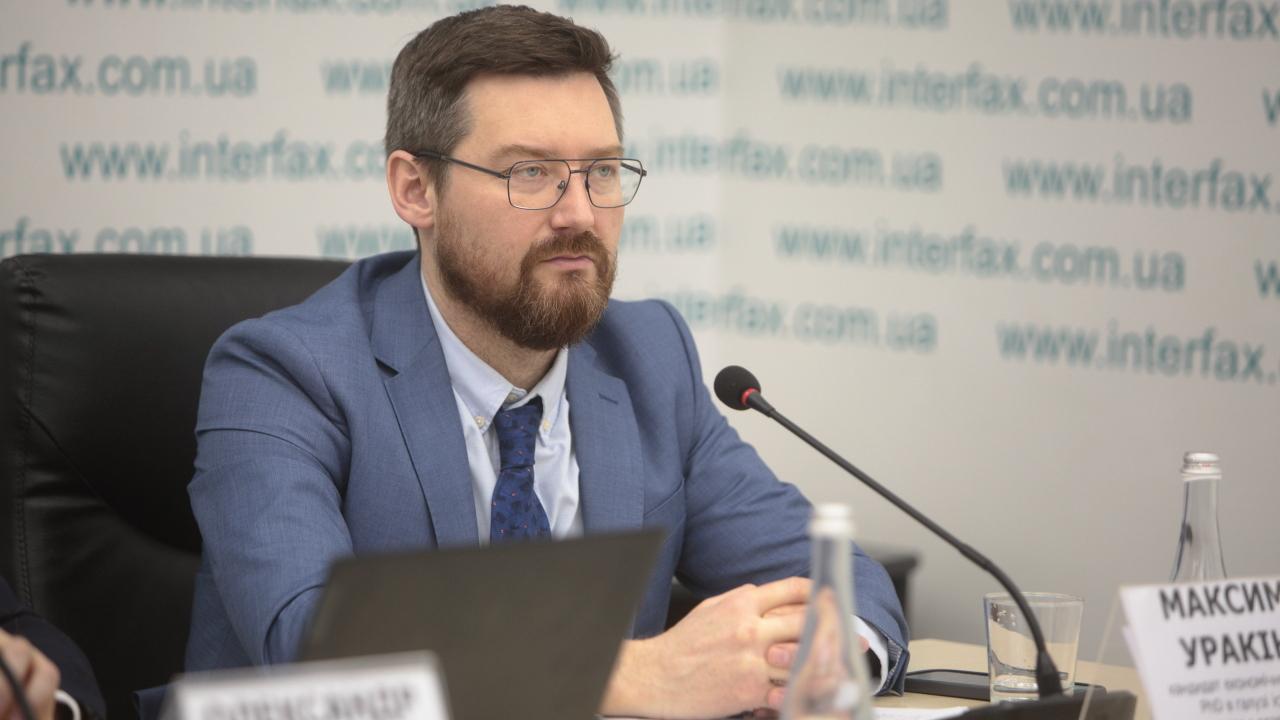
For his part, Maksim Urakin, founder of the Experts Club information and analytical center, noted that the price of medicines is a key factor for Ukrainian citizens.
“Against this backdrop, it is particularly important how state mechanisms for reimbursement and compensation for the cost of medicines work. There is a state reimbursement program, but only 13% of Ukrainians use it. Therefore, reimbursement needs to be promoted among citizens,” he said.
The survey was conducted on the SunFlowerSociology online panel using a representative sample on February 11-12, 2026. The survey involved 1,000 respondents from a representative sample in all regions of Ukraine, except for the temporarily occupied territories.
ACTIVE GROUP, EXPERTS CLUB, MEDICINE, Pozniy, REFORM, URAKIN
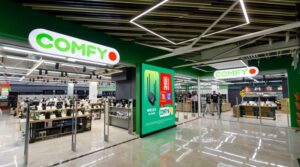
Home appliances and electronics retailer Comfy (Comfy Trade LLC) reported an increase in revenue to UAH 55.8 billion at the end of 2025, which is 17% more than in 2024.
According to the company’s press release, the total number of customers in the chain grew by 8% to over 12.4 million. Online sales accounted for 33% of total revenue, while online sales made through the retailer’s app grew to 25%.
It is noted that last year the company continued to invest in an omnichannel customer experience, service personalization, and digital product development. At the end of the year, the NPS customer loyalty index was 65%, and the SCI service satisfaction index reached 95%.
The Black Friday period last year is mentioned separately, as it was one of the most successful in the company’s history. Revenue for the week during which the promotion was running increased by 12% year-on-year, the number of orders grew by 15%, and the average check increased by 5%. At the same time, during Black Friday week, Comfy ranked first in Google search results for home appliances and electronics, the retailer notes.
In 2025, Comfy opened six new stores in Kyiv and the Kyiv region, Zhytomyr, Odesa, Chernivtsi, and Mukachevo, as well as renovated and reformatted three stores, focusing on barrier-free retail spaces and providing areas for online order pickup. By the end of the year, the chain had 115 stores in 56 cities across Ukraine.
It is noted that the company created more than 500 new jobs throughout Ukraine, expanding its staff to 4,640 employees.
During the year, the company paid UAH 2.3 billion in taxes and fees to the state budget.
According to YouControl, Comfy Holdings Limited (100%, Cyprus) is the owner of Comfy Trade LLC, and Stanislav Ronis and Svitlana Hutsul are the ultimate beneficiaries.

Ukrainians cite the outflow of medical personnel and the destruction of medical infrastructure by the aggressor as the main reasons for the deterioration in the availability of medical services during the war.
According to the results of a survey conducted by the research company Active Group and the Experts Club analytical center in early February and presented to the Interfax-Ukraine agency on Friday, 48% of respondents noted that they felt a deterioration in medical services during the war.
Among the main problems of medicine in wartime, 60% of respondents cited the outflow of medical personnel, 22.7% cited the destruction of medical infrastructure, and 13.4% cited a shortage of medicines.
“Considering that the deterioration in medical services is due to the fact that medical facilities have either been physically destroyed or doctors have left them, the fact that only 48% of respondents felt a deterioration is not a bad result. The main problems in medicine during the war are the outflow of medical personnel, followed by the destruction of infrastructure, and then the shortage of medicines. In other words, we see that the main problem is the shortage of medical personnel,” said Active Group founder Andrey Eremenko.

The reforms carried out in the medical sector in recent years have contributed to the fact that medicine continues to function, and the fact that people talk about the lack of improvement or deterioration in the quality of medical services, according to the expert, is still “not subject to harsh criticism.”
According to the survey, 7.2% currently rate the state of affairs in the healthcare system as very poor, 18.7% as rather poor, 16.7% as rather good, and 2% as very good. At the same time, 54.6% gave it an average rating.
At the same time, 29.5% of respondents completely trust their family doctor, and 61.9% trust them partially.
When assessing the possibility of obtaining consultations from a family doctor in their region, 88.8% of respondents said that it was very easy or easy to do so, while 21% said it was very difficult or difficult.
Just over 10% of respondents noted that their local hospital has a sufficient supply of medicines and modern equipment, while 45.8% said that there is a partial supply.
At the same time, 40% of respondents noted that consultations with a specialist take up to a week, 28.4% take 1-2 weeks, and 11.5% take more than a month. In 2024-2025, 68% of respondents regularly paid for medical services themselves.
At the same time, 16% of respondents noted that they spend less than 5% of their family budget on medicine, while almost 21% of respondents reported spending more than 20%.

“The study revealed both the positive and painful aspects of the Ukrainian healthcare system. The most painful issue is the brain drain. But it is important to see the strengths as well. I was very pleased that the level of trust in family doctors is very high. So, the foundation for the development of the healthcare system is there, although, in particular due to the war, there are economic barriers and barriers to accessibility,” said Maksim Urakin, founder of the Experts Club information and analytical center.

According to Serbian Economist, Hungary and Serbia have agreed to launch passenger service on the Belgrade-Budapest high-speed railway line no later than March 27, Hungarian Minister of Foreign Affairs and Trade Péter Szijjártó said in Belgrade.
Responding to questions about border procedures, including the introduction of the EES system, Szijjártó said that checks are planned to be kept to a minimum and organized so that they do not significantly affect the speed of transport. According to him, on the Hungarian side, inspectors, police, and customs officers will board the train before the border station, and checks will be carried out jointly with colleagues from the other side while the train is in motion.
The statement was made after the ceremonial signing of four documents during the 15th session of the Joint Commission on Economic Cooperation between Serbia and Hungary in the Serbian Chamber. In particular, the parties formalized a package of agreements on expanding cooperation in the nuclear sphere, interaction between chambers of commerce and industry under the Széchenyi program in Serbia, a memorandum on expert support for Serbia’s EU accession negotiations, and the minutes of the joint commission meeting.
Earlier, Serbian authorities reported that joint passport and customs control for passenger trains is planned to be carried out on Hungarian territory at the Kelebia station, and the time required for the procedures is estimated at about 30 minutes; the issue of specific EES requirements falls within the competence of the Hungarian border police.
The Belgrade-Budapest high-speed line is being modernized for speeds of up to 200 km/h and a reduction in travel time to less than three hours; in Serbia, the Belgrade-Novi Sad (2022) and Novi Sad-Subotica (October 2025) sections have already been put into operation. On February 27, it was also reported that freight traffic had started on the line.



